


Picking the wrong abrasive turns a sandblasting session into wasted media and uneven finishes. The right grit, hardness, and grain shape depend on whether you’re stripping mill scale, etching glass, or giving a metal part a soft satin sheen. This roundup walks through six solid sandblasting medias for hobbyists, restorers, and small fabrication shops, with notes on what each one actually does best. The list leans on manufacturer specs and material properties, so you can match the media to the surface in front of you without overbuying.
The Shortlist At A Glance

Blastline USA Garnet 100/120 Grit Abrasive Media 50 lb

TITGGI 100 Grit Aluminum Oxide Blast Media 12 lb

Tribos Glass Bead Media 8 lb #13 Mesh

TITGGI 120 Grit Aluminum Oxide Blast Media 8 lb
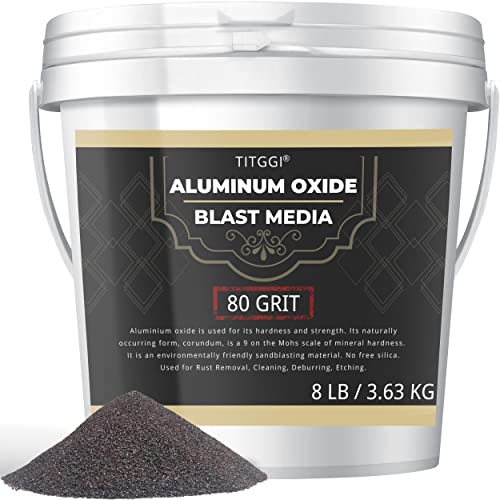
TITGGI 80 Grit Aluminum Oxide Blast Media 8 lb

HDURCIR Aluminum Oxide 100 Grit Abrasive Media 8 lb
A Closer Look At Each Pick
Almandine garnet sits in a different weight class than most cabinet abrasives, and the 50 lb bag is built for users who go through media by the bucket rather than the cup. The 100/120 grit lands in a tight particle range of roughly 250 to 125 microns, which produces a surface profile of about 1.0 to 2.0 mil (a “mil” is one-thousandth of an inch, the standard unit for measuring blast profile depth on coated metal). At a documented blasting rate of up to 330 square feet per hour, it moves through big panels faster than finer media, and the same hardness that makes it aggressive also means the grains hold their shape instead of shattering into dust.
That hardness shows up in the consumption rate, sitting between 1.25 and 2.0 lb per square foot depending on pressure and substrate. For shop owners running a waterjet or production blast cabinet, fewer changeovers and lower dust load matter as much as the cut itself. Compared with the aluminum oxide options later in this list, garnet tends to give a cleaner surface on stainless and aluminum with less embedded contamination, which is why it shows up so often in aerospace and marine work.
Notable Gains
- Natural almandine garnet holds its angular shape, so each pass keeps cutting instead of turning to powder.
- Documented coverage up to 330 sq ft/hr on stainless, a real productivity boost on large panels.
- Lower dust output than many slags, which improves visibility and reduces cleanup at the cabinet window.
- 50 lb bulk format suits waterjet users and shops that blast daily rather than occasionally.
Trade Offs
- 50 lb is overkill for small hobby projects and takes up real storage space.
- Harder to recycle than glass bead, so budget-conscious users may burn through it faster on high-pressure work.
Key Product Details
Whose Workbench It Belongs On
Production shops, waterjet operators, and serious restoration pros who blast large steel or aluminum surfaces weekly.
Look Elsewhere When
Casual hobby users who only blast small parts will get more value from the smaller TITGGI aluminum oxide bags.
Brown fused aluminum oxide runs close to diamond on the Mohs hardness scale (a 1–10 ranking where 10 is diamond), and the 100 grit sits in the comfortable middle that handles most home-shop blasting without being either too timid or too aggressive. TITGGI’s 12 lb bag gives hobbyists a meaningful step up from the small 8 lb pails without tipping into industrial territory, and the grain toughness means the media keeps cutting even after several cycles through a siphon or pressure cabinet.
Where this size pays off is in versatility. You can clean rust off a steel trailer, etch a glass panel for a frosted effect, or prep aluminum for powder coat using the same bag, simply by tweaking pressure and distance. The denser grains also mean less airborne dust compared with softer abrasives, which improves sight lines through the cabinet gloves. For a weekend warrior running a small blast cabinet, 12 lb of 100 grit is often the sweet spot between cost and capacity.
Useful Strengths
- Mohs 9 hardness holds its edge on steel, aluminum, and glass without dissolving into powder quickly.
- Reusable across multiple cycles, lowering the effective cost per part.
- 12 lb pack size fits the budget of serious hobbyists without industrial commitment.
Points To Keep In Mind
- Harder media can over-profile thin sheet metal if the nozzle sits too close, so technique matters.
- Not suited to soft finishes where you want a satin sheen rather than an etched surface.
Who Should Grab It
Home-shop users running a siphon or pressure cabinet on mixed metal and glass projects who need one media to cover most tasks.
Swap It Out When
You mainly want a soft decorative finish on stainless or aluminum, where Tribos Glass Bead Media suits the job better.
Glass bead works on a different principle than angular aluminum oxide. Instead of cutting into the surface, the round beads peen it, hammering the top layer smooth while leaving a soft satin finish behind. The Tribos #13 mesh falls in the 200 to 240 range, which is on the finer side, so the result reads as polished rather than aggressive. For anyone restoring vintage motorcycle parts, jewelry findings, or aluminum trim, that matte sheen is the whole point of the project.
The non-silica composition is the practical headline. Many traditional glass beads contain crystalline silica, which is a known inhalation hazard, and the non-silica formulation is easier on respirator filters and shop air quality. Reusability is the other quiet win: the beads don’t shatter on impact the way angular media does, so a single 8 lb bag can cycle through dozens of small parts before it breaks down. Compared with the TITGGI aluminum oxide 100 grit, this is a finishing media, not a stripping media, and picking between them comes down to what the part looks like at the end.
Strong Points
- Non-silica composition reduces respiratory load during long cabinet sessions.
- Round beads produce a uniform satin finish without deep scratching.
- Highly reusable, which offsets the upfront cost over many parts.
Worth Bearing In Mind
- Won’t strip thick rust or heavy paint the way aluminum oxide can.
- Finer 200–240 mesh beads take longer to remove meaningful surface contamination.
Feature Snapshot
Made For
Restorers and fabricators who want a soft, uniform satin finish on stainless, aluminum, or mild steel without deep profiling.
Consider Something Else When
You’re facing heavy rust or thick coatings, where the TITGGI 80 Grit Aluminum Oxide removes material faster.
The 120 grit version of TITGGI’s aluminum oxide steps the profile down from the 100 grit option, giving you a finer cut on the same Mohs 9 hardness. This is the bag you reach for when the 100 grit is leaving the surface too rough for paint or powder coat, but you still want the cutting power of angular media rather than the gentler peening action of glass bead. Eight pounds is enough for several mid-size panels or a long run of small parts in a bench-top cabinet.
In practice, 120 grit works well for final prep before primer, for cleaning up welds on stainless without leaving deep gouges, and for delicate glass etching where the frost effect should be subtle rather than heavy. The trade-off is straightforward: finer grit means slower material removal, so blasting a heavily rusted fender will take noticeably longer than with the 80 grit sibling. For users who already own the 100 grit and find it slightly too coarse, the 120 grit slot is the natural upgrade.
Positive Takeaways
- Finer profile suits paint prep, primer readiness, and subtle glass etching.
- Same reusable brown fused aluminum oxide, so cycle life stays strong.
- Compact 8 lb format works for hobbyists without dominating shelf space.
Honest Caveats
- Material removal is slower than coarser 80 or 100 grit options on heavy contamination.
- Still angular enough to mark softer metals if the operator holds the nozzle too long in one spot.
Who It Suits Best
Detail-oriented hobbyists and finish car restorers prepping thin sheet metal or stainless for paint without leaving heavy profile.
Not Your Match When
You’re stripping thick powder coat or heavy rust, where the TITGGI 80 Grit Aluminum Oxide clears material faster.
Eighty grit is the rough-and-ready end of the aluminum oxide spectrum, and TITGGI’s 8 lb bag is the one to grab when the project starts with serious cleanup. Heavy rust on a truck frame, old powder coat on a steel bracket, or mill scale on freshly cut plate all come off faster at 80 grit because the larger grains carry more momentum on impact. The same Mohs 9 hardness applies, so the grains keep their cutting edges through multiple cycles rather than rounding off.
Used carefully, 80 grit is also a legitimate starting point for a two-step finish: blast the heavy work with 80, then switch to the 120 grit option above to refine the profile before paint. That two-pass approach gives you the speed of coarse media where it matters and the smoothness of fine media where it shows. The honest read is that 80 grit is too aggressive for thin sheet metal or anything where the final surface needs to be near-mirror, so it lives mostly on heavy steel and cast iron projects around the shop.
Benefits That Matter
- Removes heavy rust, mill scale, and thick coatings faster than finer grits.
- Hard angular grain structure holds up through multiple cabinet cycles.
- Compact 8 lb bag fits a standard bench cabinet without taking up the whole floor.
Small Caveats
- Leaves a coarser profile that usually requires a follow-up pass with finer media before coating.
- Can dish out distortion or warping on thin panels if held too long in one spot.
Feature Rundown
Best Suited To
Restorers and farm-shop users who routinely strip rust, scale, or old coatings from heavy steel parts.
A Better Fit Elsewhere
You’re working on thin aluminum panels or decorative metal where the HDURCIR 100 Grit is easier to control.
HDURCIR’s 100 grit aluminum oxide targets the most common cabinet use case: medium-to-fine work that needs to be done today, not eventually. The 8 lb pack lands at a size that fits comfortably in a bench-top blast cabinet, and the brown fused grain gives you the same Mohs 9 hardness profile as the TITGGI 100 grit option above. The manufacturer notes that the media works equally well wet or dry, which adds flexibility for shops that prefer wet blasting to control dust.
This is a sensible middle-of-the-bench pick. The grit is coarse enough to clean off rust, paint, and mill scale in reasonable time, yet fine enough to leave a paint-ready profile on most substrates without a second pass. For someone buying their first bag of abrasive and not sure where to start, a 100 grit aluminum oxide in an 8 lb bag is the safe general-purpose answer, and the sturdy plastic packaging helps keep unused media dry between sessions.
Reasons It Performs
- Wet or dry compatibility gives flexibility for dust-sensitive shops.
- 100 grit balances cutting speed and finish quality for general prep work.
- Sturdy plastic container helps keep unused media clean and dry on the shelf.
A Few Limitations
- 8 lb may run out quickly for users with large multi-panel projects.
- Not specialized for either heavy stripping or fine finishing compared to dedicated grits.
Feature Card
Right Fit For
First-time abrasive shoppers running a bench-top cabinet on a mix of small metal and glass projects.
Where A Sibling Pick Shines
You need to cover big stainless panels in production, where Blastline USA Garnet has the bulk and throughput advantage.
What To Weigh Before Choosing Sandblasting Medias
Match the Media to the Surface, Not the Other Way Around
Abrasive hardness sets the ceiling, but the actual job depends on matching media to substrate. Hard materials like steel and stainless tolerate aluminum oxide and garnet well, while softer aluminum and brass want a gentler touch from glass bead to avoid digging in. Picking the hardest media available often does more harm than good on thin or soft metals.
Grit Size Drives Both Speed and Finish
Coarse grits remove material faster but leave a deeper profile, which matters for paint adhesion but hurts if you want a smooth final surface. Finer grits slow you down but produce a cleaner finish with less rework. Two-step blasting, coarse first, fine second, is a common approach for projects that need both speed and quality.
Weight and Packaging Should Match Your Cadence
Buying in bulk saves cost per pound but only if you can store media dry and use it before moisture contamination. For occasional hobby use, smaller 8 lb bags stay fresh longer and reduce waste. For daily shop work, a 50 lb pail of garnet pays for itself through fewer changeovers.
Compatibility With Your Cabinet or Gun
Not every media flows well through every system. Siphon cabinets handle lighter media easily but struggle with heavy garnet, while pressure cabinets push dense media faster. Confirm your cabinet’s recommended media weight and dust handling before committing to a full bag of anything aggressive.
Practical Notes Across These Picks
Common Shopping Slip Ups
A common mistake is reaching for the cheapest bag without checking the actual substrate being blasted. Glass bead feels gentle and premium, but it won’t strip rust, and conversely, coarse aluminum oxide on a thin aluminum panel can warp the metal. The other trap is buying a huge bulk bag for a one-off project, then watching the rest absorb moisture in the corner of the shop. Match the bag size to your real usage rhythm.
Why Top Tier Costs More
Higher tier media, like natural almandine garnet or non-silica glass bead, costs more because the raw material and screening process are more demanding. The upgrade usually pays off in cleaner surface profiles, longer cycle life, and lower health risk during long sessions. The case for spending up is strongest when you blast frequently, work with sensitive substrates like stainless or titanium, or share shop air with people who care about long-term dust exposure.
Frequently Asked Questions
What grit sandblasting media should I use for general rust removal?
A 100 grit aluminum oxide is the safe general-purpose choice for rust on steel. It cuts through oxidation faster than glass bead while leaving a profile that holds paint well. Heavily pitted or scaled metal benefits from an 80 grit first pass.
Is glass bead or aluminum oxide better for sandblasting?
Neither is universally better, and the choice depends on the desired finish. Glass bead peens the surface to a soft satin sheen, while aluminum oxide cuts and profiles. For rust and paint removal, aluminum oxide is the right tool, and for finishing or decorative work, glass bead wins.
Can you reuse sandblasting media?
Yes, most media can be reused multiple times, especially denser options like aluminum oxide and garnet. Glass bead has the longest cycle life because the round grains don’t shatter. Reuse drops as the grain breaks down into dust, so sifting out fines keeps the working media cutting efficiently.
How much media does sandblasting use per square foot?
Consumption varies by media type, pressure, and substrate, but a typical range is 1.25 to 2.0 lb per square foot for garnet and aluminum oxide. Glass bead tends to use less per pass because it doesn’t break down as quickly, though the gentler action means more passes for heavy contamination.
Is garnet sandblasting media safe for stainless steel?
Yes, natural almandine garnet is widely used on stainless steel because it cuts without leaving heavy iron contamination behind. The angular shape and consistent sizing give a predictable profile, which is why it’s common in marine, aerospace, and food-grade fabrication shops.




