


Sanding a panel flat enough for clear coat takes a steady hand and the right orbit. Most weekend warriors fight swirl marks left by cheap pads, while pros at body shops know the difference comes down to orbit pattern, dust control, and how the tool sits in your palm on a long day. This list rounds up the random orbit sanders and specialty blocks that actually make sense for auto body work, from corded shop staples to cordless kits and pneumatic dual-action options used in paint booths.
The Shortlist At A Glance

DEWALT 5-Inch Variable Speed Orbital Sander Kit (DWE6423K)

DEWALT 20V MAX 5-Inch Cordless Orbital Sander (DCW210D1)

DEWALT 5-Inch Random Orbit Sander (DWE6423, Corded)
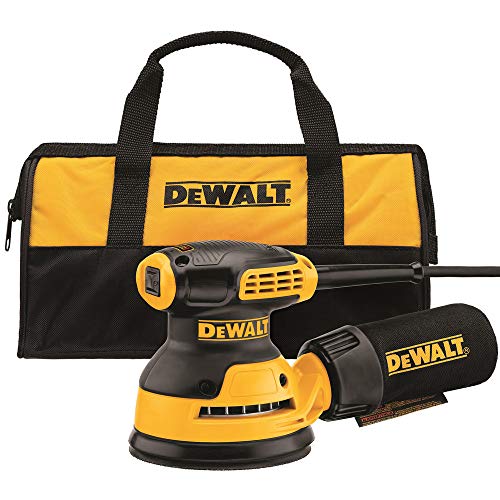
DEWALT 5-Inch Orbital Sander Kit (DWE6421K)

DEWALT 5-Inch Palm Sander (DWE6421)

Dura-Block AF4421 Round Sanding Block

Autolock 5-Inch Pneumatic Random Orbital Sander
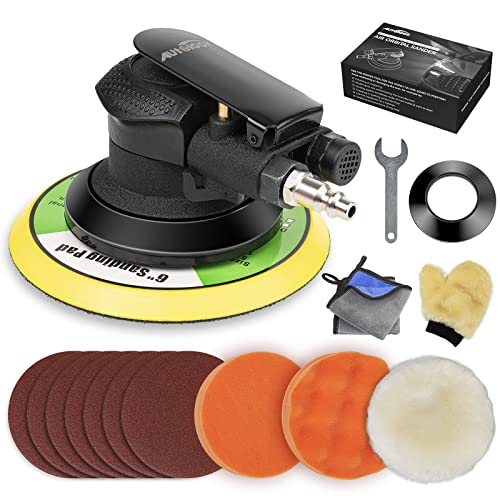
Autolock 6-Inch Pneumatic Random Orbital Sander
The Strengths Of Each Pick
The DEWALT DWE6423K is the sander most weekend warriors reach for first. A 5-inch hook-and-loop pad pairs with a 3-amp motor that spins between 8,000 and 12,000 OPM (orbits per minute), so you can slow things down when feathering clear coat or open it up when stripping filler. The shorter housing lets you get close to the panel, which matters when you’re working a quarter panel or the edge of a door.
A separate counterweight and rubber overmold grip keep the vibration reasonable across long blending sessions. The included dust bag clicks on with one hand, and you can swap it for a shop vac hose when working indoors. For most first-time bodywork projects, the variable speed dial alone justifies the kit price.
Real Benefits
- Variable 8,000 to 12,000 OPM range handles both filler leveling and finish sanding
- Low-profile design reaches tight contours on doors and fenders
- Counterweight system reduces hand fatigue during long block-outs
- Hook-and-loop pad makes disc swaps quick between grits
- Comes with dust bag and carry case for grab-and-go use
Trade Offs
- Corded design limits mobility around large vehicles
- Included dust bag fills quickly during heavy stock removal
Key Specs
Right Fit For
First-time DIYers restoring a single car in a home garage, where the included case and dust bag cover the basics.
A Better Fit Elsewhere
Shops with an existing DEWALT 20V battery platform get more done with the DEWALT 20V MAX 5-Inch Cordless Orbital Sander (DCW210D1) for the same panel coverage without the cord drag.
Where the corded DWE6423K tethers you to an outlet, the DEWALT DCW210D1 trades that leash for a 20V battery. A brushless motor keeps the 8,000 to 12,000 OPM range consistent as the battery drains, and the 2.0Ah pack in this kit handles a full hood of primer work before needing a swap. The same low-profile body and rubber overmold grip carry over from the corded sibling.
You lose runtime versus a wall outlet, but you gain the freedom to walk around a car without snaking a cord across the floor. The dust bag and vacuum port work the same way, so the learning curve from the corded kit is basically zero.
What It Does Well
- Brushless motor maintains speed under load on thick filler
- Cordless design reaches across hoods and into wheel wells
- Same hook-and-loop pad as the corded DWE6423K for shared disc inventory
- Includes battery, charger, and storage bag in the kit
Worth Noting
- 2.0Ah battery runs short during marathon sessions on full cars
- Extra batteries add cost for shops without an existing 20V lineup
Feature Snapshot
Made For
Garage warriors already invested in DEWALT 20V batteries, or anyone tired of pulling extension cords across the driveway.
Consider Something Else When
Body shops with compressed air on tap may prefer the Autolock 5-Inch Pneumatic Random Orbital Sander for unlimited runtime between compressor cycles.
Strip away the case and bag from the DWE6423K and you land at the bare DWE6423. Same 3-amp motor, same 8,000 to 12,000 OPM range, same counterweight and rubber overmold. You give up the dust bag and carrying case, but for a shop with its own vacuum setup and tool storage, the savings go straight to the wall.
The corded electric design means you will never wait on a charge mid-job, which shop-based detailers tend to prefer. You may find the lack of a starter dust bag annoying on the first few panels, but most pros route the vacuum port directly to their extractor anyway.
What Works In Its Favor
- Same performance core as the DWE6423K at a lower entry cost
- Pairs easily with shop vacuums through the built-in dust port
- Counterweight and overmold grip reduce vibration on long runs
Points To Note
- No included dust bag or case out of the box
- Cord management is on you in a busy shop
Who It Suits Best
Working detailers and restoration shops that already own vacuum extractors and want the variable speed motor without paying for accessories they will not use.
Reach For A Different Pick When
The DEWALT 5-Inch Variable Speed Orbital Sander Kit (DWE6423K) makes more sense for first-time owners who want a bag and case included from the start.
The DWE6421K is the single-speed cousin to the DWE6423K, locked at 12,000 OPM. For body filler and primer, that single speed is honestly all most beginners need, since the disc grit handles the real material work. The same 3-amp motor, counterweight, rubber grip, and short housing show up here, so the in-hand feel matches the pricier models.
You trade the variable speed dial for a simpler on-off experience, which removes one decision from the learning curve. The kit still ships with a dust bag and carry case, making it a complete starter package.
Strengths Worth Knowing
- Full kit price under the variable-speed DWE6423K
- 12,000 OPM handles the bulk of body filler and primer work
- Identical grip and housing to higher-tier DEWALT sanders
- Hook-and-loop pad accepts the same disc inventory
Honest Caveats
- No speed control when feathering thin clear coat edges
- Single-speed operation feels dated next to the DWE6423K
Best Suited To
First-time sander owners stripping a single project car, where variable speed is a nice-to-have rather than a must-have.
Swap It Out When
Anyone blending clear coat or working on multiple paint stages will outgrow the single speed, and the DEWALT 5-Inch Variable Speed Orbital Sander Kit (DWE6423K) covers that next step.
The bare DWE6421 is the same single-speed tool as the DWE6421K, minus the case and dust bag. If your shop already has a vacuum line and tool storage, the stripped-down package puts the savings toward discs and abrasives instead. The 3-amp motor and 12,000 OPM output match the kit version exactly, so there is no performance gap.
For people with multiple DEWALT sanders, this is the natural second or third unit to leave plugged in around the shop.
Why It Works Well
- Lowest-cost entry to the 12,000 OPM DEWALT platform
- Shares parts and accessories with the DWE6421K and DWE6423K
- Counterweight and overmold grip keep the tool stable on long passes
Soft Spots
- No dust bag, no case, no extras in the box
- Single speed limits feathering work on thin coatings
Whose Shelf It Belongs On
Existing DEWALT owners building out a multi-sander shop, or anyone pairing it with a dedicated shop vacuum from day one.
Look Elsewhere When
First-time tool owners get more usable package with the DEWALT 5-Inch Orbital Sander Kit (DWE6421K), which includes the dust bag and case to get started.
Power sanders cannot follow a curve, which is exactly where the Dura-Block AF4421 earns its place. The firm EVA foam (a dense, closed-cell rubber) holds its shape under hand pressure yet gives just enough to glide across slightly crowned panels without digging into the filler. Hook-and-loop attachment means you snap 5-inch discs straight onto the block, no adhesive backing needed.
At 3/4 by 1-3/8 by 11 inches, it is sized to wrap door handles, wheel arches, and the curved edges of hoods. You will not speed through a quarter panel with this, but the finish quality on tight curves is something no random orbital can match.
The Case For It
- Conforms to curves without leaving flat spots or ripples
- Hook-and-loop face accepts standard 5-inch discs
- Firm enough to remove filler, soft enough for finish work
- No power source or dust extraction setup required
Things To Weigh
- Hand sanding is slow across broad hood and roof panels
- Foam wears over time and may need replacement on heavy use
Technical Highlights
Perfect Match For
Restorers hand-shaping filler on curved panels where a power sander would round off the profile.
Skip It When
Large flat panels like roofs and hoods go faster with the DEWALT 5-Inch Variable Speed Orbital Sander Kit (DWE6423K), which covers broad areas in a fraction of the time.
The Autolock 5-inch pneumatic sander runs on compressed air, the same power source most body shops already have at every bay. There is no battery to charge and no cord to drag, just a hookup to your air line. The precision-balanced motor keeps vibration low for a dual-action tool, which matters when you are knocking down clear coat for an hour straight.
Lightweight and low-profile, it sits comfortably in the palm for overhead work on roof rails. You will need an air compressor capable of sustaining the CFM (cubic feet per minute) it demands, and oil-free performance depends on a properly regulated air supply.
A Favorable Mix
- Unlimited runtime off the shop air compressor
- Lightweight body reduces arm fatigue on vertical panels
- Low-vibration dual-action operation
Potential Drawbacks
- Requires a compressor with sufficient CFM output
- Air hose setup adds clutter compared to cordless options
Who Should Grab It
Body shop techs with a dedicated bay and a properly sized air compressor looking for a tool that runs all day without recharging.
Not Your Match When
Home garage users without compressed air will get more out of the DEWALT 20V MAX 5-Inch Cordless Orbital Sander (DCW210D1), which needs only a charged battery.
Step up to the 6-inch pad and you trade some of the 5-inch tool’s maneuverability for sheer coverage. The larger pad chews through hoods, roofs, and deck lids in fewer passes, which pays off on production work where minutes per panel matter. Like the 5-inch sibling, it runs on shop air and uses a precision-balanced motor to keep the dual-action orbit smooth.
For body filler and primer, the 6-inch pad covers ground faster but does not reach into the tighter curves a 5-inch tool can. The trade-off shows up on door edges and wheel arches, where you may need to swap down to a smaller pad anyway.
The Value In It
- 6-inch pad covers broad panels faster than 5-inch sanders
- Air-powered design runs as long as the compressor holds out
- Low profile and balanced motor reduce hand strain
Some Limits To Know
- Less suited to tight curves where a 5-inch pad reaches better
- Requires a compressor that can meet the higher air demand
- Bulkier grip profile on long sessions overhead
Built With In Mind
Production body shops sanding multiple full panels per day, where the 6-inch pad’s coverage advantage pays off in throughput.
Where A Sibling Pick Shines
Shops working more curves than flat panels should pair this with the Autolock 5-Inch Pneumatic Random Orbital Sander for the tight spots the 6-inch pad misses.
What To Know Before Buying Sanders For Auto Body Work
Random Orbit vs Dual Action: What’s the Difference
A random orbit sander spins the pad in a circle while also rotating it in an offset pattern, which hides swirl marks better than a regular orbital. A dual action (DA) sander is essentially the same thing in pneumatic form, the term shop techs use when the tool runs on compressed air. For automotive paint and filler, random orbit is the standard because it blends scratch patterns instead of leaving visible rings under the clear coat.
Power Source: Corded, Cordless, and Pneumatic
Corded sanders deliver constant power but tether you to an outlet, which gets old on a full car. Cordless 20V models trade that for battery swaps, and the runtime depends on the Ah (amp-hour) rating of the pack. Pneumatic sanders run on shop air, offer unlimited runtime, and weigh less, but you need a compressor that can keep up with the CFM demand.
Pad Size and Disc Availability
5-inch pads are the most common in auto body work because the disc sizes match the abrasive inventory at every paint supplier. 6-inch pads cover more area per pass but struggle on tight curves. Hook-and-loop attachment is now standard, so swapping between 80, 180, 320, and finer grits takes seconds.
Speed Control and Vibration
Variable speed matters when feathering thin clear coat or working on soft fillers that load up the disc. Counterweights and rubber overmold grips reduce vibration, which becomes a real issue during multi-hour block-outs. You may find the difference between a single-speed and variable-speed sander shows up most in your hands at the end of a long day.
Key Considerations Across These Picks
Common Buying Slip Ups
The biggest mistake first-time buyers make is choosing a sander based on power alone, without considering pad size and dust control. A 6-inch pad on a curve-heavy restoration creates more work than it saves. Another trap is buying a pneumatic sander without checking compressor CFM ratings, which leaves the tool starved for air and underperforming. Match the tool to the projects you actually plan, not the projects you hope to tackle someday.
What The Higher Tier Buys
Spending more typically nets you variable speed, brushless motors (which run cooler and last longer), and better vibration control. The DEWALT variable-speed kit earns its premium over the single-speed models through clear coat feathering and longer tool life. Pneumatic tools climb in price with balance precision and weight savings, both of which add up across a full workday. The upgrade is worth it for anyone running a sander more than a few weekends a year.
Frequently Asked Questions
What is the best sander for auto body work?
For most home garage projects, a 5-inch variable speed random orbit sander like the DEWALT DWE6423K balances control, power, and price. For body shops with compressed air, a 5-inch or 6-inch pneumatic DA sander runs longer and weighs less.
Can I use a regular orbital sander for automotive painting?
Regular orbital sanders leave visible swirl marks under clear coat, which is why random orbit sanders are the standard for bodywork. A regular orbital works for rough stock removal but fails at finish sanding.
What grit sandpaper should I use on car body filler?
Start with 80 grit for shaping body filler, then move to 180 grit for knocking down high spots, and finish with 320 grit before primer. Each grit step removes the scratch pattern from the previous one.
Is cordless or corded better for sanding cars?
Corded sanders deliver constant power for marathon sessions, while cordless 20V sanders trade some runtime for mobility around the car. Choose corded for shop work and cordless for driveway and garage projects.
Do I need a special sander for curved body panels?
A random orbit sander handles gentle curves, but tight contours like wheel arches and door handles need a hand sanding block like the Dura-Block AF4421 to follow the shape without rounding off the profile.




