


Refinishing a thrifted sideboard or stripping paint from a dining table can rescue a piece that would otherwise hit the curb. The catch is dust, lots of it, settling into every room and clogging the lungs of anyone nearby. A sander paired with a vacuum attachment turns a messy weekend into a far more controlled project, which is exactly the upgrade this list focuses on. Each pick below works well with a hose hooked up, captures fine particles as you work, and suits a slightly different kind of furniture job. The goal is a clean shop, a smoother finish, and a tool you’ll actually keep on the bench.
The Leading Options At A Glance

SKIL 2.0 Amp 1/4 Sheet Palm Sander 7292-02

DEWALT Orbital Sander Kit DWE6423K 5-Inch

Makita BO5041K 5″ Random Orbit Sander

DEWALT Random Orbit Sander DWE6423 5-Inch
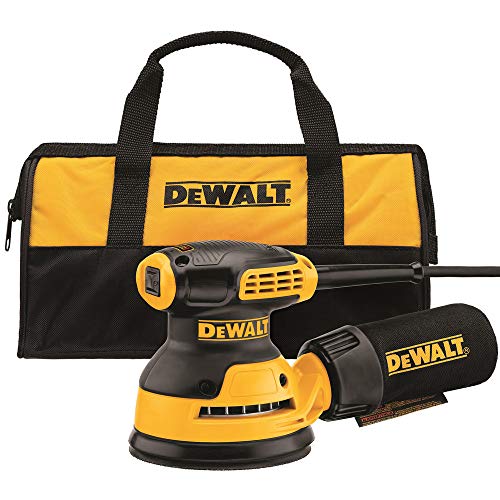
DEWALT Orbital Sander Kit DWE6421K 5-Inch

DEWALT Orbital Sander DWE6421 5-Inch

SKIL 5″ Random Orbital Sander SR211601

Gioventù Dustless Electric Drywall Vacuum Sander 950W
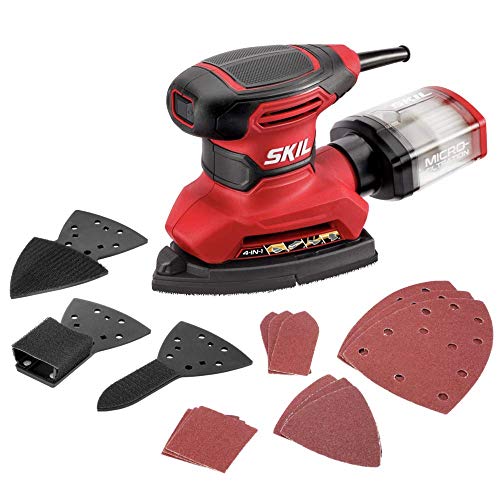
SKIL Corded Multi-Function Detail Sander SR232301
Taking A Closer Look At The Options
Small refinishing jobs, picture frames, chair legs, and narrow drawer fronts, are where the SKIL 7292-02 earns its keep. The 1/4 sheet footprint slips into places a 5-inch pad cannot, and the soft-grip housing keeps your hand from numbing out during a long pass. A pressure alert nudges you when you lean too hard, which protects the surface from accidental swirl marks. Paired with a shop vacuum via the built-in adapter, you can clear a chair without coating the whole garage in dust.
Compare that to the orbital picks that follow, which cover broad tabletops faster but cannot reach inside a turned spindle the way this sheet sander can. For a first-time refinisher, the size and feedback make a lot of sense.
Everyday Perks
- Built-in vacuum adapter pulls most fine particles away from the work surface
- Pressure control alert helps prevent gouges on softer woods
- Clear dust canister shows you exactly when to empty it
- Compact body is comfortable for smaller hands and shorter sessions
Things To Consider
- The 2.0 amp motor is best matched to lighter grits, not heavy paint stripping
- Quarter-sheet format means more frequent paper changes on large panels
Feature Snapshot
Who It Suits Best
First-time refinishers restoring small accent pieces and trim.
Look Elsewhere When
You need to flatten a large tabletop quickly, where the DEWALT DWE6423K 5-Inch variable speed kit covers more ground per pass.
The DWE6423K is a workhorse that lives in many shops for good reason. Its 3-amp motor pulls between 8,000 and 12,000 OPM (orbits per minute), so you can slow it down on a fresh coat of finish and ramp up for old paint. Hook-and-loop pad swaps make switching grits painless, and the rubber overmold grip keeps vibration honest on longer runs. Pair the dust port with a shop vac and the cleanup story is significantly better than sanding without extraction.
That short body helps you get close to the work, which matters when sanding a cabinet door laid flat. Versus the SKIL 7292-02 from pick 1, this trades fine detail access for raw coverage on broad panels.
Bright Spots
- Variable speed dial matches sanding aggression to the task
- Counterweight design reduces fatigue during long refinishing days
- Short profile reaches inside cabinets and over edges comfortably
- Dust bag or vacuum port lets you choose your cleanup style
Honest Caveats
- The included dust bag fills quickly during heavy stock removal
- 5-inch hook-and-loop discs cost a bit more than plain sheet sandpaper
Right Fit For
Hobbyists and pros who sand furniture frequently and want speed control.
Not Your Match When
Most of your work is tiny profiles and tight corners, where the SKIL SR232301 detail sander handles shapes a 5-inch pad cannot.
The Makita BO5041K earns its fan base in busy shops. A 3.0 amp motor pairs with a variable speed dial running from 4,000 to 12,000 OPM, giving a wider range than the DEWALT kit above. That low end matters when sanding sealer coats or delicate veneers, where heat and friction can scorch the surface. The rubberized palm grip and matching handle keep control steady during long passes across a tabletop.
You get a kit-ready tool that ships with a hard case, useful for storing in a van or shared shop. The dust port pairs nicely with a 1-1/4 inch vacuum hose, sealing cleanly when you want a low-dust refinishing day.
What Makes Sense
- Wide speed range handles delicate sanding and heavy stock removal
- Counterbalance system keeps vibration lower than budget orbit sanders
- Carrying case included for transport between job sites
- 5-inch hook-and-loop pad standard across the category, easy to supply
Points To Keep In Mind
- Heavier than the DEWALT DWE6423K, which adds up on overhead work
- Variable speed is controlled by a dial that can drift under heavy use
Quick Facts
Made For
Refinishers and small-shop pros who sand across a variety of furniture surfaces daily.
Consider Something Else When
You are an occasional weekend hobbyist who would not use the wider speed range, where the simpler DEWALT DWE6421K makes more sense.
The bare-tool version of the DWE6423K drops the case and accessories for a slightly lower entry point. You still get the 3-amp motor, the 8,000 to 12,000 OPM range, and the same low-profile design that helps on flat panels. For someone who already owns a stack of 5-inch hook-and-loop discs, that is a meaningful trade. The dust port connects to either the included bag or directly to a vacuum hose.
Compared to the Makita BO5041K above, the DEWALT trades a wider speed range for a smaller, lighter body. Holding either for a long session, the difference shows up in your wrist before it shows up in the finish.
Where It Delivers
- Compact form factor reaches into cabinet interiors more easily
- Variable speed adapts to both finish prep and paint removal
- Counterweight system reduces fatigue across long refinishing days
- One-handed dust bag attachment stays secure without fiddling
Trade Offs
- No carrying case included, plan storage in your own bin
- Top-end speed is lower than the Makita, slightly slower on heavy passes
Spec Overview
Best Suited To
Refinishers with a disc stash who want a lighter tool than the Makita.
Swap It Out When
You sand huge flat panels like doors and tabletops for hours, where the cyclonic SKIL SR211601 saves you from emptying a small bag mid-job.
The DWE6421K strips the variable speed dial and runs a fixed 12,000 OPM. For a lot of furniture work that is actually fine. Stripping old paint from a chest of drawers, smoothing a tabletop before stain, and roughing up a chair between coats all live in a similar orbit-per-minute neighborhood. Fewer controls means fewer things to misread on a first project. Hook-and-loop pad changes keep grit swaps fast.
It lands a touch below the DWE6423K in cost, which can matter for someone buying their first real orbital. Skip the speed dial and you skip a layer of complexity, though you also skip the slow-end option for finishing.
Noteworthy Benefits
- Single-speed operation removes the learning curve for new users
- Counterweight design keeps vibration lower than typical budget orbit sanders
- Vacuum-ready dust port plugs into standard shop vac hoses
- Hard kit case included for organized storage
Worth Noting
- Fixed speed can feel aggressive on thin veneers or sealer coats
- No slow setting for delicate finish work
Feature Rundown
Perfect Match For
New refinishers who want fewer controls and more pulling power.
A Better Fit Elsewhere
You want to dial speed for veneers, where the variable DEWALT DWE6423K is the more flexible tool.
The bare DWE6421 keeps the same 3-amp motor and 12,000 OPM output as the kit version, minus the carrying case. You get the same rubber overmold grip, the same counterweight system, and the same one-handed dust bag attachment. For someone who already has 5-inch hook-and-loop discs and a hose setup, the bare tool is the smarter pickup.
It is the most direct match for the kit version above, so the real choice is whether you need the storage case. Either way, the body design is comfortable enough for an afternoon of refinishing a dining set.
A Few Strong Suits
- Short housing keeps your hand close to the work surface
- Counterweight balance reduces the buzzing that tires out your wrist
- Common 5-inch disc format keeps consumables cheap and accessible
- Dust port accepts both the bag and a vacuum hose
Small Caveats
- No variable speed, less finesse on delicate surfaces
- Dust bag is small, hook to a vacuum for big jobs
Whose Shelf It Belongs On
Homeowners with a mid-size furniture project list who already own a shop vacuum.
Another Choice May Suit
You have many small or odd-shaped pieces, where the SKIL SR232301 detail sander’s swappable heads cover more furniture styles.
The SR211601 brings something a bit different to the bench. The cyclonic dust box uses swirling airflow to drop fine dust into a canister rather than a fabric bag, so you see exactly what you are sanding. A 7,000 to 13,000 OPM range tops out higher than the DEWALT DWE6423K from pick 4, which is useful when you want to push hard on a tough clear coat. The vibration control claim also matters during a long session on a tall bookcase.
Where the previous random orbit picks rely on either a bag or a vacuum hose, this one runs cleanly on its own for shorter bursts. Hook up a shop vac for a long day and you get the best of both worlds.
Strong Points
- Cyclonic dust box keeps suction steady as the canister fills
- Wide speed range handles heavy stripping and fine finishing
- Vibration control helps on long refinishing days
- Visible canister shows when to empty, no guessing
Room For Improvement
- Higher top speed can leave swirl marks if you linger on one spot
- Cyclonic canister needs occasional cleaning to keep airflow strong
Built With In Mind
Refinishers working on multiple mid-size pieces in one session who want fewer bag swaps.
Reach For A Different Pick When
You need professional-grade balance on truly long runs, where the Makita BO5041K still leads.
This is the outlier on the list, and that is the point. The Gioventù combines a 950W motor, 9 variable speeds, and a built-in vacuum system with a sealed dust ring to capture fine particles at the pad. For large furniture panels, doors, and even wall or ceiling work around the room, having dust extraction baked in removes a step. You are not shopping for vacuum bags or routing a hose through your shop, the system handles it.
It is heavier and bulkier than a 5-inch random orbit, so it is not the right tool for spindles and chair legs. Use it for the flat, dusty, high-coverage work and reach for one of the smaller picks for detail.
What Works In Its Favor
- Integrated dust extraction cuts cleanup dramatically on large surfaces
- 9-speed dial offers fine control across a wide range of materials
- Higher wattage handles extended sessions without thermal cutoff
- Sealed dust ring design captures particles at the source
Practical Considerations
- Bulkier form factor tires out the arm faster than a 5-inch orbit sander
- Overkill for small accent pieces, only worth it on big jobs
The Right Fit
Workshop owners tackling large furniture panels or renovation-grade dust control.
Skip It When
Your work is mostly small furniture pieces, where the SKIL 7292-02 sheet sander or a 5-inch random orbit is far easier to handle.
The SR232301 is the shape-shifter of the group. A 1.2 amp motor and 13,500 OPM output drive a base unit that accepts three extra attachments for corners, edges, and contours. You can swap profiles without a tool, which is the whole point of a multi-function detailer. The micro-filter dust box plus a 1-1/4 inch vacuum port give you two ways to keep dust off the workpiece.
It does not replace a 5-inch random orbit for broad surfaces. It complements one, finishing the inside of a drawer, the curve of a chair arm, and the tight corner of a face frame that an orbital pad cannot reach.
Features That Help
- Swappable profiles handle corners, edges, and contours without tools
- Micro-filter dust box works with or without a vacuum hookup
- 13,500 OPM output finishes detail work quickly
- Includes a small sanding sheet assortment to get started
Points To Note
- Lower motor power than the 5-inch orbit picks
- Detail sanders reward a light touch, expect a learning curve
Who Will Love This
Refinishers restoring ornate furniture with curves, grooves, and tight corners.
Where Another Pick Suits Better
You mostly sand large flat doors and tabletops, where the DEWALT DWE6423K covers more ground per pass.
Picking The Right Sander For Your Furniture Projects
Match The Tool To The Surface, Not The Other Way Around
The biggest decision is pad size and shape. A 5-inch random orbit sander flattens large tabletops quickly and leaves a swirl-free finish when paired with a vacuum hose. A 1/4 sheet palm sander like the SKIL 7292-02 slips into chair legs and trim. A multi-function detail sander like the SKIL SR232301 reaches the curves an orbital cannot. Most furniture projects benefit from at least two of these, so think about the shapes you usually refinish before buying.
Variable Speed Versus Single Speed
Variable speed, common on the DEWALT DWE6423K, the Makita BO5041K, and the SKIL SR211601, lets you slow the pad for sealers and veneers. Single-speed models like the DEWALT DWE6421 run one pace, which is fine for stripping and rough prep. Beginners often prefer single-speed for simplicity. Anyone sanding between coats of finish will eventually want variable speed.
Dust Collection And Vacuum Compatibility
Every pick above supports a vacuum attachment in some form, and that matters more than raw power. A random orbit sander hooked to a shop vac keeps the air clear and the finish cleaner, since dust is the enemy of a smooth top coat. Detail sanders tend to use smaller ports, so a reducer fitting may be required to match common shop vac hose sizes.
Motor Strength And Comfort
A 3-amp motor handles most furniture work without bogging. Below that, you may stall on heavy paint or thick finishes. Counterweight designs and rubber overmold grips reduce vibration, which matters during a full afternoon of refinishing. A heavier tool can smooth your work but tire your wrist, so weight belongs on the checklist too.
Key Considerations Across These Picks
Common Shopping Slip Ups
Many first-time refinishers grab the cheapest random orbit and skip the vacuum setup, then spend a weekend cleaning dust out of every room in the house. Another common slip is choosing a 5-inch orbit sander for a curved chair leg, where only a detail sander or palm sander actually fits. Measure your typical piece before picking a tool, and budget for a hose and adapter if the sander does not ship with one.
What The Higher Tier Buys
The jump from a single-speed model like the DEWALT DWE6421 to a variable-speed kit like the DEWALT DWE6423K buys a wider operating range, a counterweight system, and a hard case. Going further to the Makita BO5041K or the SKIL SR211601 adds better balance, lower vibration, and a more refined dust box. The honest read is that the upgrade pays off when you sand across many furniture types, not when you only tackle one project a year.
Frequently Asked Questions
Do I Really Need A Sander With A Vacuum Attachment For Furniture?
Yes, especially indoors. Sanding without extraction puts fine dust into the air and onto the next finish coat, where it shows up as a gritty surface. A vacuum port or canister on the sander cuts that dust at the source and saves significant cleanup time.
Can I Hook Any Shop Vacuum To These Sanders?
Most random orbit sanders use a 1-1/4 inch dust port that fits common shop vac hoses directly. Detail sanders often use smaller ports that need a reducer sleeve, and a few sanders ship with a branded adapter. Check the port size before assuming a direct connection.
What Grit Sandpaper Should I Start With On Furniture?
For raw wood or heavy paint, start around 80 grit. Move to 120 or 150 for smoothing, and finish with 220 before stain or sealer. Using a finer grit than needed at the start slows you down and can glaze the paper.
Are Corded Sanders Better Than Cordless For Furniture Work?
Corded models like every pick on this list deliver consistent power for long sessions, which matters on big tabletops. Cordless sanders have improved, but a drained battery mid-strip is a common frustration on furniture work that takes more than an hour.
How Often Should I Empty The Dust Bag Or Canister?
Empty the bag or canister once it looks about half full, since overfilled collection reduces suction and pushes more dust into the air. Cyclonic canisters like the one on the SKIL SR211601 tend to hold more before performance drops, but they still benefit from regular emptying.




