


Sanding metal eats through cheap belts fast, and the wrong grit turns a clean weld into a scratched mess. Whether you grind down automotive panels, sharpen shop knives, or strip paint off old iron, the abrasive you mount on your machine changes everything. This lineup focuses on belt size, grit range, grain type, and the kind of work each belt actually survives, so you spend less time swapping out consumables and more time shaping steel. Below, nine solid sanding belts for metal cover everything from 80-grit stock removal to 240-grit finishing, in the sizes portable and bench-top sanders actually accept.
A Quick View Of The Lineup

POWERTEC 6 x 48 Inch Zirconia Sanding Belts 3PK 60 Grit

3M Cubitron II File Belt 33446 80+ Grit 1/2 in x 18 in

MOVIRON 3 x 21 Sanding Belts 12-Pack Assorted Grits

MOVIRON 4 x 24 Sanding Belts 12-Pack Assorted Grits

MOVIRON 3 x 18 Sanding Belts 12-Pack Assorted Grits

MOVIRON 4 x 36 Sanding Belts 12-Pack Assorted Grits
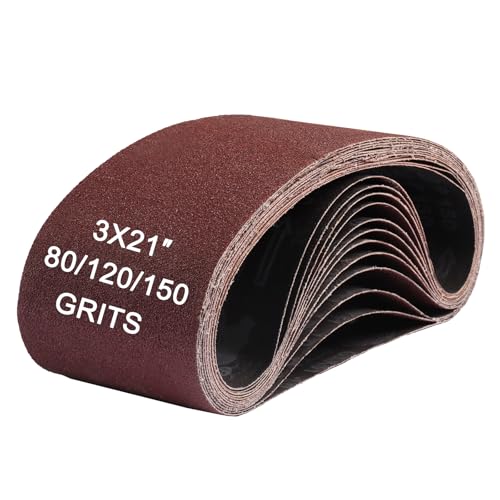
Vesagrin 3 x 21 Sanding Belts 12-Pack 80/120/150

Vesagrin 4 x 24 Sanding Belts 12-Pack 80/120/150

Benchmark Abrasives 6 x 48 Zirconia Sanding Belts 80 Grit 2-Pack
The Strengths Of Each Pick
Zirconia alumina (a self-sharpening abrasive that fractures under heat to expose fresh cutting edges) makes this POWERTEC 6×48-inch pack a go-to for shop owners running bench-top belt sanders. At 60 grit, the belt sits firmly in the aggressive-stock-removal category, which means it chews through weld beads, scale, and heavy oxidation on ferrous metals without bogging down.
The three-pack quantity keeps a backup on hand for production days, and the 6×48 sizing fits most common wide-belt bench sanders. You may find 60 grit too coarse for final finishing work, so a higher-grit belt is a smart companion for blending passes.
Strengths Worth Knowing
- Zirconia grain handles heat better than standard aluminum oxide, lasting longer on hard steel.
- 6×48 inch dimensions fit common wide-belt bench sanders used in metal shops.
- 60 grit pulls material fast, cutting down time on heavy weld and scale removal.
- Three-belt pack gives a working spare so downtime stays low during long sessions.
Worth Noting
- Single-grit pack means you will need separate belts for finishing passes.
- Aggressive cut can leave deep scratches that require follow-up sanding on cosmetic surfaces.
Who It Suits Best
Fabricators and welders running bench sanders who need fast material removal on steel, stainless, and iron.
Look Elsewhere When
The 3M Cubitron II File Belt 33446 is a stronger fit when you need narrow 1/2×18-inch belts for detail work on spot welds.
The 3M Cubitron II line uses precision-shaped ceramic grain, and you can feel the difference when grinding down spot welds or cleaning up tight inside corners. At 80+ grit and 1/2×18 inches, this 20-pack targets file belt sanders, the small pencil-style tools auto body techs and metal artists reach for in awkward spots.
Resin bonding helps the grain stay anchored under heat, so the belt keeps cutting instead of glazing over. The trade-off is cost per belt compared to commodity aluminum oxide, and the narrow 1/2-inch width does not suit flat-panel grinding on wide bench sanders.
A Favorable Mix
- Precision-shaped grain cuts faster and stays sharp longer than conventional abrasives.
- Twenty-belt bulk pack lowers the per-belt cost for shops burning through consumables.
- 1/2×18 inch format reaches into corners and contours that wide belts cannot access.
- Resin bond resists heat buildup during extended grinding on stainless and tool steel.
Honest Caveats
- Per-belt cost runs higher than bulk aluminum oxide options on this list.
- Narrow width is overkill for anyone doing large flat-panel work.
Built With In Mind
Auto body technicians, welders, and fabricators cleaning up spot welds and tight radius grinding on hard alloys.
Swap It Out When
The POWERTEC 6×48 Zirconia 60-grit pack suits you better when grinding wide flat surfaces on a bench sander.
Aluminum oxide is the everyday workhorse abrasive, and MOVIRON packs twelve 3×21-inch belts across four grits (80, 120, 150, 240) so you can move from rust stripping to fine finishing without ordering another batch. The 3×21 format matches many handheld belt sanders, and three belts per grit means each stage has a working spare.
For DIYers splitting time between metal clean-up and occasional woodworking, this assortment covers most bases. Aluminum oxide cuts slower than the ceramic or zirconia options higher on this list, so heavy production grinding will wear through the pack faster than expected.
Strong Points
- Four-grit assortment covers stock removal through fine finishing in one purchase.
- Aluminum oxide handles both ferrous metal and wood without swapping belt types.
- 12-pack keeps spares on hand for each grit stage.
- 3×21 inch dimensions fit several common handheld belt sander models.
Points To Note
- Aluminum oxide wears faster than ceramic or zirconia on hard steel under heavy pressure.
- Color coding by grit (maroon, teal, burnt orange, blue) helps once you learn the system.
Made For
Home shop DIYers and hobbyists who split sanding time between metal touch-ups and woodworking on a handheld belt sander.
A Better Fit Elsewhere
The Benchmark Abrasives 6×48 Zirconia 80-grit 2-pack handles heavier production grinding on bench sanders more efficiently.
The 4×24-inch size is the most common portable belt sander format, and MOVIRON’s 12-pack of assorted grits (80, 120, 150, 240) makes this a solid general-purpose purchase. Aluminum oxide is versatile enough to handle steel, aluminum, and wood, which keeps your consumable shelf simple.
For most garage metalwork, you will probably run through the 80-grit belts first since that is where heavy rust and paint removal happens. The 240-grit belts handle final blending before primer or clear coat.
Advantages To Know
- 4×24 inch size fits the most common handheld belt sanders on the market.
- Assorted grits let you handle paint removal, surface prep, and finish sanding in one order.
- Aluminum oxide works on metal, wood, and painted surfaces.
Some Limits To Know
- No zirconia or ceramic grain, so heavy grinding sessions consume belts faster than premium options.
- Three belts per grit means the 80-grit supply runs out first under production use.
Who Should Grab It
General home mechanics and hobby fabricators who want a single assorted pack to cover most metal and wood sanding tasks.
Another Choice May Suit
The Vesagrin 4×24 12-pack offers a similar assortment for hobbyists who want a comparable alternative at a different brand.
Knife makers and bladesmiths often run 3×18-inch belt sanders, and this MOVIRON 12-pack gives them the four-grit range (80, 120, 150, 240) needed to grind bevels and polish edges. The narrow 3-inch width is too small for efficient flat-panel work, but it shines on contoured and detailed parts.
Aluminum oxide cuts fine on tool steel and stainless at the higher grits, while the 80-grit belts handle the heavy bevel grinding. You may find the 240-grit belts a little too coarse for a true mirror polish, so finishing by hand may be required.
A Strong Showing
- 3×18 inch size matches popular knife grinder and detail sander models.
- Four grits cover bevel grinding through edge refinement in one pack.
- Aluminum oxide handles tool steel, stainless, and softer alloys.
Trade Offs
- Narrow width limits productivity on larger flat surfaces.
- Higher grits still leave visible scratch patterns that hand-finishing can address.
Right Fit For
Bladesmiths, knife makers, and detail-oriented metalworkers running narrow-belt knife grinders.
Reach For A Different Pick When
The MOVIRON 4×36 Sanding Belts 12-Pack is a stronger option for longer surface contact on knife grinder platen work.
The 4×36-inch platform is a classic knife maker and tool grinder size, giving longer contact area for hollow grinds and flat bevels. MOVIRON’s 12-belt assortment across 80, 120, 150, and 240 grit covers the progression from profiling to pre-finish work without ordering multiple packs.
Aluminum oxide works for most home-shop steel and stainless work, though production shops may want to step up to ceramic grain for higher throughput. The longer belt length means tracking adjustment on your sander matters more than on shorter belts.
Reasons It Performs
- 4×36 inch size is the go-to for many knife and tool grinder machines.
- Four-grit assortment supports the full grinding progression in one order.
- Aluminum oxide abrasive handles a wide range of ferrous and non-ferrous metals.
Some Limits To Know
- Tracking and tensioning need to be dialed in since the longer belt can wander on worn sanders.
- Aluminum oxide grain wears faster than ceramic on hard tool steel under heavy passes.
Best Suited To
Knife makers, bladesmiths, and small-shop tool grinders running 4×36 belt grinders for hollow grinds and surface prep.
Where A Sibling Pick Shines
The MOVIRON 3×18 Sanding Belts work better on detail work and tight radii that a 4×36 platform cannot reach as cleanly.
Vesagrin keeps the assortment tight at three grits (80, 120, 150) with four belts each, which works well for anyone who rarely sands past a pre-paint finish. The 3×21-inch format fits common handheld belt sanders, and aluminum oxide handles light rust, paint, and small metal clean-up jobs.
For someone restoring a tool chest or sanding down a bike frame on weekends, this 12-pack covers the basics without overspending. Heavy production grinding is not really the target here, so power users will burn through the 80-grit belts quickly.
Real-World Strengths
- Three-grit assortment at four belts each gives a solid starter supply.
- 3×21 inch size matches several popular handheld belt sander models.
- Aluminum oxide works on metal, wood, and painted surfaces for project variety.
Points To Note
- No 240-grit option means you will need a separate finer pack for finish sanding.
- Aluminum oxide grain wears faster than premium ceramic or zirconia under heat.
Who Will Love This
Occasional DIYers handling small metal restoration, paint removal, and woodworking projects on a handheld belt sander.
Consider Something Else When
The MOVIRON 3×21 12-pack includes a 240-grit option, which is a better fit when finish sanding matters to your project.
Most home shop handheld belt sanders use 4×24-inch belts, and Vesagrin’s 12-pack at 80, 120, and 150 grit (four of each) covers the most common sanding stages. Aluminum oxide is the practical, affordable choice for general metal and wood work where extreme heat resistance is not critical.
The catch is that running a sander hot on stainless or thick steel will shorten belt life compared to zirconia options. You may find the absence of a finer grit a limitation when prepping for paint or clear coat.
What Works In Its Favor
- 4×24 inch size matches the most popular handheld belt sander format.
- Twelve-belt pack spreads across three useful grits for typical projects.
- Aluminum oxide handles both metal clean-up and wood sanding in one product.
Minor Gripes
- No 240-grit included, so finish sanding requires an additional pack purchase.
- Aluminum oxide grain glazes faster on hard alloys under heavy pressure.
Perfect Match For
Home garage hobbyists doing rust removal, paint stripping, and general metal prep on a standard 4×24 handheld belt sander.
Not Your Match When
The POWERTEC 6×48 Zirconia 60-grit pack is the better choice for heavy stock removal on a bench sander.
Benchmark Abrasives leans into zirconia grain for this 6×48-inch 2-pack at 80 grit, which handles deburring, weld cleanup, knife profiling, and surface blending on ferrous metals. Zirconia’s self-sharpening characteristic keeps the cut consistent as the belt wears, which is helpful on heat-treated alloys where aluminum oxide would dull quickly.
The 2-pack is enough for occasional shop sessions, though production users will reorder often. No finer grits ship in the pack, so you will still need separate belts for finishing work.
Useful Highlights
- Zirconia grain resists dulling on hard steel and stainless under heavy grinding.
- 6×48 inch dimensions fit standard wide-belt bench sanders.
- 80 grit is aggressive enough for weld removal and knife profiling.
- Two-belt pack keeps a working spare on the shelf.
Trade-Offs To Consider
- Single-grit 80-pack means ordering additional grits for finish work.
- Only two belts, so high-volume shops will reorder more frequently than bulk packs.
The Right Fit
Shop owners and knife makers running 6×48 bench sanders who need aggressive zirconia performance on hard alloys.
Skip It When
The MOVIRON 4×36 12-pack is a better match when you want a multi-grit assortment on a knife grinder platform.
What To Match Your Sander And Metal To
Belt Size Comes First
Belt size is the most common reason for returns, since sanders only accept specific dimensions. Check your tool’s manual or measure an existing belt before ordering, because 3×18, 3×21, 4×24, 4×36, and 6×48 are all common sizes, and the wrong one simply will not mount. A 3×18 belt fits knife grinders, 4×24 fits most portable handheld sanders, 4×36 suits longer-platform knife grinders, and 6×48 is the wide-belt bench sander standard.
Grit Choice Drives The Result
Lower grit numbers (40, 60, 80) cut faster and leave deeper scratches, which suits heavy stock removal, weld cleanup, and rust stripping. Higher grits (150, 240, 400) refine the surface for paint prep or final finishing. Picking one grit and hoping it covers everything usually ends in frustration, which is why assorted packs make sense for most hobbyists.
Grain Type Affects Belt Life
Aluminum oxide is affordable and versatile, but it dulls faster on hard alloys. Zirconia alumina self-sharpens under heat, lasts longer on steel, and handles production grinding better. Ceramic grain (found in premium lines like 3M Cubitron II) cuts fastest and lasts longest, though the per-belt cost is higher. The trade-off between upfront cost and replacement frequency is the real decision point.
Match The Belt To Your Workload
A weekend restorer running 30 minutes of sanding per month can stick with aluminum oxide and replace belts as needed. A production shop burning through belts daily benefits from zirconia or ceramic grain, since less time changing belts means more time on the work piece. Match the abrasive to your pace, not just your sander.
Smart Habits Before You Buy
Pitfalls Shoppers Hit
The most common mistake is buying a belt size that does not match the sander, so measure twice and check the manual. Another slip is grabbing a fine-grit pack (240 and up) for paint removal, which will take forever and burn through belts unnecessarily. Stocking only one grit also limits your results, since most metalwork needs a progression from coarse to fine.
Where The Extra Money Goes
Premium belts with zirconia or ceramic grain cost more per belt, but they last significantly longer under heat and pressure. The upgrade pays off in shops that grind daily on hard alloys, since fewer belt changes add up to real time savings. For occasional home use, the premium price rarely justifies itself over standard aluminum oxide.
Frequently Asked Questions
What grit sanding belt works best for metal?
For rust and paint removal on metal, 60 to 80 grit cuts quickly without bogging down. For surface prep before paint, step up to 120 or 150 grit. Final finishing typically uses 240 grit and above for a smooth base.
Can aluminum oxide belts sand metal?
Yes, aluminum oxide is one of the most common abrasive grains for sanding metal, especially mild steel, aluminum, and painted surfaces. It cuts slower than zirconia or ceramic on hard alloys, but it costs less and handles most home-shop tasks well.
How do I know what size sanding belt my sander takes?
Check the sander’s manual, nameplate, or existing belt for the exact dimensions printed on the label. Common portable sizes include 3×18, 3×21, 4×24, and 4×36 inches, while bench sanders often use 6×48 inches. Measure an old belt if the label is missing.
What is the difference between zirconia and aluminum oxide belts?
Zirconia alumina is a tougher, heat-resistant abrasive that self-sharpens as it wears, lasting longer on hard steel and stainless. Aluminum oxide is a more affordable, general-purpose grain that works well on mild steel, wood, and softer metals but dulls faster under heavy grinding pressure.
How long do sanding belts for metal typically last?
Belt life depends on the metal hardness, pressure applied, and abrasive type. Aluminum oxide belts on mild steel may last a few hours of moderate use, while zirconia or ceramic belts on stainless can run significantly longer. Heat buildup and excessive pressure shorten any belt’s lifespan.




