


Drywall sanding separates a clean remodel from a weekend you wish you could redo. Joint compound hides its flaws until light hits it from a low angle, then every ridge, trowel mark, and bubble-scratch stares back at you. The right abrasive changes that equation: a sharp, well-backed sheet or disc cuts the mud flat, resists clogging under fine dust, and leaves a surface that takes primer without telegraphing seams. The wrong paper tears, glazes over, or burns through edges, forcing you to skim-coat again and lose an afternoon.
These nine sandpapers for drywall cover the situations most DIYers, remodelers, and finishing pros actually run into: pole-sander sheets for full walls, hook-and-loop discs for random-orbit work on patches, detail sponges for tight corners, and specialty rolls for longboard sanding. Each pick below lists grit, format, and the kind of job it’s built for, so you can match the abrasive to the wall, not the other way around.
A Snapshot Of The Selections

Festool 575162 80 Grit Granat for 6″ Sander, 50 Piece

Festool 205662 Granat P220 PLANEX 225mm Discs, 25-Pack
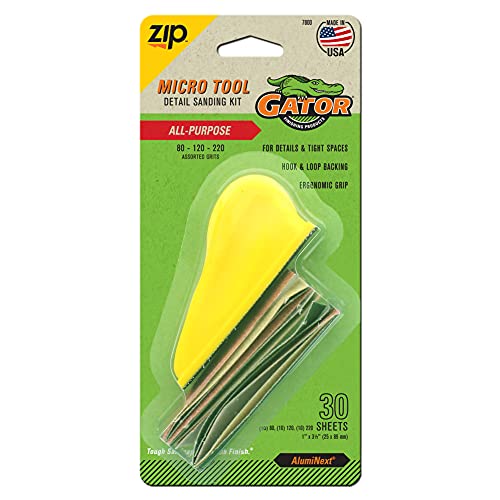
Gator MicroZip Sander Kit, Assorted Grits

3M Pro Grade Precision Sanding Sheets, 220 Grit (20 Pack)

3M Pro Grade Precision Sanding Sheets, 150 Grit (20 Pack)
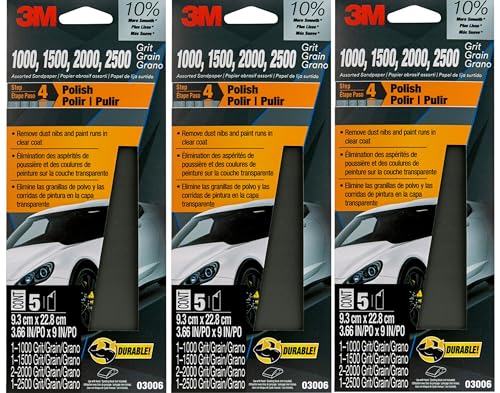
3M Wetordry Sandpaper, Assorted Grits (3 Pack)

EAFBAO 50-Piece Sanding Sponge Assortment, 180-3000 Grit

Festool Granat 5-Inch Discs, P80, 50-Pack

Dura-Gold Gold PSA Longboard Sandpaper, 320 Grit, 20-Yard Roll
Taking A Closer Look At The Options
Festool’s Granat line earns its reputation on tough finishing work, and the 575162 80-grit pack brings that abrasive to a 6-inch pad sander for serious material removal. These discs handle old paint, body filler, and stubborn joint-compound ridges without glazing over after a few passes. The hardened aluminum-oxide grain (a synthetic abrasive tougher than standard aluminum-oxide) cuts cooler under load, which matters when you’re working a hot spot for more than a few seconds.
For drywall work specifically, the 80-grit level of coarseness (meaning relatively few, large abrasive particles per square inch) chews through high spots in thick mud beds, but you’ll want to step up to 150 or 220 before priming. Owners who already own a Festool extractor-equipped sander get the most from this set, since the hole pattern is matched to that system.
What Stands Out
- Hardened aluminum-oxide grain resists dulling on tough compounds and paint layers
- Stick-Fix hook-and-loop backing changes discs fast during long sessions
- Designed for rapid grit progression, so you can move from 80 to finer passes efficiently
- 50-count pack covers a full room’s worth of heavy work without mid-project reorders
Trade Offs
- 80-grit is too coarse for the final pass, so plan on pairing with finer paper
- Hole pattern and backing suit Festool sanders most directly; aftermarket pads may not match perfectly
- Premium abrasive pricing shows up at the register, even before adding more grits
Feature Snapshot
Made For
Remodelers and finishing pros already running a Festool 6-inch sander who need a coarse disc that holds up to abuse on patching and leveling work.
Where Another Pick Suits Better
The Festool Granat 5-Inch Discs, P80, 50-Pack is the right call for anyone working a 5-inch random-orbit sander instead of a 6-inch pad.
The 205662 discs were designed around the Festool Planex, a long-reach drywall sander, and the abrasive itself is a Granat blend of hardened aluminum-oxide and ceramic grit. That mix gives a scratch pattern (the texture left by abrasive particles) that’s tough to load up with fine dust, which is the constant battle on a full-house drywall job. At P220, this lands in the standard finishing range where you want walls smooth enough to prime without telegraphing seams.
Reaching ceilings and tall walls without a ladder is the headline draw of the Planex system, and these discs were redesigned to match the tool’s multi-jetstream dust extraction. If you’re sanding above your head for hours, the dust pickup difference shows up fast in both cleanup time and air quality.
Notable Gains
- P220 grit hits the right balance for finish-sanding before primer
- Ceramic-blended abrasive resists heat buildup during long, above-head sessions
- Multi-jetstream hole pattern pairs with Planex extraction for clean dust control
- Anti-clogging coating keeps the disc cutting on dusty drywall compound
Points To Note
- Specific to the Planex tool; on a regular random-orbit sander the hole pattern won’t align well
- 25-disc count is modest for a whole-house job, so plan on ordering more than one pack
Whose Shelf It Belongs On
Drywall contractors and serious remodelers running the Festool Planex for full-room ceiling and wall work who want matched-finish discs.
Not Your Match When
Anyone hand-sanding a few patches should reach for the 3M Pro Grade Precision Sanding Sheets, 220 Grit (20 Pack) instead, since cut-to-size sheets handle small jobs with less waste.
The Gator MicroZip is built for the awkward spots a full-size sander can’t reach: inside corners, around outlet boxes, and the small repair patches that follow plumbing or electrical work. The 3.5-by-1-inch format fits a finger-style sander (a small oscillating tool with a narrow sanding pad), and the assorted grits cover the full progression from knock-down to finish. Premium P-grade aluminum-oxide grain gives a consistent scratch, which matters when blending patches into surrounding wall texture.
Hook-and-loop backing (a hook-and-loop fastener system, the same as Velcro, used to attach sanding sheets) means swapping grits takes seconds, so you can move through a multi-step repair without hunting for a fresh sheet. Compared to the Festool Granat discs reviewed above, this is a kit aimed at controlled detail work rather than bulk material removal.
Everyday Perks
- Narrow profile gets into corners and edges full-size pads can’t reach
- Assorted grits cover a complete patch repair from start to finish
- Hook-and-loop backing makes grit changes quick during multi-step work
- P-grade aluminum-oxide cuts clean without leaving deep random scratches
Small Caveats
- Small sheet size wears through faster under heavy pressure than full-size discs
- Best paired with a finger sander; using these by hand on a 1-inch surface takes patience
Right Fit For
DIYers handling electrical or plumbing patches who need to blend repairs into existing drywall without renting a pole sander.
Skip It When
Full-room sanding jobs are a better match for the 3M Pro Grade Precision Sanding Sheets, 150 Grit (20 Pack), which handle broad wall coverage in fewer sheet changes.
3M’s Pro Grade Precision sheets lean on a no-slip grip backing that holds the paper in place on a hand-sanding block, a small upgrade that makes a real difference when you’re pushing a full sheet across a wide wall seam. The 11-by-9-inch format cuts down to whatever your pole sander, hand block, or detail sander needs, so a single pack covers several tools. The 220-grit level is the go-to for finish passes on drywall, fine enough to erase scratch marks but coarse enough to keep moving.
Compared to the Festool Planex discs in slot 2, this is a hand-sanding-first option that doesn’t depend on a specific power tool. The coating helps resist clogging under fine dust, though on heavy mud work you’ll still want to swap sheets regularly.
Bright Spots
- No-slip grip backing stays put on hand blocks during long strokes
- Cut-to-fit format adapts to pole, hand, or detail sanders
- Clog-resistant coating extends working time between sheet changes
- 220 grit is the right level for pre-primer finish passes on drywall
Room For Improvement
- Sheets load up faster than ceramic-grit discs on hot, freshly-applied mud
- Paper weight feels lighter than premium hook-and-loop discs on heavy stock removal
Best Suited To
Homeowners finishing a remodel who want one paper that works on a pole sander, hand block, and detail sander without buying three different packs.
Consider Something Else When
Anyone running a Festool Planex for ceiling work will get better dust extraction from the Festool 205662 Granat P220 PLANEX 225mm Discs, 25-Pack.
The 150-grit version of 3M’s Pro Grade Precision line is the step-down cut from the 220-grit pack in slot 4, used after the heaviest leveling pass and before final finish work. On thick, multi-coat joint-compound jobs, 150 grit chews through ridges and trowel marks faster than 220 without leaving the deep scratches that show through primer. The same no-slip grip backing applies here, so the sheet stays put on a hand block or pole sander during long strokes.
In a typical workflow, you’d pair this with the 220-grit pack from slot 4: 150 to level the seams, 220 to feather the edges before primer. The clog-resistant coating helps on hot days when fine dust tends to glaze over the surface.
Benefits That Matter
- 150-grit cut handles thick, multi-coat mud beds without bogging down
- No-slip grip backing holds the sheet in place on hand blocks and pole sanders
- Clog-resistant coating extends sheet life on hot, freshly-sanded surfaces
- Sheets cut to fit pole, hand, or random-orbit sanding formats
Worth Noting
- 150 grit leaves scratches that need a follow-up pass with 220 before priming
- Sheet construction feels light compared to premium hook-and-loop discs on aggressive stock removal
Feature Snapshot
Who Should Grab It
Remodelers working through a full-house drywall phase who want a fast, mid-coarse cut that pairs with a follow-up 220-grit pass.
Another Choice May Suit
The Festool 575162 80 Grit Granat 6″ Sander Discs, 50 Piece is the better fit for shops running 6-inch random-orbit sanders on heavy leveling work.
3M’s Wetordry line is best known in auto body work, but the same silicon-carbide abrasive (a sharper, harder grit than aluminum-oxide, designed to break down slowly and leave fine finishes) on a waterproof paper backing handles drywall detail work just as well. The 3-2/3-by-9-inch strips fit a wide range of hand blocks and small detail sanders, and the waterproof construction means you can wet-sand final skim coats for a near-dust-free finish.
Wet sanding drywall isn’t standard practice, but on the final pass over a thin skim coat, a damp Wetordry sheet can leave a smoother surface than dry sanding, with almost no airborne dust. The trade-off is the slurry it creates, which needs wiping up before priming.
The Good Stuff
- Silicon-carbide abrasive cuts clean on hard, fully-cured mud and primer
- Waterproof backing works wet or dry for dust-controlled final passes
- Assorted grits cover a full detail-and-finish progression in one pack
- Flexible strip format works on hand blocks and small detail sanders
Trade-Offs To Consider
- Three-sheet count is small for anything beyond a single repair patch
- Wet-sanding creates a slurry that needs wiping before priming
Who It Suits Best
Finish carpenters and remodelers who want a low-dust option for final skim-coat passes in occupied spaces where airborne dust is a concern.
Where A Sibling Pick Shines
Large surface-area sanding is a better fit for the 3M Pro Grade Precision Sanding Sheets, 220 Grit (20 Pack), which offer more coverage per sheet.
The EAFBAO sanding sponge assortment covers an unusually wide grit range, from a coarse 180 all the way up to an ultra-fine 3000, in ten grit steps. For drywall work, the 180 through 400 range handles the bulk of leveling and finishing, while the higher grits are there for furniture, metal polishing, or other workshop tasks. The hook-and-loop backing means the sponges attach to a compatible sanding block, though they also work in the hand without a holder.
Sponges conform to curved or uneven surfaces better than flat sheets, which helps on corner-bead work and slightly wavy seams. Compared to the Festool discs above, the trade-off is grit longevity: sponges wear through faster under heavy pressure, but the convenience of grabbing the exact grit you need without cutting sheets is hard to beat.
Practical Advantages
- Ten-grit assortment covers leveling, finish, and even polish-grade work
- Sponge format conforms to corners, curves, and slight dips in seams
- Hook-and-loop backing attaches to a sanding block or works by hand
- 50-piece count gives a long runway for a multi-project home shop
Practical Considerations
- Sponge backing wears faster than paper or film under heavy pressure
- Higher grits (above 1000) are useful for finishing tasks but excess for typical drywall work
Feature Snapshot
Perfect Match For
Homeowners who want one kit that handles drywall patches, woodworking touch-ups, and small metal or plastic repairs without buying separate packs.
Skip It When
Full-room drywall sanding is faster with the cut-to-size 3M Pro Grade Precision Sanding Sheets, 150 Grit (20 Pack), which cover broad walls in fewer changes.
The Granat 5-inch disc is the smaller sibling to the 6-inch set in slot 1, built for the random-orbit sanders (palm-held sanders that spin the pad in a random pattern to avoid leaving visible scratch marks) that finishers keep in their main kit. At P80, it sits in coarse territory, designed to remove material fast on paint, filler, or heavy mud. Granat’s hardened aluminum-oxide formula is the same one used in Festool’s premium finishing system, so abrasive life tends to run longer than commodity discs under similar load.
Anti-clogging properties make this a strong pick for dusty drywall work, where standard paper can glaze over in minutes. The 50-disc pack matches the workflow pace of a full weekend of finish work without mid-job reorders.
Everyday Wins
- Anti-clogging coating holds up under fine drywall dust
- Hardened aluminum-oxide grain lasts longer than commodity abrasives
- 5-inch format fits the most common random-orbit sanders
- 50-disc count covers a full project’s worth of coarse cuts
Small Limitations
- P80 grit is too coarse for finish passes; plan to follow with 150 or 220
- Premium abrasive pricing is noticeable on the receipt
Right Fit For
Tradespeople running 5-inch random-orbit sanders for finish-carpentry, drywall patching, or general surface prep who want one abrasive that lasts.
Consider Something Else When
Anyone working a Festool Planex for full-room sanding should reach for the Festool 205662 Granat P220 PLANEX 225mm Discs, 25-Pack, which matches the tool’s extraction and hole pattern.
The Dura-Gold longboard roll covers a different corner of drywall finishing: longboard sanding blocks, the long, flat blocks used to fair (smooth and level) wide seams and butt joints (joints where two non-tapered drywall ends meet, leaving a wider, harder-to-hide seam than tapered edges). PSA (pressure-sensitive adhesive) backing sticks to the block without hook-and-loop hardware, and the 20-yard length means you can tear off a fresh strip whenever one wears through. The 2-3/4-inch width fits standard longboard profiles.
At 320 grit, this sits in fine-finish territory, suited to the last pass before primer or between skim-coat layers. The aluminum-oxide blend fused with zirconia alumina (a tougher abrasive grain that resists dulling under heat) is built for sharp, long-lasting cuts on cured mud.
The Case For It
- 20-yard roll format reduces waste on longboard sanding blocks
- PSA backing sticks without hook-and-loop hardware
- Zirconia-alumina blend resists dulling under heavy use
- 320 grit is the right level for fine-finish passes before primer
Honest Caveats
- PSA backing doesn’t reposition once stuck, so alignment on the block matters
- Fine 320 grit is too light for the heavy leveling pass on thick mud
Feature Snapshot
Made For
Finishers who already own a longboard block and want a roll that keeps fresh abrasive on hand through a long drywall phase.
Where Another Pick Suits Better
DIYers working without a longboard will find the cut-to-size 3M Pro Grade Precision Sanding Sheets, 220 Grit (20 Pack) easier to use on a hand block or pole sander.
Choosing The Right Sandpaper For Your Drywall Project
Grit range matters more than brand for most drywall jobs. P80 to P100 cuts the heaviest ridges on thick mud, P150 to P180 levels seams without leaving deep scratches, and P220 is the standard pre-primer finish. Going finer than 220 on drywall rarely helps and can actually polish the surface so much that primer struggles to bond.
Match the format to the tool. Discs fit random-orbit and finishing sanders, sheets fit pole sanders, hand blocks, and cut-to-fit work, sponges handle corners and curves, and longboard rolls stick to long fairing blocks. Buying the wrong format means wasted paper and a frustrating afternoon.
Dust control is the difference between a quick job and a full-home cleanup. Hook-and-loop discs paired with a sander that has extraction remove most airborne dust at the source. Hand-sanding still calls for a drop cloth, a shop vac, and ideally a respirator, since fine drywall dust lingers in the air for hours.
Key Considerations Across These Picks
Common Buying Traps
Walking into a drywall job with one universal grit is the most common mistake. Stocking P80, P150, and P220 covers the full progression; a single-grit purchase forces you to either over-sand fine areas or under-cut thick ones. Another trap is buying a 5-inch disc for a 6-inch sander, or a sheet that doesn’t fit your pole sander’s clamps; the hole pattern and dimensions have to match the tool, or you’ll waste half the pack on alignment issues.
Where The Extra Money Goes
Premium abrasives like the Festool Granat line use hardened aluminum-oxide and ceramic blends that stay sharp under heat and resist clogging. The honest read is that on small patch jobs, the difference between premium and mid-tier is hard to spot. On full-room sanding or production work, longer abrasive life adds up fast because you’re changing sheets less often and finishing the job sooner. Spending up makes sense when the time saved offsets the per-sheet cost, not just because the box looks more serious.
Frequently Asked Questions
What grit sandpaper should you use on drywall? Most drywall work runs through three grits: P80 to P100 for heavy leveling, P150 to P180 for seam smoothing, and P220 for the final pass before primer. Skipping grits forces one paper to do two jobs and leaves either deep scratches or slow cutting.
Can you use regular sandpaper on drywall? Standard woodworking sandpaper works in a pinch, but drywall-specific paper is designed to resist clogging under fine joint-compound dust. Woodworking paper glazes over faster on mud, which means more sheet changes and a rougher final surface.
Should you wet or dry sand drywall? Dry sanding is standard because it’s faster and works with pole sanders and dust extraction. Wet sanding with a waterproof paper like 3M Wetordry produces less airborne dust, but it creates a slurry that needs wiping before priming.
How do you keep sandpaper from clogging on drywall? Use paper with an anti-clogging or stearate coating (a dry lubricant applied to the abrasive surface that helps dust shed instead of packing into the grit), let the mud fully cure before sanding, and avoid pressing hard; let the abrasive do the work. Tapping the sheet against a hard surface knocks loose dust out of the grit.
How often should you change drywall sandpaper? On a typical hand-sanding pass, expect to swap sheets every 10 to 20 square feet. A sheet that loads up with dust stops cutting and starts burnishing the surface, leaving shiny spots that show through primer. Fresh paper cuts faster and leaves a better finish.




