


Stripping paint is the unglamorous part of any refinishing project, and your grit choice makes the difference between a clean substrate and a gouged mess. Coarser paper chews through layers fast but leaves scratches you’ll chase forever, while fine paper polishes beautifully yet stalls on the first thick coat. The nine picks below cover the full spectrum, from aggressive 80-grit stripping to K1500 finishing, so you can match the paper to the job instead of fighting your tool.
The Main Contenders

S SATC 5 inch PSA Sanding Disc 180 Grit

S SATC 5 inch PSA Sanding Disc 320 Grit

S SATC 5 inch PSA Sanding Disc 220 Grit

Eagle Abrasives Super Assilex Finishing Starter Kit K600-K1500
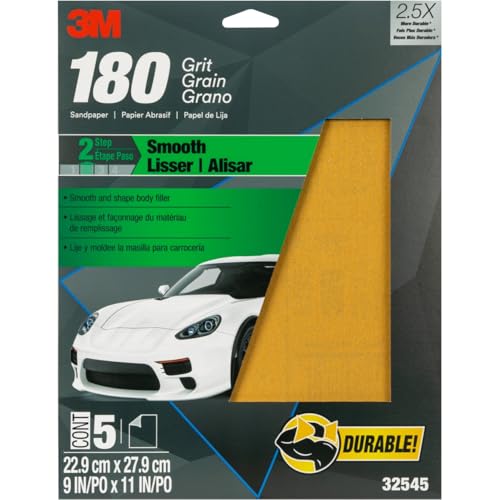
3M 180 Grit Sandpaper 9×11 Sheets 32545

S SATC 5 inch PSA Sanding Disc 80 Grit

S SATC 120 Grit Sandpaper 5 Inch Discs

S SATC 5 inch PSA Sanding Disc 400 Grit

Festool Granat 5-Inch Abrasive Discs P80 50-Pack
More Details On Our Top Picks
Working a daily-driver respray or a single fender fix? This 180-grit disc from S SATC sits in that sweet middle zone where you’re not quite stripping anymore but still knocking down heavy orange peel. The aluminum oxide grain holds up on metal, primer, and old clear without glazing the way softer abrasives can, and the count of 100 means you can keep working through a full panel without rationing fresh paper.
The PSA (pressure-sensitive adhesive) backing is the real time-saver here. Press it on, sand, peel it off, press on the next one. The 5-inch format matches the most common random-orbit and DA pad sizes, so it slots into whatever you already own. If you’re stepping up from the heavier 80-grit stripping passes and need something that smooths the surface without ditching tooth for primer, this is the disc to reach for.
The Upside
- Aluminum oxide grain cuts consistently on car paint, bare metal, and primer without burning through fast.
- 100-disc count covers multi-panel jobs without constant restocking.
- PSA peel-and-stick attachment cuts disc changes down to a single press, which matters during color sanding.
- 180 grit is the standard “between coats” cut for most refinish workflows, so it slots into familiar schedules.
Points To Keep In Mind
- 180 grit is too fine for stripping thick, cracked paint layers in a single pass.
- Owners commonly report the adhesive softens in high-heat shop environments, so dusty jobs may benefit from a fresh pad cleaning first.
Key Advantages
Who Will Love This
Anyone working through a color-sand-and-repaint sequence on a car panel or furniture face benefits most from the 180-grit cut.
Reach For A Different Pick When
The S SATC 80-Grit PSA Sanding Disc is the better fit when you need to strip a multi-layer factory paint job down to bare metal in fewer passes.
By the time you reach for 320 grit, you’re past the heavy lifting and into the part of the job where scratch pattern determines whether the clear lays down flat or shows every pass. This S SATC disc handles that transition cleanly. The finer aluminum oxide cuts polishing prep work without leaving the deep tracks that would telegraph through the topcoat.
You can run it on the same 5-inch DA pad you used for the 180-grit passes, no pad swap required. The PSA backing peels away cleanly when you’re done, so spent discs drop into the trash without leaving a gummy ring on the sander hook-and-loop face. For finishers who want one consistent attachment system from cut to polish, this fits the workflow.
Positive Takeaways
- 320 grit removes the lighter 180-grit scratch pattern, leaving a surface ready for clear or sealer.
- 100-disc bulk pack matches a full respray cycle without mid-job runs to the store.
- PSA attachment is consistent with the rest of the S SATC disc range, simplifying inventory.
Less-Strong Areas
- 320 grit is too fine to remove runs, sags, or nibs in cured paint without leaving visible halos around the spot.
- Fine-disc work loads up fast on soft primers, so a quick abrasive brush between passes keeps the cut sharp.
Made For
Refinishers running a full cut-and-buff cycle on auto body panels get the most out of this disc’s fine-grit profile.
Look Elsewhere When
The S SATC 400-Grit PSA Sanding Disc is the better call when you want an even finer pre-polish pass before compound work on dark colors.
Primer knock-down is the unglamorous middle child of paint work, and 220 grit handles it best. This S SATC disc sits between the aggressive 180 and the fine 320, smoothing the orange peel and dust nibs out of primer without burning through to the substrate. Aluminum oxide grain keeps the cut consistent whether you’re working over a 2K urethane primer or a waterborne base.
Same 5-inch PSA format as the rest of the line, so it works on the same DA pad you’ve already broken in. Most refinishers use 220 as the swing grit between base color and clear, and a hundred discs gets you through multiple door jambs and a hood before the box runs dry. The stickyback attachment holds firm during angled passes around edges, where cheaper discs tend to skate off mid-stroke.
Well-Handled Touches
- 220 grit is the industry-standard scratch pattern for primer-to-sealer transitions.
- PSA adhesive holds during edge and contour work where hook-and-loop can sometimes let go.
- Works on metal, primer, filler, and wood without changing discs between materials.
Trade-Offs To Consider
- 220 grit scratches still need a follow-up pass with 320 or finer before clear, so it’s not a one-step solution.
- High-build primers clog the disc faster than thin ones, so a dedusting brush between passes keeps the cut true.
Feature Snapshot
Right Fit For
Home garage restorers running a full primer-to-paint sequence benefit from the 220-grit cut that sits between stripping and finishing grits.
Skip It When
The 3M 180-Grit Sandpaper is a better fit when you need to shape body filler or glaze by hand rather than machine.
Most of the picks here assume you’re removing paint. The Eagle Abrasives Super Assilex kit assumes you’re putting the surface back to rights afterward. The K600 to K1500 grit range covers ultra-fine scratch refinement, the kind of work that shows up on show-car panels, guitars, and high-end cabinetry where any visible scratch becomes a long conversation with the buffing pad.
The kit ships with 25 sheets, a foam hand block, an interface pad, and a 1-micron hand pad, which sounds like a lot of parts until you realize each one solves a specific finishing problem. The flexible Super Assilex sheets work over concave and convex curves without bunching, and the included foam block keeps pressure even on flat panels. You won’t strip a car with this, but you will get a finish ready for polish without a swirl of compounding.
Key Advantages
- K600 to K1500 grit range covers the full ultra-fine refinement stage in a single kit purchase.
- Flexible sheet construction conforms to curves, headlights, and tight edges without tearing.
- Includes foam hand block and interface pad so you can start finishing without buying extras.
- Shallow scratch pattern reduces the risk of burn-through on thin or previously sanded clear coats.
A Few Limitations
- K600 and finer grits will not remove paint; they’re finishing-only products.
- 25 sheets runs out quickly on a full vehicle, so this works as a starter or spot-fixing kit rather than a production consumable.
Perfect Match For
Detailers, finishers, and hobbyists working on show-quality paint correction get the most from this ultra-fine system.
Swap It Out When
The S SATC 5 inch PSA Sanding Disc 320 Grit is the better match when your goal is genuine paint removal, not scratch refinement.
Sometimes the right tool is a sheet of paper and your hand. 3M’s 32545 series 180-grit sandpaper ships in 9-by-11-inch sheets you tear, fold, or wrap around a block depending on the contour. The aluminum oxide abrasive resists clogging better than economy papers, and the bonded construction holds up under the kind of pressure hand sanding puts on body filler.
Body shops have leaned on this exact product for years, and the reputation comes from how it behaves on filler rather than paint. You can shape a skim coat of Bondo, knock the high spots down, and feather into the surrounding paint without the paper tearing or shedding grit. Five sheets per pack is on the thin side, but each one covers real square footage when you’re working panel by panel.
Real-World Strengths
- 9-by-11-inch sheet size tears to fit hand blocks, sanding boards, or finger work.
- Aluminum oxide abrasive with anti-clog bonding lasts longer than generic papers on filler.
- Works equally well for hand or machine sanding, which matters when the job mixes both.
- 180 grit is the standard starting cut for shaping glaze, filler, and spot putty.
Worth Bearing In Mind
- Five sheets per pack is a smaller quantity than the disc products in this roundup, so plan on replenishing for big jobs.
- Hand sanding body filler is slower than running a DA over the same area, so factor in the time cost.
Best Suited To
Restorers shaping body filler, glaze, and spot putty on classic cars or panel repairs benefit from the 3M reputation and the hand-friendly sheet format.
A Better Fit Elsewhere
The S SATC 5 inch PSA Sanding Disc 180 Grit is the better match when you want the same 180-grit cut on a 5-inch DA pad for faster, more uniform machine work.
When the goal is paint removal rather than refinement, an 80-grit disc earns its keep. This S SATC entry eats through old lacquer, enamel, and acrylic layers fast, which is exactly what you want when the alternative is a chemical stripper and a putty knife. The aluminum oxide grain stays sharp on body filler and bare metal alike, so you can grind out a rust spot and keep working without switching papers.
PSA attachment sticks firmly to the 5-inch DA pad, which matters at this grit because aggressive cutting generates heat and vibration. A loose disc becomes a flying disc in those conditions, and the pressure-sensitive adhesive on this product is sized for the loads 80-grit work puts on it. The 100-count box means a single purchase covers the heavy lifting on a full door shell or fender.
What Pays Off
- 80 grit removes thick factory paint and primer in fewer passes than mid-range discs.
- Aluminum oxide grain cuts cleanly on filler, metal, and wood without melting under pressure.
- 100-disc box handles a complete strip-down of a small body panel.
Honest Caveats
- 80 grit leaves deep scratches that require follow-up passes with 180 and finer grits, so it’s never the final step.
- Aggressive cutting generates heat, so keeping the sander moving prevents burn-through on thin metal.
Quick Technical Notes
Whose Shelf It Belongs On
DIY restorers tackling a full strip-down on a vintage car or steel patio furniture get the most out of the 80-grit aggression.
Consider Something Else When
The Festool Granat 5-Inch Abrasive Discs P80 is the better call when you want a longer-lasting P80 with anti-clog properties for high-volume production work.
120 grit is the jack-of-all-trades cut in automotive and woodworking sanding, aggressive enough to remove stubborn paint but not so coarse that it scars the substrate. This S SATC disc lands in that middle ground, useful whether you’re stripping a guitar body, scuffing an auto panel for repaint, or smoothing a weathered deck railing before refinishing.
The PSA backing behaves like the rest of the S SATC line, which keeps the workflow simple. One pad, one grit, multiple surfaces, and you can pull the spent disc off in a single peel without reaching for a scraper. The aluminum oxide grain handles wood grain tear-out better than silicon carbide on softer species, which is a real plus on pine and cedar.
Features That Help
- 120 grit is the universal cut for paint removal, surface prep, and material shaping.
- Aluminum oxide grain holds up on wood, metal, and previously painted surfaces.
- 100-disc bulk pack suits multi-room or multi-panel projects without reordering.
Potential Compromises
- 120 grit scratches still need 180 or finer follow-up before any topcoat goes on.
- On soft, resinous woods like pine, owners commonly report faster loading, so a brush between passes extends disc life.
Built With In Mind
Multi-surface DIYers working on cars, furniture, and outdoor wood projects benefit from the 120-grit versatility and the cross-material compatibility.
Not Your Match When
The S SATC 5 inch PSA Sanding Disc 80 Grit is a better fit when the project is dominated by thick, multi-layer paint that needs serious removal power.
Once the surface is clean and sealed, 400 grit takes over for the polish-ready refinement stage. This S SATC disc removes the lighter scratch pattern from your 320-grit passes and preps the surface for cutting compound, swirl remover, or final glaze. The aluminum oxide grain stays consistent without crumbling, which is the failure mode that ruins finer-grit economy discs.
You’ll get a hundred discs in the box, which sounds like overkill until you’re sanding between coats on a multi-stage clear job. The PSA attachment holds through the slow, deliberate passes that 400-grit work demands, where the disc needs to stay flat against the surface. It’s a small step in the chain that makes the difference between a dull finish and a mirror.
Standout Benefits
- 400 grit is the standard pre-compound cut for dark colors and show finishes.
- 100-disc quantity matches the full sanding chain from 180 through 400 in matching S SATC stock.
- Consistent aluminum oxide grain avoids the crumble that ruins fine finishing work.
Where It Is Less Suited
- 400 grit cannot remove paint or filler; it only refines an already-sanded surface.
- At this fineness, surface cleanliness matters more than pressure, so wipe panels between passes.
Feature Snapshot
Right Fit For
Refinishers running a full cut-and-buff cycle on automotive clear coats get the most from the 400-grit pre-compound profile.
Where A Sibling Pick Shines
The S SATC 5 inch PSA Sanding Disc 320 Grit is the better fit when you need to remove 180-grit scratches rather than refine an already-fine surface.
Festool’s Granat line is the abrasive that shop owners reach for when downtime is more expensive than consumables. The P80 (the FEPA grit designation, comparable to roughly 80-grit on the CAMI scale used in the U.S.) cuts aggressively on paint, primer, and clear while shedding dust and debris without glazing, which is the slow-death failure mode on lesser discs. The 5-inch (125mm) size matches the Festool ETS and Rotex sanders natively, so there’s no adapter or compromise in dust extraction.
Anti-clog properties matter most on heat-softened coatings like fresh lacquer or enamel. The Granat formulation keeps the cut sharp across longer sessions, which is where a 50-pack justifies itself over cheaper alternatives that load up and need replacing halfway through a job. For high-volume refinish or restoration shops, the extra cost per disc amortizes fast when each one lasts through more square footage.
Notable Gains
- Anti-clog coating extends disc life on heat-softened and freshly applied coatings.
- P80 grit (FEPA designation) cuts paint and primer aggressively without glazing.
- Designed for rapid grit progression, cutting the number of intermediate steps between 80 and 220.
- 5-inch (125mm) format fits Festool ETS and Rotex pads for native dust extraction compatibility.
Less Ideal Details
- 50-disc pack is the smallest count in this roundup, reflecting the premium positioning.
- P80 scratches still require follow-up with finer grits before any topcoat goes on.
Whose Shelf It Belongs On
Professional refinishers, restoration shops, and serious hobbyists running a Festool sander benefit most from the Granat’s anti-clog formulation and dust extraction fit.
A Better Fit Elsewhere
The S SATC 5 inch PSA Sanding Disc 80 Grit is a more accessible option when budget matters more than disc life, and you don’t need native Festool dust extraction.
What Matters Most Before Choosing Sandpapers To Remove Paint
Grit Selection Drives The Outcome
Grit is the single most consequential choice in any paint-removal project. Coarse grits (60 to 100) strip fast but leave deep scratches that require multiple follow-up passes, while fine grits (320 and up) refine but cannot remove thick coatings. The CAMI scale (the U.S. grit numbering system, used on most consumer sandpaper) and the FEPA scale (the European P-prefix system, common on premium abrasives) are close but not identical, with FEPA grits running slightly finer at any given number. Picking the right starting grit means fewer total steps and less risk of burning through the substrate on a final pass.
Abrasive Material Changes The Feel
Aluminum oxide is the workhorse grain you’ll see across most of the picks here. It cuts hard materials, lasts longer, and resists heat better than silicon carbide, which is sharper but wears faster. For paint removal on metal, filler, and cured coatings, aluminum oxide is usually the right default. Silicon carbide still has its place on plastic, gelcoat, and between-coat finishing, where its sharp edges slice rather than plow.
Attachment Method Affects Workflow
PSA (pressure-sensitive adhesive) and hook-and-loop are the two common disc attachment systems. PSA sticks harder and stays put during aggressive cuts, but each change wastes a fresh adhesive layer. Hook-and-loop is faster to swap but can let go under heavy load, which becomes a safety issue at 80 grit. Matching the attachment to your sander and your grit range keeps the workflow smooth.
Sheet Versus Disc Format
Discs are designed for random-orbit and DA (dual-action) sanders and cover flat or gently curved panels efficiently. Sheets (9-by-11 inches) tear to fit hand blocks, sanding boards, or detail work in tight contours. The right format depends on how much of the job is machine work versus hand work, and most refinishers end up using both across a single project.
Common Pitfalls When Buying Sandpaper For Paint Removal
Wrong Starting Grit Costs Time
Starting too fine is the most common mistake. A 320-grit disc will not strip factory paint in any reasonable time, and you’ll burn through the disc count before the surface is bare. Match the starting grit to the coating thickness: 60 to 80 for thick multi-layer paint, 120 to 180 for single layers and primers, 220+ for refining already-stripped surfaces.
Buying Incompatible Discs
Not every 5-inch disc fits every 5-inch sander. PSA and hook-and-loop use different backings, and some sanders use proprietary hole patterns for dust extraction. Verify the attachment type and hole pattern match before ordering in bulk, or you’ll end up with 100 discs that don’t fit the pad.
Skipping Intermediate Grits
Jumping from 80 grit straight to 400 leaves scratches that show through paint. Each grit step removes the previous scratch pattern, and skipping steps leaves deeper cuts than the finer paper can erase in a single pass. The full chain (80 to 120 to 180 to 220 to 320 to 400) takes longer but produces a flatter, more uniform finish.
What Separates Premium From Basic
Premium abrasives like the Festool Granat line cost more per disc but last longer per job. The Granat’s anti-clog coating, in particular, keeps the cut sharp on heat-softened coatings where economy discs glaze over and need replacing. For a one-time weekend project, the price gap rarely makes sense. For a shop running a sander daily, the per-job cost often works out lower because each disc covers more square footage before losing its edge.
Frequently Asked Questions
What Grit Sandpaper Removes Paint The Fastest?
For most projects, 60 to 80 grit removes paint the fastest without gouging the substrate beneath. Going coarser than 60 risks leaving deep scratches that take multiple follow-up passes to erase, especially on softwood or thin sheet metal. Aluminum oxide abrasive in this range cuts cleanly without glazing on cured enamel, lacquer, and acrylic layers.
Can You Use The Same Sandpaper For Paint Removal And Finishing?
You can use the same brand, but the grits are different jobs. Paint removal typically runs from 60 to 180 grit, while finishing starts at 220 and continues up through 400, 600, and beyond. Trying to do both with a single mid-range grit, like 180, usually means the surface is either too scratched for finish work or too slow for genuine stripping.
How Do You Stop Sandpaper From Clogging?
Clogging happens when paint dust packs into the abrasive gaps, and a few habits slow it down. Run the sander at a moderate speed rather than forcing maximum RPM, brush the disc with a stiff abrasive brush between passes, and switch to a fresh disc as soon as the cut feels slower. Anti-clog coated abrasives like the Festool Granat line also resist loading significantly better than uncoated economy discs.
Is Aluminum Oxide Better Than Silicon Carbide For Paint?
Aluminum oxide is the better general choice for paint removal because it lasts longer on metal, filler, and cured coatings, and it tolerates heat better. Silicon carbide is sharper and cuts faster on hard plastics, gelcoat, and between-coat finish work, but it wears down faster on heavy removal. For most automotive and woodworking paint jobs, aluminum oxide is the default.
How Many Sandpaper Discs Does A Full Paint Job Need?
A full single-stage repaint on a car door typically uses 4 to 6 discs per grit, with 3 to 4 grit steps in the chain. A full vehicle respray from bare metal through clear can easily run through 100 or more discs of the coarser grits and another 100 of the finer ones. Buying in 100-disc packs keeps the consumable cost lower per disc and prevents mid-job runs to restock.




