


Composite decking chews up ordinary wood blades. The plastic content in capped boards and hollow-profile planks generates heat fast, and heat is what turns a clean cut into a fuzzy, melted edge. Picking a blade designed for composites means less chipping, less heat, and fewer trips back to the lumber rack.
The list below covers circular saw blades in 6-1/2″ through 12″ sizes, plus a few that handle wood, aluminum, and embedded nails for hybrid jobs. Each pick is built around tooth geometry, arbor fit, and the kind of cut you actually make on a Saturday deck build.
How The Shortlist Stacks Up

Diablo Finish Saw Blade 7-1/4″ 40-Tooth
Diablo TrexBlade 7-1/4″ 44-Tooth MTCG

Diablo TrexBlade 10″ 72-Tooth MTCG
Diablo TrexBlade 12″ 84-Tooth MTCG

Diablo Finish Trim Blade 6-1/2″ 40-Tooth

Diablo D0840X 8-1/4″ 40-Tooth Finishing
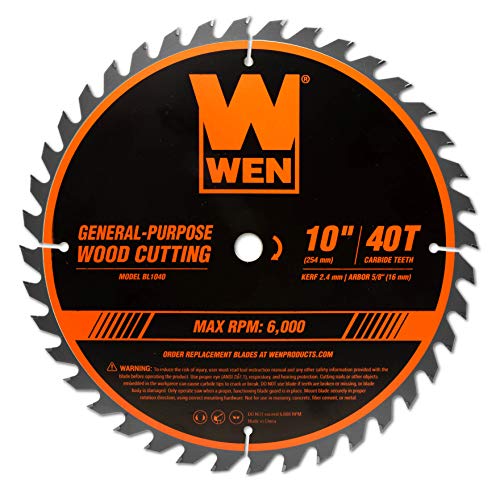
WEN BL1040 10″ 40-Tooth Carbide-Tipped

DEWALT DWA11040 10″ 40-Tooth

Evolution RAGE3 255mm Multipurpose TCT
What Each Pick Brings To The Table
The 7-1/4″ Diablo finish blade lands in the awkward middle ground between a general framing blade and a specialty composite blade. Its 40-tooth Alternate Top Bevel (ATB, a tooth pattern where alternating teeth bevel outward to slice cleanly across the grain) configuration handles plywood and dimensional lumber well, and it can score a respectable edge on capped composites when feed rates stay moderate.
You give up the dedicated melt resistance of a true MTCG (Modified Triple Chip Grind, a tooth pattern that combines a flat rake tooth with a chamfered tooth behind it, designed to grind through hard, brittle, or heat-sensitive materials without melting them) blade, but in return you get a tool that can transition between subfloor plywood, treated 2x4s, and composite deck boards without a swap. For a homeowner who needs one blade on the saw for a weekend, that flexibility matters.
Practical Pluses
- 40-tooth ATB pattern produces a noticeably cleaner edge than a 24-tooth framing blade on plywood and clean lumber
- 5/8″ arbor fits the vast majority of corded and cordless 7-1/4″ circular saws, plus most miter saws in that size class
- 8000 RPM ceiling gives you headroom on high-torque cordless saws without over-spinning the tooth line
- Functions as a crosscut blade on hardwood, softwood, and plywood without dedicated tooling
Worth Noting
- Not engineered for composite melt resistance, so slow feed rates matter on capped boards
- 40 teeth can still splinter thin fascia pieces on a poorly supported cut
Key Specs
Right Fit For
DIYers and homeowners who own a single 7-1/4″ circular saw and need one blade for framing lumber, subfloor plywood, and occasional composite deck work.
A Better Fit Elsewhere
For a dedicated composite-decking build with hundreds of capped board cuts, step up to the Diablo TrexBlade 7-1/4″ 44-Tooth MTCG, which has the modified triple chip grind that this blade lacks.
Diablo’s TrexBlade is one of the few circular saw blades engineered from the tooth shape up around composite and plastic stock. The Modified Triple Chip Grind geometry alternates a low-rake tooth with a higher square-shoulder tooth, which grinds rather than shears the material. That grind action keeps the cut cooler, and a cooler cut is what stops the polymer shell of a capped board from smearing along the kerf (the width of material removed by the blade as it cuts).
At 7-1/4″ with a 5/8″ arbor, it drops into the same circular saws and most compact miter saws that accept the Diablo finish blade above. For deck builders running a full day of board cuts on a 12×16 platform, this blade is the realistic daily driver.
Real-World Strengths
- Modified Triple Chip Grind resists melting and gummy buildup on capped composite boards
- 44 teeth give a noticeably cleaner cut edge than a 24-tooth framing blade
- 5/8″ arbor is compatible with stock 7-1/4″ circular saws, no adapter ring required
- Carbide formulation is tuned for the abrasive fillers in composite decking, not just softwood
Trade Offs
- Slower feed rate than a ripping blade, since MTCG geometry does more work per tooth
- Premium pricing over a general-purpose finish blade
At A Glance
Made For
Pros and serious DIYers cutting capped composite deck boards, plastic trim, or other dense polymeric materials on a regular basis.
Skip It When
If your cuts are mostly 3/4″ pressure-treated lumber for the substructure, the WEN BL1040 10″ 40-Tooth will feel more efficient at a lower cost.
Step up to a 10″ miter saw and the cut profile changes. Boards lay flat, the kerf is wider, and you can rotate a board to a 45° angle for a picture-frame border. The Diablo TrexBlade 10″ 72-Tooth keeps the same Modified Triple Chip Grind logic but adds tooth density, so the cut edge on a capped composite board reads almost like a sanded edge rather than a melted fringe.
For decks with mitred corners, herringbone inlays, or visible end-grain transitions, the 72-tooth count is what separates an acceptable edge from one a homeowner is comfortable leaving exposed.
The Good Stuff
- 72-tooth count produces a near-finished edge on capped composite boards with no secondary sanding
- 5/8″ arbor fits standard 10″ miter saws and portable table saws
- MTCG geometry holds up to repeated cuts in polymer-heavy stock
- Large diameter supports deep crosscuts on wide deck boards in a single pass
Points To Keep In Mind
- 10″ blades require a miter saw or table saw with a 10″ rating, not a 7-1/4″ handheld
- Higher tooth count means slower cutting, especially on dense boards
Feature Snapshot
Who It Suits Best
Builders finishing a deck with mitred corners, picture-frame borders, or any visible seam where a melted or chipped edge would force rework.
Consider Something Else When
If your saw is a 12″ sliding compound, the Diablo TrexBlade 12″ 84-Tooth will reach across wider boards in a single pass.
The 12″ version of the TrexBlade exists because composite deck boards have grown wider, and not everyone owns a track saw. On a 12″ sliding compound miter saw, you can rotate a 5-1/2″ capped board to a 45° mitre and still complete the cut in a single pass. The 84-tooth MTCG layout keeps the same melt-resistant behavior as the smaller siblings but spreads the cutting load across more teeth, so the cut runs cooler and the edge looks cleaner.
The catch is the 1″ arbor. Most 12″ miter saws use that size, but if your tool has a 5/8″ arbor you cannot drop this blade in. Confirm the spindle size on your saw before buying.
A Favorable Mix
- 12″ diameter handles deep mitres on wide deck boards without flipping the workpiece
- 84 MTCG teeth maximize finish quality and heat dispersion per pass
- Built for sliding compound miter saws commonly found on pro deck crews
- MTCG tooth geometry minimizes the melted fringe on capped composites
Less Ideal Details
- 1″ arbor will not fit saws rated for 5/8″ blades
- Blade and compatible saws both sit at the higher end of the price spectrum
Whose Shelf It Belongs On
Pro deck builders and serious DIYers with a 12″ sliding miter saw who cut wide composite boards and want the cleanest possible mitre.
Look Elsewhere When
For a 7-1/4″ or 10″ saw, the Diablo TrexBlade 7-1/4″ 44-Tooth or 10″ 72-Tooth will fit your tool without an adapter.
Smaller circular saws and trim saws run on 6-1/2″ blades, and that is where this Diablo finish trim blade lives. It carries the same carbide family and 40-tooth ATB pattern as the larger 7-1/4″ finish blade, just scaled down. The thin kerf design removes less material per pass, which matters on cordless tools that lose RPM under load.
For detail work like cutting composite stair nosing, fitting around a post sleeve, or trimming a board to a 3/8″ reveal, a 6-1/2″ blade is easier to control than a 7-1/4″ in tight spots.
Features That Help
- Compact 6-1/2″ diameter works in cordless 18V/20V circular saws and trim saws
- 40-tooth ATB pattern leaves a cleaner edge than 18- or 24-tooth trim blades
- Thin kerf reduces strain on smaller saw motors during extended cuts
Softer Spots
- Maximum cut depth is shallower than a 7-1/4″ blade, limiting it to thinner stock or partial-depth cuts
- Not a dedicated composite grind, so capped boards still want slow feed rates
Best Suited To
Owners of compact cordless circular saws or trim saws who need a finish-quality cut for thinner composite trim and detail work.
Another Choice May Suit
For full-depth cuts on standard deck boards, the Diablo TrexBlade 7-1/4″ 44-Tooth is the better tool for the same family of work.
The 8-1/4″ D0840X fills a gap that corded track saws and older miter saws often leave open. It cuts deeper than a 7-1/4″ blade, which means you can crosscut a 2x or a thick composite fascia board in a single pass on a standard circular saw, while still using a familiar 5/8″ arbor. The 40-tooth ATB geometry favors finish quality over speed, and that tradeoff pays off when the cut edge ends up visible.
For jobsite work that mixes dimensional lumber and composite trim, this blade is a quiet middle step between the everyday 7-1/4″ finish blade and the heavier 10″ miter saw blades.
Bright Spots
- 8-1/4″ diameter reaches deeper than a 7-1/4″ blade, useful for thick fascia or 2x material
- 9000 RPM max rating covers high-speed corded saws
- ATB pattern delivers smoother cut edges than a basic framing blade
- 5/8″ arbor keeps compatibility with most corded and large-format cordless circular saws
A Few Limitations
- Not engineered as a dedicated composite blade, so capped boards may still fringe at high feed rates
- Tooth count and grind prioritize wood, so plastic-heavy stock cuts slower than a true MTCG blade
Who Will Love This
Finish carpenters and trim installers who run an 8-1/4″ corded circular saw and need one blade that crosses cleanly through wood and occasional composite trim.
Reach For A Different Pick When
For a full day of capped composite deck boards, the Diablo TrexBlade 7-1/4″ 44-Tooth MTCG is purpose-built for that workload.
WEN’s BL1040 is the kind of blade that lives in a shop for years and never gets a second thought. The 40-tooth carbide-tipped format on a 10″ plate gives a respectable finish on softwood, hardwood, and plywood, and the 5/8″ arbor fits standard 10″ miter saws and contractor table saws. It is a wood-first blade, not a composite specialist, so capping boards cut on it will want slower feed rates and a steady hand.
For homeowners on a budget who already own a 10″ miter saw, this is the reasonable place to start before deciding whether the project justifies a dedicated composite blade.
What Works In Its Favor
- 40-tooth carbide-tipped geometry handles softwood, hardwood, and plywood without complaint
- 5/8″ arbor is standard on 10″ miter saws and most contractor table saws
- Carbide tips hold an edge across long cutting sessions on clean lumber
Practical Considerations
- No MTCG geometry, so capped composite boards can melt and fringe without a slow, careful feed
- Lower tooth count than a finish-optimized 80-tooth blade on mitres
- Not engineered for abrasive composite fillers, so blade life will be shorter on heavy composite use
Perfect Match For
Budget-conscious DIYers who already own a 10″ miter or table saw and need a versatile wood blade for general deck framing and trim work.
Swap It Out When
For a dedicated composite build with mitred picture-frame edges, the Diablo TrexBlade 10″ 72-Tooth MTCG will outperform it on capped boards.
The DEWALT DWA11040 is a 10″ 40-tooth blade sold specifically for table saws, with a tooth geometry the brand markets as a fine-finish configuration. The carbide tips are sized for rip cuts and crosscuts on solid wood, and the 5/8″ arbor fits standard table saws. As with the WEN above, this is a wood-first design, and the trade-off shows up the moment you push a capped composite board through it.
For shop owners who run table saws daily and want a brand-name replacement blade that holds up to long rip sessions on dimensional lumber, this one earns its place on the rack.
Positive Points
- 40-tooth configuration balances feed rate and finish for typical table saw operations
- Carbide tipped teeth hold an edge across extended production cutting
- Standard 5/8″ arbor fits the majority of contractor and portable table saws
Honest Caveats
- Tooth geometry targets wood, not capped composites, so expect some melt-out on hot days at high feed rates
- Not the right tool for a deck built entirely of composite boards
Who Should Grab It
Shop owners and serious woodworkers looking for a durable table saw blade for framing lumber, plywood, and trim, with the occasional composite board mixed in.
Where A Sibling Pick Shines
For all-composite deck projects, the Diablo TrexBlade 10″ 72-Tooth MTCG is engineered for the heat and abrasion that this blade will struggle with.
Evolution’s RAGE series of TCT (Tungsten Carbide-Tipped) blades is built around a different promise: one blade that crosses wood, mild steel, aluminum, and even nails. The 255mm RAGE3 sits in the 10″ class, so it fits 10″ miter saws and table saws rated for that size. The TCT teeth are tough enough to survive embedded fasteners in reclaimed lumber, which is the kind of surprise that ruins a specialty composite blade in a single pass.
For mixed-material deck framing, where you might cut pressure-treated 2x joists, aluminum flashing, and the occasional old nail, the RAGE3 trades cut finish for versatility. It will not leave a near-finished edge on capped boards, but it will not flinch when the cut crosses a hidden screw.
Standout Benefits
- Multimaterial TCT design cuts wood, plastic, aluminum, and mild steel in one setup
- Tolerates embedded nails and screws without chipping teeth
- Eliminates blade swaps when framing a deck with mixed stock
- 255mm (roughly 10″) diameter fits standard 10″ miter and table saws
Where It Is Less Suited
- Cut finish on capped composites is rougher than a true MTCG composite blade
- Tooth count is lower than finish-grade blades, so mitre edges will need sanding
- Sourced through international sellers, so warranty and packaging may differ from domestic stock
Built With In Mind
Renovation crews and homeowners tearing down an old deck and rebuilding, where hidden fasteners and mixed stock are a daily reality.
Not Your Match When
For a brand-new composite deck with crisp mitre seams, the Diablo TrexBlade 10″ 72-Tooth will leave a noticeably cleaner cut edge.
Choosing The Right Blade For Composite Decking
Picking the wrong blade for composites shows up the moment you make the first cut. The polymer shell that wraps most modern deck boards softens with heat, and a generic wood blade spins fast enough to smear the plastic instead of slicing it. The result is a fuzzy, slightly discolored edge that no finish sander can fully hide.
The first decision is tooth geometry. ATB (Alternate Top Bevel) patterns shear cleanly across wood grain, which is what you want for a clean edge on softwood or plywood. MTCG (Modified Triple Chip Grind) patterns grind rather than shear, which is what you want when the material is abrasive, dense, or heat-sensitive. Composite decking is all three, so MTCG blades are the realistic choice for capped boards.
The second decision is diameter. Your saw dictates the blade size, not the other way around. A 7-1/4″ circular saw pairs with a 7-1/4″ blade, a 10″ miter saw with a 10″ blade, and a 12″ sliding miter with a 12″ blade. The trade-off is cut depth and tooth count: a larger diameter lets you spin more teeth past the workpiece, which produces a cleaner edge, and it lets you crosscut wider boards without flipping the stock.
The third decision is tooth count, which is the lever that balances cut speed against finish quality. A 40-tooth blade cuts fast and leaves a workable edge on wood. A 72- or 84-tooth blade cuts slower and leaves an edge that often needs no sanding. For visible seams like mitred corners and picture-frame borders, a higher tooth count is worth the slower feed.
The fourth decision is whether the blade handles more than composites. A pure MTCG composite blade is uncompromising on plastic, but it will chip if it hits a hidden screw. A multipurpose TCT blade will survive the screw, but it will not leave a finish-ready edge on capped boards. Most deck builders end up owning one of each: a dedicated composite blade for board cuts and a multipurpose blade for framing and demolition.
Key Considerations Across These Picks
Pitfalls Shoppers Hit
A common mistake is buying a finish-grade wood blade and assuming it will perform on composites because both materials look similar. The polymer content in capped boards behaves nothing like wood, and a blade that glides through oak will melt through a deck board at full feed rate. Match the tooth geometry to the dominant material you cut.
Another trap is ignoring arbor size. A 1″ arbor blade will not fit a 5/8″ spindle without an adapter, and 12″ blades almost always use the larger size. Confirm the spindle on your saw before adding a higher-diameter blade to your cart.
A third pitfall is overworking a blade past its intended use. A composite MTCG blade survives abrasive fillers, not embedded nails. Cutting old framing with the wrong blade saves time in the moment and costs the blade in that single pass. Keep separate blades for separate tasks.
What The Higher Tier Buys
Premium composite blades earn their higher cost with MTCG tooth geometry, denser carbide blends, and tighter plate tensioning. The visible payoff is a cleaner cut edge that requires no sanding. The hidden payoff is heat management: more teeth, better carbide, and a stiffer plate all reduce vibration and friction, which keeps the cut cooler and extends blade life in abrasive composites.
For a one-weekend project, a budget blade is fine. For a multi-week deck build with hundreds of cuts, the upgrade pays back in saved sanding time and fewer blade changes. The honest read is that a premium blade earns its place when cuts are visible and frequent, and adds little when cuts are hidden and few.
Frequently Asked Questions
What makes a saw blade suitable for composite decking? Composite decking needs a blade with Modified Triple Chip Grind (MTCG) teeth or a similar geometry that grinds rather than shears, because shearing generates the friction and heat that melt the polymer shell. A higher tooth count also helps disperse heat across more cutting edges per pass.
Can I use a regular wood blade on composite deck boards? You can, but the cut edge will often show melting, chipping, or fuzz, especially on capped boards. A wood blade may be acceptable for rough cuts that will be hidden, but visible seams deserve a dedicated composite blade.
How many teeth should a composite decking blade have? For a 7-1/4″ blade, 40 to 44 teeth is the realistic minimum for clean edges. For a 10″ or 12″ blade, 60 to 84 teeth delivers near-finished edges without secondary sanding. Lower tooth counts cut faster but leave rougher edges.
Does blade diameter affect the cut quality on composites? Larger diameters spin at similar surface speeds and can carry more teeth, which often produces a cleaner edge. However, the real determinant is your saw: a 7-1/4″ blade on a 7-1/4″ saw is the right match, regardless of cut finish goals.
How long does a composite blade typically last? Blade life depends on board density, feed rate, and whether the blade ever contacts fasteners. On clean capped composite with proper feed rates, owners commonly report long service life. Hitting a hidden screw can chip a tooth and shorten the blade’s useful life significantly.




