Cutting steel asks more from a saw than ordinary woodwork ever does. A wrong tooth geometry, a soft blade, or a too-thick plate and you waste a Saturday nursing burnished edges and chipped teeth. This list rounds up nine saws and blades that handle steel with the kind of confidence weekend metalworkers, fabrication hobbyists, and small-shop pros actually need, and the buying guide below explains how to read past marketing so the next blade you buy earns its place on the bench.
A Snapshot Of The Selections
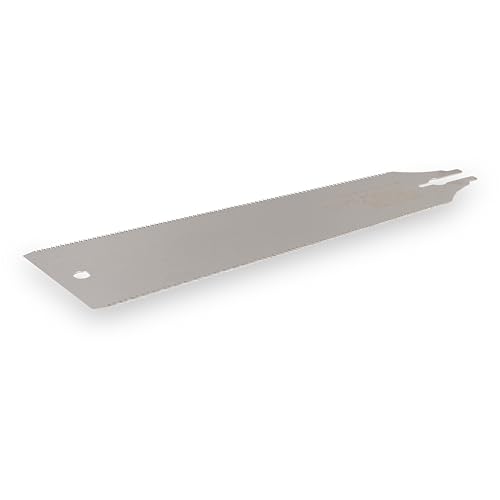
Vaughan Bear Saw Replacement Blade 10 Inch

Japanese SHINTO Saw Rasp Planer 250mm
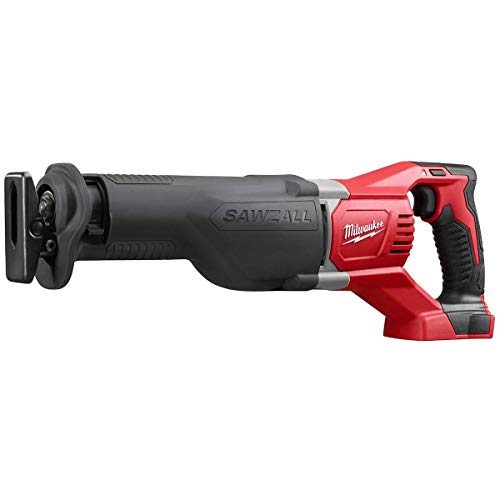
Milwaukee 2621-20 M18 Sawzall Reciprocating Saw

Corona RazorTOOTH 10″ Folding Pruning Saw

Blue Hard 10.6″ Razorsaw No. 655

Klein Tools Folding Jab Saw & Glove Bundle

Tajima GNB265 Japan Pull Blade 265mm

Shark Corp 01-2440 Replacement Blade

Stanley Handsaw Fine-Cut 450mm
The Details Behind The Selections
Cutting steel rods, pins, and embedded hardware rarely goes as planned, and a stiff Western-style saw only makes the mess worse. The Vaughan Bear Saw Replacement Blade is a 10-inch Japanese pull-cut blade with a thin alloy-steel profile that lets you slice off dowels and tenons almost flush to a surface, a geometry that pairs naturally with light steel hardware removal in mixed-material repairs.
For weekend woodworkers who occasionally cross paths with small-gauge steel pins, this blade covers the awkward jobs a backsaw handles poorly. It also works as a useful companion to the Stanley Handsaw reviewed later, swapping in when fine finish work matters more than speed.
A Favorable Mix
- Thin alloy-steel body tracks cleanly without wandering on small-diameter stock.
- Pull-cut design keeps the blade under tension, reducing the flex that ruins flush cuts.
- Double-edged layout gives two working surfaces, extending the life before replacement.
- Lightweight enough for overhead trim work where a heavy saw wears out the forearm fast.
Points To Keep In Mind
- It is a replacement blade, so you need a compatible Vaughan handle to use it out of the box.
- The thin kerf is a strength, but it also means the tooth edge can deform if twisted on hard stock.
Who It Suits Best
Trimmers and remodelers who occasionally need precise flush cuts on small dowels, plugs, and light-gauge steel hardware.
Where Another Pick Suits Better
For demolition-scale metal cutting, the Milwaukee 2621-20 M18 Sawzall Reciprocating Saw handles thicker stock and rougher conditions.
The Japanese SHINTO Saw Rasp Planer lives in the gap between a saw and a file, which is exactly where most cleanup work happens once the major cut is done. Its 250mm SK steel body with a plastic handle is built in Japan, and the rasp-style teeth shave rather than sever, which is what you want when refining edges on steel stock or trimming protruding fasteners without snapping them.
You’ll reach for this when a Sawzall makes too aggressive a pass or a fine-cut handsaw cannot reach the corner. It also complements the Vaughan Bear Saw Replacement Blade reviewed above by handling the smoothing that follows a flush trim.
Where It Delivers
- SK steel construction holds a working edge through extended detail sessions.
- Rasp-style teeth remove material in controlled passes instead of chip-sized bites.
- Compact 250mm length fits into tight spots where a full-size saw cannot maneuver.
- Plastic handle keeps the tool light for overhead detail work.
Less Ideal Details
- Not a through-cutting tool, so it cannot replace a saw for splitting stock.
- The aggressive rasp surface roughens surrounding material if you slip, so steady hands matter.
Key Product Details
Made For
Metalworking hobbyists and woodworkers who need a controlled rasp to refine edges, slots, and tight corners on steel and hardwood alike.
Look Elsewhere When
If the task calls for cutting through steel tubing rather than refining edges, the Milwaukee 2621-20 M18 Sawzall Reciprocating Saw is a better starting point.
Among the picks here, the Milwaukee 2621-20 is the only cordless power tool, and it shows the moment you start chewing through steel pipe or old bolts. It runs on Milwaukee’s M18 18V lithium-ion platform, hits 3,000 strokes per minute, and uses the Quik Lok blade clamp so swapping between wood, metal, and demolition blades takes seconds rather than minutes.
For shop owners and serious DIYers, the all-metal gearbox is the headline feature. The housing survives drops and dusty conditions that would crack a plastic-gearbox competitor, and the bare-tool configuration means anyone already running M18 batteries can add it without buying into a new platform.
Everyday Advantages
- 3,000 RPM stroke speed powers through Schedule 40 pipe and threaded rod cleanly.
- Quik Lok clamp accepts standard reciprocating blades without extra adapters.
- All-metal gearbox holds calibration after the inevitable job-site drop.
- Works with the same M18 batteries you may already own for drills and impacts.
Trade-Offs To Consider
- Bare-tool only, so a battery and charger are required if you have no M18 gear yet.
- Heavier than the manual picks in this list, which matters on long overhead cuts.
Right Fit For
Contractors, remodelers, and serious DIYers cutting steel pipe, conduit, and embedded hardware on a regular basis.
Swap It Out When
For light steel trim work that needs finesse, the Tajima GNB265 Japan Pull Blade offers a quieter, blade-only path without the cordless tool weight.
A folding saw earns its place on a list of steel-cutting tools because the blade itself is hardened steel with impulse-hardened teeth, and that’s exactly the metallurgy that makes a saw last in damp gardens and gritty backpacks. Corona’s RazorTOOTH RS16150B is a 10-inch curved-blade folder with a non-slip handle, sized for branches, light saplings, and odd field jobs where you might encounter light metal hardware buried in wood.
Gardeners, campers, and homeowners will appreciate that it folds down to a backpack-safe shape. In our view, it’s a niche pick that doubles as a backup cutter for the Stanley Handsaw reviewed later, but the curved geometry handles pruning in a way a straight fine-cut saw cannot.
Where It Helps
- Curved 10-inch steel blade clears branches faster than straight blade saws of the same length.
- Folding design protects teeth and pockets safely in a pack or tool drawer.
- Non-slip handle keeps the grip planted when gloves are wet or muddy.
- Light enough to keep on a belt loop during yard work or trail maintenance.
Some Limits To Know
- Not designed for sheet metal or heavy steel pipe, so its steel-cutting role is incidental.
- Folding hinge needs occasional cleaning to prevent sap buildup that affects lockup.
Best Suited To
Campers, homeowners, and trail crew members who need a compact folding saw for branches and the occasional mixed-material repair.
Skip It When
For pure metalwork without a branch in sight, the Milwaukee 2621-20 M18 Sawzall Reciprocating Saw is the more appropriate shop tool.
The Blue Hard No. 655 is a 270mm Japanese handsaw from Miki City’s hardware district in Hyogo, a region that has produced edge tools for generations. Its hardening treatment tunes the teeth for vertical or horizontal grinding depending on the wood grain, which translates to clean cuts on bamboo, hardwood, and the occasional embedded nail without the tooth chipping you get from a generic saw.
Fine carpenters and joiners who sometimes work in mixed-material environments will find the 270mm length comfortable. It overlaps with the Vaughan Bear Saw Replacement Blade reviewed above but at a larger scale, and the trade-off shows up when you need longer reach on a workpiece.
Where It Excels
- 270mm length covers full tenon and dovetail work without crowding the stroke.
- Hardened tooth treatment survives occasional contact with hidden fasteners.
- Comfortable for branch diameters up to roughly 9 cm, per the manufacturer’s spec.
- Miki City production draws on a regional tradition of fine cutlery-grade sawmaking.
Points To Note
- Specialized for woodworking first, so steel cutting is a side role rather than the focus.
- Replacement blades are not a feature, so once dull the whole saw is up for resharpening.
Who Should Grab It
Detail-oriented woodworkers and joiners who want a Japanese-style saw that handles the occasional steel fastener without ruining the edge.
A Better Fit Elsewhere
For pure demolition steel cutting, the Milwaukee 2621-20 M18 Sawzall Reciprocating Saw will save time and effort every session.
The Klein Tools bundle pairs a folding jab saw (model 31737) with a pair of cut-resistant knit-dipped gloves (60581), turning a single tool into a small kit. The carbon-steel saw blade locks at 125 or 180 degrees for tight spaces, and the triple-ground teeth cut in both directions, which trims drywall and the occasional metal mesh almost twice as fast as a conventional jab saw.
Tradespeople and serious remodelers will appreciate the lockback positions for inside-corner work. Compared with the Stanley Handsaw reviewed last, this bundle adds the safety element that turns a one-tool purchase into a starter safety setup.
Bright Spots
- Lockback mechanism at 125 and 180 degrees opens awkward inside-corner cuts.
- Triple-ground teeth slice on both the push and pull stroke, halving effort on long lines.
- Carbon-steel blade stays sharp through drywall screws and metal mesh.
- Bundled gloves have touchscreen fingertips, so you can take a call without removing PPE.
Honest Caveats
- Bundle price runs higher than buying the saw alone, which matters for occasional users.
- Carbon steel benefits from a light oil wipe-down after damp or sweaty jobs to prevent rust.
Quick Facts
Perfect Match For
Electricians, drywallers, and remodelers who need a folding jab saw and PPE in one purchase.
Consider Something Else When
If the work is mostly steel pipe rather than wallboard, the Milwaukee 2621-20 M18 Sawzall Reciprocating Saw is a better match.
The Tajima GNB265 is a 265mm replacement pull blade with triple cutting-edge teeth that are impulse-hardened for durability. The thin spring-steel body flexes just enough to follow a contour for ultra-close flush cuts, which is what makes it a favorite for trimming door casings and finishing trim where the blade needs to lay flat against a surface.
Trim carpenters and finish-out crews will reach for this when a powered saw risks damaging an adjacent wall. Unlike the Klein Tools folding jab saw, the Tajima blade is single-sided for safety and precision, which is a deliberate trade-off worth understanding before you buy.
Standout Benefits
- Triple cutting-edge teeth stay sharp through repeated flush cuts.
- Thin spring steel flexes without kinking, enabling close flush work.
- Single-sided design reduces the chance of scoring an adjacent surface.
- 265mm length balances reach with the maneuverability finish work needs.
Worth Noting
- It is a replacement blade, so a compatible Tajima handle must be on hand to use it.
- Single-sided teeth cut only on the pull stroke, slowing you down if you try to push through a board.
Whose Shelf It Belongs On
Finish carpenters and remodelers who need ultra-close flush cuts on door casings, baseboards, and trim against walls.
Where A Sibling Pick Shines
For gardeners looking for a folding saw with the same Japanese blade DNA, the Corona RazorTOOTH 10″ Folding Pruning Saw is the better tool for outdoor work.
The Shark Corp 01-2440 is a replacement blade for the 10-2440 Shark Saw, made in Japan with a flexible body that the manufacturer claims cuts exceptionally straight. The tooth layout pairs 17 teeth per inch on the cross-cut side with 9 TPI on the rip side, covering dimensional lumber, plywood, wallboard, and treated lumber of various sizes.
Anyone who already owns a Shark Saw will find this refreshes a tired tool. It’s the only blade in this list designed as a true two-purpose replacement, and it slots in alongside the Stanley Handsaw reviewed next as a backup for when the original blade dulls.
What It Does Well
- 17 TPI cross-cut side handles plywood and wallboard without splintering.
- 9 TPI rip side clears treated lumber quickly when speed matters more than finish.
- Flexible body tracks straight cuts on long boards, reducing drift.
- Made in Japan with a tooth geometry tuned for general construction.
Factors To Consider
- Compatibility is limited to the Shark 10-2440 handle, so it’s not a universal swap.
- Steel-cutting duties are secondary; a metal-specific blade handles pipe and rod more cleanly.
Built With In Mind
Existing Shark-saw owners who want a fresh factory-spec replacement blade without switching tool systems.
Reach For A Different Pick When
For broader compatibility across reciprocating saws, a Milwaukee 2621-20 M18 Sawzall Reciprocating Saw opens the door to the wider blade market.
The Stanley Handsaw is a 450mm fine-cut saw with 11 teeth per inch and a 1mm blade thickness, the kind of traditional Western-format saw that has hung in workshops for generations. It’s a budget-friendly way to add a general-purpose cutter to a garage or shed, and the longer blade covers crosscuts on dimensional lumber cleanly without the flex that plagues shorter saws.
Beginning woodworkers and homeowners tackling weekend repairs will find this a comfortable starting point. It also works as a low-cost companion to the Vaughan Bear Saw Replacement Blade, which handles the flush work this saw cannot reach.
What Works In Its Favor
- 11 TPI fine-cut geometry leaves a clean edge on plywood and trim boards.
- 450mm length covers full-width lumber without needing a starter hole.
- 1mm blade thickness balances rigidity for straight cuts with enough flex for comfort.
- Stanley heritage adds confidence for shoppers new to hand tools.
What To Weigh
- Not a steel-cutting specialist, so heavy metal work falls outside its comfort zone.
- Hardwood-only tasks may call for a more refined Japanese saw like the Blue Hard No. 655.
Feature Snapshot
Who Will Love This
First-time DIYers and homeowners who want a single reliable handsaw for weekend repair and trim projects.
Not Your Match When
For heavy steel work or demolition, the Milwaukee 2621-20 M18 Sawzall Reciprocating Saw is the right tool for the job.
Matching The Right Saw To The Steel You Cut
Picking a saw for steel work starts with the material’s thickness and grade, not the saw’s name. Thin sheet metal, thin-wall tubing, and small-gauge hardware all behave differently than solid bar stock or threaded rod, and a blade that excels on one will struggle on the other.
Blade Geometry And TPI
Teeth per inch is the number that quietly decides whether a cut goes clean or comes out ragged. Higher TPI (teeth per inch) means more, finer teeth that slice thin materials and leave smooth edges, while lower TPI clears material faster at the cost of finish. For thin sheet and wallboard, push above 10 TPI; for pipe and bar stock, drop into the 6 to 10 TPI range to keep the chips clearing.
Tooth Hardening And Steel Grade
Hardened or impulse-hardened teeth resist dulling when they meet the occasional hidden fastener or a piece of hardened stock. Lower-cost saws skip this step, which is fine for clean wood but punishing on mixed-material repair work. Where unexpected metal is a possibility, tooth hardening pays for itself in longer service intervals.
Power Source And Workload
Manual saws are quiet, light, and inexpensive, but they trade your effort for that simplicity. Cordless reciprocating saws like the Milwaukee 2621-20 swap your arm for a battery, which makes sense once the cuts get long or the steel gets thick. Match the power source to how often you reach for the tool, not just to today’s project.
What To Watch Before You Buy
A few patterns repeat across the saws on this list, and skipping past them leads to a tool that sits in a drawer.
Common Shopping Slip Ups
Treating TPI as a marketing number rather than a functional spec is the most common mistake, and it shows up the first time someone tries to cut 1/8-inch steel with a 6 TPI framing blade. Tooth count, hardening, and kerf width each change how the saw behaves, and reading the spec sheet once saves an hour of frustration. Also worth considering: a folding saw without a lockback, or a replacement blade without a compatible handle, leaves you with a paperweight instead of a tool.
When Paying More Pays Off
Higher-tier saws in this category tend to add impulse-hardened teeth, all-metal gearboxes, or replaceable blade systems. The upgrade payoff depends entirely on how often you cut. A homeowner who pulls a saw out twice a year doesn’t need an M18 Sawzall; a contractor cutting steel conduit weekly will feel the difference every day, which is where the all-metal gearbox and Quik Lok clamp stop being extras and start being necessities.
Frequently Asked Questions
What saw actually cuts through steel cleanly?
A fine-tooth blade with high TPI and impulse-hardened teeth cuts thin steel cleanly, and a cordless reciprocating saw with the correct metal-cutting blade handles thicker stock. Match the blade to the thickness rather than reaching for the first saw in the drawer.
Can a regular handsaw cut steel?
Standard woodcutting handsaws will technically scratch mild steel but will dull almost immediately. For occasional steel work, a Japanese pull-cut blade with hardened teeth performs far better than a generic Western-format handsaw.
How do I keep a steel-cutting blade from dulling too fast?
Light oil on the cut, steady feed pressure, and matching TPI to material thickness all extend blade life. Rushing the cut or forcing a coarse blade through thin stock heats the teeth and shortens the working edge.
Is a cordless reciprocating saw worth it for steel work?
For frequent cuts on pipe, conduit, and thick stock, a cordless reciprocating saw like the Milwaukee 2621-20 is worth the investment. For occasional trim and finish work, a manual Japanese-style saw costs less and lasts longer without batteries.
What is the safest way to cut steel at home?
Secure the workpiece, wear cut-resistant gloves, eye protection, and clear chips frequently. Manual saws give you more control and less noise, which is the right starting point before stepping up to a powered option.