


A handheld driver can change the way a weekend project feels. The right screw gun cuts the fatigue of a long deck build, sinks cabinet screws without stripping, and gets out of the way in tight cabinet boxes. These nine picks cover the full range, from a featherweight 4V pivot driver for quick assembly jobs to brushless 18V workhorses that punch above their size.
An Overview Of The Picks

RYOBI ONE+ 18V Cordless 1/2in Drill/Driver PCL206B
NEU MASTER 4V Cordless Screwdriver with Pivoting Handle

Bosch GSB 12V-15 Impact Driver (12V, 2Ah)

BOSCH PS31-2A 12V Max 3/8 In. Drill/Driver Kit

Bosch GSR12V-140FCB22 12V Flexiclick Drill/Driver

Ryobi P237 18V ONE+ 3-Speed Impact Driver
WORX WX177L.2 20V Brushless SwitchDriver 2-in-1
Milwaukee M18 18V Brushless Compact Drill/Driver 2801-20

Dremel Blueprint DD12V-S1 3-in-1 Drill Driver Kit
More Details On Our Top Picks
For homeowners already invested in the RYOBI ONE+ system, this 18V driver slots right into the battery lineup you probably own. The 1/2-inch keyless ratcheting chuck accepts standard bits and holds them tight under load, so bit slip mid-hole becomes a rare annoyance rather than a daily one. Compared with the smaller NEU MASTER below, this is a real step up in muscle for heavier tasks like deck repair or subfloor work.
The body is compact enough for cabinet interiors and overhead runs, and the grip tends to stay comfortable during long driving sessions. Owners commonly rely on it for everything from IKEA-style furniture to basic framing repairs around the house. You may find the bare-tool pricing more appealing if you already keep spare ONE+ packs on the charger.
What Stands Out
- 1/2-inch ratcheting chuck grips bits firmly and reduces slip on long fasteners.
- Compatible with the broad RYOBI ONE+ battery family, so most owners skip extra chargers.
- Enough torque for deck work, subfloor screws, and dense hardwoods without bogging down.
- Balanced grip keeps wrist strain manageable on overhead tasks like ceiling installs.
Things To Consider
- Tool-only configuration means a battery and charger may need to be sourced separately.
- Bulkier than the 12V picks later in this list, so tight electrical boxes feel cramped.
Key Product Details
Who It Suits Best
Existing RYOBI ONE+ owners who want a versatile household driver without buying into a new battery platform.
Consider Something Else When
Shoppers needing a featherweight reach into deep cabinets should look at the NEU MASTER 4V Cordless Screwdriver instead.
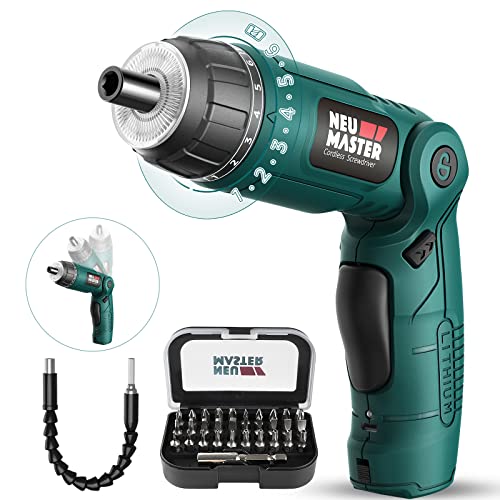
Picture the small jobs that pile up: tightening a loose cabinet hinge, swapping outlet covers, building a kids’ bookshelf from a flat-pack. The NEU MASTER 4V pivots between straight and pistol positions, which is genuinely useful in narrow spots like inside a media console. It ships with 32 bits covering most common fastener types, so you can start working out of the box.
The 2000 mAh battery handles small projects in a single charge, and six torque settings plus a drill mode help avoid stripping softer screws. Front and rear LED lights illuminate the screw head in dim corners, like under a sink or behind a TV. You may find the 4V power underwhelming for any serious drilling, but for assembly work it feels just right.
A Few Strong Suits
- Pivoting handle switches between straight and pistol grip for tight cabinet interiors.
- 32-piece bit set covers the most common household fastener types right out of the box.
- Dual LED work lights make dark corners under sinks and behind TVs much easier to navigate.
- Lightweight build reduces wrist fatigue during long flat-pack furniture sessions.
Worth Noting
- 4V motor is not designed for repetitive drilling in hardwood or masonry.
- Bits and chuck storage tend to live in the included case, which adds bulk to a “grab-and-go” tool.
Right Fit For
First-time tool owners, apartment dwellers, and anyone assembling flat-pack furniture on a regular basis.
Look Elsewhere When
Shoppers needing real driving torque for deck screws should look at the Ryobi P237 18V ONE+ 3-Speed Impact Driver.
The Bosch GSB 12V-15 is the kind of tool that surprises people with how much it gets done in a small footprint. It ships as a kit with two 2Ah batteries and a charger, which removes the usual tool-only guessing game. The impact action delivers the kind of rotational snap that prevents wrist strain on repetitive fastening work, which is the entire point of an impact driver versus a basic drill.
It fits comfortably into tight spaces, like between wall studs, that a larger 18V driver simply cannot reach. For installers, electricians, and AV techs working in cramped rack cabinets, this is a meaningful upgrade over a standard 12V drill. You may find the 15/30Nm torque modest compared to a full-size impact, but the trade-off is the form factor.
Everyday Perks
- Two 2Ah batteries and a charger included, so there’s no extra accessory hunt.
- Compact 12V body reaches spots an 18V driver physically cannot.
- Impact action reduces the wrist fatigue of long fastening runs.
- Bosch professional build quality tends to hold up well under daily jobsite use.
Trade Offs
- Lower torque ceiling than full-size 18V impact drivers like the Ryobi P237 below.
- The European 12V naming and accessory range may confuse shoppers used to 18V systems.
Feature Snapshot
Made For
Pros and serious DIYers who need a compact impact driver for tight spaces and repetitive fastening tasks.
A Better Fit Elsewhere
Shoppers prioritizing maximum torque for long deck screws should look at the Ryobi P237 18V ONE+ 3-Speed Impact Driver.
The PS31-2A has been a long-time favorite among finish carpenters and cabinetmakers, and for good reason. At under three pounds with the battery, it almost disappears on a tool belt, which is exactly the point when you’re doing overhead trim work all day. The 3/8-inch chuck handles most common driver bits used in finish carpentry without the bulk of a 1/2-inch model.
Two speed settings cover the typical range from careful driving to quick pilot holes, and the 20+1 clutch positions give you fine control over torque. It does the everyday workhorse job without trying to be an impact driver, so it lacks the rotational snap of the Bosch GSB 12V-15 above. You may find the 265 in-lb torque a bit thin for large hole saws, but for trim and assembly it’s a sweet spot.
Standout Benefits
- Lightweight at roughly three pounds, so overhead trim work stays manageable.
- 20+1 clutch settings allow precise torque control to prevent overdriving small screws.
- Two-speed transmission covers both delicate driving and faster pilot holes.
- Long-standing reputation among finish carpenters for everyday reliability.
Points To Note
- No impact mechanism, so long deck lags demand a separate impact driver.
- 3/8-inch chuck limits the size of bits and hole saws you can use.
Best Suited To
Cabinetmakers, trim carpenters, and serious DIYers who want a precision drill/driver rather than a heavy-duty impact.
Reach For A Different Pick When
Shoppers wanting modular chuck attachments should look at the Bosch GSR12V-140FCB22 12V Flexiclick Drill/Driver.
Where the PS31-2A above keeps things simple, the Flexiclick system opens up a more modular approach to the same 12V form factor. The chuck assembly accepts five different attachments, including an offset and a right-angle head, which is a real timesaver in tight corners and cabinet interiors. The 265 in-lb torque matches the PS31-2A, so you’re not trading power for versatility.
At about 1.8 pounds tool-only, it sits comfortably in the hand during long sessions, which matters more than raw specs when you’re doing repetitive work. The kit typically includes the drill, multiple Flexiclick attachments, batteries, and a charger depending on the package. You may find the accessory ecosystem confusing at first, but the flexibility pays off once you need to reach behind a sink drain.
Advantages To Know
- 5-in-1 Flexiclick system accepts offset, right-angle, and other chuck heads for tight spaces.
- Light 1.8 lb tool body keeps fatigue down during full-day jobs.
- 265 in-lb torque handles most finish and light framing fastening tasks.
- Modular design means one drill can replace several specialty tools on a service truck.
Honest Caveats
- Attachment system is Bosch-specific, so accessory costs can add up.
- 12V power ceiling still limits it compared to full 18V impact drivers like the Milwaukee M18 below.
Spec Overview
Who Will Love This
Pros like plumbers, electricians, and HVAC techs who repeatedly work in awkward tight spaces and need modular reach.
Not Your Match When
Shoppers wanting a straightforward no-frills 12V drill should look at the BOSCH PS31-2A 12V Max 3/8 In. Drill/Driver Kit instead.
The Ryobi P237 is the impact driver to reach for when a 12V simply doesn’t have the muscle. The 1/4-inch hex chuck is the standard for impact-rated driver bits, and the three-speed gearbox lets you dial back the impact action on smaller fasteners that would otherwise strip. On the top end, the impact mechanism is built to drive long deck screws and lag bolts without bogging down.
The belt clip and LED work light both feel like obvious wins on a real jobsite, keeping the tool close at hand and the work area visible. For homeowners deep into a deck build or fence project, this is the kind of driver that earns its keep. The bare-tool format keeps the upfront cost reasonable if you already have ONE+ batteries in the drawer.
Everyday Advantages
- Three-speed gearbox adjusts impact action for both small fasteners and large lag screws.
- 1/4-inch hex chuck accepts the full range of standard impact driver bits.
- Belt clip keeps the tool within reach during ladder work and overhead runs.
- Compatible with the broad RYOBI ONE+ battery ecosystem.
Some Limits To Know
- Battery and charger are not included, so budget for those if you don’t have them already.
- Larger and heavier than the 12V picks, so wrist fatigue is real on long trim-only jobs.
Perfect Match For
Shed builders, deck installers, and homeowners doing serious outdoor fastening projects on a regular basis.
Skip It When
Shoppers working mostly inside cabinet boxes should look at the Bosch GSB 12V-15 Impact Driver for a more compact option.
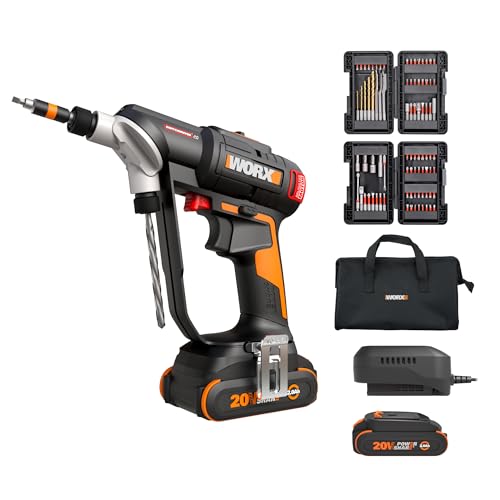
The SwitchDriver concept is one of those ideas that, once you’ve used it, makes the old way feel slow. Two rotating chucks hold a drill bit and a driver bit at the same time, and a quick twist switches between them without setting the tool down. For projects that alternate between pilot holes and driving screws, like a backyard pergola, the saved time is noticeable.
The 20V brushless motor delivers the kind of power that 12V drivers in this list cannot, while staying inside a comfortable DIY weight class. The 20V platform also means you can share batteries with other WORX 20V tools if you’re already in that ecosystem. You may find the dual-chuck system takes some getting used to compared to a single-chuck drill, but the workflow gains add up on long projects.
Where It Helps
- Rotating dual-chuck design eliminates the stop-and-change-bit pause during repetitive fastening.
- 20V brushless motor delivers more torque than the 12V picks in this list.
- Brushless construction typically means longer runtime per charge.
- Cross-compatible with the WORX 20V battery family for shared charging.
Less-Strong Areas
- Dual-chuck head is bulkier than a standard chuck, which can be a problem in tight electrical boxes.
- Not a true impact driver, so long lag screws still demand a separate tool.
Who Should Grab It
DIYers alternating between pilot holes and driving screws on sheds, decks, and outdoor builds where bit switching eats time.
Another Choice May Suit
Shoppers wanting genuine impact action for heavy fasteners should look at the Ryobi P237 18V ONE+ 3-Speed Impact Driver.
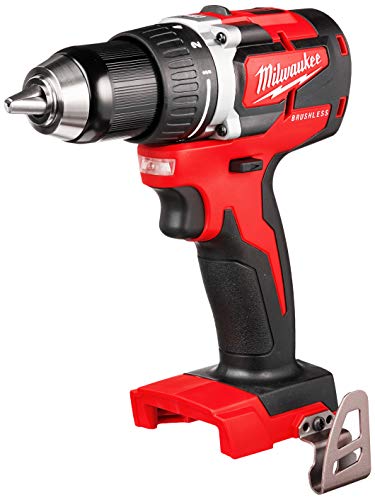
Milwaukee’s M18 platform has become a default for tradespeople, and the 2801-20 1/2-inch compact drill/driver is a major reason why. The brushless motor delivers longer runtime per charge and a noticeably longer service life than brushed designs, which matters when a tool earns its living every day. The 1/2-inch chuck handles a wider range of bits and hole saws than the 3/8-inch PS31-2A above.
The compact body weight keeps it from being a chore on a tool belt, even during a long day of repetitive work. As a bare tool, it slots into any existing M18 collection, which is the entire point of the platform approach. You may find the price premium over a brushed 18V drill harder to justify if you only use it occasionally, but the runtime gains add up for daily use.
Reasons It Performs
- Brushless motor improves runtime and motor life over brushed designs.
- 1/2-inch chuck accepts larger bits and hole saws than typical 12V picks.
- Compatible with the broad Milwaukee M18 battery and accessory ecosystem.
- Compact body design reduces fatigue without sacrificing chuck capacity.
Practical Considerations
- Battery and charger are not included, so factor in those costs.
- Premium price point is harder to justify for occasional home use compared to the RYOBI ONE+ PCL206B above.
Built With In Mind
Tradespeople and serious DIYers who already own or are willing to invest in the Milwaukee M18 battery platform.
Swap It Out When
Shoppers looking for a budget-friendly 18V option should look at the WORX WX177L.2 20V Brushless SwitchDriver 2-in-1 instead.
The Dremel Blueprint DD12V-S1 is built around a specific problem: hanging things on walls. The built-in stud finder detects framing behind drywall, and the detachable line laser projects a level reference across the work area, which is the kind of thing that separates a crooked gallery wall from a clean one. The 12V brushless motor handles typical mounting and assembly work without feeling underpowered.
The kit ships with a 2.0 Ah battery, a fast charger, and 12 bits, so it arrives ready to work out of the box. The 3-in-1 framing means a single tool replaces a stud finder, a small level, and a drill, which simplifies a hallway project. You may find the 12V platform limiting for repetitive deck work, but for hanging TVs, shelves, and mirrors it fits the bill.
Useful Highlights
- Integrated stud finder removes the guesswork from locating wall framing.
- Detachable line laser with bubble level simplifies accurate alignment on the wall.
- 12V brushless motor handles typical household mounting and assembly work.
- Kit includes battery, fast charger, and 12 bits for immediate use.
Where It Is Less Suited
- 12V platform is less ideal for heavy fastening or prolonged deck-building sessions.
- Stud finder is built in, so replacement or repair depends on the manufacturer process.
Whose Shelf It Belongs On
Homeowners who regularly mount TVs, hang gallery walls, and install shelving where stud-finding is part of every job.
Where Another Pick Suits Better
Shoppers wanting a more traditional drill/driver for general workshop tasks should look at the Milwaukee M18 18V Brushless Compact Drill/Driver 2801-20.
What Matters Most Before Choosing Screw Guns
The first call is between a drill/driver and an impact driver. A drill/driver uses steady rotational force, which is fine for pilot holes and standard screws. An impact driver adds a hammering rotational action, which prevents wrist strain on long fasteners and dense materials. Choose an impact driver like the Ryobi P237 or Bosch GSB 12V-15 if your work involves long deck screws, lag bolts, or repetitive fastening, and a drill/driver like the BOSCH PS31-2A for general assembly and finish work.
Voltage is the next decision. A 4V pivot screwdriver like the NEU MASTER handles furniture assembly and light household tasks with no fatigue. A 12V tool like the BOSCH PS31-2A or Bosch GSB 12V-15 strikes a balance of weight and capability for cabinet and trim work. An 18V or 20V tool like the RYOBI ONE+ PCL206B, WORX WX177L.2, or Milwaukee M18 2801-20 is the right pick for outdoor building, deck repair, and heavier drilling.
The chuck system matters more than people expect. A 1/4-inch hex chuck is the standard for impact-rated driver bits and is the right call for an impact driver. A 3/8-inch keyless chuck like the PS31-2A fits most common driver bits and small hole saws. A 1/2-inch keyless chuck like the RYOBI PCL206B or Milwaukee 2801-20 handles larger hole saws and bits, which is useful for plumbing and electrical work. Modular systems like the Bosch Flexiclick add reach for tight spaces but add accessory cost.
The battery platform decision has long-term consequences. A bare-tool driver costs less up front, but only if you already own the matching batteries. Switching platforms mid-career means duplicating chargers and batteries. The RYOBI ONE+ and Milwaukee M18 systems both have wide compatibility, while the WORX 20V is a sensible pick for existing WORX owners.
Key Considerations Across These Picks
Common Buying Slip Ups
The most common mistake is matching a tool to the wrong job. A 4V NEU MASTER will not drive long deck screws the way a Ryobi P237 will, and a 12V impact will not match the runtime of an 18V drill on a full day of work. Another trap is buying a bare tool without checking that you actually own compatible batteries. A 12V Bosch impact that requires a 12V Bosch battery is a different purchase from one that comes with a battery and charger.
Where The Extra Money Goes
Premium drivers like the Milwaukee M18 2801-20 and Bosch GSR12V-140FCB22 carry higher price tags for a reason. Brushless motors extend runtime and motor life, which is meaningful if the tool works for a living. The Flexiclick attachment system adds a level of modularity that can replace specialty tools on a service truck. For occasional home use, the price premium is harder to justify, but for daily use the runtime and durability gains pay back over years.
Frequently Asked Questions
What is the difference between a drill/driver and an impact driver?
A drill/driver uses steady rotational force suited for pilot holes, light drilling, and standard screws. An impact driver adds a rotational hammering action that prevents wrist strain and strips fewer fasteners on long screws and dense materials.
Can a 12V screw gun handle deck screws?
For occasional deck work, a 12V impact driver like the Bosch GSB 12V-15 can handle many deck screws. For full deck builds with long fasteners, an 18V model like the Ryobi P237 is the more practical choice.
Do I need a bare tool or a kit?
A kit includes the battery and charger, so it costs more up front but is ready to use immediately. A bare tool makes sense only when you already own the matching batteries from a previous tool purchase.
How important is a brushless motor?
A brushless motor typically runs cooler, extends battery runtime, and lasts longer than a brushed motor. For occasional home use, brushed motors remain functional, while daily users benefit more from brushless designs.
Is a built-in stud finder worth it?
A built-in stud finder, like on the Dremel Blueprint DD12V-S1, removes a separate tool from the workflow and simplifies wall-mounting projects. For shoppers who frequently hang shelves, mirrors, or TVs, that integration is genuinely useful.




