


Metal roofing eats weak tools alive. Long sheets of steel, dozens of self-tapping screws per square, and awkward angles on every run mean the wrong driver costs you time, wrist, and fastener heads. The seven picks below mix purpose-built screw guns, a tight-angle impact driver, and pneumatic coil nailers that occasionally show up in metal-roofing kits, so you can match the tool to the job instead of forcing one tool to do everything.
The Choices Worth Comparing

Milwaukee 2866-20 M18 FUEL Drywall Screw Gun

Makita XLT01Z 18V LXT Cordless Angle Impact Driver

Metabo HPT NV45AB2 Pneumatic Roofing Nailer

STANLEY B&D DW66C-1 Pneumatic Coil Siding Nailer
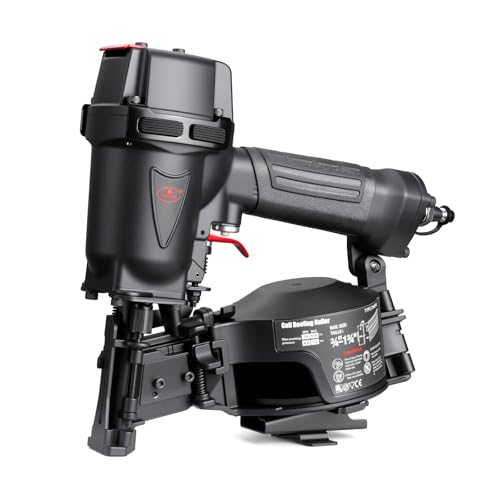
AEROPRO 15 Degree Coil Roofing Nailer

DEWALT DCF622B 20V MAX XR Screw Gun

BOSTITCH RN46 Coil Roofing Nailer
More Details On Our Top Picks
The Milwaukee 2866-20 looks like a drywall gun, but on a metal roof the auto-start mode and adjustable clutch behave like a thoughtful co-pilot. You pull the trigger, the motor only runs while the bit is engaged, and when you hit the set depth the clutch drops out cleanly. That kind of control keeps hex-head screws from stripping on thin-gauge panels and saves battery on long runs across a barn or shop roof.
Running on the M18 platform, it slides into a battery system many contractors already own, so adding a bare tool is a low-friction upgrade. Compared to the DEWALT DCF622B reviewed later, this one trades a touch of pure torque for a much faster no-load RPM, which speeds up high-volume fastening on underlayment and metal-to-frame work.
What Makes Sense
- Auto-start kicks the motor in only when the bit is pressed, cutting wasted spin and noise between fasteners.
- Brushless motor with up to 4,500 RPM keeps pace on long metal-roofing runs without bogging.
- Adjustable clutch lets you dial down torque for thin panels so you don’t snap screw heads.
- Standard 1/4-inch chuck accepts common hex driver bits used in metal roofing kits.
- Plays nicely with the existing M18 battery ecosystem if you already own Milwaukee tools.
Trade Offs
- 124 in-lb of max torque is solid for sheet metal but modest for thick-gauge steel and heavy sub-framing.
- Sold as a bare tool, so a battery and charger add to the real cost for first-time M18 owners.
- Top-heavy balance with a 5.0 Ah pack attached, which you may notice during overhead work.
Key Product Details
Right Fit For
Crews and DIYers already on the M18 platform who want one driver for drywall, sheathing, and metal roofing panels without swapping systems.
Consider Something Else When
Roofers working in tight valleys and inside corners will find the Makita XLT01Z easier to maneuver thanks to its right-angle head.
The Makita XLT01Z is the only tool in this lineup that puts the business end at a right angle to the grip, and on a metal roof that geometry is gold. Valleys, hip transitions, and the inside corners where two panels meet a wall are all painful with a straight gun. This angle driver slips into those spots and still drives screws with serious impact force, around 3.9 lbs with a battery keeping arm fatigue in check on long days.
It runs on the 18V LXT platform, which a lot of trim and remodeling crews already carry, so it slides into the same charger and batteries you may already own. Unlike the Milwaukee 2866-20, which is purpose-built for high-volume screw driving, this Makita is a versatile impact driver with an angled head, useful for fasteners beyond roofing when the job is done.
Where It Helps
- Right-angle head reaches inside corners and valleys that block straight drivers.
- Impact action sinks screws fast without stripping softer metal panels.
- Lightweight feel near 3.9 lbs with battery reduces arm pump overhead.
- Long tool length gives leverage on stubborn fasteners in tight spots.
Points To Keep In Mind
- Impact drivers lack a dedicated depth clutch, so screw depth relies on your feel and bit choice.
- Bare tool only, so LXT newcomers need a battery and charger to put it to work.
- Right-angle head limits bit length, which you may notice on long screws and stack-ups.
Who Will Love This
Roofers and remodelers working on cut-up roofs with dormers, valleys, and tight inside corners where a straight screw gun simply cannot reach.
Skip It When
You need thousands of screws sunk in a straight line on open panels, where the DEWALT DCF622B’s adjustable torque and faster cycle will outpace it.
The Metabo HPT NV45AB2 lives in a different lane from the cordless drivers above. It is a pneumatic tool, which means you need an air compressor, but in return you get a fastening pace that batteries cannot match, around 10 nails per second under load. For asphalt shingle tear-offs and installs, that speed turns a full day of work into a much shorter one, and the tool-less depth of drive lets you fine-tune sink depth without swapping parts.
It runs cleanly between 70 and 120 PSI, so a mid-size roofing compressor is plenty. Compared to the STANLEY B&D DW66C-1 reviewed next, this Metabo is more focused, designed specifically for roofing nails at 16 degrees, while the Stanley is a multi-purpose coil nailer that also handles siding and fencing.
Everyday Perks
- Pneumatic firing speed blows past cordless drivers for high-volume nailing.
- Tool-less depth adjustment makes flush driving quick when shingle thickness changes.
- Side-loading magazine keeps the workflow moving without breaking grip.
- Wide PSI range plays nicely with most portable roofing compressors.
Honest Caveats
- Requires a compressor and hose, which adds setup time and noise on a quiet site.
- Built for asphalt shingles rather than metal panels, so it is a shingle-first tool.
- Heavier feel than cordless drivers during overhead work, depending on the hose setup.
Feature Snapshot
Best Suited To
Roofing crews already running a compressor who specialize in asphalt shingle installs and want the fastest fastening pace in this roundup.
Look Elsewhere When
You need one tool that handles siding, fencing, and roofing interchangeably, in which case the STANLEY B&D DW66C-1 is a more flexible pick.
The STANLEY B&D DW66C-1 is the Swiss-army pick of the pneumatic group, comfortable on siding one day and roofing-edge trim the next. Its aluminum body keeps weight near 4.9 lbs, which is meaningfully lighter than many competitors in the coil nailer world. The 300-nail magazine means fewer reloads when you are running long courses of trim, and the rubber foot protects softer materials from scuffs on contact.
Tool-free depth adjustment and a tool-free rafter hook show up where they matter most, on a ladder or scaffold, where every minute of fiddling costs you posture. Compared to the Metabo NV45AB2 above, this one trades a little roofing-specific focus for broader use across wire weld and plastic-inserted coil nails, a real advantage for crews who split time between siding and roofing.
What Works In Its Favor
- Aluminum housing keeps weight around 4.9 lbs, friendly for overhead runs.
- 300-nail coil magazine reduces reloads on long courses of trim or siding.
- Tool-free depth adjustment saves time when switching between materials.
- Drives both wire weld and plastic-inserted coil nails for job-site flexibility.
Worth Noting
- Still needs a compressor and hose to operate, with all the setup that implies.
- Not a specialist roofing nailer, so it lacks the pure speed of the Metabo NV45AB2 on shingles.
- Exhaust direction must be set with the tool-free adjustable port to keep dust off your work.
Quick Facts
Made For
Contractors and serious DIYers who switch between siding, fencing, and roof-edge work and want one coil nailer that handles all three without swapping tools.
Reach For A Different Pick When
You install asphalt shingles every day, where the Metabo HPT NV45AB2’s roofing focus will save more time than this one’s versatility.
The AEROPRO 15 Degree Coil Roofing Nailer is the budget side of the pneumatic equation, and it punches above what its price tier suggests. It handles coil nails from 3/4 inch up to 1-3/4 inch, which covers most asphalt shingle and underlayment work, and the 120-nail magazine keeps you moving without constant reloading. The cylinder valve drive tops out around three nails per second, slower than the Metabo NV45AB2 but still quick for a small crew.
At 5.5 lbs with a tool-free depth adjustment, the body is light enough to keep on a hip all afternoon. Compared to the BOSTITCH RN46 reviewed last, this AEROPRO trims weight and accepts a similar range of coil nails, though it lacks the carbide nosepiece inserts that extend long-term wear on harsher surfaces.
Practical Advantages
- Accepts 3/4 to 1-3/4 inch nails, covering the bulk of shingle and trim work.
- 120-nail magazine is generous for the price class and reduces reload stops.
- 5.5 lb body weight is friendly for extended overhead use.
- Tool-free depth adjustment handles different shingle thicknesses without extra wrenches.
A Few Limitations
- Cycle rate around three nails per second lags behind the Metabo NV45AB2 on big tear-offs.
- Lacks carbide nosepiece inserts, so owners commonly report faster wear on abrasive shingles.
- Pneumatic operation still ties you to a compressor and hose for every job.
Spec Overview
Right Fit For
Homeowners and small crews who need a competent coil roofing nailer for weekend projects and don’t want to pay for a flagship pneumatic nameplate.
Not Your Match When
You run a production roofing crew that needs maximum speed and durability, in which case the BOSTITCH RN46 is the more rugged choice for daily use.
The DEWALT DCF622B is the most fastener-aware tool in this lineup, built from the ground up for metal fastening work. Its Versa-Clutch system dials in torque to a specific number, so you can match the setting to the gauge of panel, the thread of screw, and the substrate behind it. That kind of repeatability matters when a single over-driven screw can dimple a panel and let water in months later.
On the 20V MAX XR platform, it shares batteries with a huge DEWALT ecosystem, a real plus if you already run yellow tools. Compared to the Milwaukee 2866-20, this one trades raw speed for finer torque resolution, which is exactly what metal roofing rewards when the surface is visible from the curb and dimples cannot be hidden.
The Upside
- Versa-Clutch delivers precise, repeatable torque settings that protect panels and screw heads.
- Brushless motor rated up to 2,000 RPM balances speed with control on metal fastening.
- Compact, balanced feel is easier on the wrist during long overhead sessions.
- Integrates with the broad 20V MAX XR battery system that many trades already own.
Trade-Offs To Consider
- Lower top speed than the Milwaukee 2866-20, so high-volume drywall runs feel slower.
- Bare tool only, so DEWALT newcomers need a battery and charger to get started.
- No built-in auto-start feature, so the motor runs whenever the trigger is pulled.
Perfect Match For
Metal roofing specialists and finish-focused installers who need exact torque control on exposed-fastener panels where dimples and over-drives are unacceptable.
Where Another Pick Suits Better
Roofers mixing drywall hanging and metal panel work on the same job will prefer the Milwaukee 2866-20’s auto-start and faster no-load speed for the drywall portion.
The BOSTITCH RN46 has been on roofs for a long time, and that longevity is part of the story. Its zero-nail lockout feature stops the gun from firing when the magazine runs dry, which protects the internal driver from damage and quietly tells you it’s time to reload. The carbide inserts in the nosepiece take the abuse of abrasive shingles, and the aggressive skid pads keep the body off rough surfaces.
It runs on a standard pneumatic setup, taking 3/4 to 1-3/4 inch coil nails, which covers the same range as the AEROPRO above with more proven long-term durability. Compared to the STANLEY B&D DW66C-1, the BOSTITCH is more focused on roofing duty, trading the siding-friendly features for carbide-reinforced wear points that matter on hot, gritty days.
Strong Points
- Lockout feature prevents dry firing, protecting the driver blade from costly damage.
- Carbide nosepiece inserts extend life on abrasive asphalt and shingle dust.
- Skid pads and wear guards shield the housing when you set the tool down on rough surfaces.
- Side-loading magazine gives you a clear view of remaining nail count at a glance.
Things To Weigh
- Pneumatic-only operation means a compressor and hose are mandatory on every job.
- Heavier than the AEROPRO, so arm fatigue shows up earlier on long overhead runs.
- Lacks tool-free depth adjustment found on the Metabo NV45AB2, so depth changes take longer.
Whose Shelf It Belongs On
Established roofing pros and remodelers who want a time-tested coil nailer that holds up to daily tear-offs and re-roofs without fuss.
A Better Fit Elsewhere
Homeowners tackling a single shingle project will find the AEROPRO lighter, simpler, and easier on the wallet for occasional use.
What To Weigh Before Choosing A Driver Or Nailer
Matching the tool to the substrate and the scale of the job is the heart of this category. A cordless screw gun like the Milwaukee 2866-20 or DEWALT DCF622B is right for self-tapping screws on exposed-fastener metal panels, where you control torque screw by screw. A pneumatic coil nailer is right for asphalt shingle and underlayment work, where speed and high-volume nailing matter more than individual torque control.
If you already own a battery platform, the smart play is to stay on it. M18, LXT, and 20V MAX XR batteries are expensive to duplicate, and the cordless tools in this list do real work when paired with a 5.0 Ah pack. If you are starting from scratch, look at how often you will use the tool, and on what gauge of metal, before picking a platform.
Comfort and reach matter more than spec sheets admit. A right-angle head, like the one on the Makita XLT01Z, opens up valleys and inside corners that punish straight guns. Weight above 5 lbs, plus a battery, plus a hose, adds up by hour four on a roof, so test the grip before committing.
Key Trade-Offs Across This Lineup
Where Shoppers Go Wrong
Treating screw guns and coil nailers as interchangeable is the most common slip. A coil nailer drives nails, not screws, and a drywall-style screw gun is the wrong shape for shingle runs. Match the tool to the fastener, not the other way around.
Another trap is buying a bare tool without checking the battery platform. The Milwaukee, Makita, and DEWALT picks above are all tool-only, so the real cost includes a battery and charger. If you are not already invested in one of those platforms, add that to your math before clicking through to the listing.
What The Higher Tier Buys
The jump from a budget pneumatic like the AEROPRO to a workhorse like the BOSTITCH RN46 buys carbide wear parts, lockout features, and a longer service life under daily use. The jump from a basic cordless driver to the DEWALT DCF622B buys a real torque clutch system, which is what protects thin-gauge metal from dimples. You pay more up front, but you replace fewer tools, panels, and screw heads over the years.
Frequently Asked Questions
Can a drywall screw gun really work on metal roofing?
Yes, as long as it has an adjustable clutch and a 1/4-inch hex chuck that fits the driver bits your screws require. Models like the Milwaukee 2866-20 and DEWALT DCF622B are designed for that crossover. The clutch setting matters more than peak RPM, because overdriven screws on metal panels are hard to fix once the panel is up.
Do I need a pneumatic compressor for metal roofing?
Not for the screw-driving portion, since the cordless tools above cover that on their own batteries. You do need compressed air if you are fastening asphalt shingles or underlayment with a coil nailer like the Metabo HPT NV45AB2 or BOSTITCH RN46. A standard 6 to 8 gallon roofing compressor at 70 to 120 PSI will run any tool in this list.
What is a clutch on a screw gun and why does it matter?
A clutch is a mechanical torque limiter that disengages the drive once a set resistance is met, which keeps the screw from spinning past flush. On metal roofing, the clutch lets you sink a screw just deep enough to seat a washer without dimpling the panel. Tools with numbered clutches, like the DEWALT Versa-Clutch system, make that depth repeatable.
Are coil roofing nailers safe for metal panels?
Coil nailers are built for nails, not screws, and most metal roofing systems call for screws with sealing washers. Coil nailers fit best on asphalt shingle and underlayment work, where the AEROPRO, STANLEY B&D, and BOSTITCH picks in this list shine. For metal panels, reach for a screw gun or angle impact driver instead.
How do I keep a pneumatic nailer working well on a metal roof?
Drain the compressor tank daily, keep a few drops of pneumatic tool oil in the air fitting before each session, and wipe down the nosepiece after abrasive jobs. The carbide inserts on the BOSTITCH RN46 and the tool-less depth adjustments on the Metabo NV45AB2 both benefit from a quick clean at the end of the day, which most owners find extends service life noticeably.




