


A cabinet build looks simple until the fasteners quit on you. The wrong screw splits face frames, strips out particleboard, or corrodes around a kitchen sink, and suddenly a weekend project turns into a redo. You want hardware that bites clean, holds firm, and survives the room you put it in.
The picks below cover a realistic spread: long structural screws for carcass assembly, short sheet-metal fasteners for thin cabinet backs, hex-head self-drillers for metal-to-wood transitions, and concrete anchors for mounting cabinets to masonry walls. Each entry focuses on what the fastener actually does in a real shop or garage, who it suits, and where another option on the list is a better fit.
A Side-By-Side Look

WoodPro Fasteners CB8X234-1 Cabinet Construction Screws (Gold)

Wensilon #8×3/4″ Stainless Truss Head Screws (300-Pack)

Wensilon #8×3/4″ Black Stainless Truss Head Screws (300-Pack)

Wensilon #8×1″ Black Truss Head Wood Screws (250-Pack)

Wensilon #8×3/4″ Hex Washer Self Drilling Screws (300-Pack)

Wensilon #8×3/4″ Black Hex Washer Self Drilling Screws (300-Pack)
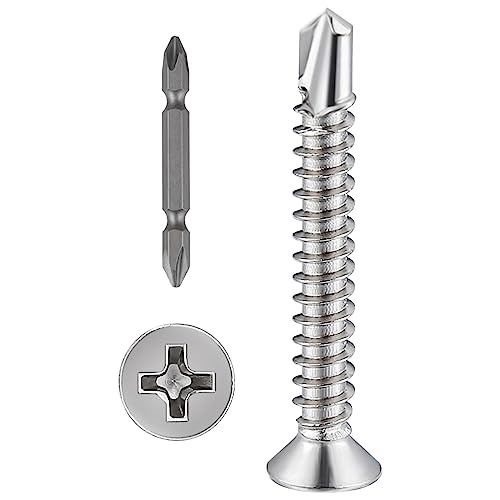
Wensilon #8×1-1/4″ Stainless Flat Head Screws (250-Pack)

Wensilon #8×1-1/4″ Black Stainless Flat Head Screws (250-Pack)
More On The Choices That Made The List
Cabinet carcass work asks a lot of a screw: it has to sink into face frame stock without splitting, seat flush, and hold up under the weight of doors and shelves. The WoodPro CB8X234-1 is built around that job, with a #8 gauge that threads cleanly into softwoods and hardwoods alike, and a 2-3/4″ length that reaches through a 3/4″ face frame into a 3/4″ carcass side without poking through.
The T-20 Torx drive (a six-pointed star pattern that grips the bit far better than a Phillips) keeps the bit seated under load, so you can drive these with a drill on a higher torque setting without cam-out (the bit slipping and chewing up the screw head). Owners commonly report the included 25mm star bit is the right match, so no extra shopping for drivers is needed.
The Good Stuff
- Sharp Type-17 point starts fast and reduces the need to pre-drill pilot holes in softwood.
- PPG 1,000-hour e-coat finish resists rust in damp kitchen and bath environments.
- T-20 Torx drive holds the bit firmly, reducing stripped heads on long drives.
- One-pound jar (around 97 pieces) covers a typical upper-and-lower cabinet run with leftovers.
Worth Noting
- The 2-3/4″ length is overkill for thin cabinet backs; a shorter #8 sheet-metal screw handles that task with less risk of blowout on thin plywood.
- Gold e-coat finish can leave a faint color ring in dense hardwoods if you countersink and don’t plug.
Spec Snapshot
Right Fit For
DIYers building face-frame kitchen cabinets from plywood who want a single screw that drives cleanly and holds long-term.
Skip It When
You’re fastening thin 1/4″ cabinet backs; the Wensilon #8×3/4″ Stainless Truss Head Screws (pick 2) are a better length for that work.
Cabinet backs, nailer strips, and thin plywood panels don’t need the bite of a 2-3/4″ structural screw, and they don’t need a fancy finish. They need a short, sharp fastener that drives fast and holds without splitting thin material. The Wensilon #8×3/4″ truss head screw fits that role, with a self-tapping tip that bores its own hole in light-gauge sheet metal, MDF, and thin plywood.
Compared with the WoodPro pick above, this fastener trades structural strength for speed and economy. The 410 stainless steel is magnetic and corrosion-resistant enough for most indoor cabinetry, though it’s a step below 304-grade stainless in harsh outdoor or marine settings.
Benefits That Matter
- Self-tapping point removes the pilot-hole step on cabinet backs and thin plywood panels.
- Truss head sits low and distributes clamping force across a wider surface, reducing pull-through on thin MDF.
- Three-hundred-piece bulk pack covers multiple cabinet builds without constant resupply.
- Stainless construction resists the humidity swings common in laundry rooms and basements.
Trade Offs
- 410 stainless is harder than 304 but slightly more prone to surface rust in standing water; not the best pick for outdoor kitchens.
- The 3/4″ length is too short to reach through a face frame, so it’s not a substitute for the WoodPro on carcass joints.
Made For
Cabinet builders attaching 1/8″ or 1/4″ hardboard backs and anyone who wants to skip the pilot-hole step on a multi-cabinet run.
Where Another Pick Suits Better
For visible dark cabinet hardware, the Wensilon #8×3/4″ Black Stainless Truss Head Screws (pick 3) give you the same body with a low-reflectance finish.
When a screw is visible, the finish matters as much as the function. The black version of the Wensilon truss head screw carries the same 410 stainless body and 3/4″ length as the silver pick above, but adds a black oxide-style finish that fades into dark-stained cabinetry, iron hardware, or matte-painted interiors.
The trade-off shows up over time. Dark-coated fasteners can show wear at the drive recess after repeated installation and removal, and the black finish tends to mark the surface with a faint halo if you drive and back out a few times. For permanent cabinet-back fastening, that rarely matters.
Real Benefits
- Black finish disappears into dark-stained hardwood, painted MDF, and matte black hardware.
- Same 410 stainless self-tapping performance as the silver version.
- Truss head profile spreads load on thin cabinet backs without poking through.
Honest Caveats
- Black coating can scuff at the drive recess on repeated removals.
- Finish isn’t a match for true black-oxide hardware; expect a slight sheen difference in raking light.
Best Suited To
Cabinet makers and interior trim carpenters who want a fastener that visually disappears on dark finishes.
Swap It Out When
You need corrosion resistance above 410 grade for a wet environment; the Wensilon #8×1-1/4″ Stainless Flat Head Screws (pick 8) carry similar length with a cleaner flush profile.
For most cabinet joinery, a 1″ screw hits the sweet spot. The Wensilon #8×1″ lands inside standard 3/4″ plywood with enough thread to bite without blowing out the back face, and the carbon steel body with black phosphate coating gives it solid hardness at a budget price.
Where the WoodPro pick is purpose-built for face-frame assembly, this screw is the generalist. It handles drawer boxes, cabinet cleats, and light carcass joints. The black phosphate finish is rust-resistant in dry indoor conditions but doesn’t match stainless for damp spaces, so plan accordingly.
Key Advantages
- 1″ length is the everyday workhorse for drawer boxes, cleats, and light carcass joints.
- Carbon steel with black phosphate coating handles typical shop torque without snapping.
- Self-tapping point removes the need for pilot holes in most softwood and plywood.
- Phillips drive is the most common bit on hand, so no specialty driver required.
A Few Limitations
- Black phosphate is indoor-rated; expect surface rust in garages, basements, or outdoor kitchens.
- Phillips head is more prone to cam-out than the Torx on the WoodPro, especially under high torque.
Feature Card
Whose Shelf It Belongs On
Home woodworkers and hobbyists who need a reliable all-purpose screw for indoor cabinet projects and don’t want to fuss with specialty bits.
Not Your Match When
You’re working in a damp basement or outdoor kitchen; the Wensilon #8×1-1/4″ Stainless Flat Head Screws (pick 8) offer better corrosion resistance in the same length class.
Some cabinet projects mix materials, attaching sheet-metal panels to wood framing, or fastening thin aluminum trim to plywood. A TEK-style self-drilling screw with a hex washer head handles that job. The drill-bit tip bores its own pilot through light-gauge steel or aluminum, so you skip the separate drilling step entirely.
The hex washer head accepts a standard nut driver or socket, and the integrated washer face spreads clamping force. In most workshops, the same drill with a 1/4″ hex adapter drives these cleanly.
Positive Points
- TEK-style drill point bores through thin steel, aluminum, and other sheet metal without a pilot hole.
- Hex washer head spreads load and resists cam-out under high torque.
- 410 stainless body handles moderate moisture without flashing rust.
- Three-hundred-piece count supports large metal-to-wood cabinet runs.
Points To Note
- Hex head sits proud of the surface, so this isn’t the right pick when you want a flush finish.
- Drill-point geometry can walk on slick metal if you don’t start with firm pressure.
Perfect Match For
Shop builders attaching metal cabinet panels, garage storage enclosures, or workshop doors to wood frames.
Another Choice May Suit
For pure wood-to-wood cabinet joinery, the WoodPro CB8X234-1 (pick 1) is the stronger structural pick.
The black variant of the TEK screw carries the same self-drilling geometry as the silver version, with a black finish for projects where the hex head will be visible. Black cabinet hardware, iron pipe fittings, and dark-painted steel trim all benefit from a fastener that blends rather than flashes.
Function matches form here: the drill point still handles light-gauge metal, and the hex washer head still drives cleanly with a 1/4″ socket. For most users, this is the choice when the screw will show.
Notable Gains
- Black finish blends with dark cabinet hardware and steel trim.
- Self-drilling TEK tip eliminates pilot-hole work on metal-to-wood and metal-to-metal joints.
- Hex washer head resists cam-out and spreads clamping load on thin sheet.
Practical Considerations
- Finish can chip at the drive recess if you install, remove, and reinstall several times.
- Not a substitute for true structural wood screws on heavy cabinet carcasses.
Who Will Love This
Cabinet builders and metalworkers who want a self-drilling screw with a low-reflectance head for visible trim and hardware.
Reach For A Different Pick When
You need a flush finish on a face frame; the Wensilon #8×1-1/4″ Black Stainless Flat Head Screws (pick 9) sit cleanly below the surface.

Mounting upper cabinets to a concrete or block wall is a different problem than assembling the cabinet itself. The Wensilon slotted hex concrete screw handles that job: it’s heat-treated carbon steel with a blue rust-resistant finish, and the threads are cut to bite into masonry, brick, and mortar once you drill a matching pilot.
The 3/16″ diameter and 1-1/4″ length suit most cabinet-to-wall applications, where a furring strip or cleat needs a solid anchor. Thirty pieces cover a typical kitchen’s worth of upper-cabinet mounting points without oversupply.
Useful Touches
- Heat-treated carbon steel provides the hardness needed to bite into concrete and brick.
- Blue rust-resistant finish extends service life on basement or garage walls.
- Hex head accepts a standard nut driver for fast installation with a drill adapter.
Things To Consider
- Requires a 5/32″ pilot hole drilled with a hammer drill and masonry bit; plan for that tool investment.
- Slotted hex head is functional but not as fast to drive as a true Torx or Robertson pattern.
- Thirty-piece count runs short for very large installations.
Who Should Grab It
Homeowners and contractors mounting upper cabinets, shelving, or heavy wall storage to concrete, block, or brick walls.
Look Elsewhere When
You’re fastening cabinet parts to each other; this screw is wall-side only. The WoodPro CB8X234-1 (pick 1) handles the cabinet assembly itself.
Face-frame cabinet assembly often calls for a flat head screw that sits flush with the wood surface. The Wensilon #8×1-1/4″ flat head answers that need, with a countersinking head profile that pulls into the wood cleanly and a length that bridges standard 3/4″ face frame stock into a 3/4″ cabinet side.
Stainless construction puts this screw ahead of the carbon steel alternatives for damp environments, including above-sink cabinets, bath vanities, and basement workshops. The 1-1/4″ length adds reach compared with the 1″ pick 4, so it handles thicker hardwood face frames without bottoming out.
Notable Upsides
- Flat head profile sits flush or slightly below the wood surface for a clean finished look.
- Stainless body resists corrosion in kitchens, baths, and basements.
- 1-1/4″ length reaches through thicker hardwood face frames without bottoming out.
- Self-tapping point reduces the pilot-hole step in softwood and plywood.
Less Ideal Details
- Countersinking requires a pre-drilled clearance hole or careful driving depth control.
- Stainless is softer than hardened steel, so high-torque driving can snap a screw if you push it.
Built With In Mind
Finish carpenters and cabinet makers who want a flush-mounted screw on visible face frames in moisture-prone rooms.
Where A Sibling Pick Shines
For dark-stained cabinetry, the Wensilon #8×1-1/4″ Black Stainless Flat Head Screws (pick 9) deliver the same flush profile with a low-glare finish.
When a face frame screw is visible and the cabinet is dark, a bright silver flat head sticks out like a tiny mirror. The black version of the Wensilon 1-1/4″ flat head screw keeps the same flush profile and stainless body, with a dark finish that recedes into the wood around it.
Same caution as the silver version: stainless is softer than carbon steel, so high-torque driving demands a steady hand. For most cabinet assembly, that means using a clutch-equipped drill and stopping the moment the head seats flush.
Practical Pluses
- Black finish disappears into dark-stained face frames and painted cabinetry.
- Stainless body handles moisture better than black phosphate carbon steel alternatives.
- Flat head profile provides a clean, finished appearance on visible joints.
Small Caveats
- Black finish can mark the surrounding wood with a faint halo during driving.
- Higher cost per screw than carbon steel general-purpose options.
The Right Fit
Cabinet makers finishing dark-stained or matte-painted projects where the screw head will be visible on the face frame.
Consider Something Else When
You’re assembling cabinet parts that won’t be seen, like internal cleats or drawer boxes; the Wensilon #8×1″ Black Truss Head Wood Screws (pick 4) save money on hidden joints.
What Matters Most When Picking Cabinet Screws
Cabinet work spans at least three different fastening jobs: structural carcass assembly, fastening thin panels and backers, and mounting the finished cabinet to the wall. Each calls for a different screw profile, and treating them as interchangeable is where most cabinet builds go wrong.
For carcass joints, look for a #8 gauge screw in the 2-3/4″ range with a Torx or star drive. The Torx pattern grips the bit under load, so the head doesn’t strip when you drive at higher torque. A Type-17 auger point (a notched tip that acts like a drill bit) reduces or eliminates the need to pre-drill pilot holes, especially in softwood, plywood, and MDF.
For thin panels like cabinet backs, drawer bottoms, and nailer strips, a shorter #8 × 3/4″ self-tapping screw in stainless or coated steel handles the work. The shorter length reduces the risk of blowout on thin plywood, and the wider truss head spreads clamping force so the screw doesn’t pull through under load.
For wall mounting, the wall material dictates the fastener. Wood studs call for a long wood screw; concrete, block, or brick needs a heat-treated concrete screw with a matching pilot hole drilled first. Skipping the pilot step on masonry is the fastest way to snap a screw or crack the surrounding wall.
Material choice also matters more than most people expect. Indoor-only projects in dry climates can run on black phosphate carbon steel without trouble. Kitchens, baths, laundry rooms, basements, and outdoor cabinets benefit from stainless steel to avoid the orange flash rust that appears within months in damp conditions. For most residential cabinet work, 410 stainless is plenty; 304 stainless is the upgrade for harsher environments.
Key Considerations Across These Picks
Mistakes Worth Dodging
Picking a single screw for every cabinet job is the most common slip-up. A 2-3/4″ structural screw will blow out the back of a 1/4″ cabinet back panel, and a 3/4″ screw will not reach through a face frame. Buy for each stage of the build rather than trying to standardize.
The second pitfall is skipping pilot holes in hardwoods and masonry. A self-tapping screw reduces the need to pre-drill in softwood and plywood, but dense hardwoods, MDF edges, and concrete still demand a pilot. A stripped head, a snapped screw, or a cracked panel is the result of skipping that step.
Where The Extra Money Goes
Higher-tier cabinet screws cost more for three real reasons: better steel, better coatings, and tighter dimensional tolerances. A premium Torx screw sits flat in the bit, drives without wobble, and has a heat-treated body that resists snapping. A budget screw may work fine in pine, but you’ll feel the difference on the first cabinet you build in maple or oak. Pay for premium where the screw is structural or visible. Save on the screws that hide inside the cabinet.
Frequently Asked Questions
What size screw is best for building a cabinet face frame?
A #8 × 2-3/4″ screw is a common length for joining a 3/4″ face frame to a 3/4″ cabinet side. It bridges both pieces with enough thread bite to hold without poking through the inside of the cabinet.
Do I need to pre-drill pilot holes for cabinet screws?
In softwood, plywood, and MDF, a self-tapping Type-17 point often eliminates the need to pre-drill. In hardwoods like maple, oak, or birch, drilling a clearance hole and a pilot hole prevents splitting and helps the screw drive straight.
Can I use deck screws for cabinets?
Deck screws are designed for outdoor structural framing, not for cabinetry. They often have heads and coatings that leave marks on finished wood. Cabinet-specific screws offer cleaner heads, better drive fit, and finishes suited to indoor use.
How many screws do I need per cabinet?
A typical upper cabinet uses around 12 to 16 screws for the carcass plus another 8 to 12 for the face frame. Buying in 250- or 300-piece packs, like most of the picks on this list, gives enough fasteners for a small kitchen with leftovers for future repairs.
What is the difference between 410 and 304 stainless steel screws?
410 stainless is harder and magnetic, with good corrosion resistance for indoor and mildly damp environments. 304 stainless is non-magnetic, softer, and more corrosion-resistant in harsh outdoor, marine, or chemical-exposed settings. For most indoor cabinet work, 410 is sufficient.




