


Framing a deck means trusting thousands of fasteners to hold joists, beams, and ledgers together for decades, and the wrong screw turns a Saturday project into a callback you didn’t want. Most homeowners standing in the fastener aisle face the same trade-off: spend more for corrosion resistance, or save a few dollars and watch stain bleed around screw heads within a season. The picks below sort through hex lags, flat-head deck screws, and bulk contractor packs so your framing work matches the way you’ll actually use the deck.
An Overview Of The Picks

Wensilon #12 x 2 Black Hex Exterior Lag Screws (1 lb)

Wensilon #12 x 2 Yellow Hex Exterior Lag Screws (2 lbs)

Wensilon #10 x 3 Deck Screws Bronze (2 lbs)

Wensilon #10 x 3 Black Deck Screws (2 lbs)
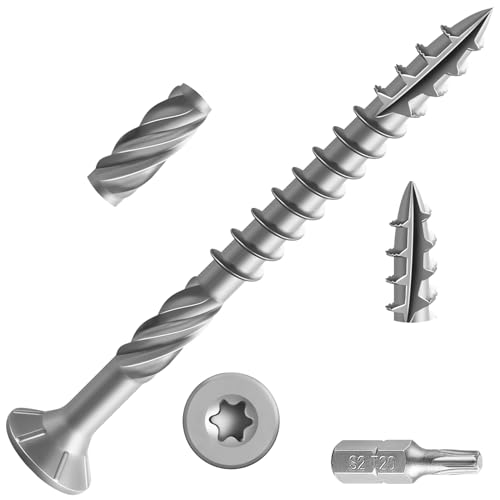
Wensilon #10 x 3 304 Stainless Deck Screws (2 lbs)

Wensilon #8 x 1 Deck Screws (2 lbs)
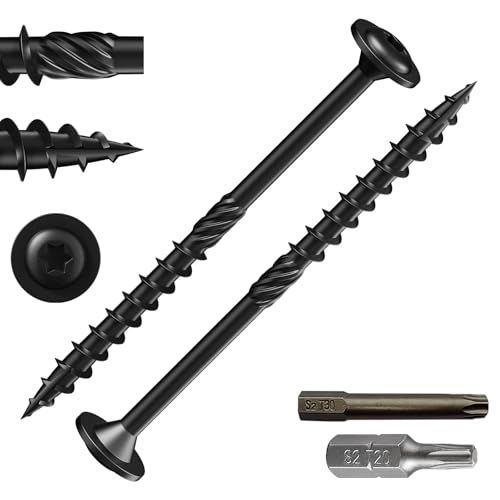
Wensilon #10 x 3 Black Lag Screws With T25 Bit

Wensilon #10 x 3 Yellow Lag Screws (2 lbs)

LIONMAX Deck Screws 3 Inch 25 lb Bulk
More On The Choices That Made The List
Hex-head lag screws earn their place at the structural end of a deck build, and this Wensilon pack is sized for the kind of ledger and beam work where holding power matters more than speed. The 5.5 x 50mm #12 body slips into pressure-treated lumber without a separate pilot hole in most situations, which keeps the workflow moving when you’re driving dozens of fasteners at a time.
For a single-section ledger or pergola corner, the 43-count pack gives you enough screws to finish the structural connection without leftovers going stale in a damp garage. Homeowners tackling a freestanding platform in the backyard will find the head profile easier to seat flush than a Phillips or square drive, since the hex socket resists cam-out (the bit slipping sideways under load) during long runs.
Good Reasons To Consider
- Carbon steel core with a black rust-resistant coating, suited to outdoor framing and pressure-treated lumber.
- Self-tapping tip cuts its own path, so a pilot hole is rarely needed in softwood framing.
- Hex drive head delivers strong torque transfer and resists stripping on long drives.
- Washer-style bearing surface spreads load across the wood face for sturdier beam connections.
Things To Consider
- Smaller 1 lb pack runs out fast on multi-joist projects; you may need a backup box mid-build.
- Black coating is solid for general outdoor use, though coastal homeowners will want the stainless option below for salt air.
Feature Snapshot
Made For
Homeowners framing a small ledger board, pergola post, or beam connection who want a structural screw that doesn’t fight the drill bit.
Look Elsewhere When
A whole-deck rebuild calls for the LIONMAX 25 lb bulk bucket, which covers hundreds of joist-to-decking fasteners in one container.
Same #12 x 2 hex body as the previous pick, but doubled to a 2 lb pack and finished in a yellow corrosion-resistant coating. The yellow finish acts as a visual flag during the build, so when you spot-check framing months later, the lag points are still easy to find beneath any later finish work.
For a deck with several beam-to-post connections or a long ledger run, the 98-count count keeps you from running out mid-afternoon. It’s a sensible match for first-time deck builders who want structural fasteners in volume without committing to contractor-scale quantities.
The Upside
- Bulk 98-piece count suits full ledger and beam framing in a single purchase.
- Carbon steel core with yellow zinc-style coating for outdoor corrosion resistance.
- Self-tapping tip eliminates most pilot-hole work, speeding up the framing day.
- Hex drive pairs with standard nut drivers for quick bit swaps on impact drivers.
Honest Caveats
- Yellow finish is more visible on stained wood than darker screws, which may matter for exposed connections.
- Still a coated steel screw, so very wet climates or coastal salt air call for stainless instead.
Best Suited To
DIYers framing a full mid-size deck who need lag screws in volume and don’t mind a visible yellow finish on the hardware.
Skip It When
A small repair or single-section build would be better served by the smaller 1 lb black lag pack above, which won’t leave you with a long box of leftovers.
Step down from lag screws and the conversation turns to flat-head deck screws, where this Wensilon #10 x 3 bronze pack is the everyday workhorse. A four-layer epoxy coating sits over heat-treated steel, which is the kind of multi-stage finish that holds up against the tannins and copper found in modern pressure-treated lumber.
You get 137 pieces in a 2 lb box, enough to drive two screws per joist across a small platform without restocking. The included T25 star bit means you can start the project without hunting for the right driver, and serrated threads just under the head help the screw seat without the board lifting away from the joist (a common issue called “board lift”).
Well-Handled Touches
- Four-layer epoxy coating resists the corrosive reaction that plain zinc screws get from treated lumber.
- Serrated threads under the head pull the decking tight to the joist without leaving a raised bump.
- T25 star drive delivers six points of contact, so the bit grips and doesn’t skate out under high torque.
- Bronze tone blends into cedar and redwood decking better than a bright silver screw head.
Points To Note
- Coated steel rather than stainless, so very wet or coastal environments will shorten the finish life compared to the 304 option below.
- 3-inch length is overkill for thin deck boards; trim projects are better served by the 1-inch screw reviewed later.
Quick Facts
Whose Shelf It Belongs On
Homeowners building a standard pressure-treated or cedar deck who need a flat-head screw that won’t streak or stain the wood over a few seasons.
Reach For A Different Pick When
A shoreline build or any framing within a few miles of breaking surf will outlast this coating, and the Wensilon 304 stainless pick later in the list is the right call.
Same 2 lb format and T25 star drive as the bronze version above, but the head comes in a flat black finish that visually disappears into dark composite boards or stained framing. If you’ve ever stared at a sea of bright silver dots across a freshly stained deck, the appeal is obvious.
The black epoxy coat is purely cosmetic on top, but it still rides on the same four-layer anti-corrosion system underneath. The 137-piece count handles the same mid-size platform scope as its bronze sibling.
Everyday Perks
- Matte black head disappears against dark composite, ipe, or semi-transparent stain.
- Serrated shank under the head keeps decking pulled tight to the joist face.
- T25 star drive reduces the chance of chewed-up screw heads during long runs.
- Heat-treated steel core with a four-layer protective coating, suitable for outdoor exposure.
Trade Offs
- Black color is a poor match for light cedar or pine, where a bronze or silver head looks more intentional.
- Coated steel construction means the cosmetic finish is the first thing to weather in extreme UV exposure.
Who Will Love This
Builders working on dark composite decking, painted framing, or stained platforms who want the fastener to fade into the wood rather than draw the eye.
Swap It Out When
Natural light-toned lumber will show these dark heads as obvious dots, in which case the bronze version above pairs more naturally with the wood tone.
Where the rest of the field relies on coatings to fight rust, this pack swaps the steel body for 304 stainless (a chromium-nickel alloy that resists corrosion on its own, without a protective finish). That’s the move you make when salt air, pool water, or a damp shaded site is going to attack any coated screw within a season or two.
The 151-piece count in a 2 lb box reflects that stainless weighs a touch more per screw, so you get a slightly lower piece count per pound than coated versions. The T25 star drive and serrated thread profile stay consistent with the rest of the Wensilon deck-screw family.
Noteworthy Benefits
- 304 stainless body is the strongest corrosion defense in this roundup, ideal for coastal and poolside builds.
- No coating to chip or wear off, so the screw head stays clean even after years of weather exposure.
- Serrated shank helps seat the screw without splitting dense hardwoods like ipe or cumaru.
- T25 star drive works with the same bits you already have on the drill from the previous Wensilon picks.
Where It Is Less Suited
- Stainless costs more per pound than coated steel, so whole-deck projects add up quickly on the budget.
- Slightly softer than heat-treated steel, so very dense hardwood may chew the star drive if you skip a pilot hole.
Key Attributes
Perfect Match For
Coastal, lakeside, or poolside deck owners who want to skip the rust-bleed headache for the life of the deck and don’t mind paying a premium per pound.
Consider Something Else When
An inland build with a tight fastener budget will do fine with the bronze coated option above, since salt air isn’t in the equation.
Most deck framing hinges on 3-inch screws, but the trim and fascia work around the perimeter tells a different story. This #8 x 1 pack is built for those lighter fastening jobs, where a long screw would punch through the face of a thin board or split a delicate profile.
You get 560 pieces in a 2 lb box, which is the kind of count that lets a finisher reach for the same screw all week without restocking. The T20 star drive is one size smaller than the framing packs above, so the bit may need to be swapped out.
Useful Touches
- Short 1-inch shank fits thin trim, fascia caps, and picture-frame border boards without poking through.
- 560-piece count covers trim and finish work across an entire deck without repurchasing.
- Star drive system grips firmly, so smaller diameter screws don’t strip out as easily as a Phillips head.
- Rust-resistant epoxy coating keeps the finish side of the deck free from stain bleed.
Potential Compromises
- Not long enough for structural joist or ledger fastening; pair it with one of the 3-inch picks above.
- T20 bit requirement means swapping out from the T25 bit used on the rest of the framing line.
Right Fit For
Finish carpenters and DIYers handling the trim, fascia, and border boards after the structural framing is locked in.
Not Your Match When
The job calls for structural joist or beam fastening, which needs the longer #10 x 3 screws earlier in this list.
This is a different beast from the rest of the line: a #10 x 3 lag screw with a star-drive head rather than a hex socket, and a 60-piece count that fits neatly on a workshop shelf. The included T25 bit means you can crack the box and start fastening without rummaging through a drawer for a missing driver.
For a single pergola, a small shed base, or a few spot repairs on a deck, the count matches the workload. Star-drive lags hold up well under impact-driver torque, and the self-tapping design skips the pilot-hole step for most softwood framing.
Positive Points
- Star-drive head holds the bit firmly under impact-driver loads, reducing stripped heads on long drives.
- Self-tapping tip cuts its own path in softwood, skipping the pilot-hole step on most jobs.
- Black coating matches the rest of the dark hardware on a stained deck for a consistent look.
- Included T25 bit gets the project moving without a separate driver purchase.
Minor Gripes
- 60-piece count runs short on multi-beam builds; larger projects need a heavier pack.
- Coated steel rather than stainless, so salt-air environments will shorten the finish life noticeably.
At A Glance
Who Should Grab It
DIYers tackling a small pergola, shed base, or handful of deck repairs who want a lag screw with the right driver already in the box.
A Better Fit Elsewhere
A whole-deck framing job will burn through this 60-count pack quickly, so the larger 2 lb yellow lag pack below is a smarter match for that scope.
The companion to the smaller 1 lb star-drive lag above, scaled up to a 2 lb pack and finished in a bright yellow coating. The 2 lb count shifts this screw from a one-off repair item into mid-size rebuild territory, where the larger pack pays off without forcing a contractor-scale purchase.
For a deck rebuild that touches several beams or a long ledger run, the count gives you room to spare, and the washer-style head spreads load across the wood face for a sturdier connection. The star-drive profile keeps the bit engaged during long impact-driver runs.
What Earns Its Place
- Generous 2 lb pack covers multi-beam rebuilds without forcing a trip back to the supplier.
- Washer head design distributes load across the wood face for stronger structural connections.
- Self-tapping tip skips the pilot-hole step in most softwood framing applications.
- Star-drive bit grip reduces the chance of a chewed-out head mid-drive.
Some Limits To Know
- Yellow finish stands out on stained wood, which can clash with darker deck aesthetics.
- Coated steel rather than stainless, so coastal builds will see faster finish wear than the 304 option earlier in the list.
Built With In Mind
Homeowners tackling a mid-size deck rebuild who want enough lag screws on hand to finish the structural work in a single weekend.
Where Another Pick Suits Better
For an entire deck surface plus framing, the LIONMAX 25 lb bulk pack later in this list is the more efficient route than stacking several 2 lb boxes of lag screws.
When a deck build stretches past a single weekend, smaller 2 lb boxes start to feel like a hassle. LIONMAX shifts the scale entirely with a 25 lb bucket packing 1,700 #10 x 3 screws, which is enough to sheath an entire deck surface, trim, and most of the structural fastening in one go.
The tan coating is rated against a 1,500-hour salt spray test, which doesn’t make it stainless, but it does put the finish well ahead of standard zinc plating for outdoor exposure. Three T25 star bits come in the bucket, so a worn driver mid-project doesn’t stop the work.
What Stands Out
- 1,700-piece bucket covers a full deck surface plus framing in a single purchase.
- Tan coating passed a 1,500-hour salt spray test, which signals stronger corrosion resistance than basic zinc.
- Reusable plastic bucket keeps leftover screws dry and contained in the workshop or truck.
- Three T25 bits included, so a stripped or lost driver doesn’t shut down the workday.
Practical Considerations
- 25 lb of screws is a lot to lug around the site, and the bucket gets heavy fast on a ladder.
- Coated carbon steel rather than stainless, so very wet coastal sites will still see the finish wear before the 304 option earlier in the list.
Feature Card
Perfect Match For
Contractors and serious DIYers building a full deck surface in one stretch who want to buy once and skip mid-project restocking runs.
Skip It When
A small repair or single-section rebuild will leave the bucket mostly full, and a 2 lb box like the Wensilon bronze pick is a smarter scale match.
What Matters Most Before Choosing Screws For Deck Framing
Material And Coating
The single biggest decision is what the screw body is made of, because that determines how the fastener weathers over a decade of freeze-thaw cycles. Coated carbon steel handles most inland pressure-treated lumber projects without drama, though the coating is the part that eventually wears. Stainless 304 steps up the corrosion defense for coastal builds, pool surrounds, and any framing where rust bleed would stain a visible surface. In plain-English terms: coated is fine for the average backyard, stainless is the right move when water, salt, or shade keeps the wood damp for long stretches.
Drive Type And Head Profile
Hex lags, star-drive lags, and flat-head deck screws each fit a different point in the build. Hex lags handle the structural ledger and beam connections where holding power matters more than finish. Star-drive (also called Torx) flat-head screws are the right tool for surface decking, since the six-lobe pattern grips firmly and resists cam-out on long impact-driver runs. Phillips heads are still common, but they strip out faster under high torque, and most of the picks in this list deliberately use a star or hex profile for that reason.
Length And Count
Screw length should match the boards and joists being joined: 3 inches for standard 5/4 decking over joists, 2 inches for thinner ledger or trim work, and 1 inch for fascia and finish details. Buy count matters just as much, since running out mid-row on a long deck creates an awkward mismatch in fastener batches. A 2 lb box covers a small platform, while a 25 lb contractor bucket is the right scale for a full deck surface plus framing.
Project Scale And Climate
Before picking a box, match the fastener to the environment. Inland builds with standard pressure-treated lumber do well with coated screws. Coastal sites within a few miles of saltwater benefit from the 304 stainless option. Shaded, damp sites that take a long time to dry out also push toward stainless or a heavy multi-layer epoxy coat. The honest read is that buying up one tier of corrosion protection usually costs less than replacing a deck in ten years because the fasteners gave up first.
Key Considerations Across These Picks
Where Shoppers Go Wrong
A common slip is matching screw length to the deck board alone and forgetting the joist below. A 3-inch screw needs to bite into the joist by at least an inch, so on thicker deck boards or doubled joists, an extra half inch of length is worth the upgrade. Another trap is grabbing a Phillips-head deck screw for an impact driver, since the bit slips and chews out the head long before the screw seats. The third mistake worth sidestepping is mixing coated and stainless fasteners on the same deck, because the two metals can react with each other in wet conditions and accelerate corrosion at the connection point.
Where The Extra Money Goes
The jump from coated carbon steel to 304 stainless roughly doubles the price per pound, and the difference shows up in the alloy composition and the absence of any protective coating that can chip or wear. Salt-spray testing, multi-layer epoxy finishes, and serrated thread geometry all add small cost increments that pay back in fewer stripped heads, cleaner-looking screw lines, and longer service life. For an inland deck that dries out between rainstorms, the coated options deliver most of the value at a lower cost. The upgrade is worth it the moment the build sits in a damp or coastal environment, or when the visible screw heads are part of the deck’s finished look.
Frequently Asked Questions
What Size Screw Should I Use For Deck Framing?
A 3-inch #10 deck screw is the standard pick for fastening surface decking to joists, since it bites at least an inch past the board into the joist below. For ledger boards and beam-to-post connections, a 1/4-inch or 5/16-inch lag screw in the 3 to 4 inch range gives the structural holding power those joints need.
Can I Use Regular Screws For Deck Framing?
Interior wood screws don’t have the corrosion-resistant coating needed for outdoor exposure, and they tend to shear off under the lateral load of a deck surface. Exterior deck screws and structural lag screws are heat-treated for shear strength and coated to resist the corrosive reaction in pressure-treated lumber, which is why the picks above are designed specifically for outdoor framing.
How Many Screws Per Joist For Decking?
Two screws per joist per deck board is the standard pattern, one about an inch from each edge of the board. For a 16-inch-on-center joist layout with standard 5-1/2 inch deck boards, that works out to roughly 350 screws per 100 square feet of deck surface.
Are Stainless Screws Worth It For A Deck?
Stainless screws earn their higher price tag in coastal, lakeside, and poolside builds where salt and constant moisture attack coated fasteners within a few seasons. Inland decks that dry out between rainstorms do well with quality coated screws at a lower cost.
What Is The Difference Between Deck Screws And Lag Screws?
Deck screws are flat-head fasteners designed to sit flush with the deck surface, sized for fastening boards to joists. Lag screws are heavy-duty hex or star-drive fasteners with a washer-style head, designed for structural connections like ledgers, beams, and posts where higher shear strength is required.




