


Framing a wall, deck, or shed takes a lot of fasteners, and the wrong screw turns a solid structure into a squeaky, loose mess within a season. Most folks grab whatever box sits near the register, then wonder why their connector plates pull loose or their ledger board flexes. The right screw depends on the material, the load, and whether the joint lives indoors or outside in the rain. This list sorts through nine options across structural connectors, sheet metal, wood framing, and masonry, so you can match the fastener to the build without overbuying.
The Shortlist At A Glance

Simpson Strong-Tie SD9212R500 #9 x 2-1/2″ SD Connector Screws (Box of 500)

Wensilon #8×3/4″ 410 Stainless Steel Truss Head Sheet Metal Screws (300 pcs)

Wensilon #8×3/4″ Black 410 Stainless Steel Truss Head Screws (300 pcs)

Wensilon #8×1″ Black Truss Head Wood Screws, Carbon Steel (250 pcs)

Wensilon #8×3/4″ Hex Washer Head TEK Self-Drilling Screws, 410 Stainless (300 pcs)

Wensilon #8×3/4″ Black Hex Washer Head TEK Self-Drilling Screws (300 pcs)

Wensilon 3/16″ x 1-1/4″ Slotted Hex Concrete Screws, Blue Finish (30 pcs)
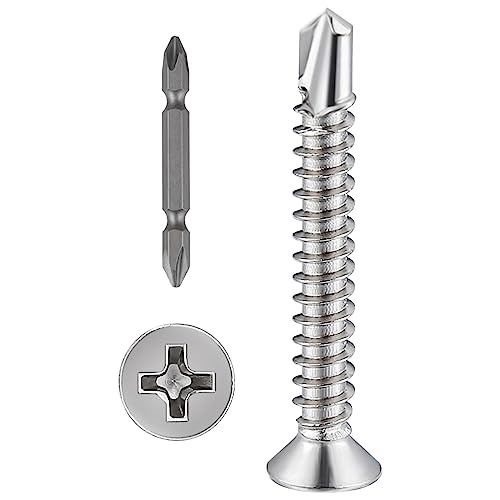
Wensilon #8×1-1/4″ 410 Stainless Flat Head Self-Tapping Screws (250 pcs)

Wensilon #8×1-1/4″ Black 410 Stainless Flat Head Self-Tapping Screws (250 pcs)
A Closer Look At Each Pick
When a Simpson Strong-Tie connector plate, hurricane tie, or joist hanger is in play, the manufacturer has a clear preference: use the SD screw, not whatever is in the bottom of the bucket. The SD9212R500 ships as a 500-count contractor box and is built around a 1/4-inch hex drive with a stamped head, so you can confirm correct size at a glance. The shank is heat-treated for better ductility (meaning the steel flexes slightly before snapping instead of shattering), and a 0.370-inch washer face spreads load across the connector.
What sets it apart from a generic #9 deck screw is the engineering. Single-fastener load capacity exceeds a 10d common nail, and Type 316 stainless steel handles coastal or treated-lumber environments where plain zinc would streak and corrode in a season. A hex driver bit comes in the box, so you do not need to hunt for the right socket before the first hole.
Strengths Worth Knowing
- Approved by Simpson Strong-Tie as a structural replacement for 10d nails in their connectors, which keeps your build code-aligned.
- Type 316 stainless steel stands up to pressure-treated lumber and salt air without bleeding rust streaks down a deck face.
- The 1/4-inch hex head with a stamped size identifier speeds up inspection on a busy job site.
- Heat-treated shank delivers the ductility needed for driving into dense engineered lumber without snapping.
- A 500-count box covers a full deck framing or a moderate room addition without running out mid-joist.
Honest Caveats
- Stainless costs more per box than coated carbon screws, so using it on non-structural trim work is overkill.
- The hex head sits proud of the connector; for flush-mounted applications, swap to a flat-head fastener.
Key Product Details
Made For
Pros and serious DIYers building decks, pergolas, or additions that rely on Simpson Strong-Tie connectors in treated lumber or coastal conditions.
Skip It When
The Wensilon #8×3/4″ Hex Washer Head TEK Self-Drilling Screws suit a metal-to-metal HVAC or steel-stud project far better than a 2-1/2-inch structural screw.
Truss heads sit low and wide, distributing clamping force over a broad surface without snagging on adjacent panels. Wensilon packs 300 of these #8×3/4-inch fasteners, sized for thin sheet metal and light gauge framing where a longer screw would punch through the back side. The 410 stainless body resists rust far better than a zinc-plated carbon screw, which matters for shop projects that may sit in a damp garage or an unconditioned outbuilding.
You will find these useful on HVAC duct assemblies, electrical enclosures, or sheet-metal patches where the screw has to drill its own hole and hold without a pilot. The wider truss head keeps thin material from tearing around the drive point, especially on softer alloys where a pan head would pull through.
Notable Upsides
- Self-tapping tip cuts its own thread in light gauge sheet metal, so no pre-drilling on most jobs.
- Truss head spreads clamping load, which prevents tear-through on 26-gauge and thinner material.
- 410 stainless steel gives a much longer service life than bright zinc plated carbon screws in humid spaces.
- 300-piece count handles a mid-sized duct rework or a few appliance repairs in one purchase.
Worth Noting
- 410 stainless is magnetic and slightly less corrosion-resistant than 304 or 316 grades in coastal or chemical exposure.
- Not suited for structural framing lumber, the length and head are wrong for shear connections.
Right Fit For
Sheet metalworkers, HVAC installers, and homeowners patching ductwork or thin metal panels where corrosion resistance is more important than a flush finish.
Look Elsewhere When
The Simpson Strong-Tie SD9212R500 is the smarter choice when you are fastening structural wood framing connectors rather than sheet metal.
Same body and head profile as the silver version, but the black oxide-style finish blends into dark trim, painted panels, and appliance housings. On a black anodized (a protective coating created through an electrochemical bath) speaker cabinet or a powder-coated steel door, a shiny zinc screw sticks out like a tack. The black surface here is functional, not cosmetic only, and still rides on the 410 stainless substrate.
It is a niche pick, but a useful one for anyone finishing a metal project where the fasteners stay visible. You keep the same self-tapping tip and truss head geometry, just with a low-reflectance color that does not draw the eye in finished work.
What Works In Its Favor
- Dark finish disappears against black hardware and powder-coated panels, cutting down on visual cleanup.
- Same self-tapping tip and truss head as the silver version, no learning curve switching between the two.
- 410 stainless base metal holds up better than plain steel in garages, basements, and outdoor enclosures.
Trade Offs
- Black coating can show wear at the drive recess after many installs, and is purely cosmetic, so any scratch exposes the base metal.
- Limited to 3/4-inch length, which rules out anything beyond thin sheet metal and shallow fastening.
Best Suited To
Custom fabrication shops and DIYers finishing black metal furniture, audio gear, or appliance repairs where the fasteners are part of the look.
Reach For A Different Pick When
The Wensilon #8×1-1/4″ Black 410 Stainless Flat Head Self-Tapping Screws deliver the same dark finish with a longer reach and a flush-mounted head.
These are not stainless, and that is the point. Carbon steel with a black phosphate (a thin dark conversion coating that adds mild corrosion resistance and a matte finish) finish gives stronger threads than stainless at a lower cost, which is exactly what you want in a cabinet shop. The 1-inch length sinks into softwood and MDF without bottoming out, and the truss head sits low so drawer slides and hinge plates clear the surface.
Wensilon rates the body at roughly twice the hardness of copper, which translates to fewer snapped heads during long production runs. For an indoor shop with stable humidity, the trade-off between cost and corrosion is usually worth it.
The Practical Payoff
- Hardened carbon steel holds threads in MDF and plywood better than a softer stainless alternative.
- Black phosphate finish blends into dark cabinet interiors and painted builds.
- 1-inch length suits face-frame assembly and small casework without poking through the back panel.
- 250-count box covers a small kitchen’s worth of cabinet joinery with room to spare.
Points To Keep In Mind
- Carbon steel with phosphate coating is for indoor use only, exterior exposure will rust within a season.
- Truss head sits proud, so it is not the right pick where a flush finish matters.
Quick Facts
Whose Shelf It Belongs On
Cabinetmakers and woodworkers assembling indoor furniture who want a tough, cost-effective fastener and do not need stainless corrosion protection.
A Better Fit Elsewhere
The Wensilon #8×3/4″ 410 Stainless Steel Truss Head Sheet Metal Screws handle thin metal work where this carbon steel fastener would be the wrong material.
TEK screws have a fluted tip that bores through steel before the threads engage, which is the difference between a 10-second install and a 10-minute drill-and-tap routine. This Wensilon box ships 300 hex washer head fasteners in #8×3/4-inch sizing, suited for joining light gauge steel studs, strapping, and metal tracks. The integrated washer face pulls the joint tight without sinking into thin material.
The 410 stainless body outperforms zinc-plated carbon in humid spaces, which matters for unconditioned shops, basements, and metal buildings. If you have ever stripped a Phillips head mid-fastener, you will appreciate the hex drive, it just does not cam out (slip and round over the recess) under load.
Practical Pluses
- TEK tip drills through light gauge steel without a pilot hole, saving time on metal framing runs.
- Hex washer head resists cam-out under high torque, faster driving with a nut driver or impact.
- 410 stainless holds up better than plated carbon in damp or partially exposed metal framing.
- 3/4-inch length is right for stud-to-track connections without punching through the back wall.
Some Limits To Know
- TEK tips struggle on heavier gauge steel above about 12-gauge, switch to a self-tapping pilot for thicker stock.
- 410 stainless is magnetic and not as corrosion-resistant as 305 or 316 in coastal environments.
Feature Snapshot
Who It Suits Best
Steel framing crews, metal building erectors, and DIYers working on basement stud walls or garage interiors where self-drilling fasteners save real time.
Not Your Match When
The Simpson Strong-Tie SD9212R500 is built for wood-to-wood structural connections rather than the metal framing this TEK screw targets.
Take the TEK self-drilling geometry of the previous pick, add a black finish, and you have the fastener most HVAC installers reach for on black sheet metal ductwork. The dark coating blends with anodized duct and standard HVAC strapping, so the screw head does not flash silver under inspection. You still get the same hex washer drive that pulls duct seams tight without tearing thin galvanized material.
For homeowners replacing a section of trunk line or a contractor running supply branches in a mechanical room, the combination of TEK tip and black finish keeps the install clean and fast. Three hundred pieces covers a small addition or a full basement rework.
What Stands Out
- TEK tip eliminates the pilot-hole step, which is the single biggest time-saver on sheet metal ductwork.
- Black finish matches standard HVAC components and keeps the install visually clean.
- Hex washer head pulls joints tight on thin material without punching through.
- 410 stainless base offers real rust resistance compared to zinc-plated carbon screws.
Where It May Fall Short
- Not for outdoor coastal installs, where the 410 grade will eventually pit compared to 316 stainless.
- Black coating is a finish only, scratches expose the base metal and may flash silver in finished work.
Perfect Match For
Mechanical contractors and homeowners running HVAC ductwork, black sheet metal enclosures, or any indoor metal project where a self-drilling screw with a dark head is needed.
Where Another Pick Suits Better
The Wensilon #8×3/4″ 410 Stainless Steel Truss Head Sheet Metal Screws work better when a wider, lower-profile head and a clean silver finish are the goal.
Wood framing into concrete calls for a different fastener entirely, and that is where masonry screws earn their keep. Wensilon’s blue-finished hex head concrete screws come in a 30-pack, sized at 3/16-inch diameter by 1-1/4 inch length. The blue rust finish on the carbon steel body is a hint at the heat-treating: it is hard enough to tap a thread into poured concrete, mortar joints, and brick without a separate anchor sleeve.
You do need to drill a pilot hole first with a hammer drill and a matching masonry bit. Once the hole is blown clean, the screw threads itself in and holds against vibration better than a plastic anchor. The hex head accepts a standard nut driver, so no specialty bits are needed.
Good Reasons To Consider
- Heat-treated carbon steel taps its own thread into concrete, brick, and block, no plastic anchors required.
- Blue rust finish gives decent corrosion resistance for basement and garage conditions.
- Hex head drives with common nut drivers, no specialty bit to track down.
- 1-1/4 inch length suits furring strips, electrical boxes, and small framing anchors to masonry.
Potential Drawbacks
- Requires a hammer drill and the correctly sized masonry bit, which adds tool cost if you do not already own them.
- Only 30 pieces per box, so larger foundation or ledger projects need multiple boxes.
Who Should Grab It
Homeowners and remodelers attaching wood framing, furring strips, or small fixtures to basement walls, garage masonry, or brick exteriors.
Swap It Out When
The Simpson Strong-Tie SD9212R500 is the right fastener when the substrate is dimensional lumber rather than masonry.
When the screw head has to disappear into the surface, a flat head (also called a countersunk head, designed to sit flush in a pre-countersunk recess) is the right tool for the job. Wensilon’s #8×1-1/4-inch flat head sheet metal screws in 410 stainless run 250 to a box and pair a self-tapping tip with a head that countersinks cleanly into soft metal, plastic, and thin wood panels. The result is a smooth finish with no protrusion to catch on clothing or paint.
This is the right pick for trim pieces, decorative metal panels, and any project where the fastener should vanish. The 1-1/4-inch length gives more bite than the 3/4-inch versions earlier in this list, which matters when fastening through a thin face sheet into a thicker backing.
A Strong Showing
- Flat head sits flush in countersunk holes, ideal for visible trim and decorative panels.
- 1-1/4-inch length provides deeper engagement than shorter self-tapping screws in the same family.
- 410 stainless body resists rust better than plated carbon for outdoor enclosures and garage projects.
- Self-tapping tip eliminates pilot holes in light gauge metal, speeding up panel installations.
What To Weigh
- Countersinking requires a correctly sized drill bit or a countersink tool, an extra step versus a truss head.
- 410 stainless is not recommended for prolonged coastal exposure, where 316 grade performs noticeably better.
Core Details
Built With In Mind
Finish carpenters, metalworkers, and cabinet builders who need a flush-mounting screw that still resists rust in a workshop or garage environment.
Another Choice May Suit
The Wensilon #8×3/4″ 410 Stainless Steel Truss Head Sheet Metal Screws are a faster install when flush mounting is not a concern.
The last pick combines the flush-mounting flat head from the previous entry with a black finish, giving you a screw that both sits level and disappears against dark trim. Wensilon’s #8×1-1/4-inch version targets high-visibility installations: black anodized panels, dark-stained cabinetry, and architectural metalwork where even a flush silver head would catch the eye. The 410 stainless substrate keeps corrosion at bay for the long haul.
For fabricators building custom AV racks, dark-stained cabinet backsplashes, or any decorative project where hardware should be heard and not seen, this fastener handles both jobs. Pre-drill and countersink, then drive the screw home for a clean reveal.
What Earns Its Place
- Black finish disappears against dark panels, painted trim, and anodized metalwork.
- Flat head sits flush after countersinking, no protrusion to catch on fabric or skin.
- 1-1/4-inch length gives more bite than shorter flat head screws for panel-to-frame fastening.
- 410 stainless base metal holds up in damp and unconditioned spaces better than plated carbon.
Less Ideal Details
- Countersinking step adds time per fastener compared to a truss or hex head install.
- Black finish is decorative, the underlying metal still has 410’s corrosion limits in harsh environments.
Technical Reference
Right Fit For
Custom fabricators, AV installers, and finish carpenters who want the screw to vanish in dark millwork, black anodized panels, or stained cabinetry.
Consider Something Else When
The Wensilon #8×1-1/4″ 410 Stainless Flat Head Self-Tapping Screws are the better match when you need the same flush performance but prefer a silver finish.
Choosing The Right Fastener For Your Build
Matching a screw to a framing project means reading three things on the box: the material, the head style, and the corrosion rating. For wood-to-wood structural connections like joist hangers and hurricane ties, an approved structural screw such as the Simpson Strong-Tie SD9212R500 delivers tested load capacity and code compliance. For light gauge steel framing, TEK screws with self-drilling tips cut their own pilot and pull the joint tight in one pass. For wood framing into concrete, masonry screws need a hammer-drilled pilot but hold far better than plastic anchors under vibration.
Length matters as much as type. A general rule is that a structural screw should penetrate the receiving member at least as deep as the thickness of the material being fastened. Short screws in 3/4-inch lengths work for thin sheet metal, while 1-1/4-inch and longer screws reach into backing framing. Going too long risks blowing out the back of the material, especially in thin metal or hollow doors.
Corrosion rating deserves attention whenever the joint sees any moisture. Type 316 stainless handles coastal and chemically treated environments, while 410 stainless is a sensible indoor-to-garage compromise. Plain zinc-plated carbon screws are fine for interior framing but bleed rust streaks down siding within a season of outdoor exposure. Match the rating to the environment rather than the price tag.
Key Considerations Across These Picks
Common Shopping Slip Ups
The most frequent mistake is using a generic deck screw where an approved structural screw belongs. Manufacturers like Simpson Strong-Tie test their connectors with specific fasteners, and substituting a similar-looking screw voids that approval and can fail inspection. Another trap is choosing length by eye rather than by the combined thickness of the materials being joined. Short screws feel tight at first but pull loose under cyclic loading, especially in deck applications where the joists expand and contract seasonally.
Where The Extra Money Goes
Higher-tier framing screws cost more for a reason. Type 316 stainless steel resists chloride corrosion (the salt-driven pitting that destroys standard fasteners near the coast or on pool decks), heat-treated shanks resist snapping in dense engineered lumber, and stamped heads with hex drives reduce cam-out. On a small interior project the savings rarely justify a downgrade, but on a deck, a roof, or a ledger board, the upgraded fastener is the difference between a 5-year repair and a 25-year install.
Frequently Asked Questions
What size screw is best for framing 2×4 lumber?
For 2×4 framing with face-mounted connectors, a #9 or #10 screw in the 1-1/2 to 2-1/2-inch range is the standard pick. The screw needs to pass fully through the connector and bite at least an inch into the underlying framing for full load transfer.
Can I use deck screws for structural framing?
Deck screws are designed for surface fastening deck boards, not for the shear loads in a connector. For joist hangers, hurricane ties, and other structural hardware, use a screw that the connector manufacturer has specifically approved, such as the Simpson Strong-Tie SD series.
What is the difference between Type 305, 410, and 316 stainless steel screws?
Type 316 is the most corrosion-resistant and is used in coastal or chemically treated environments. Type 305 is non-magnetic and slightly softer, used in applications requiring low magnetic signature. Type 410 is magnetic, harder, and more affordable, suited to indoor and sheltered outdoor use.
Do I need a pilot hole for self-tapping screws?
Self-tapping screws cut their own thread in light gauge metal and soft plywood, so no pilot is needed. For harder steel above about 12-gauge or in dense hardwoods, a pilot hole prevents snapping and improves alignment.
How many framing screws do I need per box?
A typical 2×4 wall frame with 16-inch on-center studs uses roughly 8 to 12 screws per stud bay for sheathing and plates. A 500-count box covers framing connectors and a small addition, while 250-count boxes suit trim and finish work.




