


Melamine has a reputation for splitting, chipping, and crumbling the second a wrong fastener touches it. The right screw changes all of that, sinking clean into the slick coated surface and holding tight without the breakout. Cabinet builders, closet makers, garage organizers, and weekend shelf-builders all run into the same wall: the screw in the drawer never matches the job. This lineup gathers nine options that handle melamine cleanly, with the trade-offs called out so you can match the screw to the project without guesswork.
The Lineup, Simplified

GRK R4 #8 x 1-1/2 Multi-Purpose Screws (2000/Box)

GRK R4 #9 x 2-1/2 Multi-Purpose Screws (1150/Box)

GRK R4 #10 x 4 Multi-Purpose Screws (540/Box)
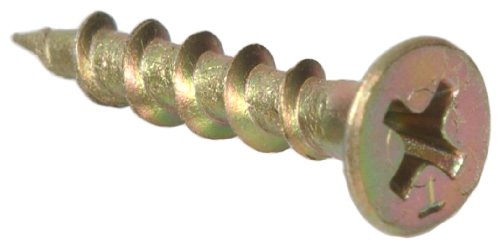
Hillman 35024 Particle Board Screws 8×3/4 (100-Pack)

Wensilon #8×1 Truss Head Self-Tapping Screws (200-Pack)

GRK Finish & Trim Head Screws #8 x 2-1/2, White (100-Pack)

Power Pro Exterior Wood Screws #8 x 2, Bronze (141-Pack)

Wensilon #6 x 3/4 Drywall Screws 410 Stainless (340-Pack)

Wensilon #8 x 3/4 Hex Washer Self-Drilling Screws (300-Pack)
The Picks, Examined More Closely
Melamine and particle board share a habit: the surface is glossy and the core is soft, so a standard wood screw walks before it bites. The GRK R4 in #8 x 1-1/2 in. was built around that exact problem. The self-tapping tip pierces the slick melamine coating without the wander you get from a duller fastener, and the bugle head countersinks flush, leaving a clean face on the panel you just spent an hour aligning.
A 2000-count box covers the kind of volume cabinet shops burn through during a single kitchen run, so per-piece cost drops fast. For a single closet project, that count feels excessive; for a small shop or a long stretch of built-ins, it lands just right. The T-15 star drive also keeps the bit seated during high-torque runs, which matters when you’re driving these into denser substrates.
Reasons It Performs
- Self-tapping tip cuts through the melamine coating cleanly, reducing pre-drilling on most panels.
- Bugle head sinks flush, so finished cabinet faces stay smooth without raised screw bumps.
- Climatek coating handles damp basements, garage walls, and exterior trim work without early rust.
- Bulk 2000-count format drops the per-screw cost on big production runs.
- T-15 star drive keeps the bit locked in under load, which reduces cam-out on long drives.
Worth Noting
- The 1-1/2 in. length is short for deep cabinet carcass joints, where a longer screw may be needed.
- T-15 bit must be kept on hand since standard Phillips drivers will chew the recess.
- Bulk packaging can be awkward to store in smaller home workshops.
At A Glance
Right Fit For
Cabinet makers and remodelers running multi-room installations who need a reliable bulk pack of climatek-coated screws for melamine, particle board, and framing.
Reach For A Different Pick When
For thinner panels and lighter work, the Hillman 35024 Particle Board Screws 8×3/4 (100-Pack) cost less per box and handle small repairs without the bulk commitment.
The shorter R4 in the lineup covers most cabinet face frames, but the moment the joint runs deeper than a single panel, you want length. Stepping up to #9 x 2-1/2 in. gives you the extra reach to bite through two layers of 3/4 in. board without the tip blowing out the back side. That extra length also helps when fastening melamine to a wood cleat or attaching a face frame to a thicker carcass.
Like its smaller sibling, this version uses the same Climatek coating for corrosion protection and the same w-cut thread profile that grips cleanly into particle board core. For pros building a full kitchen or a custom closet system, the 1150-count hits a useful middle ground between small packs and the 2000-count bin. The T-25 bit required for #9 fasteners is the only real adjustment if you’ve been using T-15 drivers on smaller GRK screws.
The Practical Payoff
- 2-1/2 in. length passes through two 3/4 in. panels for stronger carcass and face frame joints.
- W-cut thread design grips particle board core cleanly without over-driving.
- Climatek coating keeps the screws from staining lighter melamine surfaces over time.
- Star drive recess reduces bit slippage on long, high-torque drives.
Trade Offs
- Requires a T-25 bit, separate from the T-15 used on smaller GRK screws.
- Longer length can blow through the back of thinner panels if depth isn’t controlled.
- Heavier box weight makes the 1150-count less portable for job-site mobility.
Whose Shelf It Belongs On
Experienced woodworkers assembling full kitchen carcasses, closet systems, and face-frame cabinetry where deeper reach and code-approved holding power are essential.
Swap It Out When
For lighter face-frame work on standard 3/4 in. panels, the GRK R4 #8 x 1-1/2 Multi-Purpose Screws (2000/Box) covers the job at a shorter length and lower per-piece cost.
Most melamine jobs never need a 4-inch screw, and that’s exactly why this one exists for the cases that do. The #10 x 4 in. R4 reaches through thicker built-ups, ledger boards, and structural melamine-faced panels where shorter fasteners simply don’t anchor. Cabinet installers who attach upper banks to blocking, and remodelers who build out garage storage, will find the deeper reach a real time-saver.
The trade-off is precision: a 4-inch screw has more than enough length to blow through the back of a misjudged panel, so a steady driving pace and depth control matter. The 540-count box reflects that this isn’t a daily-driver screw for most folks. Pull it out for the heavy work, keep a smaller R4 for everything else, and the box lasts through years of weekend projects.
What It Does Well
- 4 in. length reaches through deep built-ups, blocking, and ledger attachments.
- #10 gauge adds shear strength for heavier structural loads.
- Climatek coating prevents corrosion in damp shop environments.
Potential Drawbacks
- Oversized for typical cabinet face-frame and shelf work.
- Higher per-screw cost compared to shorter R4 options in the same line.
- Requires a T-25 bit and confident depth control to avoid blow-throughs.
Best Suited To
Pros and serious DIYers fastening upper cabinet runs, garage shelving, and structural melamine assemblies that demand deeper anchoring than a standard-length screw provides.
Consider Something Else When
For standard 3/4 in. panel work, the GRK R4 #9 x 2-1/2 Multi-Purpose Screws (1150/Box) handles the same Climatek reliability at a more practical length.
Not every job needs a 2,000-count box and a high-end coating. For a quick closet repair, a single shelf pin replacement, or a small melamine cabinet patch, the Hillman 35024 covers the basics without overcommitting on quantity. The 8 x 3/4 in. size lands cleanly into particle board, which is the same core material hiding under most melamine surfaces, so it works in a pinch where dedicated melamine screws feel like overkill.
The yellow dichromate finish handles indoor humidity but isn’t a heavy-duty outdoor coating, so you’ll want to keep these for interior work. The shorter length also means the screw stays well within the panel, reducing the chance of blow-through on thin shelving. For a small parts drawer in a home workshop, this is the kind of fastener you grab without thinking twice.
Everyday Perks
- Short 3/4 in. length prevents blow-through on thin particle board shelves.
- Compact 100-pack fits a kitchen drawer or small parts bin without clutter.
- Yellow dichromate finish suits indoor humidity without rust staining.
Small Caveats
- Not designed for outdoor or high-moisture environments.
- Limited holding depth in thicker cabinet carcass joints.
Quick Facts
Made For
Homeowners and renters handling small melamine repairs, shelf pin swaps, and light particle board fixes where a small, affordable pack is all you need.
Look Elsewhere When
For full cabinet builds or weather-exposed projects, the Power Pro Exterior Wood Screws #8 x 2, Bronze (141-Pack) offer a corrosion-rated step up.
Wensilon’s 410 stainless self-tapping truss head isn’t a typical melamine screw, and that’s its real advantage. When you need to bridge melamine and sheet metal in the same build, like a melamine cabinet box with a metal backer or a metal-framed melamine insert, a standard wood screw will not cut it. The self-tapping tip drills its own hole through thin gauge steel, and the stainless body holds up to moisture without bleeding rust onto the white melamine face.
The wider truss head spreads clamping pressure across a broader area, which helps when fastening into softer particle board cores. The trade-off is aesthetics: that broad round head sits on top of the surface rather than countersinking, so it shows on visible cabinet faces. Reach for these when the joint is structural or hidden, not when the head needs to disappear into a clean trim line.
Useful Highlights
- 410 stainless steel construction resists corrosion in damp basements and shops.
- Self-tapping tip drills through thin metal without a separate pilot hole.
- Truss head spreads load across a wider surface on softer particle board.
Honest Caveats
- Head does not countersink, so it remains visible on finished faces.
- 410 stainless is magnetic, not as corrosion-resistant as 304 for outdoor use.
- Not the cleanest choice for purely wood-to-melamine joints where a bugle head excels.
Who Should Grab It
Builders and DIYers working on hybrid projects that combine melamine panels with sheet metal backers, brackets, or framing where standard wood screws would fail to bite.
A Better Fit Elsewhere
For purely melamine-to-wood joints, the GRK R4 #8 x 1-1/2 Multi-Purpose Screws (2000/Box) leave a flush, countersunk finish on visible cabinet faces.
Most screws for melamine are designed to hide, and the GRK Finish and Trim head takes that idea further. The narrow trim head sinks into the smallest visible footprint of any screw on this list, and the white painted head blends against white melamine surfaces where a standard bugle head would flash as a dark dot. For cabinet face frames, closet doors, and decorative panels where the screw needs to disappear, this is the cleanest look on the market.
The smaller head also means less splitting risk in delicate trim work, and the w-cut thread pattern keeps the screw driving straight. Compared to the bulk R4 framing screws reviewed earlier, this is a finishing screw, not a structural one. Use it where the head shows and appearance matters, then reach for the R4 when the joint is hidden behind a panel or hidden in the carcass.
Noteworthy Benefits
- White-painted head blends against white melamine surfaces.
- Small trim head reduces splitting on fine carpentry and detailed trim.
- W-cut thread design drives straight and resists walking on slick surfaces.
Some Limits To Know
- 100-count pack is limited for larger multi-room installations.
- Trim head offers less clamping surface than a bugle or washer head on structural joints.
- White coating can chip if driven with a worn bit.
Feature Snapshot
Who Will Love This
Craft-conscious builders finishing white melamine cabinetry, closet doors, and decorative trim where the screw head needs to stay as invisible as possible.
Not Your Match When
For heavy structural carcass work, the GRK R4 #10 x 4 Multi-Purpose Screws (540/Box) deliver greater holding power in deeper joints.
Garages, workshops, and covered porches all expose melamine panels to swings in humidity that indoor screws do not handle well. The Power Pro exterior screw in #8 x 2 in. carries a bronze coating engineered for outdoor and treated-lumber conditions, so it doesn’t streak rust down a white melamine face six months after install. For shop cabinets, basement workbenches, and any melamine build sitting in an unconditioned space, the coating earns its keep.
The 2-inch length works well for fastening melamine panels to framing or for face-frame attachment where you need a bit more reach than a 1-1/2-inch screw. The bronze tone will show on light cabinetry, though, so plan to use these on structural or hidden attachments rather than visible face frames. The 141-count sits between a small repair pack and a shop bulk box, which fits a weekend warrior’s pace of one or two builds a season.
Real-World Strengths
- Bronze exterior coating resists corrosion in unconditioned and outdoor spaces.
- 2 in. length gives extra reach for face frame and framing applications.
- Mid-size 141-pack suits weekend projects without the bulk of a contractor bin.
Points To Keep In Mind
- Bronze head will show against white melamine surfaces.
- Not a melamine-specific design, so pre-drilling is wise on edges to prevent blow-out.
- Limited pack size for large production runs.
Perfect Match For
DIYers and pros building shop cabinets, basement workstations, and covered outdoor storage where humidity and temperature swings demand a coated exterior screw.
Skip It When
For indoor cabinetry where the screw head should stay flush, the GRK Finish & Trim Head Screws #8 x 2-1/2, White (100-Pack) blend cleanly with white melamine.
Drywall screws are not always the first thing you reach for in a melamine build, but the Wensilon #6 x 3/4 in. coarse-thread version is a useful backup for thin panels, pegboard, and lightweight cleat work where a full-size cabinet screw would overpower the material. The coarse thread bites cleanly into particle board, and the 410 stainless body keeps the screws from corroding in any damp space they end up in.
These are shorter and thinner than dedicated cabinet screws, so the holding power is limited. Use them for backing panels, low-load shelf pins, and temporary jigs, and switch to a proper R4 or finish screw for structural cabinet work. The 340-count is generous for a budget screw, which makes it easy to keep a dedicated bin in the workshop without much overhead.
The Helpful Details
- Coarse thread bites into particle board cleanly without pre-drilling.
- 410 stainless body resists corrosion in basements and garage shops.
- 340-count budget pack fits small workshops and occasional repairs.
Practical Considerations
- Not a substitute for dedicated cabinet or framing screws in load-bearing joints.
- Smaller #6 gauge provides less shear strength than #8 or #10 alternatives.
Built With In Mind
Homeowners and hobbyists who need an affordable, corrosion-resistant screw for thin panels, temporary jigs, and low-load backings in melamine and particle board assemblies.
Where A Sibling Pick Shines
For structural cabinet face frames, the Hillman 35024 Particle Board Screws 8×3/4 (100-Pack) offer a better balance of gauge, length, and price for serious builds.
The self-drilling hex washer head lands at the rugged end of the spectrum. The hex head takes a nut driver or impact driver and pulls through stubborn material without the bit cam-out that plagues Phillips and star recesses under high torque. When you’re attaching melamine-faced panels to a metal frame, fastening aluminum brackets, or working with sheet metal in a hybrid build, the integrated drill tip removes the need to pre-drill every hole.
Stainless 410 construction means the screw holds up to moisture and won’t bleed rust down a cabinet face over time. The hex washer head does sit proud of the surface, similar to the truss head reviewed earlier, so plan to use these where the fastener can be hidden or where the industrial look fits the build. The 300-count and bulk 410 stainless make this a strong value for workshop bins.
A Strong Showing
- Self-drilling tip eliminates pre-drilling in thin metal and aluminum.
- Hex washer head handles high torque without bit slippage or cam-out.
- 410 stainless construction resists rust in damp shop conditions.
- 300-count bulk pack suits workshop storage at a reasonable cost.
Where It Is Less Suited
- Hex head requires a separate nut driver or hex socket, not a standard bit.
- Head sits above the surface and will be visible on finished cabinet faces.
- 410 stainless is magnetic and less corrosion-resistant than 304 for prolonged outdoor exposure.
Key Product Details
The Right Fit
Workshop builders and metalworkers who frequently fasten melamine panels to aluminum or steel framing and need a self-drilling, high-torque screw that holds up in tough conditions.
Not Your Match When
For hidden structural cabinet joints, the GRK R4 #9 x 2-1/2 Multi-Purpose Screws (1150/Box) deliver countersinking heads and Climatek corrosion protection in a longer format.
What Matters Most Before Choosing Screws For Melamine
Match the head to the visibility of the joint. Trim and finish heads disappear into white melamine faces, while bugle heads countersink for a flush look on hidden carcass work. Hex washer and truss heads sit above the surface, so reserve them for structural attachments or metal-on-melamine joints where the head can stay hidden or industrial looks fit the build.
Pick gauge and length for the panel thickness, not the project size. A #8 screw in a 1-1/2 in. length handles most 3/4 in. melamine panels, while a #9 or #10 in a 2-1/2 in. or 4 in. length reaches through two-layer carcasses or blocking. Going too long risks blow-through on the back side, and going too thin strips the soft particle board core before the screw seats.
Coating matters more than people expect. Indoor-only builds can run on basic yellow dichromate or plain zinc finishes, but garage, basement, and shop builds need a coated screw like Climatek or bronze exterior to prevent rust streaks from bleeding down white melamine. Outdoor projects want a coated screw matched to the exposure level.
Drive type affects how many screws you’ll waste. Star and hex drives grip the bit and resist cam-out under high torque, which is why most modern cabinet screws use T-15 or T-25 bits. Phillips drywall screws cost less per box but chew up faster on long drives, so weigh the budget savings against bit wear and stripped recesses.
Buy a count that matches your real workload. Bulk boxes drop the per-screw cost dramatically, but a 2000-count box of high-end screws sitting half-used in a home workshop is wasted money. A 100- or 141-count pack covers a single project cleanly, and a mid-size 540- or 1150-count fits small shops running two or three builds a season.
Key Considerations Across These Picks
Common Shopping Slip Ups
The most frequent mistake in this category is reaching for drywall screws because they’re cheap. Drywall screws have a hard, brittle shank that snaps under the lateral loads a cabinet joint experiences, and they lack the deeper thread design that grips particle board core without stripping. Another common slip is buying cabinet screws that are too long, which causes blow-through and bulging on the back of panels. Pre-drill on edges, especially near the ends of melamine panels, to avoid splitting the brittle coating.
What The Higher Tier Buys
Premium screws like the GRK R4 line earn their higher cost through code-approved holding power, Climatek corrosion coatings, and self-tapping tips that drill their own pilot holes in dense material. The lower-tier picks like the Hillman and Wensilon drywall screws handle light repair work and small jobs well, but for full cabinet installations, the higher tier delivers fewer stripped heads, less rust bleed, and cleaner countersinks. For one weekend project, the budget tier is fine. For a kitchen or closet that needs to last decades, the upgrade pays for itself in fewer callbacks and re-dos.
Frequently Asked Questions
What type of screw is best for melamine? A self-tapping screw with a bugle or trim head, in #8 or #9 gauge, typically 1-1/2 to 2-1/2 in. long, holds melamine cleanly. The self-tapping tip pierces the slick coating without walking, and the bugle head countersinks flush for a clean face.
Do I need to pre-drill holes in melamine? Pre-drilling is wise near panel edges to prevent splitting the brittle melamine coating, especially within an inch of the edge. In the middle of a panel, a self-tapping cabinet screw usually drives cleanly without a pilot hole.
Can I use drywall screws on melamine? Drywall screws work for temporary jigs, thin backings, and low-load applications, but they lack the shear strength and grip pattern for structural cabinet joints. They also snap more easily under lateral stress, so reserve them for non-structural work.
What length screw should I use for 3/4 in. melamine? A 1-1/2 in. screw gives enough bite into a 3/4 in. panel without poking through the back. For two-layer joints, a 2-1/2 in. screw reaches both panels and locks the joint together.
How do I prevent melamine from chipping when screwing? Drive slowly with a steady, even pressure, keep the bit perpendicular to the surface, and use a screw with a self-tapping tip designed for melamine. A countersink or clearance hole near the panel edge also reduces the chance of chipping.




