


Replacing a window means more than just the glass and frame. The screws and fasteners you choose decide whether the unit holds true for the next decade or starts sagging after a few seasons. This roundup sorts through washers, lag alternatives, masonry anchors, and weather-resistant wood screws to match common window installation jobs. Whether you work in a wood frame, a brick opening, or a vinyl retrofit, the right fastener shape, coating, and length changes everything about how the install feels on day one and year five.
The Picks In Brief

Prime-Line 9080196 Hot Dip Galvanized Flat Washers 25 Pack
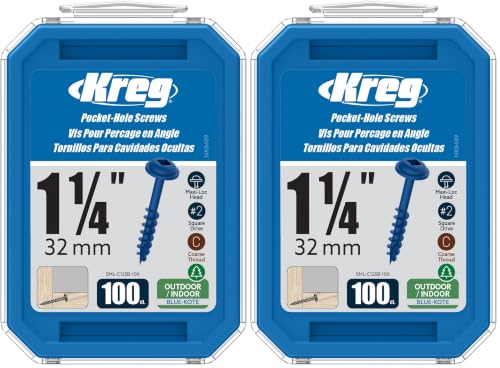
Kreg Blue-Kote Weather-Resistant Pocket Screws 1-1/4″ 100-Count

iexcell M4 x 120mm Hex Socket Cap Screws 12.9 Grade Alloy

Etauwe #8 x 1 Truss Head Self-Tapping Wood Screws 100 Pack

Prime-Line 9105504 Hex Head Cap Screws Grade 8 7/16″ 10 Pack

Hillman 1/4″ x 1″ Stainless Sidewalk Bolts 25 Pack

Prime-Line 9090855 Serrated Flange Bolts 5/16″ 25 Pack

Hillman 1/2″ x 6″ Sleeve Anchors 25 Pack

ZZem Brass #9 x 3 Door Reinforcement Kit 8 Pack
The Picks, Examined More Closely
Flat washers look like a small detail, but they spread the clamping force of a lag screw or bolt across a much wider footprint. That wider footprint protects a window frame from crushing, keeps the nailing fin from dimpling, and stops the head from slowly pulling through soft lumber as the seasons cycle. The Prime-Line 9080196 sits at a versatile 1/2 inch inner diameter with a 1-3/8 inch outer diameter, which is large enough to back most common window fastening jobs without ordering custom sizes.
The hot-dip galvanized coating is the real workhorse here. It adds a thick zinc skin that resists rust for years, even when the washer sits in a damp wall cavity or against a treated sill. For most homeowners tackling a single window, twenty-five washers is enough to cover the perimeter fasteners and still leave spares for the next project.
Useful Strengths
- Hot-dip galvanized zinc resists corrosion in damp framing
- 1/2 in. by 1-3/8 in. sizing fits common window lag and bolt diameters
- 25-pack covers an entire window plus leftover spares
- Thick steel resists deformation when tightened down
Worth Noting
- Only pairs with hardware that already accepts a separate washer
- Hot-dip finish is thicker than zinc plating, so it can sit slightly proud under shallow trim caps
Right Fit For
DIYers and pros reinforcing wooden window frames who need load-spreading support behind lag screws without a custom hardware hunt.
Where Another Pick Suits Better
For bracket-only installs where a built-in flange is preferred, the Prime-Line 9090855 Serrated Flange Bolts pack the washer into the head itself.
Pocket-hole joints speed up window trim and interior extension jamb work, and the Kreg Blue-Kote screws are tuned for that exact kind of assembly. The 1-1/4 inch length lands in the sweet spot for joining 3/4 inch stock to a 1x extension jamb without punching through the show face. A coarse thread is the key for softwood, plywood, and MDF, biting aggressively and resisting the splitting that finer threads cause in low-density lumber.
The Maxi-Loc head sits flat and wide at the bottom of the pocket, so the joint pulls tight without the screw head wiggling or stripping out. The Blue-Kote coating is a three-layer plating that stands up to weather exposure far better than standard zinc. For an exterior window sill or a garage workshop sill, you can leave the screws in place without watching them bloom orange within a season.
What It Does Well
- Coarse thread grips softwood and plywood without splitting
- Blue-Kote coating handles outdoor humidity and rain splash
- Maxi-Loc head seats firmly in standard Kreg pocket holes
- 200 total screws in the two-pack cover multi-window projects
Trade Offs
- Specialized for pocket-hole jigs, less useful for general framing
- Coarse thread is overkill in hardwood, where it can feel loose
Key Specs
Whose Shelf It Belongs On
Trim carpenters and homeowners assembling extension jambs or sill wraps with a pocket-hole jig who want an exterior-rated fastener.
Look Elsewhere When
For raw structural lag work, the Prime-Line 9105504 Hex Head Cap Screws deliver higher clamping force per fastener.
Most window installs live in the world of wood and drywall, but metal-to-metal hardware couplings call for an entirely different fastener. The iexcell M4 by 120mm hex socket cap screws serve that niche, joining aluminum window brackets, slim steel couplings, or operator arms where a flush, high-tensile bolt is required. The 12.9 grade rating signals near top-of-the-chart tensile strength, so the screw resists shearing under torque better than a standard 8.8 or stainless equivalent.
The black oxide finish is mild corrosion protection that works indoors or in sheltered cavities, and the included hex key saves a trip to the toolbox. At 120mm long with partial threading, the unthreaded shank slides through a misalignment before the threads engage, which is helpful when joining two pre-drilled metal plates that never quite line up. For shop projects and operator hardware swaps, the M4 size covers most thin-gauge coupling work.
Useful Highlights
- 12.9 alloy grade delivers high tensile strength for small-format bolts
- Partially threaded shank tolerates minor alignment drift
- Black oxide finish reduces glare and adds mild corrosion resistance
- Comes with a matching hex key in a storage case
Soft Spots
- M4 diameter is too small for structural window framing
- Black oxide coating is not suited for direct exterior exposure
Best Suited To
Shop tinkerers and metalworkers coupling slim window hardware, brackets, or operator arms where a flush socket head is required.
Reach For A Different Pick When
For anything structural, the Prime-Line 9105504 Hex Head Cap Screws provide the diameter and grade for load-bearing window framing.
Sometimes a window job needs a hundred small fasteners and a forgiving head. The Etauwe truss head screws deliver exactly that, with a wide, low-profile head that spreads pressure across soft stops, parting beads, and interior trim. The white painted head blends with painted woodwork, so the fastener disappears into the trim rather than calling attention to itself at every glance.
The self-tapping tip cuts its own pilot in softwood, which keeps installation quick and avoids the pile of pre-drilled holes slowing down the day. A full thread grip holds the head flush without snapping, and the included screwdriver bit means you can pull these from the bag and start driving. For paint-grade window trim where a flat, low-profile head is preferred over a countersunk finish, the truss shape is the right call.
Useful Touches
- Truss head spreads load on soft wood without pulling through
- White painted head blends with painted trim
- Self-tapping tip removes the pre-drilling step in softwood
- Includes a driver bit matched to the screw recess
Points To Keep In Mind
- Truss head sits proud of the surface, not flush
- Zinc exterior finish is fine indoors but limited for raw exterior exposure
Right Fit For
Finish carpenters and homeowners hanging paint-grade interior trim, parting bead, or thin stops around a window opening.
Consider Something Else When
For raw exterior trim that needs serious weather resistance, the Kreg Blue-Kote Pocket Screws hold up far longer outside.
Grade 8 cap screws are the step up from anything off the shelf at the big box store. The 7/16 inch diameter and 1-1/4 inch length deliver serious clamping force, which is the kind of muscle you want when fastening a heavy window frame, a steel nailing fin, or a structural bracket to a laminated sill. The hex head accepts standard sockets, so you can drive these with a ratchet, an impact driver with the right adapter, or a wrench in a tight spot.
For homeowners pulling off storm-damaged windows and rebuilding with beefier hardware, this is the fastener that ends the wobble. A uniform machine thread drives cleanly into a pre-tapped hole or a nut, and the grade 8 rating means it resists stretching under load. Ten screws is enough to anchor a small window and leaves a couple in the drawer for the next repair.
The Case For It
- Grade 8 rating handles high clamping loads without stretching
- 7/16 in. hex head works with common sockets and wrenches
- 1-1/4 in. length fits shallow bracket and fin applications
- Clean machine thread for repeatable torque
Worth Bearing In Mind
- Only ten screws in the pack, so larger jobs need multiples
- Requires a tapped hole or nut on the receiving end
Key Specs
Who Will Love This
Pros and serious DIYers fastening heavy brackets, steel nailing fins, or storm-rated hardware where lower-grade screws would stretch under load.
Skip It When
For shallow trim and stop work, the Etauwe #8 x 1 Truss Head Screws are far easier to drive and disappear into the wood.
Stainless steel is the answer when a fastener is going to live in salt air, driving rain, or a shaded north wall that never dries out. The Hillman 1/4 inch by 1 inch bolts are 305 stainless, which holds its own against rust even when paired with treated lumber or constant condensation. The combo head accepts either a Phillips or a square driver, so the bit you already have on hand works fine.
Truss heads spread load across soft frames and keep the bolt from pulling through during seasonal movement. The 1 inch length is short enough to clear most window jambs without burying the head, yet long enough to bite solidly into a wood sill. For coastal installs, pool houses, or any window frame that stays damp, the upgrade from zinc-plated to stainless usually pays for itself in fewer callbacks.
Everyday Advantages
- Stainless steel resists rust in coastal and high-humidity zones
- Combo drive accepts Phillips or square bits
- Truss head spreads load without pulling through soft wood
- 25-pack covers a full window perimeter
Trade-Offs To Consider
- Stainless is softer than hardened steel, so torque limits matter
- Higher upfront cost than zinc-plated equivalents
Perfect Match For
Homeowners near the coast, in humid basements, or anywhere rust is a constant concern who want a one-time install rather than future swap-outs.
Not Your Match When
For dry interior trim where corrosion is not a worry, the Etauwe #8 x 1 Truss Head Screws cover the same job at a lower cost.
A flange bolt merges the bolt head and the washer into a single piece of steel, which speeds up install and removes one small part from the parts list. The Prime-Line 9090855 adds serrations under the flange, biting into the surface and resisting vibration loosening over time. For window nailing fins, brackets, and operator arms that see seasonal flex, the lock-in matters.
At 5/16 inch by 1/2 inch, this is a small but sturdy fastener for light bracket work. The zinc plated case hardened steel balances corrosion protection with a hard driving surface, so the hex head holds up under an impact driver without camming out. Twenty-five bolts is enough for a few brackets plus leftover spares for the next repair.
Where It Helps
- Integrated flange replaces a separate washer on every install
- Serrated face grips the surface to resist vibration loosening
- Case hardened steel handles impact drivers without stripping
- Zinc plating adds moderate corrosion resistance
Points To Note
- Short 1/2 inch length limits use to thin bracket attachments
- Not a substitute for a heavy structural fastener
Key Specs
Made For
Pros and homeowners fastening window brackets, nailing fins, or operator arms where a built-in washer saves time on a multi-bolt install.
Another Choice May Suit
For pure load-spreading behind a long lag screw, the Prime-Line 9080196 Flat Washers let the installer pair any bolt length with a separate washer.
Brick and concrete window openings need a different approach than wood framing, and sleeve anchors fill that gap. The Hillman 1/2 inch by 6 inch anchors expand inside a pre-drilled hole as the nut is tightened, wedging firmly against concrete, brick, or block. The expansion grip holds against vibration and shear loads better than a plastic plug or a tapcon in soft masonry.
The zinc plated carbon steel provides moderate corrosion protection suitable for protected wall cavities and above-grade masonry. A hex head lets the installer drive the bolt with a standard socket, and the 6 inch length reaches deep enough to land in solid material past the face shell of brick. Twenty-five anchors cover a typical masonry window opening with anchors placed every 12 to 16 inches around the perimeter.
Standout Benefits
- Expansion sleeve grips concrete and brick firmly
- 6 inch length reaches past the face shell into solid masonry
- Hex head drives with a standard socket
- Zinc plated steel handles above-grade exposure
Honest Caveats
- Requires a hammer drill and correct masonry bit for the hole
- Not removable without cutting the head off
Best Suited To
Masons and homeowners installing windows into concrete, brick, or block openings where wood-frame fasteners would have nothing to bite into.
A Better Fit Elsewhere
For wood-frame installs, the Hillman 1/4″ x 1″ Stainless Sidewalk Bolts pair with the trim without the masonry drill step.
Reinforcing the screws around a window or door is a different job than the original install, and the ZZem brass kit targets exactly that scenario. The 3 inch length reaches past the door frame and into the structural wall framing behind, restoring bite where original screws have stripped loose. The included drill bit is sized to match the screws, so there is no trial-and-error matching of bits at the hardware store.
Brass resists corrosion well in standard interior conditions and works with both Torx and Phillips bits, so any driver on hand fits. The kit covers hinges, deadbolt strike plates, and even window hardware mounted into the same framing. For homeowners fighting a window or door that keeps sagging because the screws have stripped the softwood, the long-bite brass approach is often the cheapest fix that actually holds.
A Strong Showing
- 3 inch screws bite past the jamb into structural framing
- Brass resists corrosion in interior and protected exterior use
- Includes matched drill bit, Torx, and Phillips drivers
- 8-pack covers a full hinge and strike plate replacement
Worth Noting
- Only fits projects needing a #9 x 3 inch screw specifically
- Not intended for new-construction window install into fresh framing
Key Specs
Right Fit For
Homeowners dealing with stripped hinge or strike plate screws on a door or window where a longer, wider screw is the actual fix.
Swap It Out When
For new-construction framing, the Prime-Line 9105504 Hex Head Cap Screws deliver far more clamping force for the same install effort.
Choosing The Right Fastener For Window Work
Material of the surrounding frame is the first decision point. Wood framing accepts lag screws, deck screws, and pocket-hole screws with ease, while masonry openings need sleeve anchors or wedge anchors drilled into pre-set holes. Knowing the substrate before you buy a single box saves a return trip and a pile of mismatched fasteners.
Length matters more than diameter for most window installs. A screw that bites at least 1 inch into solid framing holds better than a thicker screw that barely catches the sheathing. For sash reinforcement or hinge work, longer 3 inch screws reach past the soft jamb into the structural lumber behind.
Coating and corrosion protection tie closely to exposure. Dry interior walls tolerate plain zinc or black oxide. Coastal, damp, or exterior applications usually call for hot-dip galvanized, stainless, or a multi-layer plated finish. Spending slightly more on coating now usually beats replacing rusty fasteners in five years.
Practical Takeaways Before You Buy
Pitfalls Shoppers Hit
Grabbing the cheapest screw on the shelf is the most common error. A box of unfinished or lightly plated screws saves a few dollars today and costs a re-do when rust blooms around the fastener heads. Match the coating to the wall environment, not the price tag.
Another common slip is using interior screws outside. Standard zinc plating is thin by design, and a single rain season can start the corrosion cycle that loosens the fastener and stains the surrounding trim. A small upgrade to galvanized or stainless usually outlasts the window itself.
Where The Extra Money Goes
Premium fasteners add thicker coatings, harder alloys, and tighter thread tolerances. For most window work, those upgrades show up in the second decade of service, not the first. The honest read is that paying more pays off in coastal and high-humidity zones, where a stainless upgrade is the difference between a one-time install and a recurring repair.
Frequently Asked Questions
What type of screw is best for installing a window in a wood frame?
Lag screws, structural wood screws, and pocket-hole screws all work depending on the joint. For nailing fins and shims, a hot-dip galvanized screw or lag with a separate washer resists pull-through. For interior extension jambs, a coarse-thread pocket screw bites cleanly without splitting softwood.
Do I need special screws for vinyl or aluminum window frames?
Vinyl frames typically use non-corrosive screws driven through the frame into the rough opening, often with a separate washer. Aluminum frames benefit from stainless or coated fasteners to prevent galvanic reaction with the surrounding substrate.
How long should window screws be?
Most wood-frame installs want at least 1 inch of bite into solid framing past the material being fastened. For hinge and strike plate reinforcement, 3 inch screws reach past the jamb into the structural lumber behind the trim.
Can I use the same screws indoors and outdoors?
Zinc-plated screws are usually fine indoors, but exterior exposure benefits from hot-dip galvanized, stainless, or a multi-layer coated fastener. The small extra cost is worth it anywhere rain splash or humidity is regular.
How many screws do I need per window?
A typical residential window wants a fastener every 12 to 16 inches around the perimeter, four sides included. For a standard 3 foot by 4 foot opening, that lands near twelve to sixteen screws per window before accounting for shims and brackets.




