


A metal roof only performs as well as the fasteners holding it down. Choosing the right screws for metal roofing means matching length, thread pattern, washer type, and coating to your panel profile, your framing material, and the weather your building actually sees. Pick the wrong fastener and you get leaks around every fastener head, premature rust stains bleeding down the panels, or screws that snap under wind load.
This roundup covers the fasteners worth your attention for the 2026 building season, from utility-grade galvanized screws for a backyard shed to coated stainless options for coastal installs. Every pick below is built around hex washer heads with EPDM sealing washers, the standard for exposed-fastener metal roofing. Use the table to scan by use case, then jump to a full review for the spec detail, ownership reality, and honest trade-offs.
How The Shortlist Stacks Up
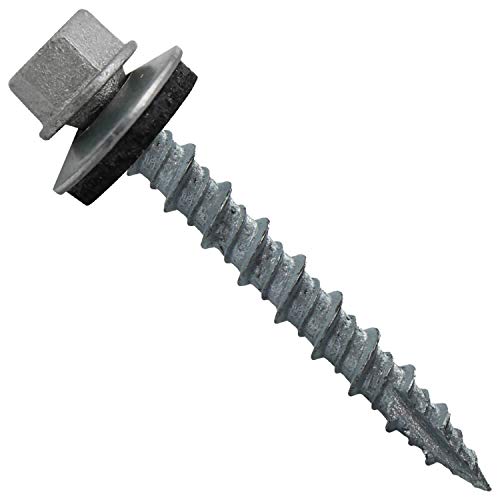
Jake Sales 10 x 1-1/2″ Painted Metal Roofing Screws 250-Count

Jake Sales 12 x 1-1/2″ Re-Grip Galvanized Roofing Screws 250-Count

LIONMAX #10 x 1-1/2″ Metal Roofing Screws 300-Pack

YIANDXI 150-Pack #10 x 1″ Stainless Steel Roofing Screws

LIONMAX #10 x 1″ Metal Roofing Screws 300-Pack

LIONMAX #10 x 2″ Metal Roofing Screws 300-Pack

LIONMAX #10 x 2-1/2″ Metal Roofing Screws 300-Pack

LIONMAX #10 x 3″ Metal Roofing Screws 300-Pack

LIONMAX 1000-Pack #10 x 1-1/2″ Metal Roofing Screws
More On The Choices That Made The List
The Jake Sales 10 x 1-1/2-inch painted screws are aimed at the most common residential and agricultural metal roofing scenario, exposed-fastener panels going over wood purlins or a plywood deck. The hex washer head drives with a standard 1/4-inch hex socket, and the bonded EPDM washer compresses under the head to seal the hole against driven rain. The painted head is finished with a two-part polyurethane rather than plain zinc, which holds color longer and resists chalk fade on south-facing slopes.
For pole barns, storage sheds, and detached workshops, this bag of 250 covers roughly 10 squares of corrugated roofing at a standard 9-fasteners-per-linear-foot pattern, give or take a few screws for overlaps and ridge trim. Heads arrive in popular panel colors, though you should always confirm the exact shade against a sample from your panel supplier before buying a full case.
Notable Upsides
- Painted head blends with common metal roofing colors for a clean visual line across the roof.
- Self-tapping tip starts cleanly in 29-gauge panel and 2x purlin combinations without a pilot hole.
- EPDM sealing washer compresses under the head to block capillary water entry at the fastener hole.
- 250-count bag suits a small outbuilding without leaving you with a half-used case.
- Polyurethane head coating outlasts plain zinc on sun-exposed slopes.
Worth Noting
- Painted head may not match every panel brand exactly, so cross-check your color before ordering in volume.
- Not the best pick for coastal installs where salt air accelerates coating failure.
Who It Suits Best
Shed and pole barn owners matching the painted head to a common panel color on a single gable or modest roof footprint.
Where Another Pick Suits Better
Shoppers in salt-air coastal locations should look at the LIONMAX #10 x 1-1/2-inch 300-pack further down, whose coating is rated for harsher corrosion exposure.
Where the painted 10-gauge screw above is built for fresh installs, this 12-gauge galvanized screw is built for refit. The thicker #12 shaft (0.216 inches) gives the threads more bite when you are replacing a fastener that has wallowed out its original hole or stripping a failed nail out of a soft purlin. The bare galvanized finish is gray, not painted, which is the honest read: this is a utility screw, not a color-match screw.
Reach for these when storm damage has loosened fasteners on an older metal roof, when a previous installer used roofing nails and you are upgrading to screws, or when wood purlins have softened enough that a smaller screw would spin out. The 1/4-inch hex head and 5/8-inch EPDM washer match the dimensions of the painted version above, so your drill setup stays the same.
Everyday Advantages
- Thicker #12 shaft grips stripped or oversized holes better than a standard #10 screw.
- Designed as a replacement for failed nails and loose screws in older roofing.
- 1/4-inch hex head and 5/8-inch EPDM washer match standard driver sizes.
- Galvanized body is gray rather than color-painted, so it does not promise a color match it cannot deliver.
Trade Offs
- No paint means the head will not blend with colored panels on visible roof slopes.
- Heavier shaft requires more drill torque, which can stall underpowered cordless drills on thicker steel.
Made For
Homeowners repairing a leak on an older metal roof where previous fasteners have loosened or pulled out.
Consider Something Else When
Fresh installs on a new pole barn should start with the painted Jake Sales 10-gauge screw reviewed first, since color matching matters on visible roofing.
LIONMAX brings a different value proposition to the table with this 300-pack. The 17-type sharp point (a self-drilling tip geometry common to sheet metal screws) starts cleanly in metal up to roughly 2 mm thick without a pilot hole, which keeps installation fast on long runs of corrugated or ribbed panel. The hex washer head and bonded EPDM washer follow the same pattern as the Jake Sales options, so the driving feel is familiar.
Where this pick separates itself is the coating. LIONMAX applies a Ruspert-style corrosion-resistant finish that the brand rates to 1000 hours of salt spray testing. That number is a lab benchmark rather than a real-world timeline, but the practical takeaway is that these screws hold up better than plain zinc in high-humidity barns, livestock shelters, and shoreline-adjacent builds. The 300-count bag is a smart middle ground between a 250 residential bag and the 1000-count contractor case reviewed last.
Strong Points
- Corrosion-resistant coating rated for 1000 hours of salt spray, suitable for humid and coastal-edge installs.
- Self-drilling tip starts in metal and wood without pre-drilling, speeding up long runs.
- 300-count bag covers a mid-size roof without leaving you short.
Room For Improvement
- Coating is functional rather than color-matched, so the heads will read on a finished roof slope.
Key Specs
Best Suited To
Homeowners in humid, rainy, or shoreline-adjacent regions who want a meaningful corrosion upgrade over basic galvanized.
Look Elsewhere When
Shoppers wanting stainless steel for the harshest marine exposure should pick the YIANDXI 150-pack reviewed next.
The YIANDXI screws jump the price-per-fastener ladder by switching to a 410 stainless steel body. Stainless changes the maintenance math entirely: where coated carbon steel screws can eventually rust and bleed streaks down a panel, stainless resists that failure mode for far longer. For homes within a mile or two of breaking surf, this is the practical answer to the rust stains that show up on a roof within a decade.
You also get a small but useful accessory in the box. YIANDXI includes a magnetic socket bit, the kind that holds the screw on the driver tip so you can start it one-handed on a ladder. For a 150-count bag aimed at small repair and trim work, that little included bit saves real time. The trade-off is straightforward: you pay more per screw, and the count is lower than the coated options.
Real Benefits
- 410 stainless steel body resists rust streaking far longer than coated carbon steel.
- Bonded EPDM washer seals against leaks at the fastener hole.
- Included magnetic socket bit speeds up one-handed starts on a ladder.
Points To Note
- Per-screw cost is higher than coated options, so this is a targeted buy rather than a bulk re-roof pick.
- 410 stainless is magnetic and less corrosion-resistant than 316, so confirm your environment before relying on it in heavy marine spray.
Feature Snapshot
Perfect Match For
Coastal homeowners and anyone tired of rust streaks bleeding down expensive standing-seam or corrugated panels.
Skip It When
You are fastening an entire re-roof where coated carbon screws at half the cost will serve you well; reach for the LIONMAX 1000-pack reviewed last instead.
Sometimes the right screw is the shorter screw. This LIONMAX 1-inch option is built for thin metal panels (29-gauge and lighter) sitting directly over wood framing, the typical case for residential carports, patio covers, and light agricultural roofing. A 1-inch screw gives the threads enough purchase in the wood below without punching so far through that the tip protrudes into an attic space or a finished ceiling.
The shorter shank also means less drill resistance, which keeps your drill battery happy on long runs. The Ruspert-style coating carries the same corrosion protection as the 1-1/2-inch LIONMAX option reviewed earlier, so you give up nothing on the weather-resistance side. Owners commonly report that the 1-inch length is a sweet spot for metal-over-plywood assemblies where over-penetration would telegraph through the ceiling below.
Key Advantages
- 1-inch length is well-matched to thin panels over wood framing without over-penetration.
- Same Ruspert-style coating as the longer LIONMAX options for consistent corrosion performance.
- Self-drilling tip reduces installation time on long runs.
Worth Bearing In Mind
- Not long enough for installations where the panel sits over a thick insulation layer.
Right Fit For
DIYers building a carport or patio cover with thin corrugated or ribbed panel over open framing.
Reach For A Different Pick When
You are fastening through rigid foam insulation or a thicker build-up, which calls for the LIONMAX 2-inch or 2-1/2-inch options further down.
The 2-inch LIONMAX is the mainstream residential choice for metal-over-plywood or metal-over-OSB roof decks. The extra half inch of reach compared to the 1-1/2-inch option handles thicker sheathing plus a small gap, while still leaving the screw threads firmly in the wood. For most homes with 1/2-inch or 5/8-inch roof decking, a 2-inch screw lands in the right zone for holding power without poking through the underside of the sheathing.
Like the other LIONMAX options, this screw uses a self-drilling tip that punches through 29-gauge and lighter panel without a pilot hole, plus the same corrosion-resistant coating the brand applies across its lineup. The 300-count is sized for roughly 11 to 12 squares of roofing at a typical fastener pattern, so it covers a single-family home’s main roof slope with a little headroom for ridge and hip trim.
Useful Touches
- 2-inch length is the residential mainstream for panel-over-plywood assemblies.
- Self-drilling tip keeps the install moving on long panel runs.
- EPDM washer seals the fastener hole against wind-driven rain.
A Few Limitations
- Head color is functional rather than paint-matched, so it will read on the finished roof.
Who Will Love This
Homeowners re-roofing a typical single-family home with 1/2-inch or 5/8-inch roof decking under the metal panels.
Swap It Out When
You need a color-matched head for a high-visibility slope, in which case the painted Jake Sales 10-gauge screw reviewed first is the better fit.
The 2-1/2-inch length is the crossover screw between residential decking and light commercial framing. It picks up extra reach for installs where there is a layer of rigid foam insulation between the panel and the wood deck, or where the panel runs over a thicker purlin. For cathedral ceilings with continuous insulation above the deck, this length is the practical minimum for getting threads into solid wood below the foam.
Installation feel is the same as the shorter LIONMAX options, with the self-drilling tip starting through thin panel without a pilot hole. The honest trade-off is drill resistance: longer screws take more torque per fastener, so a higher-voltage cordless drill or a corded screw gun is the right tool for the job. Push a 2-1/2-inch screw through a panel-over-foam build with a tired 12-volt drill and you will quickly wear out your battery.
Where It Helps
- 2-1/2-inch reach handles rigid foam insulation between panel and deck.
- Corrosion-resistant coating matches the rest of the LIONMAX family.
- Self-drilling tip starts cleanly in thin metal without pre-drilling.
Potential Compromises
- Longer shank demands more drill torque, which can stall underpowered drills on thick assemblies.
- Overkill for thin panel over bare plywood, where the 2-inch version already does the job.
Built With In Mind
Homeowners and builders fastening metal panels over a layer of rigid foam insulation above the roof deck.
A Better Fit Elsewhere
For a plain panel-over-plywood assembly, the LIONMAX 2-inch option reviewed just above is the more efficient pick.
At 3 inches, this screw is built for serious post-frame construction. Think barndominiums, horse barns, and large commercial sheds where the panel sits over a thick build-up of insulation plus a 2x purlin. The 3-inch length leaves plenty of thread in solid wood after passing through several inches of compressed insulation, which is what you need when the panel is the only weather barrier standing between your hay and a thunderstorm.
These are not everyday residential screws. Most homeowners do not need 3 inches of reach, and using one where a 2-inch would do adds drill time, breaks more driver bits, and produces a hole that is harder to seal cleanly. For the right job, though, a 3-inch screw is non-negotiable. The honest read is that this is a specialty pick for the specific case where shorter screws simply will not reach solid framing through a thick insulated assembly.
What Pays Off
- 3-inch reach handles thick insulation plus deep purlin framing in post-frame builds.
- Corrosion-resistant coating holds up on exposed agricultural and commercial roofing.
- Self-drilling tip starts cleanly in thin panel without pre-drilling.
Honest Caveats
- Overkill for most residential roof-deck applications.
- Longer shank puts real demand on your drill and driver bits.
Feature Rundown
Whose Shelf It Belongs On
Post-frame builders and barndominium owners fastening through thick insulation into deep purlins or girts.
Not Your Match When
You are working a typical residential re-roof over a thin deck, where the LIONMAX 2-inch option is the more sensible reach.
The 1000-count case is the same 1-1/2-inch LIONMAX screw reviewed earlier, just in a contractor-sized quantity. For a full re-roof on a residential home, a 1000-count bag is the right scale: a 2000-square-foot metal roof at a typical panel-and-purlin pattern works out to several hundred to well over a thousand screws depending on purlin spacing. Buying a case also keeps one box on the shelf for the inevitable trim and touch-up work down the road.
This is the pick for the workshop shelf, the farm truck, and the small contractor running weekend jobs. The Ruspert-style coating and self-drilling tip carry the same spec as the 300-pack, so you are not paying for a different screw, just a larger quantity. The trade-off, of course, is that you have 700 screws left over if your project is small, but screws store indefinitely in a dry bucket, so that is rarely a real problem.
Real-World Strengths
- 1000-count case covers a full residential re-roof in one buy.
- Same 1-1/2-inch length and self-drilling tip as the smaller LIONMAX pack.
- Corrosion-resistant coating suited to a range of climates and conditions.
Less Ideal Details
- More screws than a single small repair needs, so it is a workshop buy, not a quick-fix buy.
Who Should Grab It
Contractors, farmers, and homeowners with a full re-roof or multiple outbuildings in the queue.
Where A Sibling Pick Shines
For a single small repair on a shed, the 150-pack YIANDXI stainless option reviewed earlier is a smarter quantity match.
Picking The Right Fastener For Your Roof
Choosing screws for metal roofing comes down to four questions: how long the screw needs to be, what coating matches your environment, whether you need a color-matched head, and whether you are fastening new work or refitting old. Get those right and the rest is straightforward.
Length Is The First Decision
A screw should pass through the metal panel and at least 1 inch into solid wood below, whether that is a purlin, a girt, or a roof deck. Thinner panel-over-plywood assemblies land in the 1-inch to 1-1/2-inch range. Add a layer of rigid foam insulation and you jump to 2 inches or longer. Post-frame construction with thick insulation over deep purlins often needs 2-1/2 to 3 inches. Measure the build-up before you buy.
Match The Coating To Your Climate
Plain zinc works for dry, low-corrosion environments. A Ruspert-style or similar coated carbon steel screw is a meaningful upgrade for humid barns, livestock shelters, and shoreline-adjacent installs. Within a mile or two of breaking surf, stainless steel is the practical answer to rust streaking. The cost jump from coated to stainless is real, but the labor to replace rusted screws later is higher.
EPDM Washers Are Not Optional
The bonded rubber washer under the hex head is what keeps driven rain from wicking into the fastener hole. Cheap roofing screws sometimes skimp here with a non-bonded or hard plastic washer that does not seal. Every pick on this list uses a bonded EPDM washer for that reason. It is the cheapest insurance against the most common metal roof leak.
Color Matching Versus Function
Color-painted heads cost a small premium and they fade over time, but they make a visible difference on a steep-slope roof facing the street. For an outbuilding, a barn, or any roof slope that is not the main visual feature of the home, a functional coated head at a lower cost is the more practical choice. Save the painted screws for the slope the neighbors actually see.
Key Considerations Across These Picks
Common Buying Slip Ups
The most frequent mistake is under-buying length. Pick a screw that just barely reaches the framing and you get reduced holding power and more fastener failures over time. The opposite mistake is over-buying length on a thin build-up, which adds drill time, breaks more driver bits, and can leave screw tips protruding where you do not want them. A short pilot on a scrap piece of the same build-up tells you in five minutes what length you actually need.
Why Premium Coatings Cost More
The jump from plain zinc to a Ruspert-style coating, or from coated carbon steel to 410 stainless, is mostly about the metal treatment process and the raw material. Stainless is genuinely a different alloy, so the cost increase is structural. Coated carbon steel is a thinner upgrade, but it pays for itself in any climate that sees real humidity, salt air, or livestock-generated ammonia. For a pole barn in dry country, plain zinc is fine. For anything closer to a coast, pay up.
Frequently Asked Questions
How long should screws for metal roofing be?
Screws should penetrate at least 1 inch into solid wood framing below the panel. For thin panel over bare plywood, 1 to 1-1/2 inches is typical. Add rigid foam insulation and you usually need 2 to 2-1/2 inches. Post-frame construction with deep purlins often calls for 2-1/2 to 3 inches.
Do metal roofing screws need rubber washers?
Yes. The bonded EPDM washer under the hex head is what seals the fastener hole against driven rain. Skipping it, or using a hard plastic washer, is the most common cause of slow leaks around fastener heads on metal roofs.
Can I reuse metal roofing screws?
It depends on the condition of the EPDM washer and the threads. If the washer is still compressible and the threads bite cleanly when you test-drive a scrap piece, you can reuse them. If the washer is cracked or the threads are stripped, replace the fastener. Never reuse a screw that has been over-driven and dimpled the panel.
What is the difference between zinc and stainless screws for metal roofing?
Zinc-coated carbon steel screws are the budget-friendly standard. They work well in dry climates but can rust streak in humid or coastal conditions. Stainless steel screws cost more per fastener but resist rust far longer, which matters in shoreline installs or anywhere the cosmetic finish on the panel is worth protecting.
How many screws do I need for a metal roof?
A typical exposed-fastener metal roof uses roughly 80 to 100 screws per roofing square (100 square feet), depending on purlin spacing and panel profile. Measure your roof area, multiply by 100, and round up by 10 to 15 percent for waste, overlap, and trim. A 2000-square-foot roof usually works out to 1600 to 2000 screws.




