


A squeaky, loose subfloor usually traces back to one thing: the wrong fastener holding the panel to the joist. Pick the wrong length, head, or thread, and you’ll feel the floor shift under every step. The picks below cover wood-to-wood attachment, sheet metal fastening, and concrete anchoring, so you can match the screw to the substrate and skip the callbacks.
A Side-By-Side Look
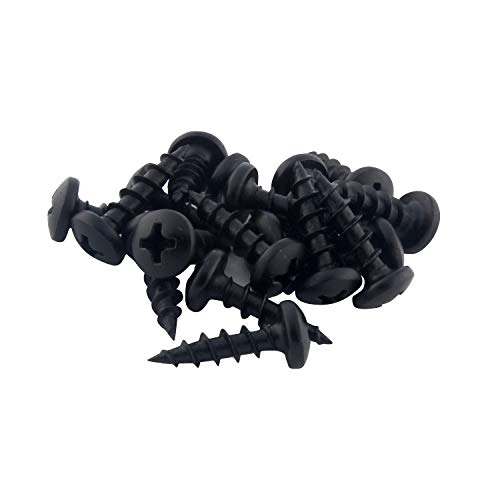
Rok Hardware #8 x 5/8″ Black Phosphate Wood Screws

Wensilon #8 x 3/4″ 410 Stainless Truss Head Screws

Wensilon #8 x 3/4″ Black 410 Stainless Truss Head

Wensilon #8 x 1″ Black Truss Head Wood Screws

Wensilon #8 x 3/4″ Hex Washer Self-Drilling Screws

Wensilon #8 x 3/4″ Black Hex Washer Self-Drilling

Wensilon 3/16″ x 1-1/4″ Hex Concrete Screws
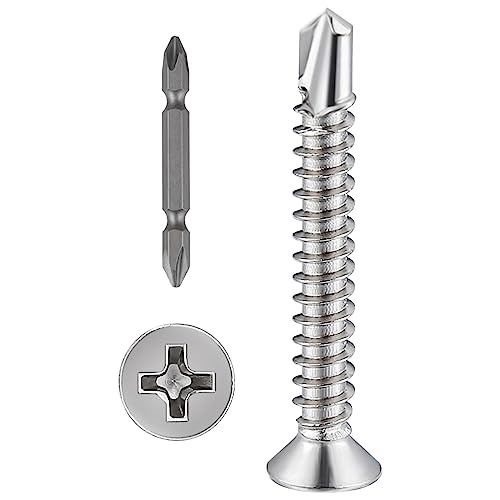
Wensilon #8 x 1-1/4″ Flat Head 410 Stainless Screws
What Each Pick Brings To The Table
When a thin subfloor panel sits over a wood joist, a long screw can blow right through the panel before it bites. The Rok Hardware #8 x 5/8″ screw solves that problem with a stubby 5/8″ length that grips the panel edge without punching out the opposite face. You get a #8 shank (a medium-duty thickness between the typical #6 and #10) paired with a deep coarse thread, the kind that chews into particle board and MDF cleanly.
Remodelers laying down a thin underlayment over an existing subfloor often reach for this profile because the pan head (a low-profile rounded-top head) seats flush and the Phillips drive keeps the bit from walking. In most kitchen and bath remodels, a box of 100 covers a fair run of underlayment sheets.
Well-Handled Touches
- Short 5/8″ length prevents blow-through in thin panels
- Deep coarse thread bites particle board and MDF firmly
- Black phosphate finish blends with dark underlayment and reduces corrosion in dry zones
- Pan head sits flush for a clean finished surface
- Phillips drive accepts standard bits already in your drill kit
Small Caveats
- Too short for standard 3/4″ plywood subfloor over wood joists
- Phosphate coating, not stainless, so damp basements may eventually show surface rust
Right Fit For
Homeowners laying thin underlayment over an existing subfloor, where a stubby screw with strong bite matters more than depth.
Reach For A Different Pick When
The job calls for full 3/4″ plywood subfloor panels over joists, where the Wensilon #8 x 1-1/4″ Flat Head 410 Stainless Screws reach deeper and countersink more reliably.
Steel- framed subfloor systems use thin metal track instead of wood joists, and tapping a wood screw into 25-gauge steel is a recipe for stripped heads. The Wensilon #8 x 3/4″ self-tapping screw cuts its own threads as it drives, and the 410 stainless body (a magnetic, hardenable grade that is roughly twice as hard as copper) resists cam-out under impact.
The wide truss head (a low, broad head with a flat bearing surface) spreads load across the metal track, which matters when the subfloor panel wants to lift under foot traffic. In a workshop or garage conversion, this screw handles the steel-to-plywood connection without pilot holes.
Good Reasons To Consider
- Self-tapping point eliminates pre-drilling in light-gauge steel
- 410 stainless body holds up to repeated driving without stripping
- Truss head distributes clamping force across thin metal
- 300-count pack covers a full room of track fastening
Worth Bearing In Mind
- Not designed for thick wood joists, the point is tuned for metal
- 410 stainless can show surface discoloration in salt-air or coastal builds
- Requires a higher-RPM drill to engage the self-tapping tip cleanly
Who Should Grab It
Contractors fastening subfloor panels to cold-formed steel track in basements, mezzanines, or commercial tenant buildouts.
A Better Fit Elsewhere
Wood-frame residential remodels get cleaner results with the Wensilon #8 x 1″ Black Truss Head Wood Screws, which carry a thread pitch better matched to dimensional lumber.
The dark-coated sibling to the previous pick, this Wensilon screw keeps the same 410 stainless body and self-tapping geometry but adds a black finish that disappears against pressure-treated lumber and dark subfloor panels. In a basement where the head would otherwise flash silver under a flashlight, that low reflectivity matters.
The 3/4″ length still suits thin metal track work, and in crawlspaces the dark finish hides the fastener once a future remodel exposes it.
What It Does Well
- Black finish blends with treated lumber and dark subfloor panels
- Self-tapping tip handles light-gauge steel without a pilot hole
- 410 stainless core resists stripping under high-RPM driving
- Truss head spreads load on thin metal without pulling through
Honest Caveats
- Coating can nick during high-torque driving, exposing the silver substrate
- Still on the short side for 3/4″ plywood over wood joists
Built With In Mind
Finish-sensitive builds where shiny screw heads would telegraph through a future ceiling below or stand out in an exposed basement.
Where A Sibling Pick Shines
Standard plywood subfloor over wood framing reads better with the Wensilon #8 x 1″ Black Truss Head Wood Screws, which carry a longer shank for deeper joist engagement.
For a standard 3/4″ tongue-and-groove subfloor, you want a screw that drives past the panel face and gets at least a half inch into the joist below. The Wensilon #8 x 1″ lands in that sweet spot, with carbon-steel strength and a black phosphate finish that grips wood without lubricating the thread (a common culprit in loose subfloor squeaks).
Owners commonly report that the truss head seats without spinning, even in dense Southern Yellow Pine joists, and the 250-count tub keeps a small addition or single-room repair stocked.
Where It Delivers
- 1″ length reaches the joist zone under a 3/4″ panel
- Carbon-steel core handles repeated impact driving
- Phosphate coating adds mild corrosion resistance for dry zones
- Truss head resists cam-out in dense lumber
Practical Considerations
- Not stainless, so outdoor or high-moisture installs will see eventual surface oxidation
- Truss head sits slightly proud of the panel, which can telegraph through thin finished flooring
Feature Snapshot
Best Suited To
DIYers fastening standard 3/4″ plywood subfloor panels to dimensional lumber joists in dry conditioned space.
Swap It Out When
The subfloor is in a damp crawlspace or basement, where the Wensilon #8 x 1-1/4″ Black Flat Head 410 Stainless Screws handle moisture exposure with a stainless body.
When the subfloor track is heavier-gauge steel, a self-tapping screw can stall. Self-drilling screws go further: the tip acts like a small drill bit, boring through 1/8″ or thicker steel before the threads engage. Wensilon’s #8 x 3/4″ hex washer head version, often called a TEK screw in the trades, brings that drill-and-tap function to subfloor work.
The integrated washer under the hex head seals the entry point on metal, and the 410 stainless body holds an edge through repeated cycles. You may find the hex drive easier on the wrist than a Phillips when driving hundreds of screws in a single shift.
Everyday Advantages
- Self-drilling tip cuts through heavier-gauge steel without a separate bit
- Hex washer head seals the entry point and resists cam-out
- 410 stainless body resists wear on the drill tip
- Works as a one-step fastener for steel track-to-subfloor connections
Where It May Fall Short
- Overkill for thin 25-gauge track where a self-tapping screw is enough
- Requires a hex driver bit rather than a standard Phillips
Whose Shelf It Belongs On
Commercial contractors fastening subfloor panels through heavier-gauge steel framing in mixed-use buildings.
Not Your Match When
Residential wood-to-wood subfloor work calls for the Wensilon #8 x 1″ Black Truss Head Wood Screws, which run cleaner in dimensional lumber.
Take the previous pick, add a black corrosion-resistant finish, and you have the dark-finish version of the TEK-style self-driller. The black coating is most useful in crawlspaces and basements where condensation gathers on steel framing, because the additional finish layer slows the rust-bleed that raw stainless can leave on adjacent concrete.
Combined with the hex washer seal, this screw keeps water out of the entry point longer than a plain stainless head. In a high-humidity zone, that extra protection is the difference between a fastener that lasts the life of the floor and one that stains the underside of a future ceiling.
What Helps Most
- Black coating adds another layer of corrosion defense over the 410 stainless core
- Self-drilling tip handles thick-gauge steel framing in one pass
- Hex washer head seals the entry point against moisture wicking
- Dark finish stays invisible in exposed basement ceilings
Points To Keep In Mind
- Coating can scratch under high-torque driving, exposing the substrate
- Hex drive requires a matched nut driver, not a standard Phillips bit
Right Fit For
High-humidity crawlspaces and basements where steel framing meets subfloor panels and rust staining would otherwise bleed through.
Consider Something Else When
The build is conditioned interior space, where the Wensilon #8 x 3/4″ 410 Stainless Truss Head Screws save cost without losing function.
Slab-on-grade conversions and basement subfloors need to anchor the bottom track to concrete, and a wood screw simply will not survive that application. The Wensilon 3/16″ x 1-1/4″ hex concrete screw is hardened (heat-treated to a high Rockwell hardness) so the threads can cut into masonry, and the blue finish signals the corrosion-resistant coating common to concrete fasteners.
You will need to drill a pilot hole with a masonry bit matched to the 3/16″ shank, but once the hole is blown clean, the screw bites aggressively and holds tight.
Reasons It Performs
- Hardened carbon-steel body cuts threads into cured concrete
- Blue rust-resistant finish holds up to slab moisture
- Hex head accepts a standard nut driver for high torque
- 1-1/4″ length reaches past the bottom track flange into solid concrete
Trade-Offs To Consider
- Requires a separate 3/16″ masonry drill bit for the pilot hole
- Only 30 screws per pack, so larger slab projects need multiples
- Not suitable for hollow block unless paired with a screen tube
Made For
Basement subfloor systems where a bottom plate of framing needs to anchor to a poured concrete slab.
Look Elsewhere When
The subfloor sits over wood joists in an upper level, where the Wensilon #8 x 1″ Black Truss Head Wood Screws do the same job with less prep.
When a finished floor (think thin engineered hardwood or vinyl plank) goes down over the subfloor, a proud truss head can telegraph through and create a soft spot. The flat head on this Wensilon screw countersinks below the panel surface, leaving the floor above perfectly flat.
At 1-1/4″ long, the screw grabs both the subfloor panel and a meaningful bite into the joist, which is the geometry that prevents the seasonal squeak most homeowners complain about. In most rooms, 250 screws handle a full re-sheet of subfloor.
The Value In It
- Flat head countersinks for a flush surface under thin finished flooring
- 1-1/4″ length reaches deep into the joist for a squeak-free hold
- 410 stainless body handles repeated driving without snapping
- Self-tapping geometry reduces pre-drilling on the job
A Few Limitations
- Requires a countersink bit to recess the head cleanly
- Not as corrosion-resistant as 304 stainless in salt-air environments
Feature Snapshot
Who Will Love This
Remodelers laying a new subfloor ahead of thin engineered hardwood, LVP, or any finished floor sensitive to telegraphing.
Skip It When
The job is a dark utility space where a flush mount does not matter, in which case the Wensilon #8 x 1″ Black Truss Head Wood Screws save cost per box.
Closing the list is the same flat-head geometry as the prior pick, with a black finish layered over the 410 stainless body. In a damp coastal build or a basement subfloor where seasonal humidity swings, that extra coating buys you years before any rust bleed shows on the underside of the floor.
You may find the dark head is also easier on the eyes during a long day of driving, since it reduces the glare that bare stainless can throw under work lights.
The Helpful Details
- Black finish adds another corrosion layer over the 410 stainless core
- Flat head recesses flush for thin finished flooring above
- 1-1/4″ length grabs both panel and joist for a squeak-free hold
- Dark profile stays invisible if a future remodel exposes the subfloor from below
What To Weigh
- Premium cost over a plain stainless or phosphate-coated screw
- Coating can chip at the drive recess under aggressive impact driving
Perfect Match For
Coastal homes, basements, and high-humidity zones where both flush-mount and corrosion resistance matter at once.
Another Choice May Suit
Dry conditioned space, where the Wensilon #8 x 1-1/4″ Flat Head 410 Stainless Screws deliver the same flat-head geometry without the premium finish.
Choosing Subfloor Screws That Actually Stay Put
The first decision is the substrate. Wood joists want a coarse-thread screw with a length that lands at least a half inch into the joist after passing through the panel. Cold-formed steel track wants a self-tapping or self-drilling screw with a hex washer head that seals the entry point. Concrete slabs want a hardened masonry screw with a pilot hole.
Length matters more than most shoppers realize. A screw that barely reaches the joist will work loose as the subfloor swells and shrinks seasonally. A screw that blows through a thin underlayment loses all clamping force. Match the screw length to the panel thickness, then add enough shank to engage the framing below.
Coating choice tracks the environment. Phosphate-coated carbon steel is fine for dry conditioned space, but basements, crawlspaces, and exterior decks want a 410 or 304 stainless body. The black-coated versions of those stainless screws add a cosmetic and corrosion layer for finished or exposed builds.
Key Considerations Across These Picks
Wrong Turns To Avoid
A common mistake is reusing drywall screws for subfloor work. Drywall screws are hardened for brittle gypsum, and they snap under the lateral load a subfloor sees. They also have a bugle head designed to dimple paper, not seat in plywood, and the threads are fine rather than coarse, which strips out of softwood joists.
Another trap is over-driving the screw. A countersunk head should sit just below the surface, not bury itself a quarter inch into the veneer. Over-driving crushes the wood fibers around the hole and removes the clamping force the screw needs to hold.
Where The Extra Money Goes
Premium stainless and coated screws cost more per box, but the upgrade pays off in two ways. The 410 or 304 stainless body resists corrosion that would otherwise bleed rust onto a finished ceiling below. The black or coated versions add a second layer of defense in damp zones, which extends the service life of the fastener well past a decade.
For most homeowners, spending up on a stainless flat-head screw makes sense in any subfloor that will sit under a thin finished floor or in a basement. The cost difference per box is small compared with the labor of pulling a failed floor back up later.
Frequently Asked Questions
What size screw is best for a 3/4″ subfloor?
A 1-1/4″ screw is the standard match for a 3/4″ subfloor panel over a wood joist. The extra half inch beyond the panel face is what gives the screw its holding power in the framing.
Can I use deck screws for subfloor?
Deck screws share the coarse thread and corrosion-resistant coating, so they will physically attach a subfloor, but most deck screws are not rated for the lateral and shear loads a subfloor carries. A purpose-made subfloor or wood screw with the right head geometry is the safer call.
Do I need to pre-drill for subfloor screws?
For wood joists, no. A coarse-thread screw drives cleanly into dimensional lumber. For steel track, a self-tapping or self-drilling screw handles its own hole. For concrete, you do need a masonry pilot hole matched to the screw diameter.
What is the difference between self-tapping and self-drilling screws?
Self-tapping screws cut threads into a pre-existing pilot hole or thin material as they drive. Self-drilling screws have a small drill bit at the tip that bores through the material first, making them better suited to thicker steel.
How far apart should subfloor screws be placed?
Most building codes call for screws every 6 inches along panel edges and every 12 inches in the field of the panel. Following the panel manufacturer’s fastening schedule keeps the floor flat and quiet.




