


Hanging a mailbox, mounting a fixture, or anchoring a handrail to a stucco exterior is one of those jobs where the fastener quietly decides whether the project holds up next season or fails the first windy weekend. The trick is matching the screw to the wall, not the other way around. This roundup walks through nine screws worth considering, grouped by the kinds of projects most homeowners and small-shop builders actually tackle on stucco, brick, and masonry. The picks mix dedicated concrete/masonry anchors, corrosion-resistant stainless options for coastal air, and specialty self-drilling screws for metal lath and lath-plus-stucco assemblies. Use it as a shortcut to the right size, head style, and coating before you commit to a box.
A Closer Look At The Lineup

Simpson Strong-Tie SD Connector Screws #9 x 1-1/2 Inch (Box of 100)

Wensilon #8×3/4″ 410 Stainless Truss Head Screws (300 Pcs)

Wensilon #8×3/4″ 410 Black Stainless Truss Head Screws (300 Pcs)

Wensilon #8×1″ Black Truss Head Wood Screws (250 Pcs)

Wensilon #8×3/4″ Hex Washer Self Drilling Screws (300 Pcs)

Wensilon #8×3/4″ Black Hex Washer Self Drilling Screws (300 Pcs)

Wensilon 3/16″ x 1-1/4″ Slotted Hex Concrete Screws (30 Pcs)
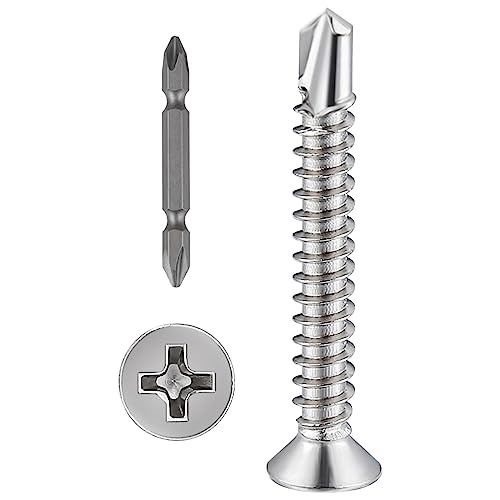
Wensilon #8×1-1/4″ 410 Stainless Flat Head Screws (250 Pcs)

Wensilon #8×1-1/4″ 410 Black Stainless Flat Head Screws (250 Pcs)
The Strengths Of Each Pick
This is the heavy hitter of the roundup, designed for structural framing and connector-plate work where a basic screw simply will not pass spec. Simpson Strong-Tie builds the SD Connector screw as a one-for-one replacement for a 10d common nail in their rated connectors, and the single-fastener load capacity is engineered to exceed that nail. For homeowners with a stucco-over-wood-frame wall, it becomes the right pick when you are fastening structural hangers, hold-downs, or mudsill anchors before the sheathing and lath go on.
The 1/4-inch hex head with an integrated 0.370-inch washer seats cleanly into the connector holes, and the head is stamped with the fastener size so you can identify the right driver bit fast. A hex driver bit ships in the box, removing the small but real annoyance of mismatched tooling mid-job. The mechanically galvanized Class 55 coating holds up under most exterior conditions, though owners in salt-air coastal zones often confirm a stainless upgrade for harsher environments.
Useful Strengths
- Engineered load rating that exceeds a 10d common nail in approved Simpson connectors, giving code-minded builds a real structural fastener rather than a generic wood screw.
- Heat-treated shank improves ductility, so the screw resists snapping when driven into dense lumber or knots.
- 1/4-inch hex head with stamped size identifier speeds up inspection and reduces driver-bit confusion on site.
- Mechanically galvanized Class 55 coating handles most exterior conditions without needing a separate weatherproofing step.
- Bulk 100-count box fits typical framing or addition projects without forcing a second mid-job supply run.
Things To Consider
- This is a structural connector screw first, not a general-purpose exterior wood screw, so using it for light stucco trim work is overspending on spec.
- Owners in coastal or high-humidity zones commonly report the galvanized finish, while rated, is not the longest-lasting option versus stainless.
Feature Snapshot
Whose Shelf It Belongs On
Framing contractors and serious DIYers running connectors, hold-downs, and structural hangers on stucco-over-frame walls.
Where Another Pick Suits Better
The Wensilon 3/16″ x 1-1/4″ Slotted Hex Concrete Screws are the right tool when the job is a light fixture mounted directly into cured stucco, not a structural connector.
For light sheet-metal fastening where corrosion is a real concern, this Wensilon 300-count box is hard to argue with on price. The 410 stainless body is roughly twice as hard as copper, so the threads resist stripping when you run a screw gun at speed, and the alloy carries a magnetic response that helps when you drop one into a wall cavity and need to retrieve it. The truss head spreads load across a wider footprint than a pan head, which is exactly what you want when fastening thin flashing or metal trim against a stucco edge.
The trade-off is geometry. 410 stainless is a martensitic grade, meaning it resists corrosion better than plain steel but does not match 304 or 316 in marine or salt-spray environments. For most inland climates and sheltered exterior trim, that gap does not matter. For shoreline installs, a higher nickel-stainless option is the safer call.
Features That Help
- Truss head profile distributes clamping force over a wider area, reducing the chance of pulling thin metal through its own hole.
- 410 stainless construction resists rust in typical exterior conditions while staying harder than softer stainless grades.
- 300-count box lowers per-screw cost, so a long run of trim screws does not blow up a project budget.
- Self-tapping point reduces pilot-hole work on thin sheet stock.
Trade Offs
- 410 stainless does not match 304 or 316 in salt-air or high-chloride settings, so coastal installs are the wrong fit.
- Packaging lists two size variants on the listing, so confirm the #8 x 3/4-inch size before checkout to avoid a mismatch on arrival.
Best Suited To
Homeowners running metal trim, flashing, or light gauge furring against stucco in non-coastal climates.
A Better Fit Elsewhere
The Simpson Strong-Tie SD Connector Screws are the right call when the project involves rated structural connectors rather than light trim.
This is the same Wensilon truss head screw as the previous pick, dressed in a black oxide finish that visually disappears against dark trim, downspouts, and oil-rubbed fixtures. For anyone who has ever finished a clean stucco repair and then watched bright silver screw heads break up the line, that finish is the entire reason to pick this version.
The mechanical side does not change. You still get the self-tapping point for thin stock, the wider truss head for load spreading, and the magnetic 410 stainless body that is easier to find when one drops. The black coating is a surface treatment rather than a deep alloy, so the corrosion rating is closer to the plain 410 stainless than to a true marine-grade fastener.
Useful Highlights
- Black finish blends with dark trim and architectural details, keeping visible fasteners from drawing the eye.
- Truss head spreads clamping load, which matters on thin metal where a smaller head might punch through.
- Self-tapping point cuts install time on light gauge flashing and trim work.
- Same 300-count value per box as the silver version, keeping cost-per-screw low for larger runs.
Worth Noting
- The black finish is decorative, not a corrosion upgrade, so the underlying 410 stainless still sets the real weather limit.
- Like the previous Wensilon box, two size variants show on the listing, so double-check that #8 x 3/4-inch is what arrives.
Who Will Love This
Finish-conscious homeowners and trim installers who want the fastener to disappear on dark exterior details.
Consider Something Else When
The Wensilon #8×1-1/4″ 410 Black Stainless Flat Head Screws are a stronger match when the job calls for a countersunk, flush-mounted head instead of a low-profile truss.
Where the previous Wensilon boxes targeted sheet metal, this one shifts toward wood-to-soft-metal fastening. The carbon steel core with black phosphate coating gives you a hard, slightly oily surface that resists light rust and grips a Phillips driver without slipping. For shop fixtures, cabinet work, and light furring against a stucco wall, the #8 x 1-inch size lands in a versatile middle ground that handles most framing-to-trim transitions.
Two practical notes. First, black phosphate is a basic indoor-leaning finish, not the coating you want for long-term exterior exposure. Second, the truss head sits proud rather than flush, so it works best where the appearance is hidden by a final trim piece.
Strong Points
- Carbon steel core gives the screw real shear strength, which is helpful when driving into dense studs or plywood backers.
- Black phosphate coating adds a thin layer of corrosion resistance while keeping the price down on a 250-count box.
- Truss head profile provides a wide bearing surface, reducing pull-through on softer materials.
- Self-tapping geometry handles soft-metal-to-wood combinations without a separate pilot step in most cases.
Room For Improvement
- Black phosphate is not a long-term exterior coating, so this screw is better suited to covered assemblies than fully exposed stucco faces.
- The Phillips drive is more prone to cam-out than a Torx or square drive, especially in harder materials at high RPM.
Made For
Shop projects, cabinet assembly, and interior furring work where stucco is the backer but the screw is shielded from direct weather.
Skip It When
The Wensilon 3/16″ x 1-1/4″ Slotted Hex Concrete Screws are the right pick when you need a true masonry anchor going into cured stucco, brick, or block.
When the project involves metal lath behind a stucco skin, you do not want to be drilling pilot holes by hand. This Wensilon TEK-style screw adds a self-drilling tip that bites into thin gauge metal on its own, so a single pass with a hex driver is usually all it takes. The hex washer head adds a built-in washer that seals out moisture around the entry point, a small but real benefit on exterior assemblies.
At 3/4 inch, the screw is purpose-built for thin metal-to-thin-metal and metal-to-wood transitions. It is too short to bite deep into a structural stud, so it belongs on the trim layer, not the framing. The 410 stainless body keeps rust at bay in normal weather, though heavy coastal or industrial atmospheres will push past what this grade can handle long-term.
A Few Highlights
- Self-drilling TEK tip removes the pilot-hole step on metal lath and light gauge framing, which saves real time on long runs.
- Hex washer head seals the entry point against water intrusion better than a plain hex head alone.
- 410 stainless core adds corrosion resistance while keeping magnetic response for easy retrieval.
- Bulk 300-count box suits whole-house trim and lath projects without resupply runs.
Points To Note
- The 3/4-inch length is too short for structural fastening into a 2x stud, so it is a trim-and-lath screw, not a framing screw.
- 410 stainless falls short of 304 or 316 in salt-air environments, so coastal installs may want a different grade.
Feature Snapshot
Right Fit For
Installers fastening metal lath, furring strips, or exterior trim to light gauge metal framing on a stucco project.
Reach For A Different Pick When
The Wensilon 3/16″ x 1-1/4″ Slotted Hex Concrete Screws are the correct call when you need a true masonry anchor driven directly into cured stucco.
This is the dark-finish version of the previous Wensilon TEK screw, with the same hex washer head and self-drilling tip wrapped in a black oxide coating. Functionally it does the same work, drilling through metal lath and seating flush against the surface. The difference is cosmetic: the black head sits quieter on dark trim, gutter brackets, and architectural metalwork than a bright silver hex will.
That coating is a surface treatment, so it should be read as a finish upgrade rather than a corrosion upgrade. Underneath, you are still working with 410 stainless, and the same coastal-and-salt caveats apply. For typical inland weather and visible exterior trim, that is more than enough.
Why It Works Well
- Black finish keeps the head visually low-key on dark trim and metalwork.
- Hex washer head seals the entry point and resists cam-out under high torque.
- Self-drilling tip handles thin metal lath and furring without a pilot hole.
- Same 300-count value per box as the silver hex washer version.
Honest Caveats
- The black finish is cosmetic, so the underlying 410 stainless sets the real corrosion ceiling.
- Like the other Wensilon listings, two size variants show, so confirm #8 x 3/4-inch is what ships before checkout.
Who It Suits Best
Finish-focused installers running self-drilling screws on dark exterior trim against a stucco surface.
Not Your Match When
The Wensilon #8×1″ Black Truss Head Wood Screws are a better choice for wood-to-soft-metal fastening where a Phillips drive and a wider head work better.
This is the only true masonry anchor in the roundup, and that is the entire reason it earns its place. Wensilon builds these from carbon steel hardened at high temperature and finishes them with a blue corrosion-resistant coating, then shapes the threads to bite into concrete, brick, block, mortar, and cured stucco without a plastic sleeve or expansion shield. The hex head takes a standard nut driver, so a cordless drill handles installation in seconds once the pilot hole is drilled to the recommended diameter.
The 30-count box reflects the typical project size for direct-to-stucco mounting, a few handrail brackets, a couple of hose reels, a small fixture. The 3/16″ x 1-1/4″ dimensions are listed, and a 1/4″ x 1-3/4″ variant also shows on the listing, so confirming the size before checkout matters more than usual here.
Points In Its Favor
- True concrete/masonry anchor thread bites directly into cured stucco, brick, and block without needing a separate sleeve.
- Blue rust-resistant coating adds a measure of weather protection for exterior mounting points.
- Hex head drives cleanly with a standard nut driver, no specialty bit required.
- Hardened carbon steel body handles shear loads better than soft zinc-plated wood screws when anchoring heavier fixtures.
A Few Limitations
- 30-piece count is small for whole-house projects, so larger installs will need a second box.
- Requires a correctly sized pilot hole in masonry, so you will need a hammer drill and the right masonry bit on hand.
- The slotted hex head is less torque-friendly than a true Torx or star drive, so harder masonry can stall a standard drill.
Feature Snapshot
Made For
Homeowners and contractors anchoring fixtures, brackets, and rails directly into cured stucco, brick, or block walls.
Look Elsewhere When
The Simpson Strong-Tie SD Connector Screws are a better fit for rated structural connectors in wood framing, where a masonry anchor is the wrong tool entirely.
The flat head profile is the move when a screw needs to sit flush with the surface it is fastening. Wensilon’s #8 x 1-1/4″ flat head screw drops cleanly into a countersunk hole and seats level with the surrounding material, which is exactly the behavior you want on exterior trim, door hardware backing, or any spot where a proud head would catch on a tool, a cloth, or a hand.
The 1-1/4-inch length gives the screw reach into a 3/4-inch substrate plus the thickness of the fastened material, so it is a useful middle-ground size for trim and panel work. The 410 stainless body is harder than softer stainless grades and holds threads well in self-tapping applications. Like every other 410 stainless screw here, it sits in the middle of the corrosion-resistance spectrum, better than plain steel, below marine-grade.
Advantages To Know
- Flat head design sits flush after countersinking, removing snag points and visual bumps on trim faces.
- 1-1/4-inch length provides enough thread engagement for typical trim and panel thicknesses.
- 410 stainless body holds up to most exterior conditions while staying harder than 300-series alternatives.
- Self-tapping point handles thin metal and soft wood without a separate pilot step.
Points To Keep In Mind
- Requires a countersink bit to seat the head flush, so tool count goes up slightly on a typical install.
- 410 stainless is not a substitute for 304 or 316 in salt-air environments, so coastal jobs may want a higher grade.
Who Should Grab It
Finish carpenters and trim installers who want a flush head on exterior wood and metal details against stucco.
Another Choice May Suit
The Wensilon #8×3/4″ 410 Stainless Truss Head Screws are a faster install when flush seating does not matter and a low-profile head is acceptable.
The last entry is the dark-finish twin of the previous flat head screw, and it solves a specific problem that the silver version does not. On dark-stained trim, painted black hardware, or architectural details where even a flush silver head catches the eye, this black-coated version disappears into the surrounding material. The screw still self-taps, still seats flush, still relies on 410 stainless underneath for the bulk of its corrosion resistance.
It is the screw you reach for when the visible finish matters as much as the mechanical hold. For everyone else, the silver flat head version at a slightly lower per-piece cost is the more practical pick.
Noteworthy Benefits
- Black finish hides the fastener head on dark trim and architectural details.
- Flat head design seats flush with the surrounding surface after countersinking.
- 1-1/4-inch length handles standard trim thicknesses without bottoming out.
- 410 stainless core adds corrosion resistance for typical exterior use.
Trade-Offs To Consider
- The black coating is a finish upgrade, not a corrosion upgrade, so the underlying 410 stainless still sets the limit.
- Like the rest of the Wensilon listings, two size variants appear on the page, so confirming #8 x 1-1/4-inch before ordering matters.
Best Suited To
Finish-sensitive exterior projects where the fastener head needs to recede into dark trim and architectural details.
Where A Sibling Pick Shines
The Wensilon #8×3/4″ 410 Black Stainless Truss Head Screws are the right call when the install is faster-paced and a flush seat is unnecessary.
Picking The Right Fastener For Stucco Walls
Match The Screw To The Wall Behind The Stucco
Stucco is a finish layer, not a structural one. What the screw actually bites into is either wood framing, metal lath, masonry, or some combination, and the fastener choice has to match that substrate. Wood and light gauge metal work well with the self-tapping and self-drilling Wensilon options in this roundup. Cured stucco over masonry calls for a true concrete anchor like the Wensilon 3/16″ hex head, or the screw will loosen within a season.
Coating Matters More Than The Stucco Itself
Exterior fasteners face a steady cycle of moisture, UV, and temperature swings that eat through plain zinc and basic phosphate in a few seasons. Mechanically galvanized coatings, such as the Class 55 finish on the Simpson Strong-Tie SD, hold up well in most climates. For shoreline or pool-adjacent installs, a higher nickel-stainless grade is the safer long-term pick, even when the per-piece cost is higher.
Head Shape And Length Do The Quiet Work
Truss heads spread load and resist pull-through on thin material. Flat heads seat flush when the look or function demands a smooth surface. Hex washer heads seal the entry point on metal lath work. Length should leave enough thread in the substrate, usually at least one inch of engagement past the fastened material, to handle real-world loads without backing out.
Project Size Should Set The Box Count
A 30-count box is right for a small anchor job and a 250 to 300-count box is right for a whole-house trim or lath project. Buying the larger box lowers the per-screw cost, but only when the project actually needs that many. A small repair does not justify a bulk pack, and a large install on a 30-piece box will run out halfway through.
Worth Knowing Before You Commit
Pitfalls Shoppers Hit
The most common mistake is treating stucco like drywall and reaching for a basic wood screw. Wood screws look like they hold at first, then back out as the stucco cures and the framing flexes with seasonal humidity. Another frequent miss is buying bright zinc-plated screws for exterior mounting to save a few dollars, which is the same mistake on a longer timeline. The third is choosing a screw that is too short, leaving too little thread in the framing to carry any real load.
Where The Extra Money Goes
Paying more for a premium screw usually buys three things. Better alloy selection, so the fastener survives the climate instead of corroding into a rust stain on the stucco. A purpose-built thread geometry, which holds better in the specific substrate and resists loosening over time. And tighter dimensional tolerances, which means the head seats cleanly and the driver bit does not cam-out halfway through the install. On a long run of trim or a structural connector, those gains pay for themselves in saved time and avoided rework.
Frequently Asked Questions
Can you screw directly into stucco without an anchor?
Stucco is a brittle finish layer and will not hold a screw on its own. The screw needs to pass through the stucco and bite into the wood framing, metal lath, or masonry behind it, and the fastener has to be rated for that substrate.
What is the difference between a self-tapping and a self-drilling screw?
A self-tapping screw cuts its own thread as it drives into a pre-drilled or soft material. A self-drilling screw has a TEK-style tip that bores its own pilot hole, usually through thin metal, before the threads engage.
Do stucco screws need to be stainless or galvanized?
Exterior stucco work calls for either a corrosion-resistant coating (mechanically galvanized, ceramic-coated) or a stainless alloy. Plain zinc-plated screws corrode quickly when exposed to weather and can stain the stucco surface.
How long should a screw be for stucco?
Length depends on the substrate. For wood framing, the screw should pass through the stucco (typically 7/8″ to 1″ thick) plus a finish layer and still leave at least one inch of thread in the framing.
Can I reuse a hole in stucco for a new screw?
It depends on the anchor type. With a plastic sleeve, the original hole often needs to be reamed slightly larger. With a concrete screw, the original pilot hole can usually accept the same screw if the threads still bite cleanly.




