


Vinyl siding projects look simple until the wrong fastener lets go after one wet season. Pick fasteners that fight corrosion, bite cleanly into sheathing or furring strips, and sit flush so panels stay anchored through freeze-thaw cycles. The picks below cover common exterior fastening jobs around siding, soffit, trim, and furring work, with options grouped by head style, material, and use case. Each one is sized for common siding applications, so you spend less time hunting through spec sheets and more time getting the job done.
The Shortlist At A Glance

Grip-Rite Exterior Screws #9 x 1-1/4″ Bugle Head (1 lb)

Wensilon #8 x 3/4″ 410 Stainless Truss Head Screws (300 pcs)

Wensilon #8 x 3/4″ Black 410 Stainless Truss Head Screws (300 pcs)

Wensilon #8 x 1″ Black Truss Head Wood Screws (250 pcs)

Wensilon #8 x 3/4″ Hex Washer Self-Drilling Screws 410 SS (300 pcs)

Wensilon #8 x 3/4″ Black Hex Washer Self-Drilling Screws 410 SS (300 pcs)

Wensilon 3/16″ x 1-1/4″ Slotted Hex Concrete Screws (30 pcs)
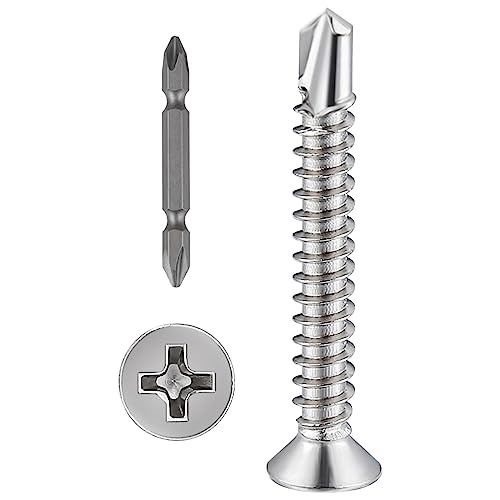
Wensilon #8 x 1-1/4″ 410 Stainless Flat Head Screws (250 pcs)

Wensilon #8 x 1-1/4″ Black 410 Stainless Flat Head Screws (250 pcs)
Meet The Standout Selections
Vinyl siding often gets fastened into a wood sheathing or furring strip, and that wood is frequently pressure-treated to resist rot. Treated lumber is rough on ordinary fasteners, so a screw rated for it earns its keep. The Grip-Rite #9 x 1-1/4″ sits right in the sweet spot for most lap and panel siding work, and the bugle head pulls cleanly into the material without pre-drilling in softwoods.
Compared to the Wensilon self-tappers later in this list, this one is built for wood-to-wood fastening rather than thin metal. For most homeowners re-siding a wall, that is the more common job. The #2 Phillips drive is widely compatible with standard drill drivers, which keeps the tool bag simple.
The Value In It
- Coarse thread bites into softwood and treated lumber cleanly
- Bugle head countersinks for a flush, snag-free finish against siding
- PrimeGuard coating is rated for treated lumber and exterior exposure
- 1-1/4″ length suits most lap siding and trim applications
Trade-Offs
- Not designed for self-drilling into thin metal flashing or furring
- Smaller pack than the Wensilon 250- or 300-count boxes
Key Specs
Whose Wall It Belongs On
Homeowners fastening vinyl panels into treated-lumber furring strips or sheathing on a single wall or small addition.
Where A Sibling Pick Shines
For thin metal flashing or aluminum trim, the Wensilon #8 x 3/4″ Hex Washer Self-Drilling Screws 410 SS handles self-drilling into metal without a pilot hole.
Siding trim and accessory pieces often need a low-profile fastener that won’t dimple the panel above. A truss head spreads the load across a wider bearing surface, so it is gentler on thin material than a flat or pan head. The bright 410 stainless body brings a noticeable jump in corrosion resistance over plain zinc-plated screws, which matters wherever siding meets moisture.
It differs from the Grip-Rite above in two important ways: it is built for sheet metal rather than wood, and the 3/4″ length suits compact accessories. For most trim pieces around a window or a utility penetrations, the shorter length keeps the screw from blowing out the back of the substrate.
Everyday Advantages
- Truss head sits low and resists pull-through in thin sheet
- 410 stainless resists rust in exterior trim locations
- Short 3/4″ length fits tight stacks of trim and accessory panels
- 300-count box covers several full accessory runs
Soft Spots
- Bright finish stands out on dark trim, which may bother some homeowners
- Not ideal for thick wood-to-wood framing connections
Built With In Mind
Anyone fastening thin metal trim, light gauge accessory panels, or soffit details where a low-profile head and a stainless body both help.
Reach For A Different Pick When
If the trim is dark and you want the head to disappear, the Wensilon #8 x 3/4″ Black 410 Stainless Truss Head Screws blend in better on charcoal or bronze finishes.
Black fasteners have become popular on dark-colored siding because a bright silver dot on a charcoal panel draws the eye. The black 410 stainless build on this Wensilon serves that exact use case, pairing corrosion resistance with a discreet finish. The truss head profile stays low, which keeps the fastener from interfering with the overlap of the panel above it.
Compare it to the previous Wensilon pick: same shape, same length, same head, just a darker finish. That makes it a drop-in substitute when aesthetics matter more than visibility, especially around vents, hose bibs, and exterior lighting where the screw head tends to land in plain sight.
Everyday Perks
- Dark finish blends into charcoal, bronze, and matte trim
- 410 stainless body holds up in damp exterior conditions
- Truss head resists pull-through on soft trim and thin sheet
- Works with standard Phillips drivers already in your kit
Things To Consider
- Not intended for load-bearing structural connections
- Short 3/4″ length limits use to thin, stacked materials
Right Fit For
Homeowners and pros working on dark-colored siding, soffit, or trim where a bright silver head would be a visible distraction.
A Better Fit Elsewhere
For projects that need to drill their own pilot through light-gauge metal, the Wensilon #8 x 3/4″ Black Hex Washer Self-Drilling Screws 410 SS includes a self-drilling tip and a sealing washer.
Most siding accessories don’t demand premium stainless, but they do demand a screw that does not corrode into a rusty streak after a few seasons. This Wensilon threads the needle with a black phosphate-coated carbon steel body that handles interior and protected-exterior zones without complaint. The 1″ length is the practical workhorse for general fastening jobs around a siding project.
It differs from the two previous Wensilons by using carbon steel rather than stainless, which brings the cost down. For sheltered trim, vent covers, and utility enclosures, that trade is often the right call. Where it is not the right call is anywhere water pools or the screw sees continuous outdoor exposure.
A Favorable Mix
- Carbon steel core keeps cost down for big batches
- Black phosphate finish helps resist surface corrosion in sheltered spots
- Truss head spreads load across soft and thin material
- 1″ length handles most general fastening tasks around a siding project
Honest Caveats
- Carbon steel body will eventually rust in wet, exposed locations
- Not a substitute for stainless where siding meets standing water or masonry
- Black coating can scuff during high-torque driving, exposing bare steel
Made For
DIYers running through hundreds of screws on interior trim, utility covers, and sheltered accessories around a siding renovation.
Look Elsewhere When
If the screw is going to live in rain or against treated lumber, the Grip-Rite #9 x 1-1/4″ Bugle Head with PrimeGuard coating is the safer call.
Self-drilling screws (sometimes called TEK screws) cut their own pilot hole as they drive, which saves a step when you are fastening into thin metal. For siding projects that include aluminum trim, coil stock, or metal furring, a hex washer head brings a built-in sealing washer that compresses against the surface. The 410 stainless body keeps rust streaks off light-colored siding.
It is the more industrial sibling of the truss-head Wensilons above. The hex head needs a nut driver rather than a Phillips, so plan the tool bag accordingly. For a homeowner, that extra step is worth it on jobs where the screw has to start its own hole in metal.
What Earns Its Place
- Self-drilling tip eliminates pilot-hole work in light-gauge metal
- Integrated washer seals against water and air intrusion
- 410 stainless body resists rust in exterior environments
- Hex drive delivers higher torque without cam-out
Where It May Fall Short
- Requires a hex nut driver, not a standard Phillips bit
- Over-torqueing can crush the washer on thinner material
Feature Snapshot
Best Suited To
Pros and DIYers fastening aluminum trim, metal flashing, or light-gauge accessories to siding where a self-drilling tip speeds up the run.
Not Your Match When
For wood-to-wood fastening on treated furring strips, the Grip-Rite #9 x 1-1/4″ Bugle Head is the more appropriate choice and works with a standard Phillips bit.
The black version of the previous Wensilon trades a bright finish for a dark, low-visibility look. For dark siding colors, that is more than cosmetic: a silver hex washer against a black panel creates a row of tiny mirrors that catch the eye at certain angles. The self-drilling tip still cuts its own hole, so the work pace is the same.
Functionally, it matches the bright-finish sibling point for point. The decision really comes down to whether the trim or accessory is dark. If it is, this is the cleaner-looking choice without giving up the corrosion resistance of 410 stainless.
Good Reasons To Consider
- Black 410 stainless finish blends with dark trim and panels
- Self-drilling tip saves a step on light-gauge metal fastening
- Hex washer seals the entry point against weather
- 300-count box suits multi-room siding projects
Potential Compromises
- Black coating can wear under aggressive driving torque
- Requires a hex nut driver, not a Phillips bit
Perfect Match For
Homeowners matching dark metal trim, soffit panels, or accessory covers to dark siding colors where the head finish matters.
Swap It Out When
For wood-to-wood fastening on light-colored trim, the Wensilon #8 x 3/4″ 410 Stainless Truss Head Screws avoid the need for a hex driver and use a standard Phillips bit.
Vinyl siding often gets anchored to a masonry wall, stucco, or a concrete foundation, and a wood screw simply will not bite into those substrates. Masonry screws thread directly into a pre-drilled hole in concrete, block, or brick and hold without a separate anchor. The blue rust finish on this Wensilon pack is a familiar sight on the job site, signaling its intended use.
It serves a different role than the other picks here. The hex head and 1-1/4″ length are built for solid substrates, not sheet metal. For most siding projects, you only need a small batch to anchor furring strips or starter strips, which is why this set ships at a modest 30-count size.
Positive Takeaways
- Threads directly into concrete, brick, or block with a pre-drilled hole
- Blue finish is a recognizable masonry-screw signal on the job site
- 1-1/4″ length suits starter strips and short furring connections
- 30-count box matches the typical need for a few anchor points
Some Limits To Know
- Requires a hammer drill and correct masonry bit to pre-drill the hole
- Not appropriate for wood, metal, or hollow drywall substrates
- Slotted drive offers less torque than a hex or Phillips head
Key Attributes
Who Should Grab It
Homeowners anchoring siding furring strips or starter strips to a concrete foundation, brick wall, or stucco substrate.
Skip It When
For wood or sheet-metal fastening, the Grip-Rite #9 x 1-1/4″ Bugle Head or the Wensilon #8 x 3/4″ Hex Washer Self-Drilling Screws 410 SS handle the job more efficiently.
A flat head sits flush with the work surface once driven, which is the right call for trim joints and stacked panels where nothing should protrude. The 1-1/4″ length is the practical step up from the 3/4″ Wensilons earlier, giving it more reach into a wood-to-metal assembly. That makes it a versatile pick when a siding project spans multiple substrates.
Compared to the 3/4″ truss head, this one trades head height for depth. The flat profile means the head won’t grab the panel above it, which matters for trim that locks into a J-channel. The bright 410 stainless body holds up in outdoor exposure.
Why It Works Well
- Flat head sits flush for clean, snag-free trim joints
- 1-1/4″ length reaches into thicker siding assemblies
- 410 stainless body resists corrosion in outdoor exposure
- Self-tapping point reduces pilot-hole work in soft metals
Practical Considerations
- Longer length may blow out the back of thin trim if not measured carefully
- Bright finish stands out on dark surfaces
Made For
Pros fastening wood trim or furring strips into thin metal framing where the screw has to reach through multiple layers.
Another Choice May Suit
For projects where the screw head needs to disappear on dark trim, the Wensilon #8 x 1-1/4″ Black 410 Stainless Flat Head Screws offer the same profile with a darker finish.
The final Wensilon in this list rounds out the color options. The flat head, 1-1/4″ length, and 410 stainless body all carry over from the previous pick, with a black finish added for projects where the screw head should fade into the background. That makes it the right fit for dark siding where a flush, low-visibility fastener matters.
It is essentially the dark-finish twin of the previous entry, and the choice between them comes down to finish color alone. The black coating helps the head visually recede against dark trim and accessories, without sacrificing the flush profile that a flat head provides.
Bright Spots
- Black finish blends with dark siding and trim
- Flat head sits flush for clean trim joints
- 1-1/4″ length suits deeper siding assemblies
- 410 stainless body holds up outdoors
Worth Noting
- Black coating can wear under heavy torque
- Not the shortest option for thin, single-layer trim work
Right Fit For
DIYers and pros working on dark-colored siding or trim where the screw head should sit flush and stay out of sight.
Consider Something Else When
For shorter, lighter trim work on dark surfaces, the Wensilon #8 x 3/4″ Black 410 Stainless Truss Head Screws are a more compact alternative.
What To Weigh Before Picking Fasteners For Vinyl Siding
Match the fastener to the substrate
The single biggest decision is what you are actually driving into. Wood, thin metal, and masonry each call for a different screw geometry. A wood-to-wood connection wants a coarse thread and a bugle or flat head, while a metal-to-metal connection benefits from a self-drilling tip and a hex washer head. Concrete and brick need a masonry screw with a pre-drilled pilot hole, not a wood screw. Picking the wrong type is the most common cause of siding fasteners backing out or shearing off.
Choose the right head and length
Head style controls how the screw sits in the finished wall. A flat head sits flush, a truss head spreads load across soft material, and a hex washer head seals against the surface. Length is just as important: too short and the screw will not engage the substrate, too long and it can blow out the back of thin trim or pierce something behind the wall. For most lap siding, a 1-1/4″ screw reaches into standard sheathing and furring strips without over-penetration.
Stainless vs. coated steel
Coated carbon steel (such as Grip-Rite’s PrimeGuard) handles treated lumber and most exterior exposure at a friendlier cost. Stainless 410 brings stronger corrosion resistance, especially against treated lumber, salt air, and constant moisture. For most inland siding projects, coated steel is fine. Coastal and high-moisture zones tend to justify the move up to stainless, depending on the conditions you are dealing with.
Real-World Considerations Across These Picks
Mistakes Worth Dodging
Reusing old screws is a common shortcut that almost always backfires. Old fasteners lose their corrosion protection, and removing them rounds out the heads or strips the drive. Use fresh fasteners sized for the new job.
Pre-drilling into thin metal or masonry is another spot where skipping a step costs time later. Self-drilling screws handle thin metal, but masonry still needs a hammer-drilled pilot matched to the screw diameter. Skipping the pilot leads to snapped screws and enlarged holes that no longer hold.
Where The Extra Money Goes
The jump from coated carbon steel to 410 stainless typically buys two things: better corrosion resistance and a longer service life in harsh conditions. For interior or sheltered trim, that upgrade is hard to justify. For coastal siding, treated-lumber framing, or anywhere a rust streak would stain light-colored panels, the higher tier pays for itself the first time you avoid a callback.
Frequently Asked Questions
What type of screw is best for vinyl siding?
A coated or stainless screw that matches the substrate works best. For wood framing or furring strips, a coarse-thread bugle or flat head is the standard. For thin metal trim, a self-drilling hex washer head saves a step.
Can I use regular deck screws for vinyl siding?
Deck screws are often treated-lumber safe, but they are sized for decking rather than siding. A 1-1/4″ exterior screw with a bugle or flat head generally sits more flush against siding panels and trim.
How long should screws for vinyl siding be?
For most lap siding over sheathing, 1-1/4″ screws reach the framing without over-penetrating. Thicker trim assemblies may step up to 1-1/2″ or longer, depending on the layers involved.
Do I need stainless steel screws for vinyl siding?
Stainless is the safer call near treated lumber, coastal air, or constant moisture. Coated carbon steel is fine for protected and inland applications, where it typically performs well for years.
Should I pre-drill holes for vinyl siding screws?
Pre-drilling depends on the substrate. Wood and soft metal rarely need pilots, while concrete and brick need a hammer-drilled hole matched to the screw diameter.




