


Picking the right fastener shapes how a project actually holds together, and most folks only notice the difference when a joint wobbles or a screw snaps mid-drive. A pocket-hole screw, a structural timber screw, and a tiny #8 trim screw do very different jobs, and mixing them up is how cabinet backs crack and deck boards pop loose. The shortlist below covers the common situations woodworkers hit at home, from quick repairs to full outdoor builds, with honest notes on trade-offs so you can match the screw to the work, not the marketing.
How The Shortlist Stacks Up

Kreg Blue-Kote Pocket-Hole Screws 1-1/2 Inch Coarse Thread

WoodPro Fasteners CB8X234-1 Cabinet Construction Screws

Wensilon #8×1″ Black Truss Head Wood Screws

Wensilon #8×3/4″ Stainless Steel 410 Truss Screws

Wensilon #8×3/4″ 410 Stainless Sheet Metal Screws
Simpson Strong-Tie SDWS22312DBB-R50 Outdoor Accents Screw

Wensilon #10×3″ Deck Screws Bronze Epoxy Coated

Wensilon #10×3″ Black Deck Screws Epoxy Coated
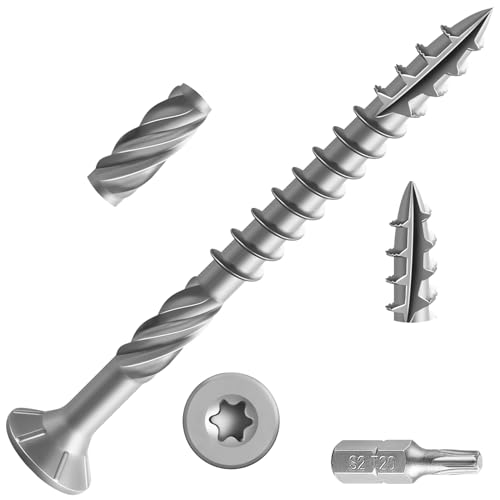
Wensilon #10×3″ 304 Stainless Steel Deck Screws
The Picks, Examined More Closely
Pocket-hole joinery lives or dies by the screw, and the Kreg Blue-Kote line is the reference most cabinet shops reach for first. The 1-1/2 inch length lands squarely in the sweet spot for 3/4 inch material, and the coarse thread bites into softwood and plywood without the splitting that plagues generic screws in pocket holes. If you are building outdoor cabinets or a workbench destined for a damp garage, the blue corrosion-resistant coating buys you years of service that plain zinc screws cannot match.
For most hobbyists, this 100-count box covers a small project with room to spare, and the Maxi-Loc flat bottom head seats cleanly in standard Kreg jigs. Cabinet makers doing repeat builds will burn through it fast, but the format makes it easy to restock.
What Helps Most
- Coarse thread drives cleanly into softwood and plywood without splitting the pocket wall
- Maxi-Loc flat bottom head seats flush and resists pull-through under load
- Blue-Kote coating holds up in damp shop conditions and outdoor cabinets
- Compatible with standard Kreg jigs, so no special setup is required
Things To Consider
- Best suited to Kreg-style pocket-hole work, not a general-purpose wood screw
- The blue finish can be visible if the screw head is not hidden, which may not suit every project aesthetic
Who It Suits Best
Cabinetmakers, garage workshop owners, and DIYers building outdoor furniture with pocket-hole jigs will get the most from this fastener.
A Better Fit Elsewhere
For heavy structural framing or pergola work, reach for the Simpson Strong-Tie SDWS22312DBB-R50 Outdoor Accents Screw instead, since it carries far more load.
Face-frame cabinetry takes a beating during install, and a screw that strips at the head turns a 20-minute job into a 2-hour rework. The WoodPro CB8X234-1 sidesteps that with a T-20 Torx drive (a six-point star pattern that grips far better than Phillips) and a sharp Type-17 point (a notched tip that pre-clears wood fibers for faster starting) that bores in without a pilot hole. The 2-3/4 inch length gives real bite into hardwood rails, which is what most face-frame builds demand.
The included 25mm T-20 bit means you can drop the box on your bench and start driving immediately. Owners commonly store the rest in a small parts bin since the gold finish blends into shop clutter.
Strong Points
- T-20 Torx drive resists cam-out, especially in dense hardwood face frames
- Type-17 point starts fast and reduces the torque your drill has to deliver
- Long 2-3/4 inch reach gets solid purchase in 3/4 inch stock with a secondary member behind it
Worth Noting
- Gold coating is decorative-grade, not designed for prolonged outdoor exposure
- 97-piece count sells out quickly on a full kitchen build, so plan on multiple boxes
Built With In Mind
Cabinet shops, trim carpenters, and serious DIYers assembling face-frame kitchen cabinets or built-ins will appreciate the drive quality.
Look Elsewhere When
For thin plywood cabinet backs, the Wensilon #8×3/4″ Stainless Steel 410 Truss Screws is a better match, since 2-3/4 inch screws will punch straight through 1/4 inch material.
When a project calls for dozens of small fasteners and you do not want to babysit a Phillips bit, this Wensilon 250-pack delivers. The truss head (a wide, low-profile head that spreads load over a larger surface) gives a clean finished look on visible joints, and the black phosphate coating hides against dark stains or painted surfaces. Carbon steel construction means these hold up under normal shop conditions, and the bulk count keeps the cost per screw modest for bigger hobby builds.
Crafters and small-shop woodworkers will likely drain the bag faster than expected once they see how well the 1 inch length works for attaching drawer bottoms, thin back panels, and small jigs. Storage is simple, since the pieces rattle around loose in the bag without tangling.
Everyday Wins
- Wide truss head distributes clamping pressure, reducing pull-through on thin stock
- Black phosphate finish blends with dark stains and painted projects
- 250-piece count keeps the per-screw cost low for hobby builds
- Carbon steel core resists stripping under normal screw-gun use
Trade Offs
- Phillips drive is more prone to cam-out than the Torx screws from Wensilon’s other listings
- Not suited for exterior or high-humidity environments, since the coating is basic corrosion protection only
Made For
Hobby crafters, small-shop woodworkers, and DIYers building indoor jigs, drawer boxes, or speaker cabinets will find this pack fits the workload.
Swap It Out When
For outdoor projects or marine-adjacent environments, the Wensilon #10×3″ 304 Stainless Steel Deck Screws handles moisture far better over the long haul.
Thin plywood backs and drawer bottoms crack when a screw with the wrong thread profile tries to bite, but the Wensilon #8×3/4″ 410 stainless fasteners solve that with a self-tapping geometry that does not demand a pilot hole. The 410 stainless body resists rust in shop environments that swing between humid and dry, which matters if the project eventually lives in a basement or unheated garage. The short 3/4 inch length also keeps the point from punching through the back side of a 1/4 inch panel.
Cabinetmakers often keep a box of these at the bench specifically for assembly-line use, where fast driving and predictable seating matter more than the strongest joint. The 300-count format lines up with how quickly these get used in real production.
What It Does Well
- 410 stainless body resists corrosion in fluctuating humidity
- Self-tapping point skips the pilot-hole step on thin plywood and MDF
- Truss head sits flat against the surface without dimpling thin material
Honest Caveats
- 410 stainless is magnetic and less corrosion-resistant than 304 stainless in salt-air settings
- Phillips drive can cam out on harder hardwoods if the drill torque is set too high
Best Suited To
Cabinet assembly lines, garage shop builders, and DIYers fastening thin plywood or MDF into thicker frames will find a steady use case.
Not Your Match When
For deck framing or any outdoor structural role, the Simpson Strong-Tie SDWS22312DBB-R50 Outdoor Accents Screw delivers the load rating that 3/4 inch cabinet screws cannot.
Most woodworkers eventually hit a project where wood meets thin sheet metal, and a regular wood screw simply will not cut it. The Wensilon 300-pack sheet metal screws bridge that gap with a thread profile designed to bite into steel or aluminum, while the truss head keeps the finished look tidy on hybrid projects. The 410 stainless body handles condensation that forms in unheated outbuildings better than a standard zinc screw would.
Garage builders running HVAC duct strapping, sheet-metal flashing, or aluminum trim into wood framing will find a real use for this box. The 3/4 inch length matches the most common sheet metal gauges, so most of the screws find a home quickly.
Strengths Worth Knowing
- Self-tapping point drills through 24- to 29-gauge sheet metal without pre-drilling
- Truss head spreads load over thin metal, reducing tear-out on the visible face
- 410 stainless body handles condensation in sheds and unheated workshops
Soft Spots
- Not a substitute for structural wood-to-wood screws on load-bearing joints
- Over-torquing snaps the head off in thicker sheet metal, so a clutch drill is helpful
The Right Fit
Garage shop owners, HVAC DIYers, and anyone fastening sheet metal flashing, duct strapping, or aluminum trim into wood framing will use this pack steadily.
Reach For A Different Pick When
For pure cabinet joinery, the Kreg Blue-Kote Pocket-Hole Screws handles the pocket-hole workflow that sheet metal screws cannot replicate.
Structural outdoor framing is where a cheap screw ruins a build, and the Simpson Strong-Tie SDWS22312DBB-R50 is engineered for exactly that job. The patented SawTooth point (a serrated tip that pre-cuts wood fibers for fast, low-torque starts) cuts its own start in most species, removing the predrilling step that slows down a deck or pergola project. At 3-1/2 inches with a .220 inch shank, this is a fastener that actually carries load, not a trim screw dressed up for a heavier role.
The DB black coating looks right at home with Simpson’s Outdoor Accents decorative hardware, so the build stays visually consistent. For most backyard builds, a 50-count box handles a single small project, though larger decks will need a serious restock plan.
Noteworthy Benefits
- SawTooth point starts fast and reduces installation torque on tough species
- Under-head nibs give the driver better control when seating the head flush
- Pairs with Simpson Outdoor Accents hardware for a clean, coordinated finish
- DB coating holds up to weather exposure on outdoor structural joints
Points To Note
- 50-count size means larger deck projects need multiple boxes for continuity
- Black finish can show wear at high-friction connection points over time
Whose Shelf It Belongs On
Homeowners and contractors building pergolas, deck frames, and decorative outdoor structures that need both strength and a clean visual finish.
Where A Sibling Pick Shines
For pure deck board fastening, the Wensilon #10×3″ Deck Screws Bronze Epoxy Coated sits flush on the board face and looks more polished in visible decking runs.
Deck boards and fence pickets demand a screw that can survive weather without leaving rust streaks down the face of the wood. The Wensilon #10×3″ deck screw addresses that with a four-layer epoxy coating that holds up to repeated wet-dry cycles, and the bronze tone blends into most stained cedar and pine projects. Serrated threads at the head bite into the surface wood fibers, which keeps boards from squeaking and separating during seasonal movement.
The T-25 star drive (a six-point Torx pattern) is a clear upgrade over the older Phillips head, since the bit grips the recess without slipping under heavy deck-driving torque. A 137-piece box covers roughly 30 square feet of standard 5/4 decking, depending on joist spacing.
Notable Upsides
- Four-layer epoxy coating resists rust streaks on visible deck faces
- Serrated threads minimize board separation and squeaking under foot traffic
- T-25 star drive reduces cam-out during long driving sessions
Small Caveats
- Not a structural screw, so it should not replace framing fasteners on ledger boards or beams
- Bronze color may stand out on very light or painted decking surfaces
Who Should Grab It
Homeowners and DIYers building or replacing a backyard deck, fence, or pergola with pressure-treated lumber or cedar will see the coating pay off across multiple seasons.
Consider Something Else When
For coastal or salt-air exposure, the Wensilon #10×3″ 304 Stainless Steel Deck Screws outlasts epoxy-coated steel in the long run.
Black hardware on a stained fence or pergola creates a clean, intentional look, and the Wensilon #10×3″ black deck screw delivers that without sacrificing the corrosion protection the bronze version offers. The four-layer epoxy coating handles rain, snow, and the slow drip of tannin-rich woods, which can stain plain zinc screws over time. The 137-piece count maps neatly to a fence panel or a smaller deck section, depending on joist spacing.
If you build a lot of outdoor projects, the black finish also hides minor paint drips and seasonal grime better than lighter coatings. Most homeowners will appreciate not having to scrub screw heads every spring.
Advantages To Know
- Black epoxy finish hides against dark stains and painted outdoor trim
- Four-layer coating holds up to wet-dry cycles across multiple seasons
- T-25 star drive grip reduces the bit slips that chew up screw heads
Where It May Fall Short
- Not a substitute for structural framing screws on ledger boards or beam connections
- Black color can fade under sustained direct sun exposure over many years
Right Fit For
Homeowners and fence builders working with dark-stained wood, modern black hardware, or pergola projects where the fastener needs to disappear into the design.
Skip It When
For salt-air coastal installs, the Wensilon #10×3″ 304 Stainless Steel Deck Screws maintains its finish where epoxy coatings eventually fail.
Coastal air chews through ordinary deck screws in a few seasons, but 304 stainless steel is the same alloy used in marine-grade hardware, and this Wensilon pack brings that level of corrosion resistance to a standard deck-screw format. The bronze epoxy coating on the head adds an extra layer of protection without changing the driving feel, and the T-20 star drive keeps the bit engaged even when you are pulling old boards off the deck in a salty wind.
The 58-piece count is small by deck-screw standards, so this box works best as a finish-grade top-up for visible hardware on a coastal deck, not a full reskin. Most coastal homeowners use it strategically on rim boards, top rails, and visible fasteners where rust would be most obvious.
A Strong Showing
- 304 stainless body resists salt-air corrosion far longer than coated carbon steel
- T-20 star drive reduces cam-out during repetitive deck-driving work
- Bronze epoxy topcoat adds a cosmetic and protective layer over the stainless core
Things That May Matter
- Higher cost per screw than coated carbon steel, so a full deck reskin adds up fast
- 58-piece count is best for targeted visible hardware, not whole-deck coverage
Perfect Match For
Coastal homeowners, lake-cabin builders, and anyone working within a few miles of saltwater who wants visible deck hardware to stay rust-free year after year.
Another Choice May Suit
For budget-conscious inland builds, the Wensilon #10×3″ Deck Screws Bronze Epoxy Coated delivers most of the corrosion protection at a lower cost per piece.
What To Weigh Before Choosing Screws For Woodworking
Screw selection comes down to the joint, the environment, and the tool you are using. Pocket-hole work calls for a coarse-thread, washer-head screw that seats flush in pre-drilled pockets, and structural framing needs a thicker shank and a self-starting point that does not require a pilot hole. Cabinetry and trim installation sits between those extremes, where drive quality (Torx or star patterns over Phillips) matters more than the raw strength number on the box.
Outdoor projects shift the priority toward corrosion resistance. Epoxy-coated carbon steel handles most backyard decks, but salt-air climates push you toward 304 stainless, which costs more but avoids the rust streaks that bleed into cedar and pressure-treated lumber over time. Indoor cabinetry rarely needs anything fancier than a zinc-coated screw, since the climate stays stable and the joints stay hidden.
Finally, think about the head. Truss heads spread load on thin material, flat heads sit flush for a clean look, and washer-style heads give the strongest hold on structural joints. Matching head geometry to the visible result you want saves a lot of filling and sanding later.
Key Considerations Across These Picks
Common Shopping Slip Ups
The most frequent mistake is treating all “wood screws” as interchangeable, when thread pitch, head style, and coating are designed for very different jobs. A fine-thread drywall-style screw used in a pocket hole will strip and fail, while a structural timber screw used in cabinet trim will split the wood and leave an ugly bulge. Match the screw type to the specific joint before buying in bulk.
Another trap is underestimating the environment. Coated carbon steel screws fail in a single season along a coastal fence line, and a premium structural screw in a damp basement cabinet will corrode the steel connector plates around it. Buying the right corrosion protection for your actual climate prevents the slow-motion failure that often goes unnoticed until a board snaps loose.
Where The Extra Money Goes
Premium screws in this category earn their cost through better materials and tighter manufacturing tolerances. 304 stainless bodies, multi-layer epoxy coatings, and patented point geometry (such as Simpson’s SawTooth) all add factory cost, and that translates to fewer snapped heads, less cam-out, and longer service life in harsh conditions. The upgrade pays off most on outdoor structural work and on visible indoor trim where a stripped head or rust streak would force a redo.
For a basic shop jig or a one-off indoor repair, a budget fastener is fine, since the joint rarely sees stress or moisture. Spend up when the screw is holding weight, sitting in weather, or living in a visible spot where failure means tearing apart a finished project to fix it.
Frequently Asked Questions
What screw length works for standard 3/4 inch plywood?
A 1-1/2 inch screw gives full bite without punching through the back face of standard plywood, and a 1 inch screw handles cabinet backs and thinner panels. Going longer risks the point exiting the bottom of the joint.
Are Torx or star drive screws worth the upgrade?
For repetitive driving or hardwood species, the six-point engagement of a Torx-style drive is a noticeable improvement over Phillips. The bits stay in the head, the screws sit straight, and you finish projects with fewer stripped heads.
Can deck screws be used indoors?
Yes, but the epoxy coating can leave a dark halo on light woods like maple or birch. For painted or dark-stained indoor projects, a standard zinc-coated cabinet screw looks cleaner and costs less.
How many screws does a 2×4 deck frame actually need?
A typical 16-inch on-center joist spacing uses about 350 screws per 100 square feet of deck surface, plus structural fasteners for the ledger and rim. The Simpson structural screw handles the framing, while deck screws handle the surface boards.
Do I need different screws for treated lumber?
Yes, especially for older ACQ-treated lumber, which corrodes standard zinc screws quickly. A multi-layer epoxy-coated or stainless screw avoids the rapid failure that treated lumber causes in plain fasteners.




