Intricate curves and clean interior cuts open up a side of woodworking that straight blades just can’t reach. A good scroll saw lets you shape wooden puzzles, inlay work, jewelry, and detailed scrollwork without wrestling the material. The trick is matching the saw to the kind of detail work you actually do, whether that’s fretwork on a quiet Sunday or production fret cutting in a small shop. The picks below cover hobbyist benches, dedicated craft rooms, and compact student setups, so you can find a saw that fits your projects, your space, and your skill level.
The Leading Options At A Glance
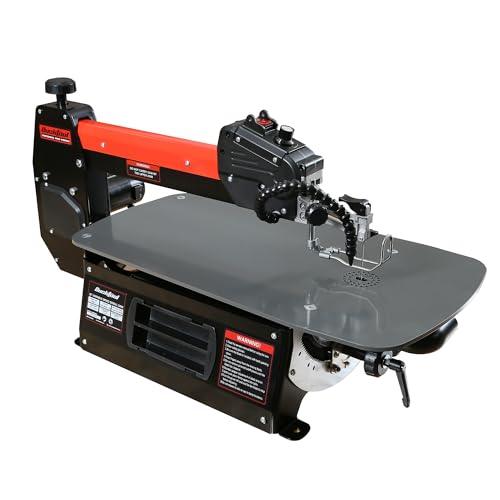
BUCKTOOL 22-Inch Scroll Saw, 1/5 HP 1.3A
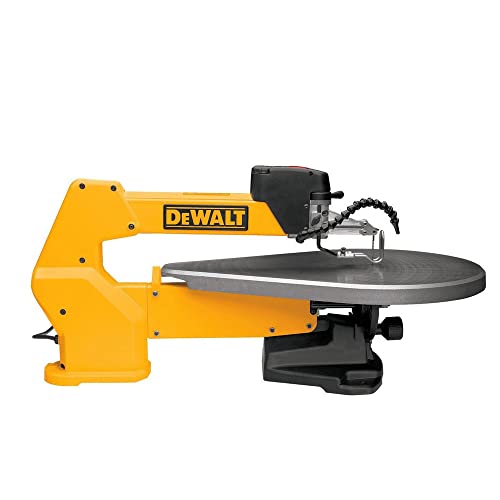
DEWALT DW788 1.3 Amp Scroll Saw

Delta Power Tools 40-694 20 In. Variable Speed Scroll Saw
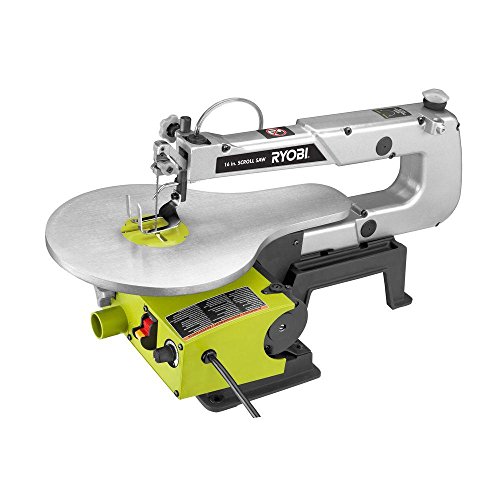
RYOBI 1.2 AMP Corded 16 in. Scroll Saw SC165VS

WEN 3922 16-inch Variable Speed Scroll Saw
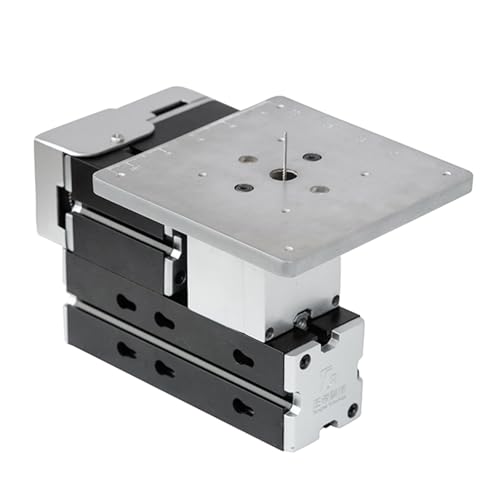
AcmeFlare Mini Scroll Saw 36W All-Metal

AcmeFlare 4-Axis All-Metal Micro Lathe 60W

AcmeFlare All-Metal Mini Lathe 36W

AcmeFlare Mini Milling Machine 3-Axis 36W
Meet The Standout Selections
The BUCKTOOL 22-inch sits in that comfortable middle ground where hobbyists tend to settle once they’ve outgrown their first benchtop unit. A 22-inch throat (the gap between the blade and the rear frame) gives you room to spin large panels for scrollwork without flipping them constantly. The 1/5 HP motor paired with a variable speed range of 360 to 1550 RPM means slow, controlled passes through hardwood and faster strokes for soft plywood trim.
Where this saw earns its keep is the angled cutting setup. The upper arm tilts 30 degrees to the left and 45 degrees to the right, so beveled fretwork and compound angles are within reach. You also get a blade-change-friendly design with a locking arm that stays raised, which is the kind of feature you stop noticing until you use a saw that lacks it. For most home shops running weekend projects, it’s a sensible, roomy choice.
A Few Strong Suits
- 22-inch throat handles oversized pieces that would crowd a 16-inch saw.
- Bevel cuts up to 45 degrees right and 30 degrees left expand design options.
- Locking upper arm keeps the blade area open for interior cuts and quick blade swaps.
- Variable 360 to 1550 RPM range covers delicate scrollwork and faster rough trimming.
Worth Noting
- The bench footprint grows with the throat, so smaller workbenches may feel cramped.
- You may find the included documentation light if this is your first scroll saw.
Key Specs
Best Suited To
Hobby woodworkers with a dedicated bench who cut large panels and want bevel flexibility for compound scrollwork projects.
A Better Fit Elsewhere
Shoppers on a tighter budget or working with smaller craft pieces will find the WEN 3922 a more compact, wallet-friendly match.
The DEWALT DW788 is the kind of saw that gets talked about in workshop forums for one reason above all: the double parallel-link arm. That linkage design keeps the blade moving in a near-straight up-and-down path while reducing side-to-side shake, which is what lets you follow tight curves without the cut wandering. For detail-driven woodworkers, that kind of control changes the whole feel of a project.
At 20 inches, the throat sits between the BUCKTOOL’s wide reach and the 16-inch hobby class. You get a 1.3 amp motor, electronic variable speed, and a tool-free blade clamp that makes pinless blade swaps genuinely fast. The flexibly positioned dust blower, the front-mounted tension lever, and the 2-inch depth of cut all add up to a saw that stays out of your way while you work. Depending on how often you cut intricate marquetry, the smoother cut may be worth the step up.
A Strong Showing
- Double parallel-link arm cuts down on vibration for cleaner, quieter operation.
- Tool-free blade clamps swap pinless blades in seconds, no allen wrench needed.
- Front-mounted controls keep speed, dust, and tension within easy reach.
- 2-inch depth of cut handles most hardwoods and plywood stacks up to that thickness.
Trade Offs
- Sits in a higher price tier than most 16-inch hobby saws on the market.
- 20-inch throat is roomy but not as generous as the BUCKTOOL’s 22-inch reach.
At A Glance
Right Fit For
Detail-oriented woodworkers cutting marquetry, inlay, and tight scrollwork who want smooth, low-vibration performance.
Reach For A Different Pick When
Shoppers who prioritize a wider throat for large panels should look at the BUCKTOOL 22-Inch Scroll Saw instead.
Delta’s 40-694 has long had a following among fretwork enthusiasts, largely because of one feature that solves a recurring annoyance. The upper arm lifts and locks in the raised position, which gives you clearance to thread the blade through a starter hole and re-clamp it without contorting your hand into the throat. That alone makes interior cutouts feel less like a balancing act.
The 20-inch throat puts it in the same size class as the DEWALT DW788, and the variable speed control spans a useful range for both fine detail and quicker trimming passes. Onboard dust management and a sturdy work surface round out the package, so the saw feels at home in a hobby shop where scrollwork is the main event rather than a side task.
Key Advantages
- Locking raised arm simplifies interior cuts and blade threading through starter holes.
- 20-inch throat handles substantial panels without crowding.
- Variable speed range adapts to soft trim work and slower hardwood scrollwork.
- Sturdy table supports accurate cuts across a range of wood thicknesses.
Some Limits To Know
- Replacement blades are a specific fit, so check compatibility before ordering extras.
- Bulkier than 16-inch models, so plan your bench space before committing.
Whose Shelf It Belongs On
Fretwork hobbyists and scrollwork specialists who frequently cut interior shapes and want a saw that streamlines that specific workflow.
Look Elsewhere When
Anyone who values the smoothest, lowest-vibration cuts above all else may prefer the DEWALT DW788’s parallel-link arm design.
Your first scroll saw should not feel like a puzzle to set up, and the RYOBI SC165VS aims squarely at that new-shopper experience. The 1.2 amp motor is a touch lighter than the 1.3 amp units in this roundup, but the variable speed control and 16-inch throat cover the projects most beginners tackle: plywood puzzles, small signs, and craft cutouts.
RYOBI’s appeal in a starter tool often comes down to the learning curve, not raw spec sheet bragging. The controls are straightforward, blade changes follow a familiar pin-end pattern, and the bench footprint stays compact. Assuming your projects stay in the small-to-medium range, this is a forgiving tool that lets you build scroll saw habits before stepping up to a heavier machine.
A Favorable Mix
- Compact 16-inch throat fits on smaller benches and apartment workspaces.
- Variable speed control helps newcomers match stroke rate to material.
- Lower entry price than 20-inch or 22-inch shop saws.
- Simple blade tensioning keeps first-time setup uncomplicated.
Room For Improvement
- Smaller throat limits oversized scrollwork and large interior cuts.
- 1.2 amp motor is well-suited to softwoods but may struggle on dense hardwoods over extended sessions.
Who Should Grab It
First-time scroll saw shoppers with a small bench, light to medium project loads, and a focus on craft and hobby cutouts.
Where Another Pick Suits Better
Woodworkers planning frequent hardwood or fretwork sessions will be happier with the DEWALT DW788’s smoother, more powerful setup.
The WEN 3922 has earned a reputation as the budget scroll saw that does not feel cheap the moment you plug it in. The cast iron base (a heavy, vibration-damping metal that holds still during cuts) is a meaningful upgrade over stamped steel in this price bracket, and the spacious work table makes aligning patterns easier than you’d expect at this tier.
You get a 9/16-inch stroke (the distance the blade travels up and down per cycle, where longer strokes remove more material) and a variable speed range from 550 to 1600 strokes per minute, which covers everything from soft balsa to thicker hardwood cutouts. Blade changes get a lot of attention in the design, and the easy-access setup removes a common friction point. For hobbyists who want a real tool without the pro-tier bill, it’s a steady choice.
Points In Its Favor
- Cast iron base keeps the saw planted, reducing walk and chatter during cuts.
- Spacious work surface supports larger patterns and easier material alignment.
- Variable 550 to 1600 strokes per minute covers soft and hardwood cutting.
- Easy-access blade change design cuts down on tool fumbles mid-project.
Soft Spots
- 16-inch throat is smaller than the 20 and 22-inch options higher in this list.
- You may notice vibration at the top end of the speed range on thicker cuts.
Spec Overview
Who Will Love This
Budget-minded hobby woodworkers who want cast iron stability and a generous work table for craft and small furniture projects.
Swap It Out When
Crafters with very small workpieces and tight indoor spaces may find the AcmeFlare Mini Scroll Saw a more compact fit.
The AcmeFlare Mini Scroll Saw is a different animal from the benchtop workhorses above. It runs on a 36W motor at up to 20,000 RPM and lives in the world of small craft cuts: thin plywood, cardboard, acrylic sheets, and model-making parts. The all-metal body, including the motor box, gears, and worktable, gives it a reassuring heft for something that fits on a desk.
The “student-safe” framing matters in classroom and family-shared workshops, where sharp pin blades on full-size saws are a real concern. You sacrifice the deep throat of a 20-inch shop saw, and the cut thickness is limited by the compact frame, but for a craft table or STEM classroom, it covers exactly the right ground. The price tier makes it a low-stakes entry into scroll sawing for younger or beginning crafters.
Standout Benefits
- Compact footprint fits on a classroom desk or small craft table.
- All-metal construction resists the wobble common to plastic-bodied mini saws.
- 20,000 RPM motor handles thin wood, cardboard, and acrylic sheets cleanly.
- Student-safe design lowers the stakes for younger or first-time crafters.
Honest Caveats
- Maximum cut thickness is well below full-size 16-inch scroll saws.
- Not a substitute for serious hardwood scrollwork or large panel fret cutting.
Who It Suits Best
Classroom teachers, parents, and craft hobbyists cutting thin wood, cardboard, and acrylic for models and DIY projects.
Consider Something Else When
Anyone cutting real hardwood or sizable plywood panels will be better served by the WEN 3922 or BUCKTOOL 22-Inch Scroll Saw.
The 4-Axis Micro Lathe brings lathe turning into the scroll-saw conversation as a complementary tool for small-parts work. Four axes (X, Z1, Z, and A) means you can machine multiple faces of a small workpiece in a single setup, and the A-axis supports ±90 degrees of rotation with roughly 2.5-degree indexing accuracy. That’s a level of flexibility you don’t get from a basic two-axis lathe.
At 60W, it’s modest but usable on soft metals like copper and aluminum, plus wood and plastic. Handwheel scales on all axes offer 0.02mm accuracy for fine adjustments, and the all-metal body with T-slot and dovetail construction (interlocking metal rails that keep the slides aligned under load) keeps things rigid. The integrated safety guard and quick indexer lean toward a workshop, classroom, or serious hobby setup rather than a casual craft corner.
Useful Strengths
- Four-axis design handles multi-face machining without re-fixturing the part.
- 0.02mm handwheel scales allow precise, repeatable adjustments.
- All-metal body with T-slot and dovetail slides holds rigidity during cuts.
- Safety guard included, which is uncommon in this micro-lathe tier.
Points To Note
- 60W motor is appropriate for soft metals and wood, not steel or dense alloys.
- Small footprint tool, so maximum workpiece size is limited compared to bench lathes.
Technical Sheet
Made For
Small-shop machinists, jewelry makers, and serious hobbyists working on soft metal and wood parts that need multi-face precision.
Skip It When
Casual crafters who only need a basic turner will be happier with the simpler AcmeFlare All-Metal Mini Lathe Machine.
The AcmeFlare All-Metal Mini Lathe is a more approachable cousin of the 4-axis model above. Same 36W, 20,000 RPM motor class, same 0.02mm molded scale for fine adjustments, but a simpler axis layout that suits hobby turners who don’t need multi-face setups. You still get the all-metal body across the spindle box, gears, handwheels, and sliders.
Where this lathe fits naturally is alongside a scroll saw in a small workshop: turn a small handle, finial, or model part, then cut decorative details on the saw. The 3-jaw chuck (a clamping device that grips round or hexagonal workpieces) handles common small-project shapes, and the dovetail connection blocks with square nuts prevent the slide screws from slipping under load. For DIY, model making, and educational settings, it’s a thoughtful tool that doesn’t try to be more than it is.
Notable Upsides
- All-metal construction across the spindle, gears, and slides for steady operation.
- 0.02mm molded scale supports precise depth and cross-feed adjustments.
- Compact frame fits a small bench alongside a scroll saw or other hobby tools.
- Dovetail slide blocks resist screw slippage during heavy passes.
Where It Is Less Suited
- 36W motor is light, so dense hardwoods and metals will test its limits.
- Two-axis design means repositioning for multi-face turning work.
Who Will Love This
Hobby turners, model makers, and crafters who want precise small-part turning without investing in a full-size lathe.
Where A Sibling Pick Shines
For multi-face turning work that demands less re-fixturing, the AcmeFlare 4-Axis All-Metal Micro Lathe is the better fit.
The AcmeFlare Mini Milling Machine rounds out this list as a complementary bench tool rather than a scroll saw itself. Its 3-axis layout, with X/Y/Z handwheels scaled to 0.02mm, supports contour work, surface milling, slot cutting, and small hole drilling. The 36W motor at 20,000 RPM keeps cuts precise on small parts.
What sets the build apart is the electroplated metal construction, which adds rust resistance and long-term rigidity. The scaled vise that comes with the unit grips small workpieces firmly, so you can machine soft metals, wood, and plastic with reasonable confidence. For DIY machinists and model makers who already have a scroll saw on the bench, this mill expands what the workshop can do without monopolizing floor space.
Real Benefits
- 3-axis precision with 0.02mm handwheel scales for accurate small-part milling.
- Electroplated all-metal body resists rust and holds rigidity over time.
- Included scaled vise supports repeat setups across multiple workpieces.
- Compact vertical mill design fits beside a scroll saw on a shared bench.
Things To Weigh
- 36W motor caps the maximum material hardness and depth of cut.
- Smaller work envelope than a full-size mill, so plan projects accordingly.
Feature Snapshot
Perfect Match For
DIY machinists, model makers, and hobby engineers who want a precision mill to pair with their scroll saw on a compact bench.
Not Your Match When
Shoppers who only need turning rather than milling will find the AcmeFlare All-Metal Mini Lathe Machine a more focused, easier fit.
Choosing a Scroll Saw That Fits Your Workshop
Throat Depth Sets the Workpiece Limit
The throat is the distance between the blade and the back of the frame, and it directly limits how large a panel you can cut in one pass. A 16-inch throat handles puzzles, small signs, and craft cutouts comfortably. A 20-inch throat, like the DEWALT DW788 and Delta 40-694, opens up larger fretwork and decorative panels. A 22-inch throat, as on the BUCKTOOL, accepts oversized material without constant flipping. Match throat size to the largest pieces you realistically expect to cut, not the largest you can imagine.
Variable Speed and Stroke Length Shape Cut Quality
Variable speed (RPM or strokes per minute) lets you slow the blade for tight curves in hardwood and speed it up for softwood trim work. Stroke length, the distance the blade travels per cycle, affects how much material each pass removes. Longer strokes (like the WEN 3922’s 9/16 inch) clear material faster but can feel rougher on fine detail. Shorter strokes give cleaner curves on thin, delicate stock. The right balance depends on whether your projects lean toward intricate fretwork or quicker production cuts.
Blade Change System and Arm Design Matter Daily
Tool-free blade clamps, like those on the DEWALT DW788, make blade swaps quick enough that you stop dreading them. Locking raised arms, as on the Delta 40-694, simplify threading a blade through interior starter holes. Arm design, whether single-link or parallel-link, affects vibration: parallel-link arms like the DW788’s tend to produce smoother, quieter cuts on tight curves. These details sound small until you spend an afternoon doing 30 blade changes.
Match the Saw to Your Skill and Project Range
First-time scroll saw users benefit from approachable controls and forgiving performance, which is the lane the RYOBI SC165VS and the WEN 3922 occupy. Experienced fretworkers gain the most from smoother arm geometry and easy interior-cut features, which points toward the DEWALT DW788 and Delta 40-694. Workshop hobbyists who want room to grow will appreciate the BUCKTOOL 22-inch’s wider throat and bevel range. Compact craft and classroom setups are a different category entirely, where the AcmeFlare Mini Scroll Saw fits naturally.
Key Considerations Across These Picks
Common Buying Mistakes and How to Dodge Them
Chasing the largest throat size often backfires: a 22-inch saw that doesn’t fit your bench becomes a storage headache. Buyers frequently overlook vibration control, then notice wandering cuts on tight curves. Blade availability is another silent factor, since proprietary blade fits can complicate restocking. Measure your bench, count how often you cut interior shapes, and confirm blade fit before committing.
Why Higher-Tier Models Cost More
The jump from a budget 16-inch saw to a 20 or 22-inch shop saw usually pays for vibration-damping arm geometry, stronger motors, tool-free blade changes, and locking arm features that simplify interior cuts. Premium arm designs, like the DEWALT DW788’s parallel-link setup, deliver cleaner cuts with less fatigue. For casual hobbyists, mid-tier value picks are plenty. For daily shop use or detailed fretwork, the upgrade typically pays for itself in cut quality and time saved.