A scroll saw in the corner of your shop can feel intimidating until you have a stack of patterns worth cutting. Most newcomers stall not because the saw is hard, but because they lack projects matched to their skill level. The right pattern book solves that problem by handing you clean, tested designs with a clear order of operations. You get to focus on blade control, curve work, and finishing instead of guessing what to make next.
Your Options, Compared
Your Options, Compared

Animal Puzzles for the Scroll Saw
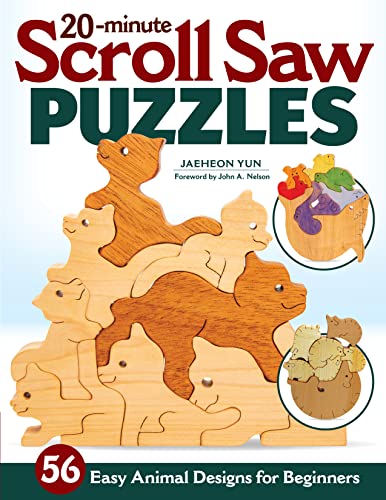
20-Minute Scroll Saw Puzzles for Beginners

Holiday Scroll Saw Ornaments Pattern Book

Scroll Saw Workbook, 3rd Edition

Animal Puzzles for the Scroll Saw, 2nd Edition

Birds of North America for the Scroll Saw

3D Scroll Saw Projects Compilation

Intarsia Woodworking for Beginners
The Picks, Examined More Closely
Dave Peterson’s original Animal Puzzles for the Scroll Saw remains a familiar sight in hobby shops, and the appeal for newcomers is straightforward. The projects center on interlocking animal pieces that fit together, giving you a tangible payoff after a few evenings of cutting. For someone who has just unboxed a scroll saw and feels unsure where to start, the book feels like a patient first project list.
You spend your time practicing inside cuts and gentle curves rather than wrestling with overly intricate silhouettes. Peterson’s approach keeps the early learning curve shallow enough that you build confidence without feeling patronized. The pattern collection also has a quiet charm that makes finished pieces feel worth keeping on a shelf or gifting.
A Strong Showing
- Interlocking animal designs teach inside cuts early without overwhelming you
- Finished puzzles double as display pieces or handmade gifts for kids and adults
- Layout is approachable for scrollers with limited prior woodworking experience
- Compact project scope keeps material waste low for small-shop setups
Things To Consider
- Pattern library is smaller than newer Peterson editions, so you may outgrow it within a season
- Older printings can ship with slight image-quality quirks, so checking page clarity matters before diving in
Who It Suits Best
First-time scrollers who want a forgiving project sequence and an early sense of accomplishment.
Look Elsewhere When
The 20-Minute Scroll Saw Puzzles book suits you better if you prefer fast-finish pieces over longer interlocking builds.
Jaeheon Yun’s 20-Minute Scroll Saw Puzzles hands you 56 full-size patterns designed to clear the saw in a single sitting. The premise is that you can knock out a small animal cut, sand it, and stack it in roughly the time it takes to watch a sitcom. The book fits naturally into tight shop schedules, weekend afternoons, or classroom rotations where attention spans run short.
The step-by-step tutorial keeps the language plain, which matters when you are teaching a partner or a child at the bench. Stackable toy formats mean the finished work feels like a set rather than a single piece, and the project list includes sloths, koalas, unicorns, and dinosaurs. Compared to Peterson’s earlier volume, this one trades depth of cut for repeatability and quick feedback.
Everyday Perks
- 56 full-size patterns let you batch-cut multiple animals in one shop session
- Step-by-step tutorial format reduces guesswork for self-taught scrollers
- Beginner-friendly geometry builds confidence without locking you into long projects
- Stackable toy output works well for craft fair inventory or classroom sets
Worth Noting
- Pattern shapes skew simple, so experienced scrollers may want something more layered after one pass
- Layout relies on tracing from the page rather than pre-cut templates, so transferring takes a small amount of prep time
Made For
Parents, teachers, and hobbyists who want projects that finish inside a single short session.
Consider Something Else When
Animal Puzzles for the Scroll Saw, 2nd Edition works better if you want a deeper pattern catalog with longer interlocking builds.
Wayne Fowler’s Holiday Scroll Saw Ornaments ships more than 200 patterns covering Christmas, Hanukkah, New Year’s, Halloween, Easter, Valentine’s, and a handful of other occasions. The variety lets you build a small year-round inventory from a single book, which appeals to anyone who likes setting up a corner booth at a local market. Designs stay clean and traditional rather than overly stylized, so finished pieces tend to age well on a tree or mantel.
You can comfortably work the patterns at any skill level, since each silhouette is approachable. The book also folds in tips and techniques for finishing, which matters when you are turning out dozens of pieces in a weekend. Versus Yun’s 20-Minute book, this one trades speed for breadth and seasonal range.
What Stands Out
- 200+ patterns span a full calendar of holidays, reducing the need for separate seasonal books
- Clean, classic silhouettes appeal to gift recipients who prefer traditional decoration
- Suits scrollers at any level, so the book grows with your skill set
- Tips and techniques sections help with finishing, sanding, and batch cutting
Points To Note
- Volume can feel overwhelming at first, so planning a small project subset helps keep momentum
- Paper-only patterns mean tracing and transferring each design adds shop setup time before cutting begins
Right Fit For
Holiday market sellers, gift makers, and families who want a year-round ornament supply from one volume.
A Better Fit Elsewhere
20-Minute Scroll Saw Puzzles makes more sense when you want small stackable animals instead of seasonal ornaments.
John Nelson’s Scroll Saw Workbook, now in its third edition, reads less like a pattern catalog and more like a structured class. Twenty-five chapters walk you through setup, blade selection, cutting strategies, and progressive project work, so you are not left guessing what to try next. The book positions itself as an objective guide, which helps when you are tired of glossy marketing claims from saw manufacturers.
The lesson arc is its strongest feature. You start with controlled straight cuts, move into tight curves, and end on projects that combine multiple techniques. Compared to Fowler’s ornament catalog, this volume trades pattern volume for depth of instruction. The third edition reflects updates to current scroll saw models and accessories, so the advice tends to feel current rather than dated.
The Good Stuff
- 25 progressive chapters build real technique instead of jumping straight to complex pieces
- Objective tone makes it easy to trust the guidance on blade choice and machine setup
- Updated third-edition content reflects current scroll saw models and accessories
- Skill-building projects keep the book relevant long after your first cut
Honest Caveats
- More reading-heavy than pattern catalogs, so it helps to commit to a chapter per week
- Practice exercises between projects require extra scrap wood you may need to source in advance
Feature Snapshot
Best Suited To
Self-taught scrollers who want a structured curriculum and are willing to work through chapters methodically.
Not Your Match When
3D Scroll Saw Projects suits you better once you have the basics down and want a project catalog of compound-cut builds.
The Petersons’ second edition of Animal Puzzles for the Scroll Saw builds on the first with 50 designs, a healthier pattern library, and step-by-step instructions that walk you through each build. The book now covers kittens, koalas, bulldogs, bears, penguins, and pigs, so you get a broader range of silhouettes without needing a second pattern source. The revised layout feels easier to follow, especially for self-learners who do not have a mentor nearby.
For someone running a small gift business or a classroom woodshop, the larger pattern count matters. You can build a portfolio of animal pieces without recycling the same silhouettes. Tips and techniques sections round out the project work, so you pick up finishing and blade guidance along the way. Versus the original Peterson volume, the second edition clearly trades nostalgia for usefulness.
Practical Advantages
- 50 patterns give you enough variety to keep projects fresh across multiple seasons
- Step-by-step instructions suit first-time scrollers with limited prior shop experience
- Tips and techniques add finishing and blade advice alongside the pattern work
- Animal range covers pets, wildlife, and farm creatures, broadening the gift appeal
Room For Improvement
- Projects skew animal-focused, so scrollers wanting geometric or architectural patterns will need a separate book
- Paper patterns require tracing and transfer, so a spray adhesive or template plastic helps speed up prep work
Who Will Love This
Gift builders, market sellers, and home woodworkers who want a deep animal pattern catalog in one volume.
Swap It Out When
Holiday Scroll Saw Ornaments fits better if your primary output is seasonal décor rather than puzzles.
Rick and Karen Longabaugh’s Birds of North America pulls 25 projects from the Berry Basket Collection, giving you a focused, themed set of avian patterns. The scope feels deliberately curated rather than padded, which makes the book approachable for newer scrollers who want a clean theme instead of an overwhelming catalog. Each project carries the kind of silhouette detail that reads well as wall art, shelf décor, or a small gift.
The Berry Basket origin shows up in the clean, well-balanced lines of each bird. You can stage the finished pieces into a small wall grouping that looks like a deliberate series rather than a random collection. The theme also makes the book appealing as a gift for a nature-loving scroller in your circle.
The Upside
- Curated 25-project set keeps the focus tight instead of overwhelming with excess patterns
- Avian silhouettes double as wall décor, shelf pieces, and themed gift items
- Berry Basket origin gives the designs a consistent, recognizable visual style
- Project scope works well for scrollers with basic curve-cutting experience
Points To Keep In Mind
- Strictly bird-themed, so you will want a separate book if you need animal or geometric variety
- Smaller pattern count than broader catalogs, so experienced scrollers may move through it quickly
Perfect Match For
Birdwatchers, nature lovers, and gift-givers who want a coherent themed collection of finished pieces.
Reach For A Different Pick When
Animal Puzzles for the Scroll Saw, 2nd Edition works better if you want a broader animal catalog beyond birds.
Diana Thompson’s 3D Scroll Saw Projects compiles 35 compound-cut builds with more than 150 patterns drawn from Scroll Saw Woodworking & Crafts Magazine. The book covers ornaments, home décor, a chess set, and other layered pieces that combine multiple cut components. You spend your time planning how parts fit together, which is a step beyond the flat puzzles covered elsewhere in this list.
You do need a foundation in basic scroll saw control before tackling compound cuts, so this works best as a second or third book. The “Getting Started” section helps bridge the gap for newer scrollers. Compared to Nelson’s workbook, this one trades lessons for projects, making it a better fit once your hands have steadied.
Noteworthy Benefits
- 150+ patterns keep the project list varied across ornaments, décor, and a chess set
- Compound-cut focus teaches 3D assembly, a clear step up from flat puzzle work
- Includes a getting-started section for scrollers transitioning from basic projects
- Project outputs suit gifting, market sales, and personal display alike
Trade Offs
- Compound cuts demand more setup, so each build takes longer than flat-pattern work
- 3D assembly introduces sanding and fitting steps that add finishing time to each project
Quick Facts
Who Should Grab It
Scrollers who have mastered flat patterns and want to tackle compound cuts and 3D assembly projects.
Another Choice May Suit
Scroll Saw Workbook, 3rd Edition fits better if you still need foundational technique before jumping into 3D builds.
Kathy Wise’s Intarsia Woodworking for Beginners steps away from fretwork entirely and introduces intarsia, the technique of fitting shaped wood pieces together like a mosaic to form a picture. The book delivers over 40 skill-building lessons, so you learn how grain, color, and shape combine before committing to a finished project. For scrollers curious about a related woodcraft, this is the most direct on-ramp on the list.
Intarsia demands a different mindset than scroll saw puzzles, since you think in fitted wood sections rather than cut-out silhouettes. The 25 projects give you a wide variety of practice pieces, from simple shapes to layered mosaics. Versus any of the pattern books above, this one trades scroll saw-only focus for a broader woodworking introduction.
The Value In It
- 40+ skill-building lessons cover intarsia technique, grain selection, and color matching
- 25 projects provide steady practice as you move from simple to layered mosaics
- Step-by-step format suits beginners with no prior intarsia experience
- Expands scroll saw skills into a related woodcraft discipline
Some Limits To Know
- Intarsia requires additional wood stock in varied colors and grains, raising material cost
Built With In Mind
Scrollers curious about intarsia who want a structured beginner guide and a steady project ladder.
Where A Sibling Pick Shines
20-Minute Scroll Saw Puzzles is a better fit if you want to stay focused on quick scroll saw cuts without branching into intarsia.
Choosing Pattern Books That Match Your Shop Goals
Picking a scroll saw pattern book comes down to honest answers about your time, your bench space, and the kind of finished piece you want to set on a shelf. Books that promise hundreds of patterns often look appealing but quickly overwhelm a beginner, so it pays to weigh the trade-off between variety and structure.
Match The Book To Your Current Skill Level
A workbook-style title with progressive chapters works well when you are still building blade control. Pattern-heavy catalogs fit better once you can comfortably execute inside cuts, tight curves, and stackable assembly without close supervision. The honest read is that skipping past the foundation step tends to produce more scrap wood than finished pieces.
Decide What You Actually Want To Make
Ornament catalogs, animal puzzles, and wildlife themes each pull your shop in a different direction. Before picking a book, name the kind of finished piece you would happily give away or display, since that single answer narrows the field fast. Market sellers usually want pattern volume, while hobbyists often want fewer projects with deeper technique.
Think About Pattern Transfer And Setup
Most books in this category ship paper patterns that need to be traced or transferred onto wood. That step adds shop time before the saw ever turns on, so it is worth budgeting for spray adhesive, template plastic, or a light pad. Books with full-size patterns reduce that friction, while smaller-scale or condensed layouts can slow down prep noticeably.
What To Watch For Before You Buy
Common Buying Slip Ups
Beginners often grab the largest pattern catalog they can find and then stall halfway through because the projects feel too ambitious. A smaller, well-paced book usually gets finished more often than a doorstop catalog. Watch for books that skip setup chapters entirely, since those tend to assume you already know how to dial in blade tension, speed, and feed rate for a new saw.
Why Premium Editions Cost More
Higher-tier titles in this category tend to add up-to-date saw guidance, larger-format pages, and progressive lessons that justify the extra cost. The upgrade pays off when you actually work through the chapters rather than flipping for patterns alone. For one-off gifts or a single themed project, a basic pattern book does the job, but a workbook-style guide earns its keep over multiple seasons of use.
Frequently Asked Questions
What Scroll Saw Pattern Book Suits A Total Beginner?
A workbook with progressive chapters and a small project scope, like the Scroll Saw Workbook 3rd Edition, gives you structure without overwhelming. Pattern-heavy catalogs can feel exciting but often bury newcomers under too many choices. Start with a book that pairs a few lessons with manageable projects so you build confidence quickly.
Are Scroll Saw Pattern Books Worth It Compared To Free Online Patterns?
A physical book tends to organize patterns by skill level and includes technique chapters that free downloads rarely cover. Online sources are useful for filling gaps once you know what you are looking for, but they assume you already have the foundational skills. For a beginner, a single well-chosen book often replaces hours of scattered browsing.
How Long Does It Take To Finish A Beginner Scroll Saw Project?
Small animal puzzles from books like the 20-Minute Scroll Saw Puzzles title often finish in under half an hour of actual cutting, plus finishing time. More complex interlocking puzzles or compound-cut builds can stretch across a weekend. The honest read is that saw time is short, but sanding and finishing often add as much time as the cut itself.
Do I Need A Special Blade For The Patterns In These Books?
Most beginner pattern books assume a standard pin-end or plain-end scroll saw blade in a fine-tooth count suitable for hardwood. Pattern thickness and curve tightness will push you toward different tooth counts, so it helps to read the blade guidance sections each book provides. The workbook-style titles usually cover blade selection more thoroughly than pure pattern catalogs.
Can I Use One Pattern Book For Multiple Skill Levels?
Books aimed at all skill levels, like the Holiday Scroll Saw Ornaments volume, work across early and later projects because they mix simple silhouettes with layered designs. Books focused on a single skill level tend to feel repetitive once you outgrow that level. For long-term value, pick a book that has at least some headroom beyond your current comfort zone.