


Securing a bike, trailer, or piece of outdoor gear shouldn’t feel like guesswork. The right steel cable or chain keeps your equipment where you left it, especially on shared racks, in apartment storage rooms, or overnight at trailheads. The picks below cover everything from compact four-foot loops for quick coffee stops to thirty-foot runs for wrapping up bulkier items like grills, kayaks, or workshop gear.
The Picks In Brief

Vascer Heavy Duty Braided Galvanized Steel Security Cable 1/2 inch, 30 ft
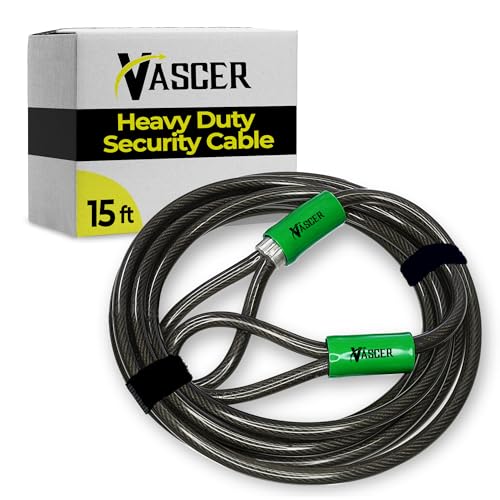
Vascer Heavy Duty Braided Steel Security Cable, 15 Ft, 3/8 inch
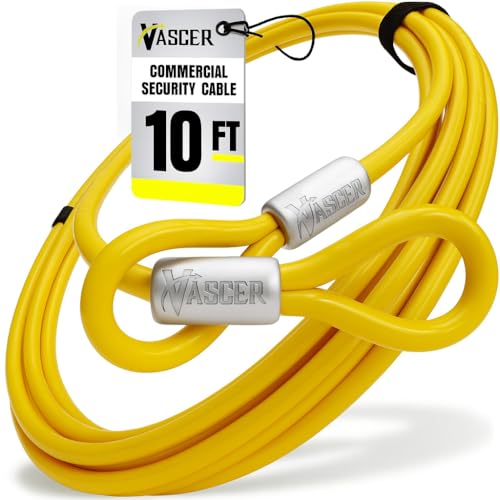
Vascer Commercial Heavy Duty Braided Steel Security Cable 1/2 inch, 10 ft
Vascer Commercial Heavy Duty Braided Steel Security Cable 1/2 inch, 6 ft

BV Heavy-Duty 15FT Security Cable with Loops 10mm

Vascer Heavy Duty Braided Steel Security Cable 30ft, 3/8 inch
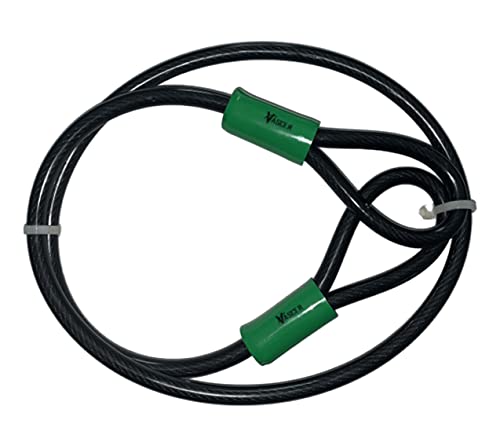
Vascer Heavy Duty Braided Steel Bike Security Cable 4ft, 3/8 in

Vascer Heavy Duty Braided Steel Bike Security Cable 7ft, 3/8 inch
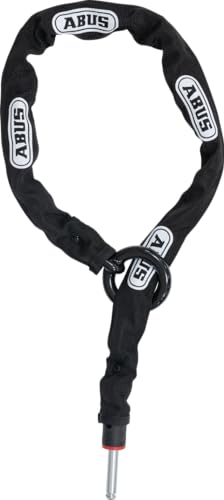
ABUS Frame Lock Plug-in Chain Adaptor Chain 2.0 6KS 130 cm
A Deeper Look At The Lineup
If your locking challenge runs beyond a single bike, this 30-foot, 1/2-inch Vascer cable gives you room to spare. The 7×19 braided construction means seven strands twisted into 19 smaller wires, a setup that trades rigidity for serious tensile strength and flexibility around odd anchor points like fence posts, hitch receivers, or trailer frames.
Looped ends mate cleanly with most standard padlocks, so you pair it with whatever lock you already trust. For homeowners with a long garden run, shop owners chaining down equipment, or anyone needing to bundle several pieces at once, the length is the main draw. Compared to the shorter Vascer cables later in the list, this one prioritizes reach over portability.
A Favorable Mix
- 1/2-inch diameter resists casual bolt-cutter attacks better than thinner 3/8-inch options.
- Thirty feet covers a wide group of items, useful for trailer beds or multiple bike racks.
- 7×19 strand construction stays pliable enough to snake through awkward anchor points.
- Looped ends fit virtually any standard padlock, no special hardware needed.
Worth Noting
- Thirty feet adds weight, so this cable is not the easiest to coil into a saddle bag for daily commuting.
- Galvanized steel benefits from occasional drying before storage, especially in coastal or snowy climates.
Feature Snapshot
Whose Garage It Belongs On
Homeowners and small-business owners who need to lock down bulky outdoor gear, trailers, or grouped equipment in low-risk settings.
Consider Something Else When
Daily bike commuters will find the 4-foot or 7-foot Vascer options lighter and easier to carry on every ride.
This 15-foot Vascer cable sits in the comfortable middle of the lineup. At 3/8 inch, it is lighter than the 1/2-inch heavy hitters but still uses the same braided galvanized construction, a process that coats the steel in zinc to slow rust and corrosion. That balance makes it the kind of cable you grab for a patio chair one day and a pair of bikes the next.
Where the 30-foot Vascer feels like overkill for a single bicycle, this 15-footer threads through two or three frames and a rack with cable left over. It is a sensible pick for suburban households, garage storage, or anyone splitting a lock between a bike and a grill. Compared to pick one, you give up a little thickness and reach in exchange for a friendlier carry weight.
Good Reasons To Consider
- 3/8-inch diameter keeps weight manageable for everyday carry.
- Fifteen feet threads through two bikes and a rack without strain.
- Looped ends work with standard padlocks you likely already own.
Trade Offs
- Thinner than 1/2-inch options, so it is more vulnerable to dedicated cutting tools.
- Fifteen feet may feel short when securing a trailer plus attached equipment.
Made For
Suburban households and casual riders locking up a couple of bikes at a rack or securing patio gear overnight.
Where Another Pick Suits Better
For maximum length in a similar gauge, the Vascer 30-foot 3/8-inch cable (pick six) is the better fit for bigger anchor runs.
Ten feet of 1/2-inch cable sounds short on paper, but that is exactly the point here. The Vascer 10-footer gives you the thicker gauge of a commercial cable without dragging extra slack into a coat pocket or saddle bag. Think of it as the short, stout sibling to the 30-foot run in pick one.
It shines for couples sharing one rack, a single e-bike plus accessories, or securing a generator to a trailer hitch eye. Looped ends play nicely with a padlock of your choice, and the 1/2-inch thickness still resists the casual snip test. The honest read is that ten feet locks a single object well and starts to feel tight when you try to bundle more than two frames.
Why It Works Well
- 1/2-inch diameter in a short package stays easy to handle and coil.
- Ten feet is enough to lock one bike plus a wheel or accessory.
- 7×19 braided galvanized build for flexibility around standard anchor points.
- Pairs with most common padlocks without needing adapters.
Honest Caveats
- Short reach becomes a real limitation when chaining more than two items.
- Heavier per foot than thinner cables, so storing the slack neatly takes a moment.
Feature Card
Best Suited To
Couples and solo riders with a single rack or a hitch-mounted setup who prefer a stouter cable over a longer one.
Swap It Out When
Reach matters more than thickness, in which case the Vascer 30-foot 3/8-inch cable is a smarter match.
Six feet is a quirky length, and that is the appeal. The Vascer 6-foot, 1/2-inch cable fits the narrowest jobs where a longer cable just gets in the way. It slips into a backpack pocket, wraps a single bike frame and rear wheel, and tucks back into storage without a wrestling match.
Compared to the 4-foot Vascer later in the list, you trade a little portability for a thicker gauge and slightly more reach. It is a friendly option for quick coffee-stop locking, dorm storage, or a workshop toolbox. The trade-off shows up the moment you try to fit more than one bike into the loop.
Key Advantages
- 1/2-inch thickness in a compact, easy-to-pack form factor.
- Six feet covers a single bike frame plus rear wheel.
- Galvanized braided steel construction matches the longer Vascer cables.
Points To Keep In Mind
- Too short for two-bike setups or wrapping larger gear.
- Thick gauge means it does not fold flat the way thinner cables do.
Perfect Match For
Quick errands, dorm room storage, or a single commuter bike you want to lock and forget.
Skip It When
You regularly need to lock two frames together, where the Vascer 7-foot 3/8-inch cable gives you more usable slack.
BV positions this 15-foot, 10mm cable as an all-purpose weatherproof option, and the description lines up with how most people use a 3/8-inch braided cable. The 10mm size is essentially 3/8 inch, so it slots right next to the Vascer 15-footer in the lineup but with a different braid pattern under the hood.
Where this one earns its keep is outdoor settings. Patio furniture, grills, generators chained to a deck, or garden equipment all benefit from a cable that handles moisture without complaint. The 15-foot run gives enough reach to wrap bulky items and still click a padlock through both loops. Relative to pick two, the difference comes down to brand feel and the way each cable lays in storage.
Reasons It Performs
- 3/8-inch diameter hits the sweet spot for everyday locking weight.
- Braided steel construction helps resist casual cutting attempts.
- Fifteen feet covers most patio and garden anchoring tasks.
- Weatherproof braided build tolerates rain and sun exposure in typical outdoor spots.
Worth Bearing In Mind
- Not the thickest cable available, so high-risk areas deserve a heavier chain.
- Owners commonly report that outdoor storage can shorten the lifespan of the finish if left wet for long stretches.
Quick Facts
Who Should Grab It
Homeowners securing patio gear, outdoor furniture, or garden equipment in low-to-moderate risk areas.
A Better Fit Elsewhere
For bike-specific locking at a busy rack, the Vascer 7-foot 3/8-inch cable is a more commuter-friendly size.
When you need length without dragging around a 1/2-inch cable, the 30-foot Vascer in 3/8 inch is the practical compromise. It stretches across multiple bike stands, threaded through a row of patio chairs, or wraps up a kayak rack with cable to spare. The galvanized steel core still gets the same corrosion-resistant treatment as the heavier Vascer cables.
It appeals to households with several bikes or anyone running a community rack. Compared to pick one, you lose a meaningful step in thickness but gain easier handling, which matters when you are looping and unlooping a 30-foot run multiple times a week. You may find the slack gets in the way for short single-bike trips, so this is a multi-use cable first.
Where It Helps
- Thirty feet covers family-sized bike storage or patio runs.
- 3/8-inch gauge keeps the weight reasonable for the length.
- Looped ends accept standard padlocks you already use.
- Galvanized finish helps the cable survive outdoor storage.
Less Ideal Details
- Thinner than 1/2-inch options, so it is the wrong pick where maximum cut resistance matters.
- Thirty feet of cable can tangle without a dedicated storage bag or hook.
Right Fit For
Families and shared-rack users who need to lock multiple bikes or a long stretch of gear at once.
Another Choice May Suit
Solo commuters looking for an easier carry should consider the Vascer 7-foot 3/8-inch cable instead.
Four feet is the shortest Vascer cable in the lineup, and it is built for portability. The 3/8-inch diameter keeps it light, while the braided galvanized core still offers meaningful resistance against casual tampering. The vinyl sleeve around the cable helps protect a bike’s paint from scuffs when you loop it over the top tube.
It is the right size for locking a single frame plus a wheel to a post, then tossing the cable into a backpack or pannier. Compared to the 6-foot Vascer, you save a bit of bulk but lose the ability to wrap larger frames. For quick stops, four feet is usually enough; for anything longer, you will want a lengthier option.
Notable Upsides
- Compact 4-foot length fits into most bags and saddle packs.
- 3/8-inch gauge covers everyday bike-locking needs without excessive weight.
- Vinyl coating helps protect the bike frame from scratches during use.
Small Caveats
- Four feet is too short to lock a frame and both wheels plus a rack.
- The vinyl jacket may wear at stress points after years of repeated coiling.
Who It Suits Best
City commuters and quick-stop riders who want a small, light cable for short errands.
Reach For A Different Pick When
You need to wrap a frame plus a rack post, where the Vascer 7-foot 3/8-inch cable gives you more working slack.
The Vascer 7-foot, 3/8-inch cable is the most commuter-friendly length in the Vascer bike range. Seven feet is enough slack to wrap a frame, lock a wheel, and still click a padlock through both loops, without the bulk of a 15-footer dragging in a bag. The braided galvanized construction mirrors the rest of the Vascer line, and the cable plays nicely with most U-locks as a secondary loop.
It is a natural upgrade from the 4-foot pick for riders who want to lock to thicker posts or share a rack with a friend. Where it falls short is the same place any 3/8-inch cable does: dedicated thieves with the right tools will not be deterred. For a busy city commute on a typical bike, the length is the right daily compromise.
Where It Delivers
- Seven feet gives comfortable reach around racks and posts.
- 3/8-inch diameter balances portability and durability for daily use.
- Vinyl sleeve helps shield the frame from contact scratches.
Honest Caveats
- Not the right pick for high-theft areas where a heavier chain makes more sense.
- Coiling the full seven feet neatly takes a little practice.
Built With In Mind
Regular city commuters who lock up at the same rack most days and want enough slack to cover frame and wheel together.
Where A Sibling Pick Shines
For high-risk racks, the Vascer 1/2-inch 6-foot cable offers noticeably more cut resistance in a similar form factor.
The ABUS Chain 2.0 6KS is a different category of product from the loose-loop Vascer cables. It is a 6mm hardened-steel chain at 130cm, engineered to plug into a compatible ABUS frame lock as a secondary layer of protection. That is the key: it only makes sense if you already own (or plan to buy) an ABUS frame lock with the matching slot.
For European-style city commuting, where frame locks are common, the chain acts as the security that grips a rack or post while the frame lock secures the rear wheel. The chain comes with its own carry bag, which matters because steel chain is heavier than braided cable. Compared to any of the Vascer cables, this is the most specialized pick on the list.
The Helpful Details
- 6mm hardened steel chain for stronger cut resistance than typical cable.
- 130cm length covers one bike plus a rack or post.
- Includes a carry bag to keep the chain clean during transport.
Points To Note
- Heavier than braided cable, so it adds noticeable weight to a daily bag.
- Requires a compatible ABUS frame lock to function as intended.
Who Will Love This
Owners of compatible ABUS frame locks who want a matching chain rather than a generic cable.
Look Elsewhere When
You do not have an ABUS frame lock, in which case a Vascer cable with a separate padlock is a more flexible setup.
What To Weigh Before Buying Security Chains
Cable Gauge And Material
Thickness matters most when you compare two cables head-to-head. A 1/2-inch cable is meaningfully harder to crop with handheld bolt cutters than a 3/8-inch option, and that gap shows up the moment a cable is left unattended. Galvanized steel adds a zinc coating that slows rust, which matters for outdoor setups, garages that see moisture, or coastal air. The braided pattern (such as 7×19) lets a thicker cable still flex around awkward anchor points, instead of fighting you.
Length And Use Case
Length drives convenience more than any other spec. A 4 to 7-foot cable fits a typical commute and lives in a bag. A 15-foot cable covers two bikes or a small patio run. A 30-foot cable handles trailers, generators, or whole racks of gear. Match the length to the largest job you realistically do, then subtract the cost of the unused slack you would be hauling around otherwise.
Chain Vs. Cable
Hardened steel chains, like the ABUS pick above, are heavier and tougher to crop, but they need a compatible frame lock to perform their best. Braided cables are lighter, more flexible, and friendlier to paint and finishes. Commuters tend to favor cables for daily carry; stationary setups like a workshop or patio often do better with a stiffer chain.
Padlock Compatibility
Every cable on this list ends in sealed loops, which means you bring your own padlock. Match the shackle diameter to the loop opening and confirm the lock body clears both loops at the same time. Skipping this step is the most common reason a brand-new cable ends up sitting in a drawer.
Smart Considerations Before You Commit
Where Shoppers Go Wrong
The most common slip-up is buying length without checking the anchor points. A 30-foot cable sounds generous, but if the only post you ever use is a single street pole, you spend more time coiling slack than locking the bike. Another misstep is grabbing the thinnest cable available because it costs less. In a high-traffic area, a slightly thicker 3/8-inch cable is a smarter floor than a bargain 1/4-inch option. Finally, mixing cable and padlock brands without checking fit can leave you with a shackle that barely threads through the loop.
What Separates Premium From Basic
The jump from a basic cable to a more substantial one usually shows up in three places: thicker steel, better galvanization, and tighter braid consistency. Heavier cables cost more per foot, and well-finished loops resist fraying longer than stamped ends. For low-risk settings like a private garage, a mid-range 3/8-inch cable does the job. For shared racks or overnight locking in busier spots, the step up to a 1/2-inch braided cable or a hardened-steel chain is the upgrade that matters.
Frequently Asked Questions
What thickness of security chain is best for a bike?
For most city commuters, a 3/8-inch braided steel cable is the practical floor. In busier or higher-risk spots, a 1/2-inch cable or a 6mm hardened chain is a sensible upgrade. The thicker the cable or chain, the harder it is to cut with handheld tools, but the heavier it is to carry.
How long should my security chain be?
Match the length to the largest job you realistically face. A 4 to 7-foot cable suits single-bike commuting. A 10 to 15-foot cable covers a couple of bikes or patio gear. A 30-foot cable handles trailers, generators, and full racks. Extra length adds weight and tangles if you do not actually need it.
Can I use the same cable for bikes and outdoor equipment?
Yes, as long as the cable’s length and thickness fit the job. Braided galvanized cables are common across both use cases because they tolerate weather and flex around odd shapes. For very high-value equipment, a hardened steel chain may be worth the extra weight.
Do I need a special padlock to go with these cables?
Most of the cables here end in standard sealed loops, which accept any common padlock. Match the shackle diameter to the loop opening, and confirm the lock body fits through both loops at the same time. No proprietary lock is required for any of the Vascer or BV cables listed.
How should I store a security cable to make it last?
Wipe off moisture before coiling, especially after rain or snow, and store the cable indoors or in a dry container. For longer cables, a wall hook or simple storage bag keeps the braid from kinking at the same spot every time. A quick inspection of the loops once a season helps catch fraying before it becomes a failure.




