


Stripping wire by hand eats hours you never planned to spend. Anyone running a small shop, scrapping copper on weekends, or rewiring a vintage bike runs into the same wall: the wrong tool turns a quick job into a knuckle-busting chore. This lineup focuses on machines and tools that handle the adjustment for you, so the focus stays on the actual wiring, not the fiddling. Each pick below solves a slightly different problem, from a hand-held electrician’s tool to a workshop-grade motor that chews through scrap pile in minutes.
The Picks In Brief

StripMeister E250 Electric Wire Stripping Machine

StripMeister E350x Wire Stripping Machine 500 MCM

StripMeister Original & E250 Blade Replacement Kit

StripMeister E350x Electric Wire Stripper Ø1″

Klein Tools 11063W Wire Cutter/Stripper
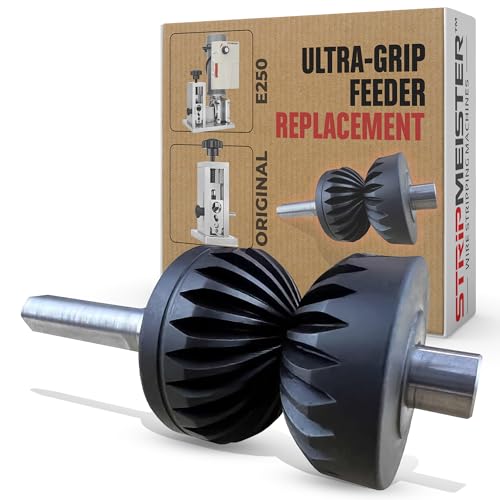
StripMeister Original & E250 Feeder Replacement

StripMeister E1000 Electric Wire Stripper 1-3/4″

StripMeister Original Drill-Powered Wire Stripper
More On The Choices That Made The List
The E250 lands in that sweet spot where a bench-mounted machine stops feeling like a luxury and starts paying for itself. It runs on a 1/4 HP fan-cooled DC motor with variable speed, so you can dial it back for delicate gauge wire and crank it up for thick romex. The wire range runs from Ø1/8″ up to Ø3/4″, which covers most residential, automotive, and light commercial work.
Compared to a hand tool like the Klein 11063W, this is a different beast entirely. The Ultra Grip feeder is the real headline feature: it pulls mangled, kinked, or pig-tailed copper through without stalling. The frame uses aircraft-grade aluminum and a heat-treated tool steel blade, so longevity looks solid based on the spec sheet.
Practical Advantages
- Variable speed motor lets you match the feed rate to wire thickness, reducing nicks on softer conductors
- Ultra Grip feeder handles twisted or damaged copper that would jam lesser machines
- Solid aluminum frame and CNC-machined parts suggest long service life under repeated use
- Wire range from Ø1/8″ to Ø3/4″ covers the bulk of residential and small commercial gauges
- Hands-free operation means less fatigue during long stripping sessions
Things To Consider
- Requires bench space and a power outlet, so it’s not a grab-and-go option
- Replacement blades and feeders are consumables you’ll need to budget for over time
Who It Suits Best
Small workshop owners and serious DIYers processing several hundred feet of wire per month will get the most out of the E250’s capacity and speed.
Swap It Out When
The StripMeister Original Drill-Powered Wire Stripper is a better fit for hobbyists who already own a cordless drill and rarely strip more than a few coils at a time.
The E350x steps up from the E250 with serious capacity for scrap yard work. It handles wire from #18 gauge all the way up to 500 MCM, stripping insulation from 0.08″ to 1.043″ thick. That upper range puts it in industrial territory, well past where the E250 maxes out.
The construction leans on aircraft-grade aluminum alloy and a precision-machined knife, with the feeder built from heat-treated tool steel. The Ultra Grip feeder earns its name here: it pulls in kinked, pinched, and twisted copper without slipping, which is where scrap pile wire often lives. The package also includes a replacement feeder assembly, handy if the original wears out.
Useful Highlights
- Wide gauge range from fine #18 up to heavy 500 MCM cable
- Ultra Grip feeder resists slipping on damaged or twisted conductors
- Robust aluminum and tool steel construction suited to daily shop use
- Included replacement feeder adds long-term value to the kit
Worth Noting
- Bulkier and heavier than the E250, so it wants a permanent spot on the bench
- You may find the upper capacity wasted if you mostly work with residential gauge wire
Made For
Scrap recyclers and electricians handling commercial or service entrance cable will appreciate the headroom above 250 MCM.
Look Elsewhere When
The Klein Tools 11063W makes more sense for a service truck where portability matters more than gauge range.
This kit is a maintenance part, not a standalone tool, and that framing matters. If you already run a StripMeister Original or the E250 reviewed above, the blade is the wear item you’ll replace eventually. The set includes the cutting blade, the retaining pin, and a hex key wrench, so you have everything to swap it in one trip to the bench.
The blade itself takes the most abuse on any wire stripper, since it sees insulation on every pass. Having a fresh blade on hand avoids the slow degradation in cut quality that owners commonly report after hundreds of pounds of wire. The hex key doubles as the tool for releasing the pin, so you won’t need a separate Allen set.
The Value In It
- Complete kit: blade, pin, and hex key included for one swap
- Compatible with both the Original and the E250 models, so it covers two machines
- Restores clean cuts without buying a whole new stripper
Trade Offs
- Only useful if you already own a compatible StripMeister machine
- Not a substitute for proper blade alignment during installation
Best Suited To
Current owners of the StripMeister Original or E250 who want a backup blade ready before the current one dulls.
Consider Something Else When
Anyone without a compatible machine should skip this and head to the StripMeister E250 itself or the drill-powered Original for a first-time purchase.
Think of the E350x as the wider-jaw sibling to the E250 covered earlier. It pushes the maximum wire diameter to Ø1″, which opens up larger service cable and feeder wire that the smaller machine can’t grip. The Ultra Grip feeder is the same technology, but on a beefier frame built for sustained high-volume runs.
The motor is geared for speed, and the manufacturer markets it specifically toward profitability on scrap runs. If you process mixed scrap where one batch might be fine appliance wire and the next is heavy service entrance, this single machine handles both without a swap.
Useful Touches
- Ø1″ capacity covers most residential service and light commercial feeder wire
- Ultra Grip feeder designed to handle twisted, mangled, and irregular scrap
- Faster cycle time than the E250, which adds up on long scrap days
- Single machine spans small and large gauge, reducing tool changes
Honest Caveats
- Bench footprint and weight exceed the E250, so plan for a dedicated spot
- Overkill for occasional household wiring tasks
Perfect Match For
Mid-volume scrap operations that regularly see wire beyond Ø3/4″ but don’t need the 1-3/4″ reach of the E1000.
A Better Fit Elsewhere
Recycling yards processing feeder cable and large service entrance runs should step up to the StripMeister E1000 for true industrial capacity.
The Klein 11063W is the only hand tool on this list, and it earns its place by solving a completely different problem. Where the StripMeister machines are bench tools for processing wire, this is a jobsite tool for wiring. It cuts and strips 8-20 AWG solid and 10-22 AWG stranded wire in a single squeeze, thanks to compound-action stripping.
Precision-machined stripping holes remove insulation cleanly without scoring the copper, and the tool can pull up to 1 inch of jacket in a single motion. The tension spring returns the handles, and the overall fit is built for a tool belt pouch rather than a workbench.
The Helpful Details
- Self-adjusting jaws strip both solid and stranded without manual setup
- Cuts and strips in one motion, trimming steps on every termination
- Compact enough to ride in a pouch or pocket all day
- Removes up to 1 inch of insulation per stroke, useful for panel work
Points To Keep In Mind
- Not designed for scrap processing, so it bogs down on long runs of wire
- Limited to roughly 8-22 AWG, well below what bench strippers handle
- Hand fatigue becomes real during repetitive commercial runs
Right Fit For
Licensed electricians, HVAC techs, and anyone making terminations on the go where lugging a bench machine isn’t realistic.
Skip It When
Scrapers and home workshop users processing bulk wire will find the StripMeister E250 far faster for their workload.
Like the blade kit above, this is a replacement part, not a fresh tool. The feeder and shaft assembly is the grip mechanism that pulls wire through the stripper, and it’s a wear item alongside the blade. StripMeister’s Ultra Grip design uses special teeth to bite into damaged or irregular copper, so once those teeth wear, the machine starts to slip.
Swapping the feeder restores the original bite on kinked, pinched, and pig-tailed wire. The kit fits both the Original and the E250, so it’s a useful spare to keep on the shelf if you depend on the machine for daily volume.
The Upside
- Restores Ultra Grip performance on worn machines
- Compatible with two popular StripMeister models
- Extends the working life of an existing machine rather than replacing it
Small Caveats
- Only relevant if you already own a compatible StripMeister
- Installation requires some mechanical comfort and basic hand tools
Who Should Grab It
Long-term owners of the StripMeister Original or E250 who notice slipping or inconsistent grip on twisted wire.
Another Choice May Suit
First-time shoppers should pick the StripMeister Original Drill-Powered Wire Stripper instead, since it doesn’t require owning a machine to use.
The E1000 is the heavy hitter of the lineup. It pushes wire capacity to 1-3/4″ and delivers over 50 lbs of stripping force, which is the kind of spec that matters when you feed it thick service entrance cable or aluminum feeders. The hardened CNC-machined blade and dual wire guides suggest a build targeted at full-day industrial use.
It also handles both copper and aluminum, while the smaller StripMeister models lean toward copper. The Ultra Grip feeder carries over from the E250 and E350x, so it grips mangled and irregular wire without slipping. For professional recyclers and electrical contractors running scrap volume, this is the kind of machine that pays back its footprint quickly.
What Stands Out
- Handles copper and aluminum, expanding the materials you can process
- 1-3/4″ capacity covers the largest service and feeder cable commonly scrapped
- 50+ lbs of stripping force tackles thick insulation without stalling
- Dual wire guides and CNC-machined blade support consistent cut quality
Factors To Consider
- Largest and heaviest machine in this lineup, demanding permanent floor or bench space
- Power requirements and price tier put it beyond casual home use
Whose Shelf It Belongs On
Recycling yards, electrical wholesalers, and industrial scrap operations that process cable above 1″ diameter regularly.
Where A Sibling Pick Shines
The StripMeister E350x Electric Wire Stripper Ø1″ is the more sensible step for shops that rarely see cable larger than an inch.
The Original is the entry point into the StripMeister line, and it earns that spot by skipping the built-in motor. You attach any standard corded or cordless drill to drive the feeder, which keeps the cost and weight down dramatically. For a hobbyist with a drill already on the bench, that’s a meaningful saving.
Wire range tops out at Ø3/4″, the same as the E250, and the housing uses 5-axis CNC milling for tight tolerances. It’s portable enough to toss in a truck for a farm job or garage cleanout, which is where the drill-powered design really pays off. You trade raw speed for portability and price.
A Favorable Mix
- No dedicated motor means lower cost and lighter carry weight
- Same Ø3/4″ wire range as the motorised E250, so capacity doesn’t take a hit
- CNC-machined body helps maintain consistent strip quality over time
- Uses any standard drill you already own, no special coupling required
Points To Note
- Throughput is lower than a dedicated motor since you’re limited to drill trigger control
- You’ll need to supply the drill, and cheap drills may not have enough torque
Built With In Mind
Weekend scrappers, hobbyists, and small garage shops that already own a decent corded drill and only process a few hundred feet of wire per session.
Not Your Match When
High-volume operations should pick the StripMeister E250 instead, since its dedicated motor and variable speed save time on every pass.
What Matters When Choosing Self-Adjusting Wire Strippers
Wire Gauge And Material Range
The single biggest factor is matching the machine to the wire you actually handle. AWG (American Wire Gauge) numbers shrink as wire gets thicker, and MCM (thousand circular mils) is used for large cable above 250 MCM. A tool that maxes out at Ø3/4″ is plenty for residential romex, but service entrance and feeder work demand Ø1″ or larger. Materials matter too: most entry-level units handle copper cleanly, while aluminum requires a tougher blade and more force.
Power Source And Throughput
Bench machines run on dedicated AC or DC motors and tend to deliver the fastest cycle times. Drill-powered options like the StripMeister Original trade speed for portability, since you’re working with whatever torque your drill offers. Variable speed control is worth seeking out, because thin stranded wire and thick solid core want very different feed rates to avoid nicking the copper.
Build Quality And Replacement Parts
Wire stripping is hard on cutting edges and feeder teeth. Look for CNC-machined components, heat-treated tool steel blades, and readily available replacement parts. StripMeister’s modular approach, with separate blade and feeder kits, means a worn part doesn’t end the machine’s life. Aluminum frames resist corrosion in damp shops, which matters if your workspace isn’t climate-controlled.
Hand Tool Vs Bench Machine
Hand-held self-adjusting strippers like the Klein 11063W are the right call for terminations and field work. Bench machines win anywhere you process wire in volume, since the motorized feeder does the pulling and you just guide the conductor. Mixing both in your kit is a common pattern: the hand tool for quick electrical work, the bench machine for scrap and harness builds.
Key Things To Weigh Across This List
Where Shoppers Go Wrong
The most common mistake is buying by gauge range alone without thinking about the thinnest wire you handle. A machine that maxes out at Ø3/4″ sounds generous until you try to strip 22 AWG speaker wire, and the wide-open feeder simply can’t grip it. Always check the minimum wire size, not just the maximum. Another frequent misstep is overlooking the replacement parts ecosystem. A bench machine with no available blades or feeders becomes a paperweight once the first wear item goes, so factor consumables into the real cost.
When Paying More Pays Off
Higher-tier models earn their keep by combining wider gauge range, faster motors, and tougher construction. The E1000 costs more than the E250, but the jump to 1-3/4″ capacity and dual-material handling opens up jobs the smaller machine can’t touch. For a hobbyist stripping a few spools a year, that extra headroom is wasted money. For a recycling yard or electrical contractor running daily volume, the upgrade pays back through faster cycle times and fewer jams on tough scrap.
Frequently Asked Questions
What wire sizes can a self-adjusting wire stripper handle?
Most bench machines in this category cover anywhere from Ø1/8″ up to Ø3/4″ or larger, depending on the model. The StripMeister E1000 stretches to 1-3/4″, while hand tools like the Klein 11063W work across 8-22 AWG.
Can these machines strip aluminum wire as well as copper?
The StripMeister E1000 is built to handle both copper and aluminum. Smaller StripMeister models are optimized for copper, and the Klein hand tool works well on both but at much smaller gauges.
How often do blades need replacing on a motorized wire stripper?
Blade life depends on the volume and type of insulation. StripMeister’s replacement blade kit exists because the blade is the highest-wear component, and shops processing hundreds of pounds of wire per week commonly keep a spare on hand.
Do I need a dedicated motor or can a drill work?
The StripMeister Original runs on any standard drill, which keeps cost and weight down for occasional use. Dedicated motors on the E250, E350x, and E1000 deliver faster, more consistent cycles for daily volume.
Are replacement parts easy to find for these machines?
StripMeister sells separate blade kits and feeder replacement assemblies for its Original, E250, and compatible models, so common wear items are straightforward to source. The Klein hand tool is a sealed unit, with replacement generally handled through warranty rather than field service.




