


A dull blade turns a quick dinner prep into a chore, and a whetstone remains the most dependable path back to a clean cut. The challenge is sorting through dozens of grits, materials, and kit shapes without overspending on the wrong setup. This guide walks through nine well-regarded options built for everything from a first-time home cook to a seasoned woodworker, so you can match a stone to the knives and tools you actually use.
The Main Contenders
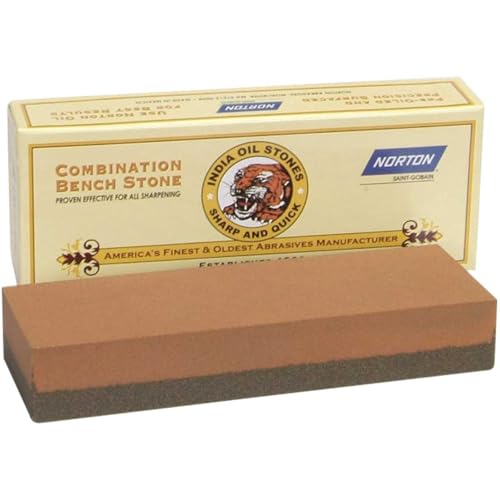
Norton Combination Grit Abrasive Benchstone (Aluminum Oxide)

Sharp Pebble Whetstone Knife Sharpener (1000/6000 Grit)

Sharp Pebble Whetstone Knife Sharpening Stone Kit (400/1000)

Sharp Pebble Complete Whetstone Sharpening Kit (1000/6000)

Spyderco 400 Square Ceramic Sharpening Files
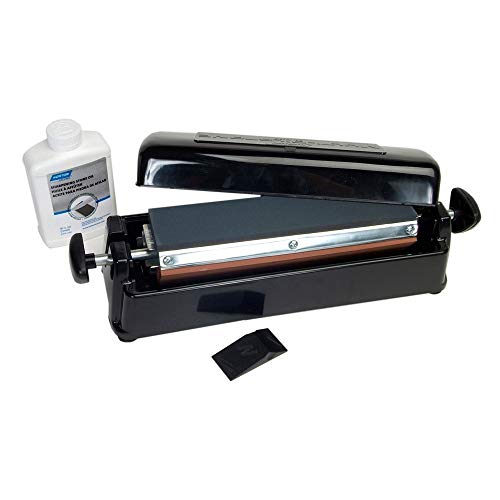
Norton IM313 Multi-Oilstone Sharpening System
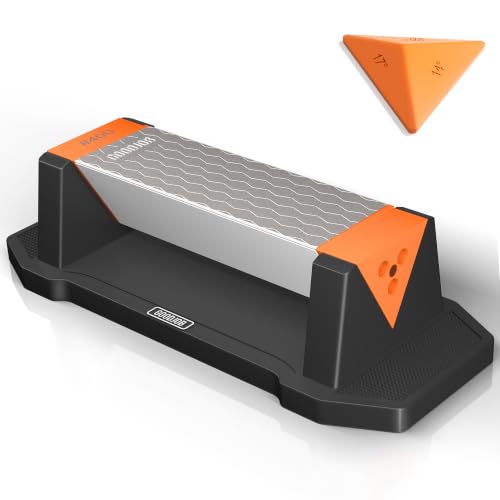
goodjob Diamond Sharpening Stone 3-Sided (400/1000/8000)

goodjob Diamond Sharpening Stone Extra Large (400/600/1000)
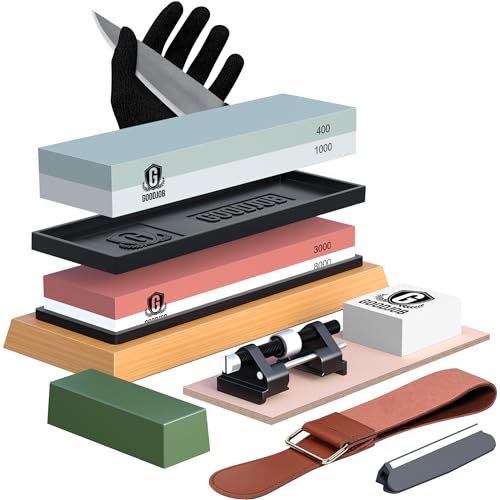
goodjob Complete Knife Sharpening Stone Kit (400/1000 & 3000/8000)
The Picks, Examined More Closely
The Norton Combination Grit Abrasive Benchstone has been a workshop staple for decades, and the 6-by-2-inch surface covers most pocket and kitchen knives without sliding around on the bench. It’s an oilstone, so a light coat of honing oil before each session keeps the pores clear and the cutting action consistent.
For a home cook restoring a week-old factory edge, this Norton earns its reputation by doing one job extremely well. The aluminum oxide abrasive cuts slowly but predictably, which matters more than speed when you’re learning how the angle feels in your hand.
What Stands Out
- Aluminum oxide abrasive produces clean, long-lasting edges on carbon and stainless steel
- Dual-grit design handles both repair work and final polishing on a single stone
- Compact 6-by-2-inch footprint fits on most countertops and in small drawers
- Oil-based sharpening reduces dust and keeps the stone from loading up with metal fines
Points To Note
- Requires a separate bottle of honing oil, which adds a small recurring cost and a bit of cleanup
- Sharpens more slowly than diamond alternatives, so patience is part of the process
Who It Suits Best
Traditionalists and weekend woodworkers who already keep honing oil on the bench and want a stone that lasts for years.
Consider Something Else When
Shoppers who want a water-only, no-mess routine should look at the Sharp Pebble Whetstone Knife Sharpener (1000/6000 Grit) instead.
Sharp Pebble’s 1000/6000 stone is the entry point most first-timers gravitate toward, and the included angle guide takes the hardest part of whetstone sharpening off the table. The 1000-grit side resets a tired edge, while the 6000-grit side brings it to a clean polish that slides through a tomato skin.
Because it’s a water stone, you soak it for a few minutes before use and rinse it clean afterward, which keeps the kitchen counter free of oil residue. That convenience is a real selling point in apartment kitchens where spills matter.
The Case For It
- Locking angle guide helps maintain a consistent bevel without guesswork
- Water-only sharpening means no oil smell and easy rinse cleanup
- 6000-grit finish leaves a noticeably smoother working edge than mid-range stones
- Bamboo base holds the stone steady during longer sharpening sessions
Trade Offs
- No coarse grit below 1000, so heavily chipped blades need a separate repair stone
- Requires a 10-minute soak before each session to keep the surface from drying out mid-stroke
Right Fit For
Newcomers who want guided sharpening without investing in a full multi-stone system.
Where Another Pick Suits Better
Cooks who regularly deal with damaged edges will get more use from the Sharp Pebble Whetstone Knife Sharpening Stone Kit (400/1000 Grit), which adds a coarser repair side.
The 400/1000 Sharp Pebble kit answers the first real question every cook asks: how do I fix a knife that already feels ruined. The 400-grit face reshapes chips and rolled edges in a handful of passes, then the 1000-grit face refines the bevel into something a home cook can actually use.
Like the higher-grit Sharp Pebble, this is a water stone, so you skip the oil and the mess. For someone maintaining a small block of kitchen knives on a tight budget, the kit format is a smart middle ground between a single stone and a full sharpening system.
Where It Helps
- 400-grit side handles real repair work that finer stones can’t touch
- Double-sided design saves counter space compared to owning two separate stones
- Water-based operation keeps cleanup to a quick rinse under the tap
- Lower price point than premium kits with similar grit coverage
Some Limits To Know
- Tops out at 1000 grit, so the final edge won’t have the mirror polish a finishing stone provides
- No angle guide, so first-timers may need to practice their bevel on a sacrificial knife
- 400-grit dishes out metal quickly, which can shorten blade life on thin Japanese-style knives if you overdo it
Made For
Budget-conscious home cooks restoring neglected knives and wanting one stone that handles both repair and routine maintenance.
Not Your Match When
Anyone chasing a true polished edge should step up to the Sharp Pebble Complete Whetstone Knife Sharpening Stone Kit (1000/6000 Grit) for the higher finishing grit.
Sharp Pebble’s complete kit adds something the brand’s basic whetstone doesn’t: an adjustable angle guide that clicks into preset positions of 15, 17, 20, and 22 degrees. That range covers everything from a delicate Japanese gyuto to a thicker Western chef’s knife, which removes the biggest variable for someone still building muscle memory.
For households with a mixed knife drawer, the guide pays for itself the first time you avoid grinding a wonky bevel into an expensive blade. The stone itself runs at 1000/6000 grit, so you’re set for routine touch-ups and finishing passes but not for major chip repair.
Where It Delivers
- Four-angle guide system supports the most common kitchen knife bevels in one tool
- 1000/6000 grit range handles routine maintenance and final polishing in a single stone
- Non-slip base keeps the stone planted during longer sharpening sessions
- Water-only cleanup means no oil residue around food prep areas
Honest Caveats
- No coarse grit, so badly damaged blades still need a separate 400-grit stone
- Angle guide adds bulk to the setup, which matters in tight kitchen drawers
Best Suited To
New sharpeners with a varied knife collection who want a single kit that walks them through the correct angle for each blade.
Skip It When
You mostly sharpen one or two knives and don’t need a multi-angle guide, in which case the simpler Sharp Pebble Whetstone Knife Sharpener (1000/6000 Grit) gets the job done.
Spyderco’s ceramic files aren’t a whetstone in the traditional sense, but they fill a gap no rectangular stone can. The square profile reaches into gouges, mold edges, and tool details that a flat surface simply can’t address, which is why jewelers, gunsmiths, and dental techs keep sets like this within reach.
The 400-grit ceramic offers fine sharpening, polishing, and deburring on hardened tool steel and even carbide, so the same file works on everything from a wood-carving gouge to a small machinist’s edge. The rust-proof ceramic body wipes clean with kitchen cleanser and a plastic scouring pad.
Practical Advantages
- Square cross-section reaches into recesses, mold details, and serrated edges
- Fine-grit ceramic handles deburring on hardened steel and carbide tools
- Rust-proof ceramic cleans easily with standard kitchen cleanser
- Compact length fits in a shop apron pocket or a small toolbox drawer
Worth Noting
- Not designed for full-length kitchen knife edges, which makes it a complement rather than a primary stone
- Ceramic cuts slowly on heavy repair work, so it’s better for finishing than reshaping
Whose Shelf It Belongs On
Hobbyists and craftspeople who sharpen gouges, small tools, and detailed edges that a flat whetstone can’t reach.
Look Elsewhere When
You mostly sharpen full-size kitchen knives and need a flat sharpening surface, in which case the Norton Combination Grit Abrasive Benchstone covers that work better.
The Norton IM313 is a three-stage oilstone system that takes a knife from genuinely damaged to a working edge in one workstation. The progression runs from a 100-grit silicon carbide stone for repair, to a 150-grit stone for reshaping, and finally a 320-grit aluminum oxide stone for honing, which covers the full sharpening arc most people need.
The plastic angle guide and reservoir base add a workshop feel that single benchstones lack, and the non-skid bottom keeps everything planted while you work. It comes with stone oil, so the setup is ready to use out of the box without a separate purchase.
The Value In It
- Three-grit progression handles repair, reshaping, and honing in a single workstation
- Silicon carbide repair stone cuts through chips and rolls that finer stones can’t touch
- Plastic angle guide helps maintain a consistent bevel across sessions
- Reservoir base with non-skid bottom keeps the system stable during use
Practical Considerations
- Bulkier than a single benchstone, so it needs a dedicated spot on a workbench or counter
- Requires regular oiling and cleaning to keep the stones from glazing over
- Heavier price tag than single-stone options, which is fair but worth planning for
Who Will Love This
Serious home cooks, scissor sharpeners, and pros who want a stationary system that handles every stage of edge maintenance.
A Better Fit Elsewhere
Casual users with limited counter space should consider the compact goodjob Diamond Sharpening Stone 3-Sided (400/1000/8000) for similar coverage in a smaller footprint.
goodjob’s 3-sided diamond stone crams repair, sharpening, and a near-mirror polish into a single block roughly the size of a paperback book. The 400-grit face resets a damaged edge, the 1000-grit face refines it for everyday use, and the 8000-grit face polishes it to the kind of finish that makes a kitchen knife feel like a new tool.
Because it’s diamond abrasive, the stone cuts faster than comparable water stones and doesn’t need a long presoak. The included angle guide helps lock the bevel in place, which matters when you’re working on the finer grits where a wobble shows up immediately.
Practical Pluses
- Diamond abrasive cuts faster than traditional water stones at equivalent grits
- Three grits on one block eliminate the need to swap stones mid-session
- 8000-grit face delivers a polish that rivals dedicated finishing stones
- Small footprint suits apartments, RVs, and minimal-countertop kitchens
Details To Watch
- Smaller surface area can feel cramped on long chef’s knives and slicing blades
- Diamond plates can develop grooves over time with heavy use on harder steels
Perfect Match For
Cooks with limited storage who still want a full repair-to-polish progression on a single compact block.
Reach For A Different Pick When
You regularly sharpen long blades like a 10-inch chef’s knife or sujihiki, in which case the wider goodjob Diamond Sharpening Stone Extra Large (400/600/1000) gives you more room to stroke.
goodjob’s extra-large diamond stone takes the same three-sided approach as the smaller model and stretches it across a wider surface. That extra width matters when you’re pushing a long slicing stroke along a chef’s knife or a Chinese cleaver, where a narrow stone forces you to reset the blade mid-pass.
The 400/600/1000 grit lineup is built more for repair-and-hone than for high-polish work, which lines up well with daily kitchen knife maintenance. You skip the 8000-grit polish, but the trade-off is a stone that handles bigger blades without feeling undersized.
Strong Points
- Extra-wide surface accommodates full-length chef’s knives and cleavers in a single stroke
- Diamond abrasive holds its flatness longer than softer water stones
- Three grits cover repair, sharpening, and routine honing in one block
- Stable base keeps the stone planted during heavier sharpening sessions
Less Ideal Details
- Larger footprint demands more counter or shelf space than compact alternatives
- No ultra-fine grit above 1000, so the final edge won’t reach a mirror polish
Who Should Grab It
Home cooks and knife owners with longer blades who want room to stroke and a stone that stays flat through years of use.
Swap It Out When
You care more about a high-polish finish than surface area, in which case the Complete Knife Sharpening Stone Kit (400/1000 & 3000/8000) covers the higher grits.
The goodjob complete kit is the option for someone who’s already past the beginner stage and wants a four-grit progression without buying stones one at a time. The first stone pairs 400 and 1000 grit for repair and sharpening, while the second stone pairs 3000 and 8000 grit for refining and a genuine mirror polish.
The abrasive is white corundum, which cuts cleanly and resists the glazing that cheaper aluminum oxide stones can develop. For someone restoring a Japanese-style knife or maintaining a high-end chef’s edge, that finishing capability is the whole reason to step up.
What Helps Most
- Four grits across two stones cover repair, sharpening, refining, and mirror polishing
- White corundum abrasive cuts cleanly and resists premature glazing
- 3000 and 8000 grit finishing stones produce a noticeably smoother working edge
- Double-sided design keeps the kit compact compared to four separate stones
Trade-Offs To Consider
- Higher price point than single-stone options, which makes sense for the coverage but adds up
- Two stones mean more storage space and a slightly longer setup routine
- 8000-grit polish is rewarding but takes patience to see the difference over a 1000-grit edge
Built With In Mind
Enthusiasts and owners of premium knives who want a kit that takes a blade from damaged to mirror-polished without swapping gear.
Another Choice May Suit
Cooks who only need routine maintenance should consider the Sharp Pebble Whetstone Knife Sharpener (1000/6000 Grit) for a simpler one-stone routine.
What To Weigh Before Choosing Sharpening Whetstones
Grit Range And What Each Level Does
Grit numbers describe the abrasive particle size on the stone’s surface: lower numbers cut faster but leave a rougher edge, and higher numbers refine that edge into something smoother. A 400-grit stone reshapes chips and rolls, a 1000-grit stone handles routine sharpening, and anything from 3000 grit upward polishes the bevel. Most home cooks get through daily life with one stone in the 1000 range, while a two-stone kit covering repair and polish suits anyone maintaining premium knives.
Material Matters More Than The Label
Water stones, oilstones, and diamond plates all sharpen steel, but they feel different under the blade. Water stones need a soak and a rinse, oilstones need honing oil and stay put on the bench, and diamond plates cut faster and stay flat longer. Pick the maintenance style that fits your kitchen habits, because a stone you actually use beats a technically superior stone sitting in a drawer.
Size, Base, And Angle Control
The stone’s surface needs to be wider than the blades you sharpen most often, otherwise you’re constantly repositioning mid-stroke. A non-slip base or rubber mat keeps things stable, and an angle guide removes the biggest variable for new sharpeners. For long chef’s knives or cleavers, prioritize surface area; for pocket knives and paring blades, a compact stone with a guide is plenty.
Key Considerations Across These Picks
Common Shopping Slip Ups
Many first-time shoppers fixate on the highest grit number and assume a finer stone always means a sharper knife. In practice, skipping the coarser grits means you can’t fix real damage, and you end up buying a second stone anyway. Another trap is ignoring maintenance style: an oilstone in a kitchen where water-only cleanup is the norm tends to get neglected. Match the stone to the cleaning routine you actually keep up with.
What The Higher Tier Buys
The jump from a basic whetstone to a multi-stone kit pays for itself in two ways. First, you get a repair grit that brings damaged blades back instead of forcing you to replace them. Second, finishing stones in the 3000-to-8000 range produce a smoother working edge that holds up longer between sessions. For a single shared household knife, a basic stone is enough; for a drawer full of good blades, the upgrade covers the full sharpening arc without workarounds.
Frequently Asked Questions
How often should you flatten a whetstone?
Flatten a whetstone whenever the surface starts showing a visible dip or you feel the blade rocking during a pass. For a home cook using a 1000-grit stone weekly, flattening every few months keeps the contact even and the edge consistent.
Can you use water stones and oilstones on the same knife?
Yes, the knife itself doesn’t care which stone you use, but you should keep the two systems separate. Oil residue on a water stone fills the pores and reduces cutting speed, and water left on an oilstone can cause the surface to degrade faster than it should.
What grit works for daily kitchen knife maintenance?
A 1000-grit stone handles most weekly touch-ups on a typical chef’s knife or petty knife. Step up to a 6000-or-higher finishing stone if you want a noticeably smoother cut on produce and protein.
Do diamond stones wear out faster than water stones?
Diamond plates tend to stay flat longer than water stones, but the abrasive surface can develop grooves with heavy use on very hard steels. Water stones dish in the middle faster, so they need flattening more often, though the abrasive itself refreshes with each flattening pass.
Is an angle guide necessary for beginners?
An angle guide removes the largest source of beginner frustration, which is holding a steady bevel by feel. Once you’ve built muscle memory on a few knives, you can often skip the guide and freehand the same angle, but it’s a useful training tool for the first few months.




