


A dull chisel turns fine joinery into a chore, and the wrong stone makes a slow job slower. Whether you tune a vintage Stanley plane, reset a Japanese bench chisel, or maintain a carving set, your stone choice shapes how cleanly the edge arrives. This list gathers nine sharpening stones and accessories worth a look in 2026, spanning water stones, diamond plates, and a clever sink bridge that keeps your workspace tidy. Each pick solves a different stage of the sharpening process, so read for the work you actually do.
An Overview Of The Picks

SHAPTON K0709 Glass Stone #320 Rough
Chosera 3,000 Grit Stone with Base

SCOTTCHEN Sink Bridge Whetstone Holder

Sharp Pebble Whetstone 1000/6000 Grit

Sharp Pebble Whetstone Kit 400/1000 Grit

Sharp Pebble Complete Whetstone Kit 1000/6000
Goodjob 3-Sided Diamond Stone 400/1000/8000

Goodjob Extra Large Diamond Stone 400/600/1000
Goodjob Double-Sided Whetstone Kit 400/1000 & 3000/8000
The Picks, Examined More Closely
The Shapton K0709 is the kind of stone you reach for when an edge has gone past a quick touch-up. Its #320 grit cuts quickly through chips and rolled tips, and the glass-backing design keeps the surface dead flat across years of use. A quick splash of water primes the stone, so there’s no soaking and no oil to clean up afterward.
Compared with the cheaper dual-grit kits further down this list, the Shapton skips extras and focuses on a single, well-made stone. It suits woodworkers who already know how to hold an angle and want a reliable workhorse. Beginners can use it too, but pairing it with a guide is a smart move.
A Few Highlights
- Cuts fast on damaged or new edges, saving setup time on real projects
- Splash-and-go design, no long soak required before each session
- Glass backing keeps the working face flat over years of regular use
- Color-coded by grit, easy to spot in a crowded tool drawer
- Compatible with oil or water, useful if your shop already uses one medium
Worth Noting
- Single-grit stone, so a finer stone is still needed for final polishing
- Higher upfront cost than bundled beginner kits with stands included
Key Advantages
Who Will Love This
Woodworkers restoring vintage chisels or reprofiling new O1 and A2 blades will appreciate the cutting speed and the flat, dependable surface.
Look Elsewhere When
The Sharp Pebble Whetstone Kit 400/1000 Grit is a better match if you want a bundled base, flattening stone, and a budget entry point in one box.
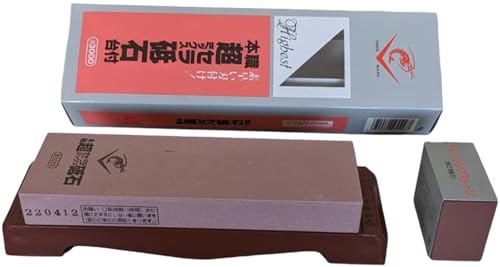
The Chosera 3,000-grit stone sits at the high end of the spectrum, designed to put a refined, near-mirror edge on the steels that resist ordinary stones. Stainless, high-alloy, and blue-steel tools respond well to its dense matrix, and the included base keeps the stone steady during patient polishing passes. It is a finishing stone, not a grinder, so most users pair it with a coarser stone up the workflow.
Where the Shapton at #1 focuses on repair, the Chosera is the second-half tool. Reaching for it on a well-prepped bevel feels like the final mile of a long run, smoothing the scratches left by a 1,000-grit stone.
Strengths Worth Knowing
- Engineered for tough steels like blue paper and high-vanadium alloys
- Mounted base keeps the stone stable during long finishing sessions
- Produces a refined surface that responds well to stropping afterward
- Compact 210 x 70 x 25 mm footprint fits a small shop bench
Trade Offs
- Premium price reflects the abrasive technology inside
- Not intended to fix chips or reset damaged bevels
- Requires a coarser stone earlier in the workflow to perform well
Whose Shelf It Belongs On
Skilled sharpeners working with high-end Japanese or premium stainless chisels will see the payoff most clearly.
Reach For A Different Pick When
The SHAPTON K0709 Glass Stone #320 is the right first stop if the edge is chipped or the bevel needs reshaping before any 3,000-grit work begins.
The SCOTTCHEN bridge is a small piece of shop furniture that solves a real cleanup problem. Drop it across a standard kitchen sink and it catches every drop of water, slurry, and metal dust that would otherwise pool on a countertop. The 304 stainless-steel body resists rust even after months of weekly sharpening sessions.
Owners commonly report that the non-slip rubber feet hold firm on stainless and composite sinks alike, and the adjustable arms grip stones from roughly 3 to 14 inches wide. It isn’t a sharpening stone itself, which is the trade-off: pair it with any of the stones in this list and your shop stays dry.
A Few Strong Suits
- 304 stainless build shrugs off water exposure in a busy sink
- Wide compatibility fits most whetstones on the market today
- Turns the sink into a sharpening station without permanent mods
Points To Keep In Mind
- Not a stone, so it must be paired with a separate sharpening surface
- Countertop-only use below 13.25 inches is required for shorter sinks
- Adds a setup step compared to a fixed bench platform
Made For
Home sharpeners without a dedicated workbench who want to keep the kitchen tidy during regular whetstone sessions.
Swap It Out When
Skip the SCOTTCHEN and grab the Sharp Pebble Whetstone Kit 400/1000 Grit if a self-contained base and stone in one box is the priority.
The Sharp Pebble 1000/6000 packs a meaningful two-stage progression into a single stone. Start on the 1,000-grit face to set a fresh bevel or chase out small damage, then flip to the 6,000-grit side to refine that working edge into something approaching a polish. Water is the only lubricant needed, so setup stays simple.
Where the Shapton K0709 is a single-grit specialist, this Sharp Pebble acts like a small workflow in one block. For someone sharpening a kitchen knife or a bench chisel once a month, that combination covers most situations without buying extras.
Real-World Strengths
- Two grits on one stone, useful for refining after the main grind
- Water-only operation, no oil to buy or clean up between sessions
- Solid entry point that pairs with a coarser stone later on
Minor Gripes
- No bundled base or guide, so a stable platform is needed
- 1,000-grit face won’t reset heavily damaged edges quickly
Feature Snapshot
Best Suited To
Casual woodworkers and home cooks who want one stone that handles routine maintenance without a steep learning curve.
Consider Something Else When
The Sharp Pebble Complete Whetstone Kit 1000/6000 is a smarter pick if you also need an angle guide to keep your bevels consistent.
The 400/1000 Sharp Pebble kit is a friendly first sharpening setup. The 400-grit face handles edge repair and reprofiling on neglected chisels, the 1,000-grit face brings the edge back to a working hone, and the bundled accessories, like the rubber base and angle guide, remove the usual guesswork. Water is all that’s needed between passes.
Compared with the 1000/6000 kit at #4, this one leans toward repair rather than final polish. It is the right pick if a chisel arrives with a dinged tip or a new tool needs its factory edge reset before it ever touches wood.
Practical Advantages
- 400 grit makes short work of rolled or chipped bevels
- Includes base and guide, so nothing else needs to be purchased
- Water-only sharpening suits quick cleanup and apartment living
- Reasonable price for a complete beginner system
Room For Improvement
- No high-grit face, so a separate finishing stone is required later
- Rubber base is light and may shift on slick countertops
Quick Facts
Right Fit For
First-time sharpeners who want a complete, affordable kit for getting dull chisels and knives back into shape.
A Better Fit Elsewhere
The Goodjob 3-Sided Diamond Stone 400/1000/8000 is worth a look if a diamond surface and a built-in 8,000-grit polishing face sound more useful than the Sharp Pebble’s rubber base.
The Complete kit takes the standard 1000/6000 Sharp Pebble stone and adds a built-in adjustable angle guide with stops at 15, 17, 20, and 22 degrees. That range covers most Western and Japanese bench-chisel bevels, and the guide clicks into place so the hands can focus on pressure rather than position. For someone still building angle control, the difference shows up in the very first session.
It’s a step up from the bare 1000/6000 stone at #4, and a friendlier pick than the Chosera finishing stone if you don’t already have a coarse grinder lined up.
Advantages To Know
- Adjustable angle guide at four common bevels takes the guesswork out
- Protects thin or premium blades from uneven freehand passes
- 6,000-grit face produces a near-polished edge on most chisels
Softer Spots
- Still no repair-stage grit, so a 400-grit stone helps for damaged edges
- Angle guide adds bulk, less convenient for travel sharpening
Who Should Grab It
New sharpeners who know they want a complete kit and need help locking in a consistent angle across a full set of chisels.
Not Your Match When
The Sharp Pebble Whetstone Kit 400/1000 Grit is the better entry if the priority is repairing damaged edges before learning the finishing stage.
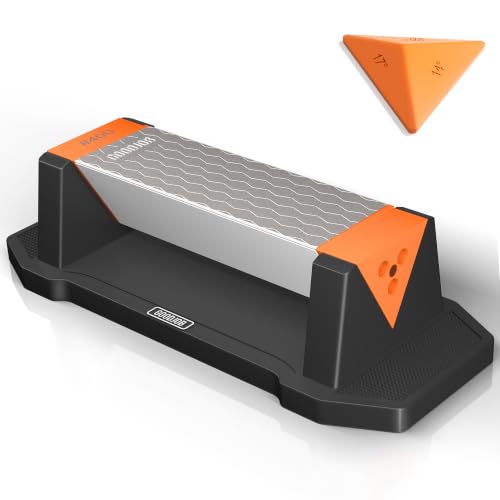
The Goodjob 3-sided diamond stone stacks repair, sharpening, and polishing on a single rotating block. Diamond plates cut faster than water stones of the same grit, so a chipped bench chisel spends less time on the coarse face and more time in the user’s hand. The included angle guide clicks onto the stone, and the whole unit tucks into a small drawer when the work is done.
It takes up less bench real estate than the Goodjob Extra Large at #8, which matters in a one-room apartment or a packed tool cabinet. The trade-off is surface area, so very wide plane irons may not fit comfortably on the smaller block.
A Favorable Mix
- Diamond abrasive cuts quickly, speeding up repair work
- Three grits cover repair, sharpening, and polishing in one block
- Compact footprint suits small benches and travel kits
Some Limits To Know
- Smaller surface may feel tight on wide plane irons
- Diamond plates can leave a deeper scratch pattern that needs stropping
- Plastic housing around the stone is the most likely long-term wear point
Built With In Mind
Sharpeners with limited bench space who still want a full grit range and a fast-cutting diamond surface for daily work.
Where A Sibling Pick Shines
The Goodjob Extra Large Diamond Stone 400/600/1000 is a better match if your chisels include wide plane irons and you need the extra length.
The Extra Large Goodjob trades the compact footprint of its smaller sibling for a longer, wider working surface. Long plane irons, slicers, and chef’s knives sit flat on the stone without hanging off the edge, and the 400/600/1000 grit spread covers the bulk of routine edge maintenance without a separate polishing stone. Diamond abrasive keeps the cutting speed high even after the surface wears.
It’s a noticeable step up in mass from the 3-Sided Diamond at #7. The trade-off is bench space, since this stone wants a permanent spot rather than a drawer.
Notable Gains
- Generous surface handles wide blades without rocking
- 400 grit repairs damage, 600 grit refines, 1,000 grit polishes
- Diamond plate stays flat under heavy use
Practical Considerations
- Larger footprint demands a dedicated spot on the bench
- Heavier than compact stones, less convenient to move between rooms
- No high-grit face, so a 6,000 or 8,000 stone extends the workflow
Feature Card
Perfect Match For
Workshop owners with long bench chisels, plane irons, or longer kitchen blades who need extra surface area on every pass.
Skip It When
The Goodjob 3-Sided Diamond Stone 400/1000/8000 fits better in a small-space shop or a portable kit.
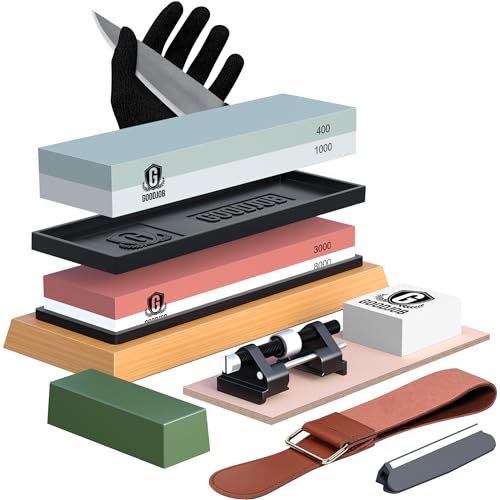
The Goodjob double-stone kit pairs a 400/1000 block with a 3000/8000 block, so a full progression from chip repair to mirror polish lives in one box. White corundum abrasive cuts cleaner than cheap aluminum-oxide stones, and the included base keeps both stones stable during longer sessions.
It’s the most complete kit in this lineup, sitting between the Sharp Pebble Complete and the Goodjob Extra Large. For someone who wants one purchase to cover the entire workflow, this is the closest option without adding a separate strop or diamond plate.
Key Advantages
- Four grits across two stones cover the full sharpening workflow
- White corundum abrasive cuts cleanly and wears evenly
- Included base and guide suit a first-time setup
Things To Weigh
- Two stones take up more storage space than a single dual-grit block
- 8,000 grit is a true polish, so a leather strop still helps for the final mile
- Water stones need a brief soak, unlike splash-and-go options
Technical Reference
The Right Fit
Sharpeners who want a single purchase that handles every stage from a damaged edge to a polished chisel, without buying extras.
Where Another Pick Suits Better
The SHAPTON K0709 Glass Stone #320 is a smarter pick if you mostly repair and reprofile, since a single fast-cutting specialist stone may serve better than a four-grit kit.
What To Know Before Buying Sharpening Stones For Chisels
Match The Stone To The Steel
The chisel in your hand matters as much as the stone on the bench. Hard, abrasion-resistant steels, like high-vanadium or blue paper tool steel, push back against ordinary aluminum-oxide stones and demand a harder abrasive such as silicon carbide, ceramic, or diamond. Softer carbon-steel chisels work fine on entry-level water stones. Hardwood carvers and furniture makers using premium Japanese tools will see sharper, longer-lasting edges from a finishing stone in the 3,000 to 8,000 grit range, while carvers and remodelers who routinely nick edges benefit from a coarse 320 to 400 grit repair face.
Understand Grit Progression
A “grit” refers to the abrasive particle size on the stone’s surface, where lower numbers cut faster but leave deeper scratches, and higher numbers refine the edge toward a polish. Most chisel workflows move through three or four stages: repair (around 320), sharpen (1,000), refine (3,000 to 6,000), and polish (8,000 and up). Skipping a stage leaves scratches that the next stone can’t fully erase, so the progression needs to be deliberate. Dual-grit stones combine two common stages on one block, useful for compact shops.
Stone Format And Maintenance
Water stones cut fast and feel smooth under the blade, but they dish in the center with use and need periodic flattening on a dedicated lapping plate. Diamond plates stay flat on their own and cut aggressively, so they’re a good fit for users who flatten water stones or want minimal upkeep. Oil stones cut slower but last longer, making them a fit for light, infrequent touch-ups. Whichever format you choose, drying the stone fully before storage and keeping slurry wiped from the surface helps it last.
Workmanship, Accessories, And Workspace
A solid base keeps the stone from sliding mid-stroke, which is the difference between a consistent edge and a chipped tip. Angle guides help when freehand control is still developing, and rubber feet or a sink bridge catch the water that would otherwise pool on the bench. The most expensive stone isn’t always the right one; a thoughtful base, a flat stone, and a grit range that matches the steel in your tools go further than a premium number.
Key Considerations Across These Picks
Where Shoppers Go Wrong
The most common mistake is buying a fine-grit stone first. A 6,000-grit stone cannot repair a chipped or rolled edge, no matter how long you rub, because the abrasive is too small to remove steel quickly. Starting with a repair-stage stone (320 to 400 grit) lets the edge reset before any refinement, and the finer stones then polish what the coarse stage shapes. Many first-time sharpeners also skip flattening their stones, which causes the center to dish and the bevel angle to wander over time. A separate flattening plate or diamond lapping sheet keeps the surface true.
Where The Extra Money Goes
Premium stones like the Shapton K0709 and the Chosera 3,000 use harder, more uniform abrasive particles that cut faster, hold their shape longer, and produce a cleaner scratch pattern than budget stones. That translates to less time at the bench and longer intervals between stone maintenance. Higher-tier stones also tend to ship with flat glass or rigid backings, which protects flatness during transport and storage. For someone sharpening a few kitchen knives once a month, the upgrade rarely pays back, but for a woodworker touching up a chisel set weekly, the time savings and edge quality show up quickly.
Frequently Asked Questions
What grit stone is best for sharpening chisels?
Most chisel work centers on a 1,000-grit stone for the main bevel, with coarser grits (320 to 400) reserved for repair and finer grits (3,000 to 8,000) reserved for refinement and polishing. Pick a stone that includes 1,000-grit for daily use, and add coarser or finer stones as your steel and your finish goals demand.
Do diamond stones work for chisels?
Diamond stones cut cleanly and stay flat over time, which makes them well suited to chisels, especially those made from abrasion-resistant high-alloy steel. They remove metal quickly, so a light touch and steady pressure keep the edge from being over-ground. Diamond plates pair well with a fine water stone for the final polish.
How often should I flatten my water stone?
Flatten a water stone as soon as you notice the surface dishing in the middle, which usually happens every 10 to 20 sharpening sessions for regular users. A diamond lapping plate or a dedicated flattening stone makes quick work of the task. Skipping flattening lets the bevel angle drift, which dulls the chisel faster between sessions.
Can one stone sharpen all my chisels?
A single dual-grit stone in the 400/1000 or 1000/6000 range handles routine maintenance for most chisels, but heavily damaged edges or mirror-polished finishes need additional grits. Adding a coarse repair stone and a fine polishing stone covers the full range of work without overbuying. For most home shops, two or three stones is the practical sweet spot.
Should I use water or oil on my sharpening stone?
Match the lubricant to the stone: water stones use water, and oil stones use honing oil. Mixing the two clogs the pores and reduces cutting speed. Splash-and-go water stones like the Shapton K0709 need only a quick spritz, while traditional water stones benefit from a brief soak before each session.




