


A chisel only works as well as its edge, and a dull one turns crisp joinery into a slow, frustrating mess. Woodworkers maintaining a small bench, DIYers touching up a hand plane, and hobbyists restoring old tools all run into the same wall: freehand sharpening drifts out of square, and edges that looked fine at the bench fail mid-cut. The right sharpening system pulls those problems back under control, and the picks below cover the benchstone basics, jigged angle control, and the specialty bits that round out a serious sharpening setup.
The Lineup, Simplified
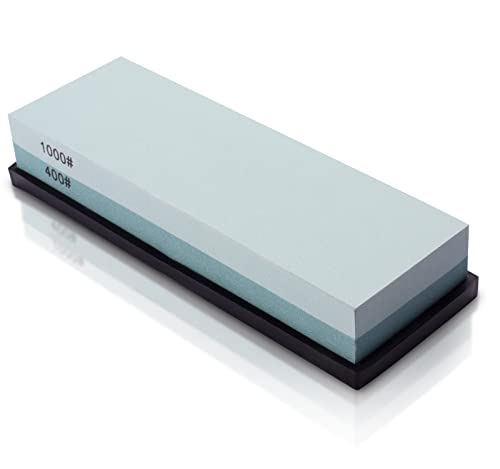
MIDO 400/1000 Whetstone Sharpening Stone

MIDO 1000/6000 Grit Dual Whetstone

Sharp Pebble Electric Chainsaw Sharpener Kit
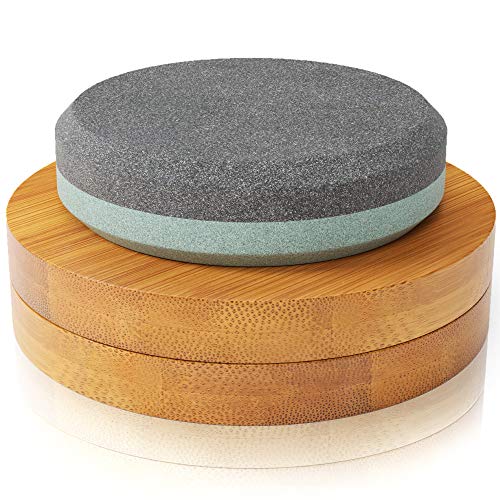
Sharp Pebble Axe/Hatchet Whetstone Puck
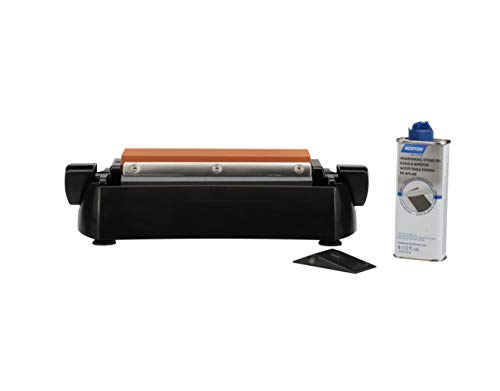
Norton IM200 Oil Stone Sharpening Kit

Taytools Dead Flat Float Glass Plate

Oneway 3945 Mini Platform Assembly

Sharp Pebble Honing Guide for Chisels
Meet The Standout Selections
The MIDO 400/1000 whetstone is the kind of low-friction starting point that makes sense before anyone graduates to fancier gear. The 400-grit face (a coarser grit that removes metal quickly) reshapes a chipped or rolled edge, while the 1000-grit side (a medium grit for general sharpening) refines it into something that shaves and pares cleanly. For most weekend woodworkers touching up a bench chisel after a few hours of work, that two-stage jump covers the routine.
A non-slip rubber base keeps the stone planted on the bench, which matters more than it sounds when you’re pushing a bevel across it by hand. Silicon carbide (a hard, synthetic abrasive) construction holds up to repeated soak-and-sharpen cycles. You’ll want to keep a towel and a shallow tray nearby, since waterstones like this one benefit from a brief soak before use.
Practical Pluses
- Dual-grit layout covers repair and refinement in one stone
- Non-slip base reduces wandering during freehand passes
- Silicon carbide body resists wear through regular sessions
- Low learning curve for first-time chisel owners
Things To Consider
- Requires soaking and ongoing drying time between uses
- No angle guide, so consistent bevels depend on your hand
Who It Suits Best
Beginners building a first sharpening kit and hobbyists handling light touch-ups on a few bench chisels.
Where Another Pick Suits Better
The Norton IM200 oil stone kit fits woodworkers who want a broader grit range in a single benchtop setup.
Where the 400/1000 stone handles the heavy lifting, this MIDO 1000/6000 grit stone takes the edge the rest of the way. The 1000-grit face resets a working edge, then the 6000-grit side polishes it to the kind of finish that glides through end grain without catching. That two-step ladder makes it a natural follow-up to a coarser stone rather than a replacement for one.
The high-density silicon carbide (a tough engineered abrasive that resists chipping) is built to keep its shape across many sharpening sessions, and the rubber base still keeps the stone from skating around. For joiners chasing that polished, near-mirror bevel, this is the stone that finishes the job.
Benefits That Matter
- 6000-grit side delivers a polished, low-friction edge
- Dense silicon carbide resists chipping across long-term use
- Non-slip base gives the same stable feel as coarser MIDO stones
- Pairs naturally with the 400/1000 stone for a full grit ladder
Worth Noting
- No coarse grit, so badly damaged edges need a separate stone first
- High-grit faces show wear patterns and metal dust quickly
Key Specs
Right Fit For
Woodworkers who already have a coarse stone and want to add a dedicated polishing stage for finer joinery.
Swap It Out When
The Sharp Pebble Honing Guide is a smarter buy if freehand control is the actual problem holding edges back.
Chainsaw chains wear out faster than almost any other blade in the shop, and filing each tooth by hand eats into a Saturday fast. The Sharp Pebble electric sharpener takes over that grind with a 120V benchtop unit and an angle guide attachment that holds the chain at a consistent geometry. It’s a powered tool aimed at a powered problem, and it lives outside the chisel category by design.
Four grinding wheel bits cover the common chain file sizes (5/32″, 3/16″, 7/32″, and a second 7/32″), so most homeowner-grade chains fit. Where this kit overlaps with chisel work is the workshop environment: same outlet, same bench, same space-conscious setup.
Everyday Advantages
- Powered grinding saves time over hand-filing each tooth
- Angle guide attachment keeps the grind consistent across teeth
- Four included wheel bits cover common chain pitches
- Wrench included for swapping stones and adjustments
Points To Note
- Not designed for chisels or plane irons
- Takes up bench space and needs a power outlet within reach
Made For
Chainsaw owners maintaining their own cutting chain and landscapers who sharpen between jobs.
Look Elsewhere When
Skip this one for chisel and plane work and reach for the Norton IM200 oil stone kit instead.
Axes, hatchets, and small camp blades don’t live on a workbench, and a full-size whetstone doesn’t travel well in a pack. The Sharp Pebble puck solves that with a compact disc shape that fits in a gloved hand and a 150-grit coarse side built for reshaping dull or nicked edges in the field. The fine side handles the lighter touch-up once the heavy damage is gone.
Silicon carbide construction gives it the same wear resistance as larger bench stones, and the surface area sits roughly 40% larger than typical puck sharpeners. For someone splitting wood at a cabin or maintaining a hatchet on a trail, that’s the right balance of portability and cutting power.
Advantages To Know
- Compact puck shape fits in a pack or tool drawer
- 150-grit coarse side resets nicked outdoor edges fast
- Silicon carbide body holds up to repeated field use
- Larger surface area than typical pocket puck designs
Honest Caveats
- Small size makes it slow on long bevels
- Not a substitute for a bench stone on chisels or planes
Best Suited To
Campers, bushcrafters, and homeowners maintaining axes and hatchets away from a workshop.
Another Choice May Suit
The MIDO 1000/6000 dual whetstone is a better fit for anyone who sharpens mostly at the bench.
The Norton IM200 is the kind of three-stage system that anchors a serious sharpening corner of the shop. It ships with a 100-grit Crystolon stone (a coarse silicon carbide stone for repairing damaged edges), a 150-grit Crystolon stone for general sharpening, and a 320-grit India stone (a finer aluminum oxide stone for honing) for the final refinement. Oil acts as the lubricant, flushing swarf (metal particles generated during grinding) and keeping the surfaces cutting clean rather than glazing over.
A knife angle guide comes in the box, which shortens the learning curve for anyone new to oil stones. Compared to waterstones that need soaking and slow drying, oil stones sit ready on the bench and tolerate long storage without special care. For a woodworker running multiple chisels and plane irons through weekly sessions, that convenience adds up.
What Pays Off
- Three stones cover repair, sharpening, and honing in one kit
- Oil lubrication extends stone life and resists glazing
- Angle guide included for consistent bevels
- Ready to use without pre-soaking
Practical Considerations
- Requires sharpening oil as an ongoing consumable
- Slower cutting than waterstones on hard tool steels
- Heavier and bulkier than a single whetstone setup
Quick Facts
Whose Shelf It Belongs On
Serious woodworkers and crafters running regular sessions on chisels, plane irons, and quality knives.
Reach For A Different Pick When
The Taytools float glass plate makes more sense for anyone committed to the film-based Scary Sharp method.
The Taytools glass plate isn’t a stone at all, and that’s the point. The Scary Sharp method skips conventional stones entirely and uses adhesive-backed abrasive film (lapping film with progressively finer grits) stuck to a perfectly flat substrate (a base material that won’t flex or bow). This 5/16″ thick, 5″ x 12″ float glass plate is dead flat out of the box and gives the film a rigid, true foundation to work against.
You peel off the backing on a sheet of microfinishing film, press it down, and you have an instant sharpening surface. The trade-off is buying film separately and replacing it as it wears, but the system produces remarkably consistent edges once you get into the rhythm.
What Makes Sense
- Dead-flat glass substrate keeps film cutting true
- Film sheets are cheaper and easier to swap than stones
- No water or oil mess on the bench
- Generous 5″ x 12″ surface handles wide plane irons
Possible Compromises
- Requires ongoing purchase of lapping film
- Glass is heavy and needs careful storage to avoid chipping
Perfect Match For
Woodworkers already invested in or curious about the film-based Scary Sharp sharpening workflow.
Not Your Match When
The Norton IM200 oil stone kit is a better starting point for traditionalists who want stones in hand from day one.
The Oneway 3945 isn’t a complete sharpening system on its own. It’s a replacement or extra mini platform assembly for the Wolverine sharpening system, which bolts to a bench grinder and gives woodturners controlled, repeatable grinds on gouges and skews. The mini platform handles narrower tools and skew chisels that the standard V-block won’t grip as securely.
For turners already running a Wolverine setup, this is the kind of add-on that expands what the jig can hold. Newcomers to turning have no use for it without the rest of the system, so context matters before adding it to a cart.
Reasons It Performs
- Expands the Wolverine jig’s tool-holding range
- Factory-fit part for Oneway’s established sharpening platform
- Useful as a spare when the original wears or gets lost
Things To Weigh
- Requires the full Wolverine system and a bench grinder to use
- Not a standalone sharpening solution
- Niche fit for woodturners only
Who Should Grab It
Woodturners already running the Wolverine system who want to grind narrower tools and skew chisels with confidence.
Skip It When
The Sharp Pebble Honing Guide is the better add for bench chisel work, since it doesn’t need a grinder to operate.
A honing guide (a clamp that holds a blade at a fixed angle against a stone) is the missing piece for anyone whose freehand technique drifts. The Sharp Pebble jig clamps onto chisels and plane irons, lets you dial in a sharpening angle, and rolls the tool across the stone at that fixed geometry. That removes the most common beginner mistake: a bevel that rocks and never quite meets the stone evenly.
Pair it with any of the whetstones above, and the system becomes repeatable enough that beginners get clean edges on the first afternoon. For more experienced woodworkers, it acts as a reset when freehand technique slips after a long break from the bench.
Why It Works Well
- Locks chisels and planes at a consistent sharpening angle
- Speeds up the path to clean, square edges for beginners
- Adjustable angle settings handle different tool profiles
- Works with any flat sharpening stone or film system
Points To Note
- Takes a few sessions to learn the clamping rhythm
- Doesn’t replace flattening or stropping routines
Feature Snapshot
Built With In Mind
Beginners learning to sharpen and woodworkers returning to hand tools after time away from the bench.
Consider Something Else When
The Norton IM200 oil stone kit is a better standalone answer for shops that want stones and angle guidance in a single purchase.
Picking The Right Sharpening Setup For Your Shop
Choosing between stones, jigs, and powered systems comes down to how you actually work. A hand-tool woodworker running chisels and planes through weekly sessions has different needs than a homeowner maintaining a chainsaw twice a year.
Grit Range And Progression
Grit numbers tell you how coarse or fine an abrasive is: lower numbers cut fast and remove damage, higher numbers refine and polish. Most chisel work wants at least a 1000-grit stone for general sharpening, with a coarser 400-grit stage available for repairing chips and a finer 4000+ stone for polishing. Buying all three at once costs more upfront but saves the frustration of switching systems mid-project.
Angle Control And Repeatability
Freehand sharpening works once muscle memory develops, but a honing guide removes the guesswork during the learning phase. Jigs like the Sharp Pebble Honing Guide hold chisels at a set angle so the bevel meets the stone evenly on every pass. For anyone who sharpens occasionally, that consistency matters more than the small speed trade-off.
Lubricant, Mess, And Maintenance
Waterstones need soaking and slow drying, oil stones need sharpening oil and rag cleanup, and film systems stay dry. None is universally better, but the bench you sharpen on should match the system you choose. A shop that prizes clean, dry surfaces leans toward film; a shop that already has oil and rags out for tool care fits naturally with an oil stone.
Specialty Tools And Niche Needs
Chainsaws, axes, and turning gouges each want their own dedicated solution. A bench whetstone won’t maintain a chainsaw chain efficiently, and a chainsaw sharpener won’t touch a chisel bevel. Matching the system to the tool, rather than forcing one tool to do everything, keeps edges where they should be.
What To Watch Out For Before You Buy
Common Shopping Slip Ups
The biggest mistake is buying a single 1000-grit stone and assuming it covers every job. A chipped or rolled edge needs a coarser stage to reshape, and a polished finish needs a finer one to refine. Equally common is skipping a honing guide and then blaming the stone for inconsistent results: a hand drifting off-angle produces a rounded bevel that never quite sharpens, and the stone isn’t the problem.
What The Higher Tier Buys
Premium sharpening systems cost more because they hold flatness longer, cut faster on hard steels, and ship with multiple grits or angle guides in one box. For a woodworker running a full set of chisels through daily use, that added convenience replaces the time spent swapping between cheaper stones. For occasional touch-ups, a budget whetstone covers the job without the extra spend. The upgrade is worth it when sharpening eats into project time, not when it’s a once-a-month chore.
Frequently Asked Questions
What grit stone should I use to sharpen a chisel?
A 1000-grit stone handles routine sharpening on most chisels, while a 400-grit stage repairs chips and a 4000+ grit stage polishes the bevel. Most woodworkers build a kit that includes at least two of those three.
Do I need a honing guide for chisels?
A honing guide helps beginners hold a consistent angle and produces repeatable results without years of freehand practice. Experienced sharpeners often set the guide aside once their muscle memory locks in.
How often should I flatten my sharpening stone?
Check the stone’s surface every few sessions. Heavy use, especially on the coarser grits, creates a hollow in the middle that throws off the bevel. Re-flattening with a diamond plate or a dedicated flattening stone keeps the surface true.
Can I use the same stone for knives and chisels?
A whetstone sharpens both, but the grits and angles differ. A knife edge often wants a steeper angle than a chisel, and switching back and forth on one stone works only if you’re willing to reset the angle each time.
What’s the difference between a waterstone and an oil stone?
A waterstone uses water as a lubricant and cuts fast but wears faster and needs soaking. An oil stone uses sharpening oil, lasts longer between flattenings, and tolerates storage without special preparation. The cutting feel differs too, with waterstones generally feeling faster and oil stones feeling more controlled.




