


Hanging drywall means running hundreds, sometimes thousands, of screws in a single afternoon, and a standard drill just isn’t built for that grind. The right screw gun sinks fasteners to a consistent depth, saves your wrist, and turns a brutal job into a smooth rhythm. This list breaks down eight solid options, from heavy-duty cordless pro tools to compact home DIY picks, so you can match the tool to the scale of your project.
The Leading Options At A Glance

Milwaukee 2866-20 M18 FUEL Drywall Screw Gun (Bare Tool Only)
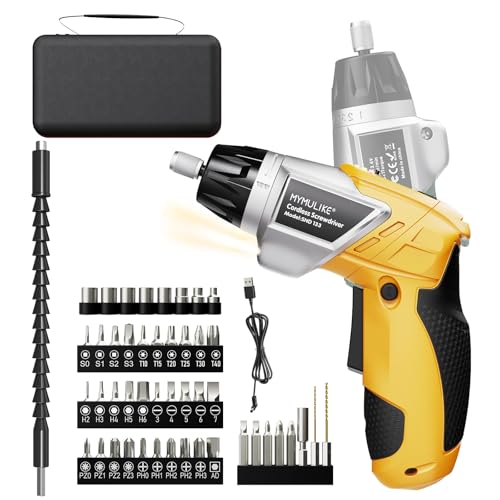
MYMULIKE 3.6V Rechargeable Power Screwdriver Set 49-Piece

MYMULIKE Red 4V Mini Power Screwdriver 23-Piece Set

DEWALT 20V MAX XR Drywall Screw Gun DCF620B (Bare Tool)

DEWALT DCF620D2 20V Drywall Screw Gun Kit

MYMULIKE 49Pcs 3.6V Rechargeable Power Screwdriver Set
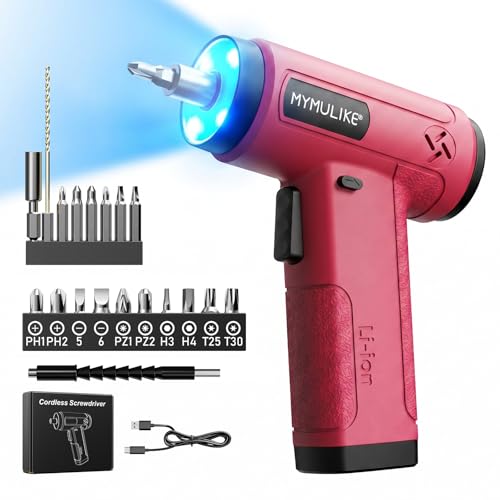
MYMULIKE Pink 4V Mini Power Screwdriver 23-Piece Set

Makita FS4200 4,000 RPM Drywall Screwdriver
More On The Choices That Made The List
For pros hanging sheet after sheet of drywall, the Milwaukee 2866-20 sits in serious-tool territory. The brushless motor delivers up to 4,500 RPM with no-load speed and 124 in-lb of torque, which is plenty of muscle for sinking 1-1/4″ coarse-thread screws into stud framing without bogging down.
The auto-start mode is the kind of feature you stop noticing until you grab a gun without it. When the tool is locked on, the motor automatically fires the moment you press the nose against the drywall, so you skip the trigger squeeze and just push and pull along the seam. That kind of efficiency matters on day three of a big install.
Strong Points
- Auto-start lock-on mode reduces trigger fatigue during long hanging sessions
- Brushless 18V motor with up to 4,500 RPM handles dense framing and pressure-treated lumber
- Pistol-grip design with adjustable clutch for consistent screw depth across hundreds of fasteners
- Runs on the M18 battery platform, so existing Milwaukee 18V packs slot right in
- 1/4-inch chuck accepts standard drywall driver bits and most collated screw strips
Worth Noting
- Bare tool only, so budget separately for an M18 battery and charger if you’re new to the platform
- Heavier than DIY-focused picks, which may wear on casual users
- Power suits professional job sites; overkill for a single-room patch job
At A Glance
Who Will Love This
Full-time drywall hangers and trim-out pros who already own M18 batteries and want a workhorse that keeps up on multi-day installs.
Look Elsewhere When
Homeowners hanging a single room of sheetrock will find the Makita FS4200 a more sensible match without the battery platform cost.
This MYMULIKE kit takes a different angle than the pro-grade Milwaukee above. Instead of chasing raw RPM, it focuses on furniture assembly, electronics tinkering, and tight-space work. The 3.6V motor delivers up to 6 Nm of torque across seven adjustable settings, which gives you fine control when you’re working around a flat-pack cabinet or a delicate repair.
The pivoting handle is the kind of feature that pays off in awkward spots. Reach a screw at an odd angle behind a drawer, and the handle rotates so your wrist doesn’t have to. USB charging means the same cable that charges your phone tops up the screwdriver, no proprietary brick required.
Real-World Strengths
- 49-piece bit and accessory kit covers Phillips, flathead, Torx, and hex fasteners
- Pivoting handle adapts to tight corners and overhead furniture assembly
- 7 torque settings prevent stripping small screw heads on softer materials
- Built-in LED light helps when working inside cabinets or dim closets
Trade Offs
- 3.6V motor and 6 Nm torque are not built for full drywall hanging
- 200 RPM top speed feels slow compared to the Milwaukee and DEWALT screw guns
Made For
Apartment dwellers and renters who mostly assemble flat-pack furniture and tackle small weekend repairs rather than full renovation projects.
Consider Something Else When
Someone hanging actual sheetrock should step up to the DEWALT 20V MAX XR Drywall Screw Gun for the speed and depth control those jobs demand.
The MYMULIKE 4V mini trades the pivoting handle of the previous pick for a smaller, more pocket-friendly body. At a single-speed 320 RPM with 2.5 Nm of torque, it’s not about brute force. It’s about pulling it out of the junk drawer when a switch plate needs to come off or a cabinet hinge loosens.
The 360-degree LED light wraps around the chuck, which is a thoughtful touch. Instead of a single bulb casting a shadow the wrong way, the ring lights the screw head from all sides. For a tool you’ll grab during late-night repairs, that visibility actually matters.
Practical Pluses
- Compact 4V design fits comfortably in a kitchen drawer or tool pouch
- 360-degree LED ring illuminates screw heads without harsh shadows
- USB charging port works with phone chargers and power banks
- 23-piece bit set covers common household fastener types
Soft Spots
- 2.5 Nm torque is light, so it struggles with long screws or dense wood
- Single-speed design offers no fine adjustment for delicate electronics work
Right Fit For
Anyone who wants a grab-and-go electric screwdriver for small household fixes without hauling out a full drill kit.
Not Your Match When
Furniture builders who need adjustable torque for different materials should look at the MYMULIKE 49Pcs 3.6V set, which adds seven clutch settings.
Compared to the Milwaukee 2866-20 we covered first, the DEWALT DCF620B trades a bit of top speed for a wider, more contractor-friendly feature set. The brushless motor spins up to 4,400 RPM, which is just shy of the Milwaukee’s 4,500 RPM ceiling, and the nose cone adjusts to three screw depth settings for switching between 1″ and 1-1/4″ drywall screws.
If your shop or job box is already full of yellow 20V MAX batteries, this gun drops in without buying a new platform. The LED light at the toe helps in basements and garages where overhead lighting is hit or miss, and the bare-tool configuration lets dedicated DEWALT owners save on the battery bundle.
What Earns Its Place
- Brushless motor maximizes runtime per amp-hour on the 20V MAX platform
- Three-position adjustable nose cone sets consistent screw depth for drywall and subfloor work
- Up to 4,400 RPM exceeds the older DW272 corded model in real-world sinking speed
- Toe-mounted LED light brightens dim corners and ceiling work
Points To Keep In Mind
- Bare tool only, so factor in 20V MAX battery and charger pricing
- No auto-start mode like the Milwaukee, so trigger finger stays busier on long runs
Feature Snapshot
Whose Shelf It Belongs On
Existing DEWALT 20V MAX owners who want a dedicated drywall tool without investing in a second battery platform.
A Better Fit Elsewhere
First-time drywall gun shoppers will save a step with the DEWALT DCF620D2, which ships with batteries and a charger in the box.
The DCF620D2 takes the same DCF620 platform covered above and ships it with two 20V MAX batteries and a charger. For someone new to cordless drywall tools, that bundle removes the awkward “now I need to buy batteries” step that catches a lot of first-time shoppers flat-footed.
Mechanically, it matches the bare-tool DCF620B: brushless motor, up to 4,400 RPM, three-position depth nose cone, and toe-mounted LED. The difference is you can pull it out of the box and start hanging sheetrock the same afternoon, even if your tool kit has never seen a DEWALT battery.
Practical Advantages
- Two batteries and charger included, so the tool is ready to use on day one
- Brushless motor delivers efficient runtime across long hanging sessions
- Three depth settings cover standard 1″ through 1-5/8″ drywall screw lengths
- Compatible with the DCF6201 collated screw attachment for high-volume work
Honest Caveats
- Costs more upfront than the bare-tool DCF620B, even if you already own batteries
- No auto-start trigger mode
Best Suited To
First-time drywall tool buyers who want everything in one box and don’t already own a 20V MAX battery fleet.
Swap It Out When
Existing DEWALT owners with several 20V packs on the bench will save money going with the DCF620B bare tool instead.
This 49-piece MYMULIKE set shares the same 3.6V motor and 6 Nm torque ceiling as the second pick on this list, but it leans harder into the kit side of the equation. The included bit selection spans Phillips, flathead, Torx, hex, and square-drive heads, which means you’re covered for almost any consumer-grade fastener you’ll meet in a weekend project.
The 6+1 torque position design gives you a dedicated setting for switching into drill mode, useful for boring small pilot holes before driving screws into hardwood. For furniture builders and appliance repair tinkerers, that bit of flexibility tends to earn its keep.
Points In Its Favor
- 49-piece kit includes a wide range of bit types and socket adapters
- 7 torque settings plus drill mode handle both delicate and firmer materials
- LED work light helps in dim corners during appliance repair
- USB charging makes top-ups easy from any phone charger
Possible Compromises
- 200 RPM top speed trails most cordless drills on the market
- 3.6V motor is not a substitute for a real drywall screw gun on sheetrock projects
Perfect Match For
DIYers who split time between furniture assembly, electronics repair, and small appliance fixes and want one kit covering all three.
Another Choice May Suit
Anyone actually hanging full drywall sheets will get more value from the Milwaukee 2866-20 covered earlier, which is purpose-built for that workload.
Functionally identical to the red 4V mini covered third on the list, this pink version exists for shoppers who want a softer color profile in the toolbox. Same single-speed 320 RPM motor, same 2.5 Nm torque ceiling, same 360-degree LED ring around the chuck, and the same 23-piece bit assortment.
The honest read is that the color is the main differentiator. Anyone shopping for performance should look at the other picks. Anyone who wants a small electric screwdriver that’s easy to spot in a crowded drawer and feels approachable in the hand will find what they need here.
Well-Handled Touches
- Lightweight 4V body is comfortable for users with smaller hands
- Soft-grip finish helps during longer repair sessions
- USB charging port accepts standard phone cables and power banks
Worth Bearing In Mind
- 2.5 Nm torque cannot drive long deck or construction screws
- No torque clutch, so over-driving small screws is a real risk
Who Should Grab It
Light-duty users who need a friendly, lightweight tool for basic household screwdriving without paying for more power than they’ll use.
Reach For A Different Pick When
Anyone needing adjustable torque for varied materials should skip to the MYMULIKE 49Pcs 3.6V kit, which offers proper clutch control.
The Makita FS4200 takes the list in a different direction. Where everything else is cordless, this is a 6.0 AMP corded driver built for outlets and extension cords. The reward is consistent power from the first screw to the last, with no battery management, no charging breaks, and no fade as packs drain.
At 4,000 RPM and around 3.0 lbs, it’s lighter than many cordless drywall guns and balanced for long overhead runs. The steel-reinforced belt clip is a small detail, but on a real job site, being able to hang the tool off a belt or a stud keeps your hands free and the work moving.
What It Does Well
- 6.0 AMP corded motor delivers steady torque without battery fade
- Lightweight 3.0 lb body reduces arm fatigue on ceiling work
- Built-in LED light brightens the screw line in dim basements
- Steel-reinforced belt clip holds up to daily site abuse
A Few Limitations
- Requires an outlet or extension cord, which limits use on off-grid sites
- 4,000 RPM is slower than the cordless DEWALT and Milwaukee options above
Quick Facts
The Right Fit
Workshop and garage users with a reliable outlet who want an uncomplicated, no-battery-management drywall driver for occasional projects.
Where A Sibling Pick Shines
Anyone working on ladders or in framing cavities away from outlets will find the DEWALT DCF620D2 cordless kit a more practical match.
What To Weigh Before Choosing A Sheetrock Screw Gun
Matching The Tool To The Project Scale
The word “screw gun” covers a wide spectrum. A true drywall screw gun like the Milwaukee 2866-20 or the DEWALT DCF620 runs at high RPM with a depth-sensing nose cone designed to sink hundreds of fasteners without stripping paper. A general cordless screwdriver like the MYMULIKE 4V mini is built for occasional household fixes, not hanging full sheets.
Volume matters. Hanging a single room of drywall is a different beast than finishing a basement. Heavy production work benefits from brushless motors, higher RPM, and auto-start features. Small repairs and furniture assembly call for adjustable torque, lighter weight, and a comfortable pivoting grip.
Cordless Versus Corded Trade-Offs
Cordless drywall screw guns like the DEWALT and Milwaukee options give you freedom around ladders, in basements, and across framing cavities. The trade-off is battery management, and the bare-tool pricing assumes you already own the platform. The Makita FS4200 sidesteps that by running off AC power, at the cost of needing an extension cord and an outlet nearby.
For pros already invested in a 20V MAX or M18 battery fleet, a bare-tool gun is often the smartest play. For first-time drywall tool shoppers, the kit version of the DEWALT DCF620D2 sidesteps the platform question entirely.
Features That Matter And Ones That Don’t
A depth-sensing nose cone, sometimes called a depth clutch, lets you set the exact screw depth once and then run fasteners at a consistent level without re-adjusting. For drywall work, this is the single most useful feature. Adjustable torque clutches matter more for furniture and appliance work, where over-driving a small screw can crack the material.
RPM matters less than you might think once you clear roughly 3,500 RPM. What matters more is how the tool feels in the hand over a long session, how well the nose cone holds calibration, and whether the LED light actually lights the screw line you’re working on.
Common Sticking Points And How To Avoid Them
Slips First-Time Shoppers Hit
Choosing a bare-tool drywall gun without checking the battery platform often leads to surprise spending on batteries and a charger. If you’re not already invested in 20V MAX or M18 packs, the kit version of the DEWALT DCF620D2 usually costs less in total.
A second common slip is buying a small electric screwdriver and expecting it to handle drywall. The MYMULIKE 4V mini is a great household tool, but it cannot sink 1-1/4″ drywall screws into stud framing. Matching the tool to the actual workload is worth doing before clicking buy.
Where The Higher Price Tag Goes
Spending more on a pro-grade drywall gun like the Milwaukee 2866-20 gets you a brushless motor, an auto-start trigger, and a depth-sensing nose cone built for thousands of cycles. For occasional use, the upgrade may not pay back. For daily hanging, the savings in time and the longer motor life usually justify the cost.
Higher-tier tools also tend to share batteries across a broader tool family. If a single M18 or 20V MAX battery powers your drill, impact driver, reciprocating saw, and drywall gun, you carry one charger and one set of packs to every job, which is a quiet but real saving.
Frequently Asked Questions
What RPM do I need for a drywall screw gun?
Most drywall screws sink cleanly between 3,500 and 4,500 RPM. The Milwaukee 2866-20 sits at 4,500 RPM, while the Makita FS4200 runs up to 4,000 RPM. Both cover standard drywall work, so RPM alone shouldn’t drive the decision. Clutch quality and balance matter just as much.
Are brushless drywall screw guns worth the extra cost?
Brushless motors run cooler, last longer under heavy use, and extract more work per battery charge. For a contractor hanging drywall every day, that adds up. For a homeowner hanging one room every few years, a brushed corded option like the Makita FS4200 may be the smarter spend.
Can I use a regular drill instead of a drywall screw gun?
A standard drill can drive drywall screws, but it lacks the depth-sensing nose cone, which means you’ll adjust the clutch by feel for every fastener. On a single-room project, that’s manageable. On a full basement, the extra time adds up fast, and the depth-sensing gun pays for itself in reduced fatigue.
Do cordless drywall screw guns come with batteries?
Some do, some don’t. The DEWALT DCF620D2 kit ships with two 20V MAX batteries and a charger. The Milwaukee 2866-20 and the DEWALT DCF620B are bare tools, intended for shoppers who already own the matching battery platform. Always check which version you’re looking at before buying.
How long does a drywall screw gun last?
A well-maintained cordless drywall gun from a major brand typically lasts several years of professional use, often longer for DIY workloads. Corded models like the Makita FS4200 can run for decades with basic brush replacement. The biggest factor in lifespan is keeping dust out of the motor and avoiding drops on hard surfaces.




