


Anyone who spends time in a garage, basement workshop, or home job site knows the air can turn stale, hot, or thick with sawdust in minutes. A solid shop fan moves that air around so you’re not working in a soup of humidity and particulates, and the right model also helps dry paint, cure concrete, or vent fumes after staining lumber. The seven air movers below cover everything from compact 600 CFM units you can stash on a shelf to 4000 CFM monsters that handle flooded basements. They all tilt, stack, and run on standard household power, but they differ in raw output, noise, and how many extras you get.
A Side-By-Side Look

Zynovate 1 HP 4000 CFM Portable Blower Fan
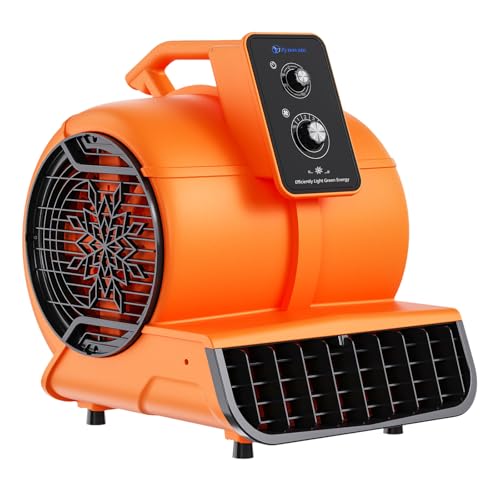
Zynovate 1/2 HP 2600 CFM Air Blower Fan

Zynovate 1 HP 4000 CFM Air Mover Blower Fan

Huilynsen Air Mover Blower Fan with Outlets

Zynovate 1/4 HP 1000 CFM Air Blower Fan

Zynovate 1/4 HP 1000 CFM Portable Blower Fan

Zynovate 1/6 HP 600 CFM Portable Blower Fan
The Picks, Examined More Closely
For anyone facing a soaked carpet or a sealed workshop in July, the Zynovate 1 HP 4000 CFM Portable Blower Fan delivers the kind of brute force most consumer-grade air movers simply can’t match. The 1 HP motor pushes up to 4000 CFM (cubic feet per minute, the standard way to rate how much air a fan moves), which is enough to dry out a flooded room or chase sawdust out of a two-car garage in well under an hour. Three speed settings let you dial back the noise when you’re working nearby and need to actually hear your saw or sander.
Stackable, portable, and built for repeated jobs, it handles the kind of work that would burn out a household box fan. Anyone restoring a basement after a leak, drying tile adhesive overnight, or ventilating a freshly painted shop will appreciate the muscle here.
Useful Highlights
- 4000 CFM output clears moisture and fumes from large spaces fast
- 3 adjustable speeds match airflow to room size and noise tolerance
- Multi-angle tilting directs air horizontally, at a low rake, or vertically
- Stackable housing saves floor space in a crowded shop or storage closet
- 1 HP motor is designed for sustained heavy-duty use rather than quick spot jobs
Things To Consider
- On its highest setting, you may find the noise level intrusive in a home office or living area
- Power draw at full tilt can be significant, so older 15-amp circuits may struggle if other tools share the line
- Owners commonly report that the outer housing collects dust and needs a wipe-down after each project
Who It Suits Best
Restoration contractors, basement remodelers, and serious DIYers running long drying or ventilation cycles in large spaces.
A Better Fit Elsewhere
The Zynovate 1/6 HP 600 CFM Portable Blower Fan suits hobbyists in apartments who rarely need full-room drying power.
The Zynovate 1/2 HP 2600 CFM Air Blower Fan sits in the practical middle of the lineup, the kind of capacity that handles a damp garage, a humid basement, or a recently sealed concrete floor without running at full scream. The 1/2 HP motor (half a horsepower, the unit that measures how hard a motor is working) moves up to 2600 CFM, which is more than enough to push air across a two-car garage or chase drywall dust out of a remodel in progress.
Where it earns its spot over smaller models is the 4-position angle adjustment (0°, 20°, 45°, 90°), so you can aim airflow flat across a floor, up a wall, or straight at a workbench. For hobbyists who sand, stain, or weld occasionally, this is the comfortable everyday option.
Practical Advantages
- 2600 CFM handles room-scale drying without the punishing noise of the 4000 CFM models
- 4 blowing angles offer more aiming precision than the standard 3-position housings
- 3-speed control gives you a quiet low setting for working nearby and a high setting for fast drying
- Reasonably portable at this size, with a carry handle built into the housing
Worth Noting
- Slower than the 1 HP units on big restoration jobs, so it takes longer to dry a fully flooded room
- The motor housing can run warm during extended cycles, which is normal but worth checking periodically
Made For
Home garage owners and basement hobbyists who want drying power without stepping all the way up to a contractor-grade 1 HP model.
Look Elsewhere When
The Huilynsen Air Mover Blower Fan with Outlets is a stronger choice for job sites where you need to daisy-chain tools and lights off the same fan.
On paper, the Zynovate 1 HP 4000 CFM Air Mover Blower Fan looks like a near-twin of the first pick, and the 4000 CFM top output is the same. The difference shows up in daily use: the 3-position tilt (0°, 20°, 90°) gives you a slightly cleaner set of options aimed at drying floors, low walls, and vertical drying cycles. Where the 1 HP motor shines is multi-room drying, running two of these in tandem to push air through an entire finished basement, for example.
Workshop owners tackling tile adhesive, self-leveling underlayment, or flood recovery will find the extra cubic feet per minute cuts job times meaningfully. It’s the right tool when hours of drying time translate into real money or scheduling headaches.
The Helpful Details
- 4000 CFM maximum matches the highest-output model in the Zynovate range
- 1 HP motor handles long runtime cycles without overheating on heavy jobs
- 3-angle tilt covers the most common drying positions without overcomplicating setup
- Stackable design lets you store multiple units in a tight workshop corner
Trade Offs
- Heavier than the 1/2 HP model, so moving it between rooms takes more effort
- At peak speed, the noise floor makes conversation difficult, so plan around it for shared spaces
Right Fit For
Contractors and serious home renovators running multi-day drying or ventilation projects in finished spaces.
Swap It Out When
The Zynovate 1/2 HP 2600 CFM Air Blower Fan is the better fit for smaller rooms where 4000 CFM is overkill.
The Huilynsen Air Mover Blower Fan is the only model here that thinks of itself as a power hub, not just a fan. The 185° adjustable tilt is the widest range on the list, letting you aim airflow almost flat against a floor or steeply upward to clear ceiling-level fumes. Three speed settings handle the usual job site range, from gentle room circulation to active drying.
Two built-in AC outlets on the housing are the real trick, letting you plug in work lights, a radio, or a small power tool without hunting for another wall socket. A circuit breaker with reset means a tripped outlet won’t leave you hunting for the panel mid-project. This is the pick for a job site where the fan is the center of a small power setup.
Where It Excels
- 185° tilt range is the most flexible aiming on this list
- Built-in AC outlets let you run lights or small tools off the fan’s housing
- Resettable circuit breaker saves a trip to the breaker panel when something trips
- 3-speed control covers quiet circulation to active drying
Honest Caveats
- Stacking multiple units isn’t as clean as the Zynovate housings, so storage can be bulkier
- Outlets add convenience but also mean more cables to manage around the workspace
Who Should Grab It
Job-site regulars and weekend warriors running renovation projects where power outlets are scarce and a single fan anchors the workspace.
Reach For A Different Pick When
The Zynovate 1 HP 4000 CFM Portable Blower Fan is the stronger choice when pure drying output matters more than the built-in outlets.
Sometimes you don’t need a hurricane, you just need air moving in a specific spot. The Zynovate 1/4 HP 1000 CFM Air Blower Fan fits that bill. The 1/4 HP motor (a quarter-horsepower motor, sized for lighter continuous duty) tops out at 1000 CFM, which is plenty for drying a small patch of carpet, venting fumes from a single workbench, or speeding up paint cure on a weekend project.
The 4-position tilt (0°, 20°, 45°, 90°) gives you the same aiming range as the larger 1/2 HP model, just in a smaller, lighter box. Apartment dwellers with a balcony workshop or homeowners tackling one room at a time will find the size and output match their actual needs.
Real Benefits
- 1000 CFM is well matched to single-room projects and spot drying
- 4 blowing angles cover flat-floor and wall-aimed drying setups
- 3-speed control lets you run quiet overnight without waking the house
- Lighter housing than the 1 HP models, easier to carry between floors
Points To Note
- 1000 CFM will not dry a flooded basement in a reasonable window
- At full speed, you may find it still overpowers a small bedroom, so the low setting matters
Best Suited To
Homeowners handling paint touch-ups, small water spills, or one-room renovations where massive output isn’t necessary.
Skip It When
The Zynovate 1 HP 4000 CFM Air Mover Blower Fan is the better pick for restoration work or shop ventilation across multiple rooms.
Functionally, the Zynovate 1/4 HP 1000 CFM Portable Blower Fan and the previous 1/4 HP model share most of their core specs, including 1000 CFM output, 3 speed settings, and the 4-angle tilt range. The portable framing here leans toward daily household use rather than a heavier shop routine, which is why it earns the Home Essential badge instead of the Compact Choice label.
It’s a natural fit for drying laundry faster in a damp basement, clearing steam out of a small bathroom after a shower, or running alongside a space heater to spread warmth. The motor is sized for repeated short cycles rather than marathon restoration work, and the housing is friendly to tight storage spots.
Bright Spots
- 1000 CFM is more than enough for typical household drying and ventilation tasks
- Lightweight build makes it easy to move between the laundry room, basement, or garage
- 3-speed control keeps the low setting gentle enough for living spaces
- 4-angle tilt handles floor-drying, wall-drying, and ceiling-venting
Room For Improvement
- Not designed for long commercial-style duty cycles, so marathon jobs will wear it faster
- The plastic housing feels lighter than the metal-look Zynovate 1 HP models, which may matter for rough workshop use
Perfect Match For
Homeowners who want a reliable household fan for damp basements, laundry rooms, and small renovation touch-ups.
Where Another Pick Suits Better
The Huilynsen Air Mover Blower Fan with Outlets is the right call when the fan needs to anchor a job-site power setup.
The Zynovate 1/6 HP 600 CFM Portable Blower Fan rounds out the lineup as the gentlest option, sized for places where 4000 CFM would be wildly excessive. The 1/6 HP motor (one-sixth of a horsepower, the smallest here) produces up to 600 CFM, which translates to a soft, directed breeze rather than a wind tunnel. That’s the right amount for a craft room, a small closet workshop, or a hobby bench where you want fumes cleared without making the room noisy.
The 4-angle tilt and 3-speed control match the larger Zynovate models, so you don’t sacrifice aiming flexibility just because the output is lower. For apartment dwellers and crafters without a dedicated shop, this is the smallest fan that still feels like a real air mover rather than a desk fan.
What Stands Out
- 600 CFM is well matched to closets, craft rooms, and small office spaces
- Quieter operation at full output than any other fan on this list
- 4-position tilt and 3 speeds give the same control layout as larger Zynovate models
- Compact footprint fits on a shelf, under a workbench, or in a small closet
Less-Strong Areas
- Cannot dry a wet carpet or large spill in any reasonable time
- Limited to spaces under roughly 200 square feet for meaningful airflow
Built With In Mind
Apartment hobbyists, crafters, and small-office users who need a portable air mover for gentle ventilation rather than heavy drying.
Consider Something Else When
The Zynovate 1/4 HP 1000 CFM Air Blower Fan is the natural step up once you need to dry a wet floor or chase fumes out of a full garage.
What To Weigh Before Choosing A Shop Fan
Start with the cubic feet per minute rating, since CFM is the single number that tells you how much air a fan actually pushes. For spot drying a small room, 600 to 1000 CFM gets the job done. For a two-car garage or a basement in active renovation, 2600 CFM is the comfortable middle. Anything approaching 4000 CFM belongs in restoration work or large workshops where you’re moving serious air for hours at a time.
Motor size, measured in horsepower (HP), is the second number worth checking. Higher HP generally means the fan can sustain peak output for long cycles without straining, while lower HP motors are sized for short, repeated household tasks. The trade-off is weight: a 1 HP unit is heavier and louder, but it’ll run a 12-hour drying shift without complaint, while a 1/6 HP unit is light and quiet but won’t survive marathon use.
Tilt range and stacking matter more than people expect. A fan that only tilts to 90° forces you to prop it up on a crate to dry floors. Models with 0° flat-tilt and multiple intermediate angles (20°, 45°) are far more useful in real rooms. Stackable housings save shop space, and built-in outlets like the Huilynsen’s turn a fan into the center of a small job-site power setup.
Key Considerations Across These Picks
Pitfalls Shoppers Hit
A common trap is buying the highest CFM fan available and assuming bigger is better. In a small workshop or apartment, a 4000 CFM unit is overkill, creates dangerous noise levels, and wastes electricity on air you’re just going to push around in circles. Match CFM to your actual room size, and remember that 2600 CFM is plenty for a standard two-car garage.
Another mistake is ignoring tilt range. A fan that only aims straight ahead can’t dry a flat floor or shoot air up a wall, which limits it to circulation work. Look for at least three angle options, ideally including a flat 0° position for floor drying, before committing.
Where The Extra Money Goes
The step up to a 1 HP 4000 CFM model is mostly about runtime durability and faster drying on large jobs. The motor is built to handle extended high-output cycles, the housing is more robust, and the airflow is roughly four times what a 600 CFM unit produces. That extra cost pays off when you’re drying a basement after a flood, running a paint-curing cycle overnight, or stacking two units to ventilate a whole shop.
The cheaper 1/4 HP and 1/6 HP models are the right call when you mostly need a portable, quiet fan for household tasks, and you don’t expect marathon sessions. Choosing between tiers comes down to whether your real work is “drying a wet carpet” or “moving air in a damp laundry room.”
Frequently Asked Questions
How many CFM do I need for a typical two-car garage?
A two-car garage usually calls for somewhere between 2000 and 3000 CFM to clear humidity, dust, or fumes in a reasonable window. The 2600 CFM mid-range model handles this comfortably, while a 4000 CFM unit gives you extra headroom for serious restoration work.
Are shop fans safe to leave running overnight?
Most modern air movers are designed for extended cycles, but you should still place the fan on a stable surface, keep the intake and exhaust clear, and avoid running it on a circuit shared with other heavy loads. For overnight paint curing or humidity control, a 1 HP or 1/2 HP model is the safer bet than a smaller motor.
Can I use a shop fan to dry fresh paint or stain?
Yes, and it’s one of the most common uses for these air movers. Direct airflow across the surface at a moderate speed to speed up solvent evaporation, but keep the fan moving rather than aimed at one spot for hours, since concentrated airflow can skin the surface unevenly on thick coats.
What’s the difference between a shop fan and a regular box fan?
Box fans are built for household circulation and move around 1000 to 2500 CFM at low pressure, with light-duty motors. Shop fans use higher-HP motors, produce higher static pressure (the force that pushes air through resistance like carpet or wet surfaces), and are designed to dry materials rather than just move air around a room.
Do these fans need any special maintenance?
Basic upkeep goes a long way. Wipe the housing down after each project, vacuum the intake grille to clear dust buildup, and check the power cord for nicks or wear before each use. The motors are sealed and generally don’t need lubrication, but keeping the intake clear is the single biggest factor in long-term reliability.




