


Woodworking generates a stubborn mix of fine dust, chips, and shavings that settle on every surface in your shop, from jointer beds to workbenches. The right shop vac keeps that mess contained so you can breathe easier, see your work clearly, and protect your tools from abrasive particles. Picking the wrong setup means clogged filters, weak suction at the source, or constant tank emptying. These eight options cover stationary dust collection fittings, portable 4-gallon grab-and-go units, and heavy-duty 16-gallon workhorses so you can match the right tool to your shop size and workflow.
A Side-By-Side Look

HczystBs Magnetic Dust Collection Fittings 7-Pack (2.5″)
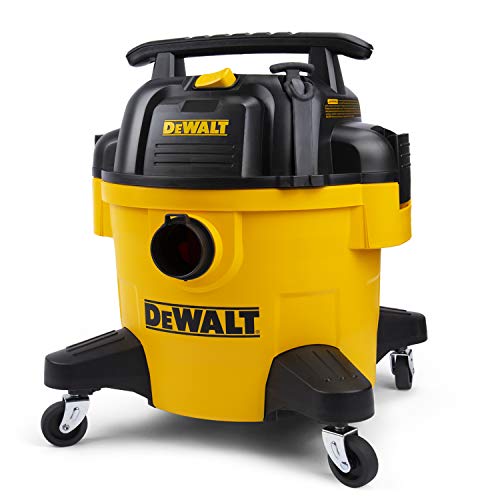
DEWALT 6 Gal 4 HP Poly Wet/Dry Vacuum

Shop-Vac 5801411 14-Gallon 5.5 Peak HP Wet/Dry Vac

Ridgid WD4070 4-Gallon Portable Vacuum

CRAFTSMAN 16 Gallon 6.5 Peak HP Wet/Dry Vacuum

HczystBs Magnetic Dust Collection Fittings 3-Pack (2.5″)
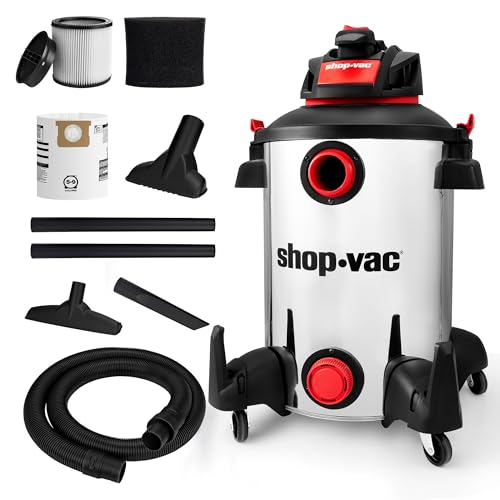
Shop-Vac 5761311 12-Gallon 6 Peak HP Wet/Dry Vac

Shop-Vac 5761011 10 Gallon 4.5 Peak HP Wet/Dry Vacuum
What Each Pick Brings To The Table
This fittings kit serves a different role than the rest of the list, since it doesn’t vacuum at all. It connects a standard 2-1/2″ shop vac hose to multiple tools so dust gets pulled at the source instead of settling on the floor. A single magnetic duct connector snaps to a steel ring port mounted on each machine, and rubber cuff couplers plus stainless hose clamps seal the joints.
Woodworkers running a small shop with a planer, jointer, and drum sander all sharing one vac benefit most. The magnetic design also makes moving the hose between tools quick, which matters when you’re flipping between operations during a project. Compared to fixed blast gates, this approach trades fine-grained airflow control for portability.
Benefits That Matter
- Magnetic coupling routes dust from several tools through one hose without constant re-plumbing.
- Rubber cuff couplers compress by hand, so swapping machines takes seconds rather than minutes.
- Stainless steel clamps resist rust in humid garage and basement shops.
- The seven-piece spread covers a complete multi-tool setup out of the box.
Things To Consider
- The 2-1/2″ diameter won’t fit tools with 4″ OEM dust ports without a reducer.
- Magnetic grip weakens on thin-gauge steel ports, so heavily painted surfaces may need a receiver ring.
Quick Facts
Made For
Shop owners running several 2-1/2″ ported machines off a single shop vac who want tool-to-tool swaps without dragging extra fittings out.
Consider Something Else When
You mostly work on one tool and don’t need multi-port routing, in which case the HczystBs 3-Pack keeps things simpler and lighter on storage.
DEWALT’s 6-gallon poly tank hits a sweet spot for hobbyists who don’t want a full-size unit hogging floor space. The 4 HP motor delivers the kind of pull that handles planer shavings and small sawdust piles without bogging down, and rubberized casters roll smoothly across a concrete shop floor.
The compact footprint makes it easy to wheel under a workbench between sessions, and the blower port pulls double duty for clearing off the bench or blowing sawdust out of tight corners. For weekend builders running a jobsite or small garage shop, this size is the practical middle ground between a 4-gallon grabber and a 14-gallon tank.
Positive Takeaways
- 6-gallon poly tank resists dents and rust better than steel in damp basements.
- 4 HP motor clears sawdust piles quickly during short sanding and routing sessions.
- Blower function doubles as a clearing tool for benches and trim work.
- Rubberized casters protect finished floors and roll over thresholds without sticking.
Honest Caveats
- The 6-gallon capacity fills up fast on long planer runs, requiring mid-project emptying.
- Poly tank surfaces tend to scuff visibly over time, though cleaning with a damp cloth keeps it serviceable.
Best Suited To
Weekend woodworkers and small-shop owners who need a maneuverable vac that tucks away when not in use.
Look Elsewhere When
You run extended sanding or planing sessions where the 14-gallon Shop-Vac 5801411 will empty less often and reduce interruptions.
The 14-gallon Shop-Vac 5801411 brings SVX2 motor tech to a tank size that handles long sessions without constant emptying. The 5.5 peak HP rating gives it the muscle to clear chips from a planer run or suck up spilled coolant from a wet/dry mess without stalling.
A rear blower port turns it into a clearing tool for the patio or driveway, which woodworkers finishing outdoor projects will appreciate. This is the unit you wheel out when the dust load goes up, the project runs long, and the smaller picks in this list would force a stop-and-empty cycle.
Everyday Advantages
- SVX2 motor design extends motor life under heavy dust loads from repeated sanding sessions.
- 14-gallon tank means longer runtime between dumps during big project cleanups.
- Rear blower port clears sawdust from workbench surfaces and shop corners.
Trade Offs
- The larger tank and motor make it heavier to lug up basement stairs or onto a truck bed.
- Bulky footprint takes up more shop floor space than the 6-gallon DEWALT.
Key Specs
Who It Suits Best
Active woodworkers and small contractors who run multiple tools per session and need a vac that won’t quit mid-project.
Skip It When
You mostly work at a small bench in a tight space, where the 6-gallon DEWALT DXV06P tucks away more easily.
The Ridgid WD4070 is built around portability rather than raw capacity. At roughly 12 pounds, it’s the kind of vac you carry to a job site, up attic stairs, or out to a deck project without thinking twice. Rear wheels plus a locking hose handle make it surprisingly stable for its size.
The 4-gallon tank limits it to short cleanup tasks and quick sawdust pickups rather than long planer runs. What it offers instead is the grab-and-go convenience that bigger tanks can’t match, especially when the work moves around rather than staying in one shop.
Notable Upsides
- 12-pound frame is light enough to carry one-handed up stairs or onto scaffolding.
- Locking Tug-A-Long hose stays put during transport, reducing tangles on the way to a job.
- Rear wheels and casters handle carpet, thresholds, and rough shop floors.
Worth Noting
- 4-gallon capacity means frequent emptying during any sustained sanding session.
- Smaller motor delivers less suction than the 5.5 peak HP Shop-Vac for heavy chip loads.
- Compact hose and tank limit debris size compared to larger units.
The Right Fit
Mobile woodworkers and finish carpenters who need a job-site-ready vac that travels light and sets up fast.
A Better Fit Elsewhere
You mostly clean up inside a fixed home shop, where the 12-gallon Shop-Vac 5761311 reduces trips to the dumpster.
The 16-gallon CRAFTSMAN tops this list in both capacity and motor output, and the 2-1/2″ diameter hose is the same width many stationary dust collection setups use. That larger hose moves bigger chips without clogging, which matters when you’re hooked to a planer, jointer, or drum sander.
The 6.5 peak HP motor handles renovation-scale debris, water recovery, and blower duty without slowing down. The included car nozzle, utility nozzle, and wet nozzle add real versatility for shop and household jobs. For a woodworker who also tackles home renovation and flood recovery, this is the one vac doing the work of two.
Everyday Perks
- 2-1/2″ hose diameter handles wood chips without choking the way 1-1/4″ hoses do.
- 6.5 peak HP motor sustains suction under heavy load, like thick planer shavings.
- 16-gallon tank swallows long-session debris without pausing to empty.
- Multiple included nozzles cover cars, wet pickup, and general utility work.
Points To Note
- 16-gallon size and weight make it less portable than the 4-gallon Ridgid WD4070.
- Filter and dust bag replacement parts add to long-term ownership costs.
Spec Overview
Perfect Match For
Serious woodworkers and renovators who need a single heavy-duty vac for both shop dust and household water recovery.
Another Choice May Suit
You rarely run long sessions and prefer a smaller footprint, in which case the 10-gallon Shop-Vac 5761011 balances size and capability.
Where the 7-pack version sets up multi-tool routing, this 3-pack keeps things minimal. You get one magnetic duct connector, one steel ring receiver, one rubber cuff, and three hose clamps, which is everything needed to hook a single 2-1/2″ ported tool to a shop vac. For a shop that runs one planer or jointer, that’s the whole job.
Mount the steel ring on your tool’s dust port once, and the magnetic connector snaps the hose into place every time you fire up the machine. It’s a clean, low-fuss approach to source dust collection without buying more fittings than you’ll use.
A Strong Showing
- Single-tool setup avoids the cost and clutter of multi-port routing kits.
- Magnetic coupling makes hose attachment tool-free, which speeds up workflow.
- Stainless clamps and rubber cuffs form a tight seal under sustained suction.
Small Caveats
- Adding a second tool later means buying another receiver and connector separately.
- Only one hose connection point is included, so it’s not a multi-machine solution.
Whose Shelf It Belongs On
One-machine shop owners with a single planer, jointer, or drum sander who want clean dust pickup without excess hardware.
Reach For A Different Pick When
You plan to add more tools and want a single kit to cover them, making the HczystBs 7-Pack a more future-proof choice.
The 12-gallon Shop-Vac 5761311 sits in the comfortable middle of the lineup, sized for shops that want more capacity than a 6-gallon tank without committing to a 16-gallon workhorse. The 6 peak HP motor and 100 CFM blower port cover both vacuum and clearing duties, and a built-in tank drain means you don’t have to lift and tip the unit to empty liquids.
Onboard cord and accessory storage keeps the hose, nozzles, and power cord organized when you roll the unit back into its corner. For mid-size home shops, this is the size that disappears into the background until you need it.
Notable Gains
- 12-gallon tank with drain simplifies liquid pickup after a glue spill or varnish mishap.
- Rear blower port doubles the unit’s usefulness for clearing sawdust and outdoor debris.
- Positive lid latches keep the tank sealed during transport, even on sloped shop floors.
- Onboard storage for accessories and cord keeps the workspace tidy between sessions.
Worth Bearing In Mind
- 1-1/2″ accessories limit chip size compared to the 2-1/2″ hose on the CRAFTSMAN 16-gallon.
- Heavier than the 6-gallon DEWALT, so moving it frequently can wear on you.
Who Should Grab It
Mid-size shop owners and hobbyists with several tools who need a versatile vac that handles wet, dry, and blower tasks without excess weight.
Where A Sibling Pick Shines
You primarily handle fine dust from a stationary tool, where the HczystBs magnetic fittings add true source-collection capability.
The 10-gallon Shop-Vac 5761011 rounds out the lineup as the everyday workhorse for home workshops. The 4.5 peak HP motor and 90 CFM blower cover garage, basement, and vehicle cleanup without overcomplicating the controls. A 7-foot Lock-On hose gives you reach into the corners of a one-car garage without dragging the tank around.
This size works well for hobbyists who run a table saw, miter saw, and occasional sander but don’t need the heavy-duty output of a 16-gallon unit. The 3-in-1 design (vacuum, wet pickup, blower) makes it useful for fall leaf clearing and spring garage purges too, so it earns its place in the corner year-round.
What Earns Its Place
- 10-gallon capacity handles weekend project debris without constant emptying.
- 7-foot hose reaches across a one-car garage without repositioning the tank.
- 3-in-1 function covers wet pickup, dry vacuum, and leaf clearing on a single unit.
Some Limits To Know
- 4.5 peak HP is the lowest motor rating in this lineup, so planer chip loads slow it down.
- 1-1/4″ hose diameter restricts airflow compared to wider 2-1/2″ dust collection setups.
Right Fit For
Home shop hobbyists who want a versatile, year-round vac for woodworking projects, vehicle detailing, and seasonal cleanup.
Swap It Out When
You need a 2-1/2″ hose for planer and jointer hookup, where the CRAFTSMAN 16-gallon handles chip volume more comfortably.
What To Weigh Before Choosing Your Setup
Hose diameter is the single biggest spec to compare. A 2-1/2″ hose (like the CRAFTSMAN 16-gallon) moves coarse planer chips without clogging, while a 1-1/4″ hose (the Shop-Vac 5761011 and 5761311) suits fine sawdust and household debris. For a shop with a planer, jointer, or drum sander, the wider hose earns its keep. For sanding and miter saw work, the smaller hose is plenty.
Tank capacity determines how often you stop to empty. A 4-gallon Ridgid WD4070 is fine for short cleanups but fills up fast on extended sessions, while a 14 or 16-gallon tank runs through a full project. Most home woodworkers find the 10 to 12-gallon range hits the balance between capacity and portability.
Peak HP ratings suggest motor strength, but real-world suction depends on hose diameter, filter condition, and tank seal. Higher HP helps when pulling chips through long hose runs, though for short hose setups the difference between 4 and 6.5 peak HP narrows considerably.
Filtration matters more than most shoppers realize. Fine wood dust passes through a basic filter and ends up back in the air, which is rough on lungs and shop finishes. A dedicated dust collection setup, like the HczystBs magnetic fittings pulling at the source, catches dust before it spreads and keeps your vac’s filter from loading up as fast. Pair magnetic source collection with a HEPA-rated shop vac filter if your shop needs cleaner air, and you’ll breathe easier during long sessions.
Picking The Right Vac And Avoiding Regret
Common Buying Mistakes To Sidestep
Buying on peak HP alone leads to overpowered units with undersized hoses. A 6.5 peak HP motor pushing through a 1-1/4″ hose can starve the airflow and heat the motor faster than a properly matched setup. Match the hose diameter to the tool’s dust port for the best results.
Ignoring tank drain features forces you to lift and tip a heavy, sloshing tank when you finally need to empty liquids. A built-in drain (like the Shop-Vac 5761311) saves your back and your shop floor from spills.
Skipping source-collection fittings means your shop vac works harder than it should. Magnetic dust port kits like the HczystBs 3-Pack and 7-Pack let you capture dust right at the planer or jointer, which keeps the filter cleaner and the air clearer.
Where The Higher Tier Earns Its Price
The jump from a 10-gallon to a 16-gallon vac brings a 2-1/2″ hose, stronger motor, and longer runtime between emptyings. That upgrade pays off for woodworkers running planers, jointers, and drum sanders, where chip volume and hose width both matter. For someone who only sands and sweeps up after a miter saw, a 6 or 10-gallon unit covers the workload without the extra cost and shop floor space. The honest read is that premium tier makes sense when your tools produce heavy debris, and stays unjustified for light hobby work.
Frequently Asked Questions
What size shop vac do most woodworkers need?
A 10 to 14-gallon tank handles most home and small commercial shops. The Shop-Vac 5801411 14-gallon or the CRAFTSMAN 16-gallon cover long sessions, while the 6-gallon DEWALT fits tight spaces and short cleanups.
Should I use a shop vac or a dedicated dust collector for woodworking?
A dedicated dust collector like the HczystBs magnetic fittings works best at the source for stationary tools, while a shop vac handles cleanup, smaller tools, and wet pickup. Many woodworkers use both, hooking the magnetic fittings to a shop vac for planer and jointer dust capture.
Can a regular shop vac handle fine sawdust safely?
Yes, as long as the filter is clean and properly seated. Fine dust loads filters fast, so plan on regular filter tapping or replacement, and consider pairing the vac with magnetic source-collection fittings to reduce the load.
What’s the difference between peak HP and real suction?
Peak HP measures motor draw at startup, not sustained suction. Real airflow depends on hose diameter, filter condition, and tank seal, so two vacs with similar peak HP ratings can perform very differently in the shop.
How often should I empty the tank to keep suction strong?
Empty the tank when it reaches about two-thirds full, since overfilled tanks restrict airflow and reduce pickup. Heavy dust loads from sanding or planing require more frequent checks than general shop sweeping.




