


Woodworking produces fine particulate that settles into lungs, coats shop surfaces, and shortens the life of every tool with a motor. A solid shop vac and a few well-chosen accessories turn a hazy, cough-inducing afternoon into a cleaner, more productive session. The picks below cover the heart of a real dust control setup, from flexible cuff couplers and filter bags to dedicated collectors and wet/dry shop vacs, so hobbyists and small-pro woodworkers can match gear to their space, tools, and budget.
The Shortlist At A Glance

POWERTEC 70148-P4 2-1/2 Inch Dust Control Flex Cuff (4 Pack)

POWERTEC 70334 1 Micron Dust Filter Bag for Wall Mount Collectors

POWERTEC 70403 1 Micron Dust Bag and 5″ Band Clamp Kit

POWERTEC 70322 4″ to 2-1/2″ Reducer and Flex Cuff Set

POWERTEC DC5372 1 HP, 560 CFM Portable Dust Collector

Cen-Tec Quick Click Dust Collection Separator

Shop-Vac 5801411 14-Gallon 5.5 Peak HP Wet/Dry Vac
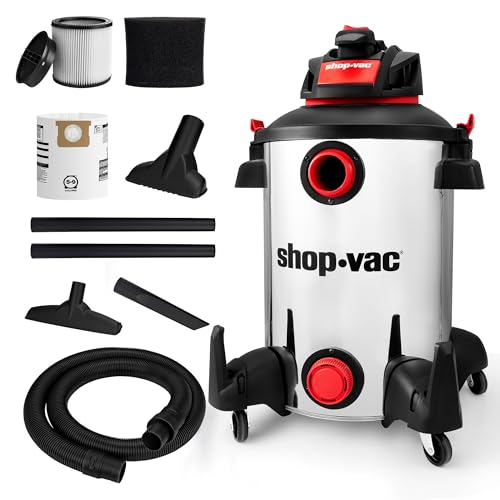
Shop-Vac 5761311 12-Gallon 6 Peak HP Wet/Dry Shop Vacuum

Shop-Vac 5761011 10-Gallon 4.5 Peak HP Wet/Dry Vacuum
Taking A Closer Look At The Options
A flexible cuff is the small but mighty piece of rubber that joins two pieces of dust collection hardware, and POWERTEC ships four of them in a single pack. Each cuff wraps a 2-1/2 inch OD (outside diameter) port, fitter, or hose end, with a steel hose clamp at each side to lock the seal in place. The result is a reusable, airtight connection that you can take apart without hunting for screws or wrapping the joint in tape.
Compared with the rigid reducers and adapters later in this roundup, a flex cuff absorbs slight misalignments between a tool’s dust port and a hose run, which matters in tight shop layouts. You may find a four-pack gives you spares for the bandsaw, planer, and miter station without buying more than you need.
Advantages To Know
- Rubber construction flexes to absorb port-to-hose misalignment in cramped setups
- Steel clamps on each end keep the seal tight during long run times
- Reusable design removes cleanly for tool changes, with no screws or tape to deal with
- Four-pack covers multiple machines at once, which is convenient for first-time shop builds
Things To Consider
- Built strictly for 2-1/2 inch OD ports, so a reducer is needed when matching 4 inch lines
- Owners commonly report that overtightening the steel clamps can pinch the rubber, shortening seal life
Who It Suits Best
Woodworkers assembling a small shop on a budget who need reliable 2-1/2 inch connections across several machines.
Where Another Pick Suits Better
Pick up the POWERTEC 70322 reducer and flex cuff set if your main line is 4 inches and you need to step down to a 2-1/2 inch tool port.
A filter bag is the workhorse consumable on any wall-mounted dust collector, and POWERTEC’s 70334 is built to slot into the popular 14-inch canisters used across Grizzly, Shop Fox, Rockler Delta, Wen, and POWERTEC’s own DC5371 and DC5372 collectors. The 1-micron rating is the key spec. A micron is one millionth of a meter, and at 1 micron this bag captures fine sanding dust that coarser bags would push back into the air.
For a hobby shop cutting hardwoods and MDF, that level of filtration directly affects the air you breathe on weekend sessions. The trade-off, as with any fine filter, is that the bag loads up faster and restricts airflow once it nears capacity, so a watchful eye on fill level pays off.
The Value In It
- 1-micron rating captures the fine dust that coarser bags tend to recirculate
- Fits multiple popular wall-mount collector models, which keeps replacement shopping simple
- Compatible shape makes it a drop-in for the original equipment bag on the listed machines
- Long bag body holds a meaningful volume of dust between cleanouts in a typical home shop
Worth Noting
- At 1 micron, expect the bag to load up faster and to need more frequent emptying than coarser options
- Confirms fit by collector model and bag dimensions before ordering, since not every wall-mount uses the same neck
Feature Snapshot
Made For
Wall-mount collector owners who run a table saw, planer, or drum sander and want noticeably cleaner shop air.
Consider Something Else When
Choose the POWERTEC 70403 bag and clamp kit if your collector uses a 4-3/4 to 5-1/4 inch band clamp mount instead of the neck style on this bag.
The 70403 bundles a 1-micron replacement bag with the band clamp you actually need to attach it. Where the previous POWERTEC bag assumes a slip-on neck, this one fits collectors that secure the bag with a 4-3/4 to 5-1/4 inch band clamp, covering the Wen, Shop Fox, Grizzly, Rockler Delta, and POWERTEC DC5371/5372 mounts that take that style. A band clamp is simply a stainless steel strap with a tensioning mechanism that wraps the bag collar and cinches tight.
For a shop in mid-rebuild or first start-up, the all-in-one packaging means you don’t end up with a perfect bag and no way to attach it. The trade-off shows up when you already have a serviceable clamp and only need a fresh bag, since this kit costs a touch more than a bare bag.
Benefits That Matter
- 1-micron rating delivers the same fine-dust capture as the previous POWERTEC bag
- Band clamp fits a 4-3/4 to 5-1/4 inch range, which covers most popular wall-mount canisters
- Bundle removes the guesswork of matching bag to clamp style at install time
- Stainless clamp resists corrosion in damp garage or basement shops
Honest Caveats
- If your existing band clamp is still solid, paying for a second one feels redundant
- Replacement interval is the same as any 1-micron bag, so plan on stocking at least one spare
Right Fit For
Shops upgrading an aging collector setup where the old clamp and bag both deserve replacing at the same time.
Look Elsewhere When
Pick the Cen-Tec Quick Click Dust Collection Separator if your main goal is catching debris before it reaches the vacuum or collector in the first place.
Most stationary tools ship with 4 inch dust ports, and most shop vac hoses step down to 2-1/2 inches, which means the two rarely want to talk to each other without help. The POWERTEC 70322 set is built for exactly that gap. You get a rigid 4 to 2-1/2 inch reducer, a 4 inch flex cuff, and stainless steel clamps to lock the joint from port to reducer to hose.
Unlike the earlier 2-1/2 inch cuff pack that expects matched sizes on both ends, this kit starts at the larger 4 inch side. Depending on your tool, you may find a single reducer pays for itself the first time it saves a clogged filter or a sawdust-covered floor.
Noteworthy Benefits
- Bridges 4 inch tool ports to 2-1/2 inch shop vac hoses without custom fittings
- Stainless steel clamps resist corrosion better than plated hardware over time
- Flex cuff absorbs alignment issues between the tool outlet and the hose run
- Useful as a universal adapter when tools and hoses are mixed brands
Points To Note
- Stepping from 4 to 2-1/2 inches restricts airflow, so expect a modest drop in suction
- Listing specifies fit for 2-1/4 inch OD hose ends, which is close to but not identical to the common 2-1/2 inch shop vac fitting
Best Suited To
Shops pairing a 4 inch stationary tool with a smaller shop vac that needs an adapter to do the job.
Swap It Out When
Choose the Shop-Vac 5801411 14-Gallon 5.5 Peak HP Wet/Dry Vac if suction loss from the reducer is a real concern, since a larger tank and stronger motor help compensate.
The DC5372 is the heart of the roundup: a real dust collector rather than an accessory, and a portable one at that. With a 1 HP motor pulling 560 CFM (cubic feet per minute, a measure of how much air the unit moves) and rolling on casters, it sits between a wall-mount collector and a heavy two-stage system. The included 1-micron bag has a clear window for fill level checks and a zipper for emptying without lifting the canister off the unit.
Compared with the wet/dry vacs lower in this list, a dedicated collector like this is built for sustained run times on a table saw or planer, where a shop vac motor would heat up. For a small pro or hobby shop with limited breaker capacity, the single-outlet design keeps installation simple.
The Practical Payoff
- 560 CFM handles single-tool hookup at a planer, jointer, or table saw without starving airflow
- 1-micron bag ships in the box, so you do not need a separate purchase to start collecting
- Clear window on the bag takes the guesswork out of emptying timing
- Cast base with casters moves between tools on a small shop floor
- Compact footprint suits shops where a fixed ducted collector is not realistic
Trade-Offs
- Single intake means only one tool at a time, unless you add a blast gate system
- At 1 HP, larger shops with multiple simultaneous users will feel the limit
- 1-micron bag loading is the same trade-off noted on the earlier filter bag picks
Quick Facts
Whose Shelf It Belongs On
Small professional shops and serious hobbyists who need real collector airflow without installing a full ducted system.
Reach For A Different Pick When
Choose the Shop-Vac 5801411 14-Gallon Wet/Dry Vac if you also need wet pickup or a blower function, which this dedicated collector does not offer.
A cyclonic separator is a chamber that spins incoming air so heavy chips and coarse dust drop into a bin before they ever reach a vacuum or collector filter. The Cen-Tec Quick Click adds that pre-separation stage to a standard shop vac setup, catching bulky debris and large chips that would otherwise clog the vac’s filter in a single afternoon of routing or sanding.
For a shop already running a Shop-Vac, a separator like this dramatically reduces how often the filter needs swapping or cleaning, which in turn extends vacuum life. The trade-off is the additional hardware in the line, which adds height and a footprint between the tool and the vac.
A Few Highlights
- Catches chips and coarse dust before they load the vacuum filter
- Helps the host vacuum last longer by reducing filter clogs
- Routes debris into a general purpose bin, which is easier to empty than the vac canister
- Useful for both fine dust and larger scrap, depending on the tool
Room For Improvement
- Adds a stage between tool and vacuum, which can feel like extra plumbing for a small benchtop setup
- On its own, it does not capture fine dust, so the downstream filter still matters
Core Details
Who Will Love This
Shop owners running a Shop-Vac at a router table, planer, or wide-belt sander who are tired of cleaning the filter every session.
Not Your Match When
Pick the POWERTEC DC5372 portable dust collector if you want a dedicated, single-tool collector with a real filter bag, rather than a pre-filter for a vac.
When the tool list includes a planer, a miter saw, and the occasional flooded basement, a 14-gallon wet/dry vac is the workhorse most shops reach for. The 5801411 ships with SVX2 motor technology, a rear blower port, and a 5.5 peak HP rating (peak HP is a measure of the motor’s highest output rather than running power). The 14-gallon tank is the largest in this roundup, so it runs longer between empties during long routing or sanding sessions.
For shop dust control, the appeal is the multi-function design: a single unit handles chips, fine dust, and a wet spill without swapping gear. On the flip side, peak HP numbers across the Shop-Vac line inflate compared with real-world suction, and a fine-dust filter is not built in.
Features That Help
- 14-gallon capacity swallows a full afternoon of planer or sander chips
- Wet/dry capability covers glue puddles, paint spills, and shop coolant mishaps
- Rear blower port clears benches and offcuts without a separate tool
- SVX2 motor design targets longer motor life under repeated use
Worth Bearing In Mind
- Stock filter is fine for general debris but not optimized for very fine MDF or sanding dust
- Peak HP ratings read higher than sustained suction, so manage expectations at the hose end
Perfect Match For
Garage and basement shops that need one machine for both dust collection and the occasional wet mess.
A Better Fit Elsewhere
Choose the Cen-Tec Quick Click Dust Collection Separator to add pre-separation to this vac, since fine dust is the bigger weak point on stock Shop-Vac filters.
The 5761311 splits the difference between the 14-gallon flagship and the 10-gallon compact in this roundup. A 12-gallon tank with 6 peak HP, 1-1/2 inch accessories, a tank drain, and on-board storage keeps the unit tidy in a working shop. The rear blower port and 100 CFM (cubic feet per minute of air movement on the blower setting) help clear sawdust from work surfaces when the hose is too awkward to reach.
For most home workshops, the 12-gallon size hits a sweet spot: enough capacity for planer and sander runs, light enough to move around. The honest read is that, like the 14-gallon, this unit still leans on a coarse stock filter, so fine MDF and sanding dust will reach the motor more than a collector would allow.
Well-Handled Touches
- 12-gallon tank balances capacity and weight for a one-person shop
- Tank drain simplifies liquid disposal after a wet pickup
- On-board cord and accessory storage keeps the hose, wands, and crevice tool together
- 100 CFM rear blower handles quick bench and sidewalk clearouts
Some Limits To Know
- Fine dust filtration still requires an upgraded filter or a pre-separator
- 1-1/2 inch hose diameter is smaller than what most stationary tools expect, so reducer cuffs are a common add-on
Built With In Mind
Mixed-use shops that want a wet/dry vac for both tool cleanup and household messes in one unit.
Skip It When
Choose the Shop-Vac 5761011 10-Gallon 4.5 Peak HP vac if portability and light benchtop use matter more than tank size.
The 5761011 is the lightest, smallest option in the Shop-Vac trio, and that is the point. A 10-gallon tank, 4.5 peak HP, 7-foot hose, and rear blower port cover a miter station, a small planer, and the kind of routine benchtop cleanups a hobby shop generates. For a beginner setting up a first garage workshop, this is a manageable size that still does real dust work.
For longer planer runs or sustained sander sessions, the smaller tank fills faster, and 4.5 peak HP reads lower than the 12 and 14-gallon siblings. You may find it needs a more frequent emptying rhythm than the larger Shop-Vacs higher in this list.
The Good Stuff
- Lightest Shop-Vac in this roundup, easy to carry to a jobsite or upstairs
- 7-foot hose reaches a miter saw without repositioning the unit
- Wet/dry plus blower covers a wide range of small-shop tasks in one tool
- Compact footprint fits a corner of a one-car garage
Less Ideal Details
- 10-gallon tank fills faster than the 12 and 14-gallon siblings on planer or sander runs
- Stock filter needs an upgrade for fine MDF or sanding dust in a serious shop
The Right Fit
First-time woodworkers and small benchtop setups that want a single wet/dry vac without dedicating floor space to a full collector.
Where Another Pick Suits Better
Step up to the POWERTEC DC5372 portable dust collector once the tool list grows to include a planer and jointer running back to back.
Factors To Consider When Choosing Shop Vacs For Woodworking Dust Collection
Airflow And Suction
Airflow, measured in CFM, drives how effectively a collector or shop vac pulls dust away from a tool’s port. Static pressure, expressed in inches of water lift, determines how well the unit keeps pulling through a long hose run or a clogged filter bag. Tools with small ports and short hoses lean on CFM, while long ducted lines and high-resistance filters lean on static pressure. For a hobby shop with a single tool online at a time, a 350 to 600 CFM unit with a 1 micron filter handles most hardwood and MDF scenarios.
Filtration Rating
A micron is one millionth of a meter, and a 1-micron filter captures the fine particles that a typical 5-micron or coarse filter sends back into the shop. For sanding dust, MDF, and plywood, finer ratings directly improve air quality and reduce cleanup of settled dust on adjacent surfaces. The trade-off shows up in airflow: a finer filter loads faster and drops suction earlier, so plan on a routine empty cycle rather than waiting for a full bag.
Port Diameter And Hose Compatibility
Stationary tools typically use 4 inch dust ports, while shop vacs and many smaller machines ship with 1-1/2 or 2-1/2 inch hoses. Reducers, flex cuffs, and adapter kits bridge the gap, but each step restricts airflow to some degree. Before buying, sketch out the planned path from tool to collector and check that the cuffs, clamps, and reducers are available for the diameters involved.
Tank Size And Mobility
Wet/dry vacs are sized by tank capacity in gallons, and dust collectors by CFM and bag volume. A 10-gallon vac suits a benchtop or a miter station, while a 14-gallon tank covers planer and sander runs. Casters, weight, and on-board storage all matter when the unit moves between tools throughout the day, and that mobility often matters more than a small capacity bump.
Key Considerations Across These Picks
Common Shopping Slip Ups
The most common slip is buying a shop vac sized for the workshop floor rather than for the tools online. A 4.5 peak HP vac can struggle at a planer, while a small collector sized for hobby use may not move enough air for a wide-belt sander. Match the unit to the largest single tool on the list, and add a separator or finer filter if fine dust is a concern.
Where The Extra Money Goes
Premium dust collectors and higher HP wet/dry vacs add stronger motors, finer filters, larger tanks, and more durable housings. The upgrade pays off in longer run times, fewer filter swaps, and cleaner air during long sessions. For a hobby shop running one or two tools on weekends, the basic tier often covers the workload without a meaningful drop in dust control quality.
Frequently Asked Questions
What CFM do I need for a small woodworking shop?
For a hobby shop running a single tool at a time, 350 to 600 CFM is a workable range. Planers and jointers sit at the upper end, while a miter saw or sander can run comfortably on the lower end of the range.
How often should I empty a 1 micron dust collector bag?
A 1 micron bag fills faster than coarser options, so expect more frequent empties than you would with a 5 micron bag. Many owners find that emptying at roughly half to two-thirds full keeps airflow from dropping noticeably during a cut.
Can a shop vac replace a dedicated dust collector?
A shop vac can handle lighter tools and shorter sessions, but it tends to load filters quickly with fine dust. A dedicated collector runs cooler, has larger filtration, and is built for sustained cuts on a planer, jointer, or table saw.
Do I need a cyclone separator with a shop vac?
A cyclone separator extends filter life and reduces how often the vac needs cleaning, especially with routers and sanders. For a setup dedicated to coarse chips and cleanups, a separator is optional, but a fine-dust workflow benefits from adding one.
Are 4 inch and 2-1/2 inch dust ports interchangeable?
The two sizes are not interchangeable, and most setups need a reducer or adapter to bridge them. Flex cuffs and reducer kits make the join airtight, though a size step always introduces some airflow restriction.




