


A quality pair of side cutters is one of those tools you’ll reach for constantly once you own a good one. Electricians, jewelry makers, hobbyists, and weekend fixers all need clean, reliable cuts without frayed ends or hand fatigue. The trouble is that “side cutters” covers a wide range, from tiny flush nips for soft jewelry wire to heavy 9-inch linesman pliers built for abuse on a job site.
The picks below span that full spectrum. I’ve grouped them by real-world use rather than brand, so you can match the tool to the work in front of you. Every option is built for repeat use, with steel and joint designs that hold up to actual cutting rather than occasional light duty.
The Essentials At A Glance
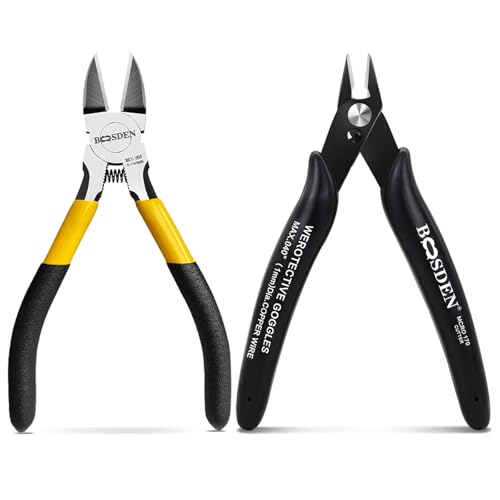
BOOSDEN Mini Flush Cutters & Wire Cutters Set, 5-Inch
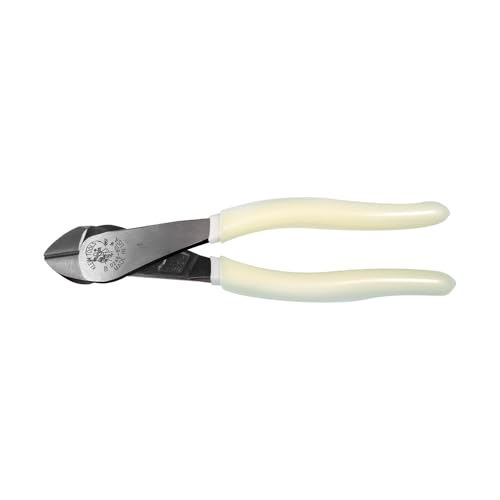
Klein Tools D248-8-GLW Hi-Viz Diagonal Cutting Pliers, 8-Inch

Klein Tools D2139NE11055 Lineman’s Pliers Set, 2-Piece

Klein Tools 2038RINS Insulated Long Nose Pliers, 8-Inch

SK 9″ Ironworker’s Linesman Pliers with Knurled Jaws

SK 9″ Angled Side Cutters, Heavy Duty Diagonal Pliers

BOOSDEN 5 Pack Micro Flush Cutter Pliers, 5-Inch
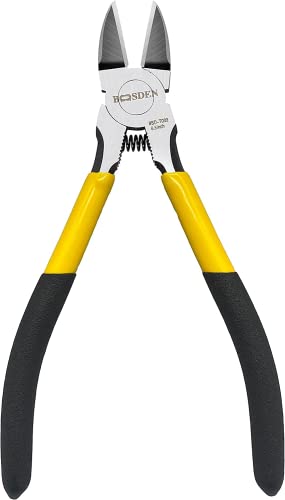
BOOSDEN Wire Cutter 6.5-Inch Diagonal Cutter

BOOSDEN Wire Cutter 5-Inch Diagonal Cutter, 5 Pack
The Picks, Examined More Closely
Jewelry and craft projects demand cuts that sit nearly flush against a finding, with no sharp tail to snag thread or fabric. This BOOSDEN pair gives you a 5-inch flush cutter and a 5-inch diagonal cutter in one bundle, so you can switch between trimming flush against a bezel and trimming slightly proud against a sheet. The high-carbon steel edge holds up to repeated snips of soft copper, craft wire, and memory wire without immediate dulling.
For hobbyists who work at a desk or small bench, the 5-inch length keeps your hand in a natural position. You won’t be fighting leverage on every cut, the way you might with an 8-inch linesman plier. Compare that to the larger Klein and SK options later in this list, which are built for thicker wire and heavier work.
Bright Spots
- Two specialized cutters in one set, covering both flush and diagonal needs
- Compact 5-inch frame keeps your hand relaxed during long beading sessions
- High-carbon steel blades are heat treated for clean cuts on soft metals
- Useful for jewelry, electronics, and model-making without tool swapping
Worth Noting
- Not built for hard steel wire or electrical cable, which can chip the small jaws
- Springs may need occasional lubrication after heavy daily use
Who It Suits Best
Jewelry makers, bead workers, and crafters who want a clean, two-tool kit for soft wire and small findings.
Consider Something Else When
Electricians and tradespeople will get more from the Klein Tools D2139NE11055 Lineman’s Pliers Set, which pairs a heavy cutter with a dedicated wire stripper.
Anyone who has crawled under a crawlspace or worked a dark service van knows the pain of dropping a tool and spending five minutes hunting for it. The Klein D248-8-GLW solves that very specific problem with glow-in-the-dark handles that charge under natural or artificial light and stay visible long after the lights go out. The short-jaw angled head still gives you the leverage of a standard 8-inch diagonal cutter.
The short jaws let you reach into crowded panels and switchgear without the bulk of a longer plier blocking your view. That angled head also creates a more natural wrist position when you’re snipping wire at chest height. It pairs nicely with the BOOSDEN mini set if you already own a fine cutter, since this one handles the heavier side of the workload.
Practical Pluses
- Glow-in-the-dark handles make the tool easy to spot in low light
- Short jaws improve access inside tight electrical boxes
- Angled head reduces wrist strain during overhead work
- Made in the USA with Klein’s typical forging quality
Trade Offs
- Glow effect fades over years of heavy use, depending on charging cycles
- Not rated for insulated work, so it isn’t a substitute for a true 1000V tool
Made For
Tradespeople, mechanics, and homeowners who work in dim crawlspaces, basements, or unlit vans.
Look Elsewhere When
Anyone working near live circuits should step up to the Klein Tools 2038RINS Insulated Long Nose Pliers for proper 1000V protection.
Lineman’s pliers earn their name on the job site, where you twist, pull, and snip through heavy-gauge wire all day. This Klein set pairs a 9-inch high-leverage side cutter with a dedicated solid-and-stranded copper wire stripper. The rivet on the 9-inch plier sits closer to the cutting edge than standard designs, which translates into noticeably more bite through thick conductors.
For pros, the appeal is two tools that handle the majority of electrical prep without leaving your belt. The stripper covers solid and stranded copper, while the larger plier does the twisting and cutting that smaller flush cutters simply can’t manage. Compared to the BOOSDEN micro set in the picks above, this is a different tool class entirely.
The Upside
- High-leverage design gives 46% more cutting power near the joint
- Pairs a heavy side cutter with a purpose-built copper wire stripper
- 9-inch length provides the reach and leverage for thick cable work
- Made in the USA with induction-hardened cutting edges
Minor Gripes
- Bulkier than dedicated flush cutters, awkward for jewelry or electronics
- Not insulated, so it requires de-energized work only
Quick Facts
Best Suited To
Electricians, HVAC techs, and serious DIYers who routinely cut and strip copper conductor and need one rugged bundle.
A Better Fit Elsewhere
Fine electronics and model-building work suits the BOOSDEN 5 Pack Micro Flush Cutter Pliers better, since small precision beats leverage at that scale.
Working around live panels changes the rules. A standard 8-inch plier looks identical to an insulated one, but only the latter is rated to keep you safe when something goes wrong. The Klein 2038RINS is rated for 1000V and meets IEC 60900 and ASTM F1505 standards, so it’s a legitimate protective tool, not just a marketing claim. The long-nose design also gives you reach into recessed terminals.
The multi-color insulation makes it visually clear that this is the safe tool, not a spare from your general kit. The induction-hardened cutting knives sit near the tip, which lets you snip conductors at a distance from your fingers. Compare this to the Klein D248-8-GLW above, which handles general cutting but lacks any voltage rating.
Key Advantages
- 1000V insulation rating for live panel work
- Long-nose profile reaches into recessed terminals and crowded busbars
- Meets IEC 60900 and ASTM F1505 insulated tool standards
- Induction-hardened knives maintain edge life under heavy use
A Few Limitations
- Heavier than a non-insulated plier due to the molded coating
- Overkill for home DIY where the panel can simply be de-energized
Technical Sheet
Whose Shelf It Belongs On
Licensed electricians, solar installers, and industrial maintenance techs who routinely work on or near energized equipment.
Skip It When
Casual home users can rely on the BOOSDEN 6.5-inch Diagonal Cutter, since they almost never work on live household circuits.
Ironwork is brutal on tools. You twist tie wire, snap rebar ties, and yank stubborn fasteners, often with a gloved hand. The SK 9-inch ironworker’s plier takes that punishment with a knurled jaw that grips slick tie wire without slipping, plus chromium-vanadium steel that resists deformation under heavy side loads. The spring-loaded action keeps the jaw open between cuts, which matters when you’re doing this for hours.
The hook handle design lets you hang the tool from a belt loop or scaffold clip without dropping it, a small detail that ironworkers tend to appreciate. Compared to the Klein D2139NE11055 set above, this SK leans toward construction rather than electrical work. Both are 9-inch linesman-style tools, but the SK’s knurled jaws are tailored for tying and twisting rather than copper work.
What Works In Its Favor
- Knurled jaws bite into slick tie wire without slipping
- CR-V steel body holds shape under heavy twisting loads
- Spring-loaded self-opening action reduces hand fatigue
- Hook handle keeps the tool tethered on a belt or scaffold
Points To Note
- Overbuilt for household electrical tasks, where the bulk slows you down
- Knurled jaws can leave marks on soft copper if used for that purpose
The Right Fit
Ironworkers, steel fixers, and masons who spend their day twisting rebar ties and working overhead.
Not Your Match When
Electricians should look at the Klein Tools D2139NE11055 Lineman’s Pliers Set for proper copper and cable work.
Standard 9-inch cutters work great in the open, but the moment you’re reaching into a wall cavity, a junction box, or behind a furnace, the straight head gets in your way. The SK angled side cutter solves that with a curved head that swings the cutting edge out to the side, giving you working clearance in tight spaces. The CR-V steel is heat treated for strength, and a super lacquer finish keeps rust at bay on damp job sites.
That angled head is the real story here, since the steel is similar to other premium diagonal pliers. If you’ve ever tried to snip a wire tie behind an appliance or cut a cable flush against a backplate, the geometry makes the difference. This pick sits between the SK ironworker’s pliers and the smaller flush cutters, blending leverage with access.
A Few Strong Suits
- Angled head design opens up access in deep or narrow spaces
- CR-V steel construction resists deformation during heavy cuts
- Super lacquer finish helps the tool survive damp environments
- 9-inch length delivers leverage without feeling unwieldy
Honest Caveats
- Angled head is overkill for open bench work, where a straight cut is faster
- Not rated for insulated electrical work
Spec Overview
Who Should Grab It
Auto techs, HVAC installers, and remodelers who regularly reach into tight cavities where a straight-head cutter simply won’t fit.
Reach For A Different Pick When
If you mostly cut on an open bench, the BOOSDEN 6.5-inch Diagonal Cutter is easier to control and lighter in hand.
Buying a single flush cutter for a classroom, repair shop, or volunteer workspace often ends with the tool walking off. The BOOSDEN 5-pack solves that very real problem by giving you five micro flush cutters at a fraction of what five individual purchases would run. At 60 grams each, these are light enough to live in a pen cup, a repair bench drawer, or a maker space without taking up much real estate.
The internal spring keeps the jaws open between cuts, so users aren’t fighting stiffness during long work sessions. That makes the design approachable for younger students or first-time tool users. The flush blade leaves minimal nubs, which matters for plastic model parts and electronics where a sharp tail would interfere with assembly.
Standout Benefits
- Five-pack format suits classrooms, workshops, and shared benches
- 60-gram body weight keeps hand fatigue low during detail work
- Internal spring returns the jaws automatically between cuts
- Flush blade design leaves little to no nubs on soft materials
Softer Spots
- Not intended for hard steel wire or anything above hobby-grade gauges
- Five nearly identical tools can be confusing without labeling
Who Will Love This
STEM teachers, makerspace managers, and small electronics shops that need multiple identical cutters in rotation.
Swap It Out When
A solo hobbyist who just wants one quality cutter will get more value from the BOOSDEN Mini Flush Cutters & Wire Cutters Set at the top of this list.
The 6.5-inch size is the comfortable middle of the side cutter world, large enough to handle up to 12 AWG wire yet small enough to keep in a kitchen junk drawer or a small tool roll. BOOSDEN builds this one from high-carbon steel with high-frequency hardened cutting edges, so it holds sharpness through typical home projects. It works on soft copper, plastic-coated wire, small cable, and aluminum without complaint.
For most home users, this is the size that disappears into a hand. Larger 9-inch cutters feel like a tool, while a 5-inch micro cutter feels like a scalpel. The 6.5-inch sits in between, and that middle ground handles more real-world tasks than either extreme. Compared to the BOOSDEN 5-inch pack, this single tool has more reach and snips heavier wire without strain.
What Stands Out
- Mid-size 6.5-inch frame suits most home and garage tasks
- High-frequency hardened edges hold sharpness through repeated cuts
- Handles up to 12 AWG soft copper, aluminum, and plastic-coated wire
- High-carbon steel body balances cost and durability
Some Limits To Know
- Not designed for hardened steel wire or live electrical work
- Single-tool purchase, so it isn’t ideal for shared workspaces
Feature Rundown
Perfect Match For
Home DIYers, hobbyists, and apartment dwellers who want one capable diagonal cutter for occasional wiring, crafting, and small repair work.
Another Choice May Suit
Workshops that need multiple identical cutters on hand will get more from the BOOSDEN 5 Pack Micro Flush Cutter Pliers in shared use.
Compact 5-inch diagonal cutters shine in electronics, fly tying, plastic modeling, and other detail work where a larger tool would overpower the task. This BOOSDEN 5-pack gives you five identical cutters with high-carbon steel blades, all with a return spring that keeps your hand relaxed during long sessions. Each tool ships in a small footprint, so storage isn’t an issue even in a tight apartment workbench.
For anyone who keeps losing a single small cutter in a drawer, the multi-pack format quietly solves that. You can park one in the kitchen junk drawer, one in a sewing kit, one in an electronics box, and still have spares. The 5-inch size shares the same general role as the BOOSDEN Mini Flush Cutters set above, though this is a diagonal jaw rather than a true flush jaw.
The Helpful Details
- Five-pack gives you spares for multiple rooms and tool kits
- High-carbon steel blades stay sharp under typical hobby workloads
- Built-in return spring reduces hand fatigue during long sessions
- Compact size reaches into electronics and model work
Practical Considerations
- Too small for household 12 AWG wire or thicker cable
- Spring tension may loosen over years of constant compression
Core Details
Built With In Mind
Electronics hobbyists, model builders, and small repair enthusiasts who want a tidy multi-pack of compact diagonal cutters at a sensible price.
Where A Sibling Pick Shines
Jewelry makers who need a true flush cut should pick the BOOSDEN Mini Flush Cutters & Wire Cutters Set, since flush blades matter for finding work.
What To Weigh Before Choosing Side Cutters
Side cutters look similar at a glance, but the differences between a 5-inch flush nip and a 9-inch linesman plier are enormous in actual use. Start with the work you’ll do most often, since tool size follows the task, not the other way around.
Size And Reach
Size sets the basic capability of any side cutter. Compact 5-inch and 5.5-inch models fit electronics, jewelry, and plastic modeling, where a heavy tool would overpower the cut. Mid-size 6.5-inch options handle home wiring, craft projects, and light repair work. Full 8-inch and 9-inch models deliver the leverage needed for cable, copper conductor, and tie wire. Reach matters when you’re cutting in a tight wall cavity, where a longer plier helps even if you don’t need the leverage.
Blade Style And Edge Treatment
A flush jaw sits flat against the workpiece, leaving almost no nub. Diagonal jaws cut at an angle and leave a small tail. For jewelry findings and electronics, flush is the cleaner choice. For electrical work, diagonal gives you a more durable edge for repeated cuts on harder material. Hardened edges hold sharpness longer, which matters if you cut daily rather than occasionally.
Material And Joint Construction
High-carbon steel and chromium-vanadium steel both hold up to regular use, though the heat treatment matters as much as the alloy. Look for induction-hardened cutting knives, which resist dulling far better than untreated edges. A riveted joint with a rivet positioned closer to the cutting edge delivers more leverage, which is the design behind most “high-leverage” pliers. Spring-loaded handles reduce hand fatigue over long sessions.
Insulation And Safety Rating
For anyone working near live circuits, insulation isn’t optional. A 1000V rated plier that meets standards like IEC 60900 and ASTM F1505 provides a true safety margin if you contact a live conductor. Non-insulated pliers should only be used on de-energized circuits, even if they look similar. The same applies to glow-in-the-dark and ergonomic features, which are nice but never substitute for proper insulation.
Handle Comfort And Grip
Comfort shows up after a long workday, not during a single cut. Look for cushioned or molded grips that fit your hand size, and consider whether the handle geometry lets you apply pressure without hotspots. Spring-loaded action is a real plus for repetitive cutting, since it removes the need to manually open the jaws between cuts.
Key Considerations Across These Picks
Where Shoppers Go Wrong
The most common error is matching a tiny flush cutter to a heavy-duty job. A 5-inch micro flush nip simply cannot cut 12 AWG copper cleanly, and forcing it usually chips the jaw. The reverse mistake also happens, using a 9-inch linesman plier to trim soft jewelry wire, which leaves a rough tail and can damage findings. Match tool size to the wire gauge you’ll cut most often, and consider keeping a second tool for occasional outliers.
Another pitfall is ignoring insulation on electrical work. A standard diagonal cutter can look exactly like an insulated one, but only the latter carries a voltage rating. Never assume a rubbery handle means the tool is rated for live circuits. Check for explicit IEC or ASTM markings before working on energized equipment.
Where The Extra Money Goes
Premium side cutters earn their higher cost through steel quality, edge treatment, and joint precision. Forged chromium-vanadium or high-carbon steel, induction-hardened knives, and tight tolerance rivet joints all extend tool life and improve cut quality. Brand heritage plays a role too, since established makers tend to have more consistent quality control. For occasional home use, a mid-range tool is enough. For daily professional cutting, the upgrade pays off in fewer replacements and cleaner work.




