Putting siding up the slow way costs weekends. The right pneumatic or cordless nailer turns a two-day tear-off into an afternoon, and a coil nailer that matches your fastener length, shank style, and trigger preference makes the difference between clean lines and crooked seams. This roundup looks at eight siding-focused picks across the roofing, fencing, and finishing categories, with attention to magazine capacity, pressure range, shank compatibility, and the kind of project each one actually handles best. Contractors, remodelers, and committed DIYers should all find a match here.
A Fast Comparison Of The Options

Paslode Coil Fencing Nails & Fuel 1-7/8 in. x .099 in.

Maxparts NVH45 15 Degree Roofing Nail Gun

T-Rex Ferociously Strong Duct Tape 35 Yards 3-Roll

Bostitch 16 Ga 7/16 in. Pneumatic Crown Stapler

Metabo HPT NV65AH2 Coil Siding Nailer + Nails Bundle

BOSTITCH RN46 Coil Roofing Nailer 3/4 to 1-3/4 in.

Maxparts CN70 Pneumatic Siding Nailer 1-3/4 to 2-3/4 in.
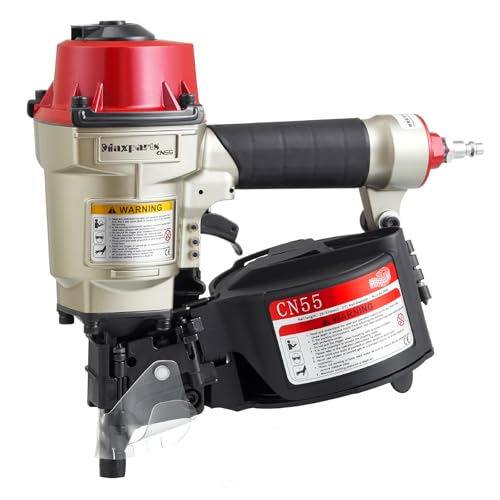
Maxparts CN55 Pneumatic Siding Nailer 1 to 2-1/4 in.
Meet The Standout Selections
This is a fastener pack, not a tool, and that matters for the right crowd. The 1-7/8 in. aluminum nails are built to feed through the Paslode Cordless CSF 0 Degree Siding & Fencing Nailer, paired with three fuel cells in the box. The fuel cell is the small propane canister that drives the cordless nailer’s combustion, so three cells is enough to get through a moderate fence run without scrambling for replacements.
For property owners running off a generator at the back of a yard, the cordless design means no compressor hose to drag through wet grass. The 0-degree straight collation also keeps the nailer nose narrow, which helps in tight corners between posts. If your current setup is already a Paslode cordless platform, this refill pack slots straight in.
Real-World Strengths
- 2,400 nails per pack keep reloads infrequent on full-day fence builds
- Three included fuel cells stretch a single purchase across multiple work sessions
- Aluminum shanks cut weight in the magazine, so the nailer stays balanced overhead
- Plastic collation strips break away cleanly, leaving fewer sharp fragments at the jobsite
Things To Consider
- Aluminum nails are not the right choice for ACQ-treated lumber, which corrodes unprotected aluminum
- This pack only fits the Paslode CSF 0 Degree platform, so it is not a universal refill
Who It Suits Best
Property owners and fence crews already running a Paslode cordless CSF system who need a single bundle for a weekend cedar or untreated pine fence.
Consider Something Else When
The Maxparts CN55 is a better match for crews who need a pneumatic coil nailer with broader shank compatibility across treated lumber.
The Maxparts NVH45 is a roof-focused pneumatic coil nailer built for the awkward, leaned-over, two-handed work of asphalt shingle installation. A 15-degree magazine angle, a high-capacity coil that holds up to 120 nails at a time, and a sensitive trigger valve let the operator feather the firing rate from short bursts to a steady flow on a long shingle run. Weight stays low, which matters at the end of a four-hour reroof.
The driving range covers 7/8 in. to 1-3/4 in. full-head coil roofing nails, the most common shingle fastener sizes. For homeowners tackling a single garage tear-off or a shed reshingle, the lower price and lighter handling can outweigh a more recognized brand. For commercial roofers, the trade-off shows up in long-term durability under daily use.
What Makes Sense
- 120-nail magazine capacity reduces trips back down the ladder during long shingle rows
- Sensitive trigger valve gives the operator precise control over firing cadence
- Lightweight balance helps during overhead work on rafter-level deck repairs
- Accepts the standard 7/8 in. to 1-3/4 in. full-head coil nails stocked at most lumberyards
Worth Noting
- A pneumatic tool needs a compatible air compressor and hose, which is an added cost for first-time owners
- Brand support and replacement parts are not as widely available as the BOSTITCH RN46 below
Quick Facts
Made For
Homeowners and small crews handling asphalt shingle tear-offs and repairs who want a budget-friendly pneumatic coil roof nailer.
Look Elsewhere When
The BOSTITCH RN46 is the better tool for roofers running multi-day commercial projects where carbide wear parts and rebuild support matter more.
Adhesive tape is not a nailer, but no siding project reaches the finish line without a roll of strong tape somewhere on the bench. T-Rex’s heavy-duty duct tape handles the wrap-and-hold work that surrounds a siding job: sealing housewrap seams, bundling offcuts, masking window edges before trim cuts, and strapping extension cords out of the work zone. The gunmetal grey color also blends with most siding palettes when a patch has to hold for a few weeks.
The 35-yard three-roll pack totals 105 yards, enough to keep a crew rolling through a full rewrap. Compared to the standard duct tape you’d grab at a grocery checkout, the thicker adhesive layer here is built for longer dwell time on rough surfaces like OSB sheathing. For occasional residential users, that extra grip is sometimes more than the project needs.
Everyday Perks
- Thicker adhesive layer holds on dusty sheathing and weathered housewrap better than standard duct tape
- Three-roll format keeps a backup roll on the truck and one inside, reducing downtime
- Gunmetal grey finish is easier on the eyes than neon silver when used as a visible patch
- Works as a quick strapping material for extension cords, drop cloths, and tarp corners
Trade Offs
- Residue can stay behind on painted trim if left in the sun for more than a couple of weeks
- For a clean paint line, painter’s tape still beats duct tape along window and door edges
Best Suited To
Siding and roofing crews who need a heavy-duty utility tape on hand for wrap sealing, bundle work, and on-the-fly patches.
Not Your Match When
The Bostitch 651S5 stapler is the better match for crews who need a fastening tool that drives 16-gauge staples into vinyl siding trim.
The Bostitch 651S5 is a sheathing-focused pneumatic stapler that overlaps with siding work in a specific way. Its included vinyl siding adapter sets the nose depth so 16-gauge, 7/16 in. crown staples seat into vinyl panels without crushing the nailing hem. A flip-open nose design makes jam clearing faster when a stray staple catches on a housewrap seam, and the adjustable depth-of-drive lets you dial in just-enough hold without over-penetrating the panel.
For vinyl siding installs, the tool is genuinely helpful; for general carpentry, it also handles sheathing, subfloor, and roof felt work. The contoured grip and adjustable rafter hook make ladder work more comfortable across a long day. Compared to the coil nailers in this list, the trade-off is fastening style: staples don’t hold a siding panel the same way a siding nail does, which is why the vinyl adapter matters.
Useful Touches
- Vinyl siding adapter included for proper staple depth on siding panels
- Flip-open nose design clears jams without taking the tool off the wall
- Selectable trigger switches between contact and sequential firing without extra tools
- Adjustable rafter hook keeps the tool hanging on the ladder rail between fastener loads
Points To Note
- A pneumatic tool needs an air compressor and hose setup, which is an added cost for first-time owners
- Staples are not a substitute for siding nails on every product warranty, so check panel manufacturer guidance
Feature Snapshot
Perfect Match For
Vinyl siding installers and remodeling crews who want a stapler that handles both sheathing attachment and the vinyl nailing step.
Skip It When
The Metabo HPT NV65AH2 bundle is a better match for crews who need a true coil siding nailer that drives full round-head nails for longer hold.
The Metabo HPT NV65AH2 is a serious coil siding nailer bundled with a 3,600-count box of 2 in. x .092 hot-dipped galvanized ring shank siding nails. That combination matters because the tool and the fasteners are tuned to each other. Ring shank nails give better withdrawal resistance than smooth shanks, and the hot-dipped galvanized coating helps the assembly hold up against weather exposure on fiber cement and cedar siding jobs.
The tool itself accepts 16-degree wire collated coil siding nails from 1-1/2 in. to 2-1/2 in. and 15-degree plastic collated nails from 1-1/2 in. to 2-1/4 in. A switchable trigger lets the operator toggle between sequential single-shot and rapid contact firing, which is genuinely useful when moving from detail work around windows to long runs along a wall. For full tear-off siding work, this is one of the most complete packages on the list.
What Pays Off
- Bundle includes both tool and 3,600 ring shank nails, so crews can start work the same day the box lands
- Hot-dipped galvanized coating improves weather resistance for exterior siding applications
- Switchable trigger moves between sequential and contact modes without extra tools
- Accepts both wire and plastic collated coil nails, which gives flexibility on fastener sourcing
Softer Spots
- The bundle price is higher than buying a bare tool and nails separately, depending on retailer sales
- Pneumatic operation still requires a compressor rated for siding nailer consumption
Spec Overview
Who Should Grab It
Full-time siding contractors and remodelers who want one bundle with a proven nailer and matched fasteners for a tear-off and re-side project.
Another Choice May Suit
The Maxparts CN70 is a stronger fit for crews driving 2-1/2 in. to 2-3/4 in. nails into thicker furring strips or structural siding.
The BOSTITCH RN46 is the workhorse roofing nailer in this roundup. A lightweight aluminum housing keeps weight manageable on long roof days, while the carbide inserts in the nosepiece resist wear from abrasive shingles and repeated contact with the deck. The tool’s zero nail lockout feature prevents dry firing once the magazine runs empty, a small detail that meaningfully extends driver blade life on production work.
Skid pads and aggressive wear guards protect the housing from drops onto gravel or shingle bundles, which matters for any tool that lives on a roof. Quick-set adjustable depth control lets the operator match drive depth to shingle thickness without extra tools. Compared to the Maxparts NVH45 above, the RN46 trades some price advantage for better wear components and broader fastener length support.
What Works In Its Favor
- Carbide nosepiece inserts hold up to abrasive contact on shingle and felt surfaces
- Zero nail lockout feature prevents dry firing, extending driver blade life
- Skid pads and wear guards protect the housing during real-world job site drops
- Quick-set depth adjustment matches drive depth to shingle thickness without extra tools
Some Limits To Know
- Compressor requirements step up compared to smaller finish nailers, so the air system needs to keep up
- Weight is higher than the Maxparts NVH45, which shows up late in a long shingle day
The Right Fit
Roofing contractors and remodelers running production work on asphalt shingle tear-offs and re-roofs who prioritize wear-component longevity.
Reach For A Different Pick When
The Maxparts NVH45 is a better match for homeowners doing a single shingle repair where weight and price matter more than durability parts.
The Maxparts CN70 handles the upper end of the coil siding nailer range, driving 15-degree wire collated nails from 1-3/4 in. up to 2-3/4 in. That range is what you reach for when fastening into thick furring strips, structural siding panels, or wood-backed assemblies where shorter nails would not get a full bite. The tool runs on 70 to 120 PSI and accepts shank diameters from 0.091 in. to 0.113 in., so it covers both smooth and ring shank fasteners.
Rapid-fire capability at 10 cycles per second lets long siding runs move quickly when the project allows. For crews used to the Metabo HPT NV65AH2 above, the CN70 trades a smaller brand footprint for longer maximum nail length. For siding pros who regularly anchor into denser substrates, the extra power range is the reason to pick this one.
Useful Strengths
- 2-3/4 in. maximum nail length handles thick furring and structural siding applications
- Wide shank diameter range covers both smooth and ring shank fasteners
- Rapid-fire capability pushes long siding rows along at production pace
- Industrial-grade motor handles daily crew use without bogging down
Honest Caveats
- Higher operating pressure range demands a compressor with enough reserve to keep up under rapid fire
- For thinner panel siding, the CN70 may be overpowered compared to the CN55 below
Built With In Mind
Siding and fence crews working with thick furring strips, structural panels, or 2x-backed assemblies that need a longer bite than standard siding nails provide.
Swap It Out When
The Maxparts CN55 is a better fit for crews focused on thinner fiber cement or standard vinyl siding where a 1 in. to 2-1/4 in. range covers the work.
The Maxparts CN55 is the smaller sibling of the CN70 above, dialing the range down to 1 in. through 2-1/4 in. and the shank diameter window to 0.083 in. to 0.091 in. For most fiber cement, vinyl, and standard wood siding, those numbers cover the work. Operating pressure is the same 70 to 120 PSI band, so a typical pancake compressor can keep up.
The rapid-fire rate is the headline feature, and it shows up in production siding where every minute across a full day adds up. For crews working a daily route of siding repairs, the CN55 hits a sweet spot of weight, capacity, and fastener range. Compared to the Metabo HPT NV65AH2 bundle above, the CN55 is a less expensive tool-only option, though you’d need to source your own fasteners.
What Earns Its Place
- 1 in. to 2-1/4 in. range covers the majority of fiber cement and vinyl siding panel thicknesses
- 10-shots-per-second rapid fire helps long runs move along at a production pace
- Lower minimum shank diameter (0.083 in.) supports lighter-gauge fasteners
- Standard 70 to 120 PSI operating range plays well with most home-shop compressors
Points To Weigh
- Tool-only, so the cost of collated nails needs to be added separately
- Brand service network is thinner than Metabo HPT, so warranty claims may take longer to resolve
Technical Reference
Whose Shelf It Belongs On
Daily siding crews and remodelers focused on vinyl and fiber cement panel work who want a high firing rate at a friendly tool-only price.
A Better Fit Elsewhere
The Maxparts CN70 is the better tool when the job requires 2-1/2 in. or longer nails into furring or structural backing.
What To Weigh Before Choosing Siding Tools
Nailer Type And Power Source
Pneumatic coil nailers deliver consistent power and lighter tool weight, but they need a compressor and hose to run. Cordless fuel-cell systems like the Paslode platform trade hose drag for fuel cell swaps. The honest read is that pneumatic still wins on cost-per-shot for production crews, while cordless wins on mobility for fence and deck work at the back of a yard. Match the tool type to how far you are from an air supply, not to which one looks newer.
Fastener Range And Shank Compatibility
A 1 in. to 2-1/4 in. range covers most siding panel work. Push past 2-1/2 in. only when you are fastening into furring strips, structural panels, or thicker sub-assemblies. Shank style matters more than many shoppers realize: smooth shanks are easier to remove if a panel needs replacement, while ring shanks resist pull-out better on long-term exterior exposure.
Magazine Capacity And Reload Frequency
A larger coil magazine means fewer trips down the ladder. For a single shingle repair, that barely matters. For a full re-side, the difference between a 120-nail coil and a 300-nail coil adds up across an eight-hour day. Capacity is also tied to tool weight, so balance the two against your own fatigue threshold.
Trigger Mode And Operator Control
Sequential firing requires a deliberate press for each nail, which keeps the operator accurate around windows and trim. Contact firing allows rapid bumps along long runs, which is faster but requires more discipline. The Metabo HPT NV65AH2 and Bostitch 651S5 both offer selectable triggers, which is genuinely useful for projects that mix detail work and long runs.
Practical Buying Decisions For Siding Tool Shoppers
Wrong Turns To Avoid
The most common slip is matching a pneumatic nailer to a compressor that cannot keep up. A coil siding nailer running rapid fire will starve a small pancake compressor, leading to misfires and slow production. The other trap is buying a longer-nail-range tool than the project needs. A 2-3/4 in. capacity sounds future-proof, but the heavier tool and higher pressure requirements are overkill on a standard vinyl re-side.
When Paying More Pays Off
The Metabo HPT NV65AH2 bundle costs more than a bare Maxparts CN55, but the included ring shank hot-dipped galvanized nails and the switchable trigger justify the difference for full tear-off siding work. The Bostitch RN46 also earns its higher price through carbide wear parts and a zero nail lockout feature that extends driver blade life. For occasional DIYers, the upgrade is harder to justify. For production crews, it usually pays back in fewer rebuilds and faster project completion.
Frequently Asked Questions
What Is A Coil Siding Nailer?
A coil siding nailer is a pneumatic or cordless nailer that holds fasteners in a round or flat coiled strip, allowing a much higher nail capacity than stick-style magazines. Coil nailers are common on roofing, siding, and fencing work where reload frequency needs to stay low.
Can One Nailer Handle Both Roofing And Siding?
Some coil nailers overlap, but fastener specifications and magazine angles differ between roofing and siding. Roofing work uses shorter, wider-head nails for shingle hold, while siding uses longer ring shank nails for withdrawal resistance. The Maxparts NVH45 and Bostitch RN46 lean toward roofing, while the Maxparts CN55 and CN70 are tuned for siding.
What PSI Does A Siding Nailer Need?
Most pneumatic siding nailers run between 70 and 120 PSI. The Maxparts CN55 and CN70 both sit in that range, making them compatible with standard home-shop compressors. Always check the tool’s specified operating pressure before connecting to a new compressor.
Are Cordless Siding Nailers As Strong As Pneumatic?
Cordless fuel-cell systems like the Paslode CSF offer excellent mobility and power for residential fence and siding work, but pneumatic coil nailers still lead in raw cycles-per-minute for production crews. The honest trade-off is convenience versus sustained firing rate.
What Is Ring Shank And Why Does It Matter?
A ring shank has concentric ridges along the nail shaft that grip the wood fibers, increasing pull-out resistance compared to a smooth shank. For exterior siding exposed to wind and weather cycles, ring shank nails hold panels in place longer and reduce the chance of loose panels over time.