


Putting siding on a house, shed, or fence is one of those jobs where the right nailer changes everything. Run the wrong coil through your tool and you spend the afternoon digging misfires out of fiber cement. Run the right setup and a 12-foot plank goes up clean before lunch. This list covers nine solid siding nailer picks, from cordless convenience to pneumatic workhorses, plus a couple of installation gauges that solve the “second pair of hands” problem.
Your Options, Compared

Paslode Coil Fencing Nails & Fuel, 1-7/8 in.

Maxparts NVH45 Roofing Nail Gun
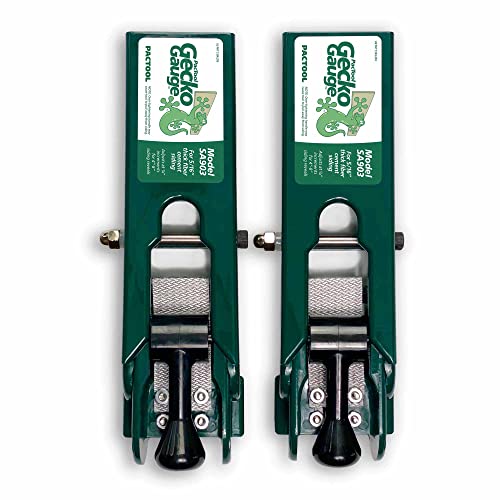
PacTool Gecko Gauge Fiber Cement Kit

Metabo HPT NV65AH2 Siding Nailer Bundle

PacTool Gecko Gauge Siding Tool
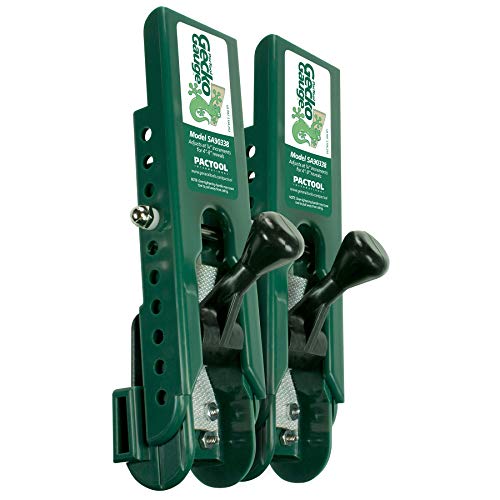
PacTool Gecko Gauge LP Wood, 2-Pack

BOSTITCH RN46 Coil Roofing Nailer

Maxparts CN70 Pneumatic Siding Nailer
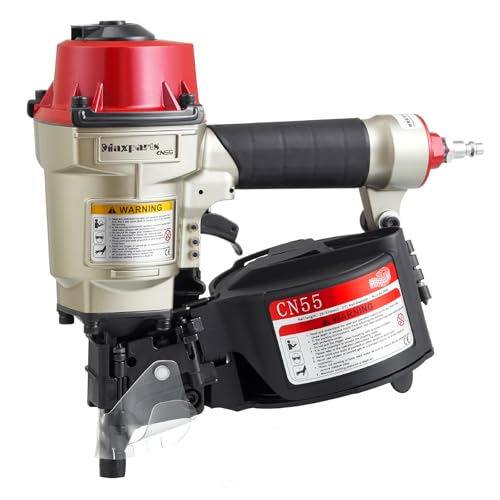
Maxparts CN55 Pneumatic Siding Nailer
A Breakdown Of The Leading Choices
This Paslode pack is the consumable side of a cordless setup rather than a tool on its own. It’s built to feed the Paslode Cordless CSF 0 Degree Siding & Fencing Nailer, so you get nails and fuel cells matched to that specific platform. The aluminum shank keeps weight down on long fence runs, and the 0.099-inch diameter hits a sweet spot for cedar and pine rails.
On a job site without a compressor, this pack is what keeps the cordless nailer working. The fuel cells arrive sealed and shelf-stable, so spares can sit in the truck for a season without going bad. You may find the 1-7/8-inch length limiting if your fencing uses thicker posts or you want deeper bite.
Good Reasons To Consider
- 2,400 nails and three fuel cells cover a full weekend of fence work without a reload run
- Aluminum construction reduces rail splitting compared to heavier-gauge steel
- Plastic collation strips cut down on the wire scraps and sharp clippings that typically litter a deck
- Purpose-matched to the Paslode CSF cordless system, removing compatibility guesswork
Trade Offs To Consider
- Only fits the Paslode cordless platform, so it is a non-starter for pneumatic or other cordless brands
- Aluminum shanks are softer than galvanized steel and can bend on dense hardwoods
Made For
Cordless-first fence builders who already own a Paslode CSF and need a turnkey nail-and-fuel supply for a weekend job.
A Better Fit Elsewhere
Shoppers running pneumatic setups get more value from the Maxparts CN70 Coil Nailer, which covers a wider length range for general siding and fencing.
Roofing day is usually a long day on a sloped surface, so tool weight matters more than usual. The Maxparts NVH45 comes in light and balanced, with a sensitive trigger valve that gives you real control over how fast the nails feed. It runs 15-degree coil roofing nails from 7/8 inch up to 1-3/4 inch, which covers asphalt shingles, felt underlayment, and most peel-and-stick membranes.
The magazine holds around 120 coil nails at a time, so reloads stay infrequent even on a steep run. Where this gun earns its place is on smaller patch jobs and shed roofs where dragging out a full-size pro pneumatic feels like overkill. You may find the depth adjustment a bit stiff at first, but it holds setting well once dialed in.
A Strong Showing
- Light body reduces arm fatigue on long overhead runs
- Sensitive trigger allows measured firing for delicate flashing work
- 120-nail magazine keeps reload stops rare
- Compatible nail range covers shingles, felt, and synthetic underlayments
Some Limits To Know
- Roofing-focused depth and nose geometry is less ideal for siding planks
- Lightweight construction can feel less planted during heavy production use
Best Suited To
Homeowners and small-shop roofers handling shingle patches, sheds, and outbuildings where a lighter, control-oriented tool beats raw power.
Skip It When
Crews focused on fiber cement siding or thicker lap siding will find the Metabo HPT NV65AH2 a stronger all-around siding platform.
Holding a 12-foot fiber cement plank level while you reach for a nailer is the kind of job that usually needs three hands. The PacTool Gecko Gauge solves that by clamping onto the previous course and supporting the next board, freeing both of yours. Designed for 5/16-inch fiber cement and James Hardie siding, this two-clamp kit sets the standard for one-person plank installation.
The gauge acts as a built-in reveal guide, so each course sits at a consistent exposure without tape-measure checks every few feet. For a single-story ranch, one set of clamps covers the wall, and the time saved on layout more than pays back the cost. Owners commonly report that the clamp pads wear over time on abrasive cement, so storing them dry helps.
Useful Highlights
- Acts as a second pair of hands, so solo Hardie installs become realistic
- Built-in reveal spacing keeps exposure lines consistent
- Two clamps cover a typical 12-foot plank in one setup
- Time savings on layout often recoup the cost on a single wall
Honest Caveats
- Limited to 5/16-inch fiber cement thickness, so it cannot support thinner lap profiles or engineered wood
Right Fit For
Solo installers tackling a James Hardie re-side or addition who want clean reveal lines without paying for a helper.
Where Another Pick Shines
Projects mixing Hardie and LP SmartSide will be better served by the PacTool Gecko Gauge for Fiber Cement & Engineered Wood, which handles both materials.
The Metabo HPT NV65AH2 is one of those pneumatic siding nailers that has earned a long track record on residential crews, and this bundle pairs it with a starter pack of 2-inch by 0.092-inch hot-dipped galvanized ring-shank coil nails. That combination gives you the tool and the first 3,600 nails in a single order, which removes the trip to the fastener aisle before day one.
The gun accepts 16-degree wire-collated coil siding nails from 1-1/2 inch to 2-1/2 inch, and it also runs 15-degree plastic-collated coils up to 2-1/4 inch. A selector switch toggles between sequential and contact firing, so you can switch from precision work at corners to production speed on long runs. You may find the bare-tool price alone makes more sense if you already have a stockpile of compatible nails.
Useful Touches
- Bundle simplifies the first purchase for new siding crews
- Selective actuation switch lets you choose between precision and speed modes
- Accepts both wire and plastic-collated coils, widening fastener options
- Hot-dipped galvanized ring shanks provide corrosion resistance for exterior exposure
Points To Keep In Mind
- Bundle pricing looks higher upfront compared to bare-tool plus loose nails
- Pneumatic, so you need a compressor capable of consistent volume
Quick Facts
Who It Suits Best
First-time siding crews who want the gun and a matched fastener supply in one shipment, without doing compatibility research.
Look Elsewhere When
Existing pneumatic shops that already stockpile nails will find the bare Metabo HPT NV65AH2 elsewhere, or the lighter Maxparts CN55 a friendlier match for trim siding.
The newer PacTool Gecko Gauge was designed for the reality that many modern siding jobs mix materials. It supports full 12-foot Hardie fiber cement boards and 16-foot LP SmartSide planks, so you can move between products without swapping tools. For remodelers working on additions that butt into older siding, that flexibility is genuinely useful.
The patent-pending design keeps a plank locked at the correct reveal while you fasten, so exposure lines stay straight across mixed-material runs. It’s heavier than the original Gecko, which is the trade-off for handling longer and heavier boards. Owners commonly note that the wider stance makes the gauge feel more planted on lap siding.
Real Benefits
- Works on both Hardie fiber cement and LP SmartSide, so one tool covers two product lines
- Supports up to 16-foot planks, matching modern engineered wood lengths
- Wider stance gives a planted feel on long courses
- Eliminates chalk-line checks on every course
Things To Weigh
- Heavier than the original Gecko, which can wear on tall ladder work
- Larger footprint takes up more room in a crowded scaffold setup
Perfect Match For
Remodelers and addition builders whose projects span fiber cement and engineered wood without wanting two specialty gauges in the truck.
Swap It Out When
Single-product Hardie-only runs stay simple and lighter with the original PacTool Gecko Gauge Fiber Cement Kit covered above.
The 2-pack of PacTool Gecko Gauges is aimed squarely at LP SmartSide and similar 3/8-inch engineered wood products. With two clamps working on opposite ends of a long plank, you can hang a 16-foot course by yourself, walk to one end, fasten, then move to the other. That’s a workflow change that turns a two-person job into a one-person one.
Because engineered wood is lighter than fiber cement, the gauges don’t need the heavier frame of the dual-material model. The green color makes them easy to spot in grass or on a sawdust-covered deck. You may find that on very tight inside corners, the clamp arms need a moment of adjustment to clear trim.
What Stands Out
- Two clamps let you work both ends of a long plank without a helper
- Tuned for 3/8-inch LP siding, the most common engineered wood thickness
- Light frame suits the lower weight of wood-based planks
- High-visibility green reduces lost-tool time on busy job sites
Practical Considerations
- Limited to engineered wood thickness, not a fit for fiber cement or thick cedar lap
- Clamp arms can crowd tight inside-corner work
Feature Snapshot
Whose Shelf It Belongs On
Solo contractors and ambitious homeowners working through a full LP SmartSide re-side without paying for a helper.
Reach For A Different Pick When
Mixed Hardie-and-wood projects will run smoother with the PacTool Gecko Gauge for Fiber Cement & Engineered Wood instead.
The BOSTITCH RN46 is the kind of coil nailer you hand to a roofer and don’t worry about it for a season. The aluminum housing keeps the weight reasonable while shrugging off the drops and scrapes that come with daily shingle work. It runs 3/4-inch to 1-3/4-inch coil roofing nails, which covers asphalt shingles, underlayment, and most re-roof tear-off work.
Carbide inserts in the nosepiece resist wear from abrasive surfaces, and the wear guards and skid pads take the punishment that would chew up cheaper tools. The zero nail lockout feature prevents dry firing, which protects the driver and tells you when to reload. You may find it slightly nose-heavy during long overhead runs, but the trade-off is a more durable drive mechanism.
Practical Pluses
- Aluminum housing balances weight with job site durability
- Carbide nosepiece inserts extend service life on abrasive surfaces
- Zero nail lockout prevents dry firing damage and signals reload time
- Wear guards and skid pads absorb the typical roof damage zones
Where It Is Less Suited
- Roofing-focused geometry, so it’s not the first pick for lap siding courses
- Slightly nose-heavy for full-day overhead use without breaks
Built With In Mind
Working roofers who put their tools through real-world punishment and need a coil nailer that holds up season after season.
Where A Sibling Pick Shines
For roofing that mixes into siding, the Maxparts CN70 Coil Nailer handles longer fasteners and works on heavier siding profiles.
The Maxparts CN70 sits at the heavier end of the pneumatic siding nailer category, both in build and in the fasteners it drives. It handles 15-degree flat wire-collated nails from 1-3/4 inch to 2-3/4 inch with shank diameters from 0.091 to 0.113 inch. That range covers the thicker lap profiles, heavy-duty fence work, and structural siding applications where a lighter nailer stalls.
Working pressure runs 70 to 120 PSI, which lines up with most homeowner and small-shop compressors. The rapid-fire rate of around 10 cycles per second helps on long wall runs where rhythm matters. You may find the added weight noticeable on tall ladder work, which is the honest trade-off for the drive power.
Why It Works Well
- Drives longer 2-3/4-inch nails for thick siding, fencing, and sheathing work
- Industrial-grade motor handles high-shank-diameter fasteners without bogging down
- Rapid-fire rate supports production pace on long wall runs
- Compatible pressure range suits most homeowner-grade compressors
Points To Note
- Heavier than shorter-range nailers, which wears on overhead or ladder work
- Overkill for thin trim siding where a lighter gun would suffice
Technical Highlights
Who Should Grab It
Pro remodelers and serious DIYers working on thick siding, fence builds, and any application where shorter 2-1/4-inch fasteners just won’t reach.
Consider Something Else When
Trim-heavy and lap-light siding jobs are easier on the wrist with the lighter Maxparts CN55 Pneumatic Siding Nailer.
The Maxparts CN55 is the shorter-reach sibling to the CN70, and it earns its place on trim and lap work where driving 2-3/4-inch nails would split the material. It runs 15-degree flat wire nails from 1 inch to 2-1/4 inch with shank diameters from 0.083 to 0.091 inch, which is the sweet spot for engineered wood lap, fiber cement trim, and most cedar profiles.
Because the nail length range tops out lower, the body is a touch lighter, which matters on tall walls and soffit work. The same 10-cycles-per-second firing rate holds, so you don’t trade production pace for the smaller footprint. You may find that on denser hardwood or thicker composite siding, the CN70 is the better match.
Notable Gains
- 1-inch minimum nail length supports delicate trim and soffit work
- Lighter body reduces arm fatigue on tall wall and overhead runs
- Same firing cadence as the larger CN70, so no pace trade-off
- Lower shank diameter range suits engineered wood and cedar without splitting
Where It May Fall Short
- 2-1/4-inch max nail length is too short for thick structural siding
- Light body feels underbuilt on dense hardwoods and composite planks
The Right Fit
Trim carpenters and siding pros working lap profiles, soffits, and detail courses where shorter, lighter fasteners keep the material intact.
Not Your Match When
Projects that switch between trim and heavy structural siding benefit from the longer 2-3/4-inch reach of the Maxparts CN70 Coil Nailer covered above.
What Matters Most Before Choosing Siding Nailers
Matching the Tool to the Siding Material
Fiber cement, engineered wood, cedar, and vinyl each have different fastening needs. Fiber cement needs coated or galvanized fasteners and careful depth control to avoid breaking the face. Engineered wood accepts slightly heavier nails but hates over-driving that crushes the surface. Always confirm the siding manufacturer’s fastening guide before settling on a nail length, because the wrong choice voids warranties on premium products.
Pneumatic vs. Cordless Trade-Offs
Pneumatic siding nailers still dominate the pro side because of firing rate and depth consistency. Cordless platforms like the Paslode CSF trade some of that for portability on fence runs and remote job sites. The honest read is that cordless works for shorter bursts, while pneumatic wins on all-day production. Your compressor capacity matters too: high-cycle pneumatic guns need a tank that recovers quickly.
Coil and Collation Compatibility
Coil siding nailers run either 15-degree or 16-degree collation, and the collation type affects which nails fit. Wire-collated coils cost less but leave wire scraps; plastic-collated coils cut down on cleanup. Match the collation angle to the tool, not the other way around, and stock up on the correct fasteners before the project starts.
Magazine Capacity and Reload Behavior
A larger magazine means fewer trips up and down the ladder. Most coil siding nailers hold 120 to 300 nails, which sounds like a lot until you’re 20 feet up and discover you’re empty. For tall walls, a higher-capacity magazine is the kind of feature you stop noticing until you switch back to a smaller one.
Key Considerations Across These Picks
Pitfalls Shoppers Hit
The most common mistake is buying a roofing nailer expecting it to handle lap siding. Roofing nose geometry drives nails too deep for siding, and the depth adjustment often lacks the fine range needed. Another trap is mismatched collation, where the box of nails you grabbed at the store doesn’t fit the gun you already own. Always check the angle and collation type on the tool before buying fasteners, especially in bundles where the nailer and nails are sold separately.
What The Higher Tier Buys
Stepping up to a pro-grade siding nailer usually means a metal magazine, carbide wear points, and a depth adjustment that holds setting under load. Those features show up as longer tool life and fewer misfires across a busy season. The upgrade payoff is most clear for full-time remodelers running the tool daily; for occasional use, a mid-tier pneumatic handles most homeowner jobs without the added cost.
Frequently Asked Questions
What is the difference between a siding nailer and a roofing nailer?
Siding nailers are tuned for depth control and longer fasteners, while roofing nailers drive shorter nails fast and deeper. Siding nose geometry and depth adjusters are built for lap profiles, not shingle surfaces.
Can one siding nailer handle both fiber cement and engineered wood?
Yes, as long as the gun accepts the right fastener diameter and length for each material. Dual-material gauges help on installation, but the nailer just needs the right nail range and depth control for both products.
Do I need a compressor for a pneumatic siding nailer?
Yes, pneumatic siding nailers require a compressor that can deliver consistent pressure and volume. Most homeowner-grade compressors in the 6-gallon range handle coil siding nailers, but verify the tool’s CFM and PSI requirements before buying.
How long should a siding nailer last with regular use?
Pro-grade pneumatic siding nailers commonly last several years of daily job site use with basic maintenance like oiling and clearing jams. Mid-tier models last well for occasional projects but may need diaphragm or o-ring service sooner under heavy use.
Is a cordless siding nailer worth it for a small fence project?
For short fence runs where dragging a compressor is impractical, a cordless system like the Paslode CSF is genuinely useful. The trade-off is higher per-nail cost and slower firing, so it pays off most on smaller, scattered jobs.




