


Picking the right skill saw blades comes down to matching tooth count, kerf, and tooth geometry to the material you cut most. A framing crew ripping 2x4s needs aggression and durability, while a finish carpenter slicing plywood wants clean, splinter-free edges. The eight options below cover the main jobs you’ll run into on a jobsite or in a home shop, with honest notes on what each one does well and where it falls short.
A Side-By-Side Look

Festool Panther Saw Blade 160 x 2.2 x 20 PW12

Diablo Finish Saw Blade 7-1/4 Inch 40T ATB
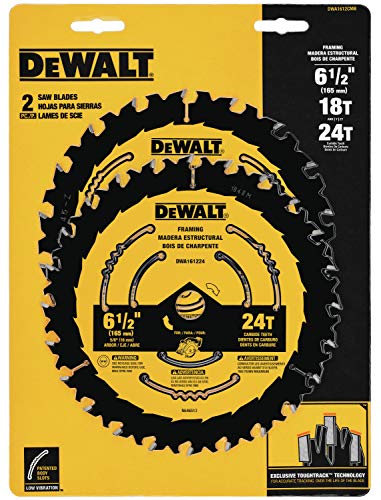
DEWALT Circular Saw Blade 6-1/2 Inch DWA1612CMB
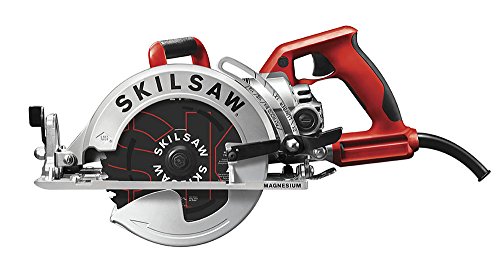
SKILSAW SPT77WML-01 Lightweight Worm Drive Saw

DEWALT Circular Saw Blade 7-1/4 Inch 60T DWA171460

Diablo Finish Trim Saw Blade 6-1/2 Inch 40T

Freud LU87R010 10 Inch Thin Kerf Rip Blade

Victorinox Ranger 79 M Grip Swiss Army Knife
What Each Pick Brings To The Table
Festool’s Panther blade is built for shop-precise cutting in solid wood, particle board, cement-bonded chipboard, hardboard, and plasterboard, making it a versatile panel-cutting companion. The 160 mm diameter pairs with a 20 mm bore, and depending on your saw’s spindle you may need a ring to step up to the common 30 mm arbors found elsewhere on the list. It runs cleanly on track saws and plunge saws from the same brand, where alignment matters as much as the cut itself.
For anyone outfitting a finish-focused workshop, this blade rewards slow, deliberate feed rates. Compared to the DEWALT DWA1612CMB up next, the Panther targets finer work rather than framing speed.
Positive Takeaways
- Engineered for clean cuts across multiple sheet goods, not just dimensional lumber
- Pairs naturally with track and plunge saws for guided, splinter-controlled results
- 20 mm bore fits Festool saws directly, simplifying blade swaps in that ecosystem
- Long tool life when paired with the matched saw’s lower-RPM plunge cuts
Practical Considerations
- The 20 mm bore means an adapter ring is required for most non-Festool saws
- Premium pricing puts it out of reach for casual weekend projects
- Resin and pitch buildup can shorten life if you skip periodic cleaning
Key Specs
Who Will Love This
Shop-based finish carpenters and cabinet builders working with sheet goods on a track or plunge saw.
Look Elsewhere When
Framers running 7-1/4 inch cordless circular saws should reach for the DEWALT DWA1612CMB instead.
The Diablo Finish blade at 7-1/4 inches with a 40-tooth ATB (Alternate Top Bevel) grind targets clean crosscuts in hardwood, softwood, and plywood. The 5/8 inch arbor fits standard corded and cordless circular saws, and 8000 RPM max gives you headroom on most 7-1/4 inch saws without approaching dangerous overspeed. ATB geometry shears wood fibers on each pass, which is why it leaves a noticeably cleaner edge than a framing blade.
For trim carpenters and remodelers, this is the everyday crosscut workhorse. It slots in next to the Festool Panther as a finish option, but on a standard circular saw rather than a track saw.
What It Does Well
- 40-tooth ATB grind leaves smoother edges on plywood and trim boards
- 5/8 inch arbor matches the most common 7-1/4 inch saw setups
- Carbide tooth formulation holds up across hardwood and softwood changes
- Coating reduces heat and pitch buildup during long rip runs
Worth Noting
- Not designed for nail-embedded lumber, so framing debris can chip teeth
- Thin kerf demands careful handling to avoid lateral blade deflection
- Resin cleanup with a dedicated blade cleaner extends life between sharpenings
Right Fit For
Remodelers and trim carpenters who need a reliable crosscut blade on a standard 7-1/4 inch circular saw.
Skip It When
Framers should grab the SKILSAW SPT77WML-01 worm drive saw setup, which tolerates tougher conditions.
The DWA1612CMB is a 6-1/2 inch blade purpose-built for compact circular saws, with an 18/24 tooth configuration that splits the difference between ripping and crosscutting. DEWALT designs the tooth geometry for straight, accurate cuts over the blade’s working life, and the thin kerf reduces the load on smaller cordless motors. That makes it a strong match for trim carpenters working overhead or for plumbers and electricians who cut dimensional lumber on the fly.
Against the Festool Panther and the Diablo 7-1/4 inch, this blade trades maximum cut depth for portability. On a 6-1/2 inch cordless saw, you lose roughly half an inch of depth per pass.
What Makes Sense
- Thin kerf keeps battery drain low on cordless circular saws
- Tooth pattern handles both framing and trimming without blade swaps
- Body slots cut vibration, which improves accuracy on long cuts
- Tungsten carbide tips resist wear from occasional hidden nails
Some Limits To Know
- Lower tooth count means rougher plywood edges than a 40T blade
- Smaller diameter limits depth of cut on standard 2x lumber
- Carbide edges can chip if you push into knots or pressure-treated lumber
Key Specs
Whose Shelf It Belongs On
Tradespeople running compact cordless saws who need one blade for framing and trim.
A Better Fit Elsewhere
Cabinetmakers chasing clean plywood edges will get more from the DEWALT DWA171460 60-tooth blade.
The SPT77WML-01 is technically a saw rather than a standalone blade, but the worm drive platform dictates the kind of blade that thrives on it. At 15 amps and 7-1/4 inches, it pairs naturally with heavy-duty framing and ripping blades that need sustained torque. The magnesium housing keeps weight near 11.5 lbs, which matters on long framing runs where a heavier saw punishes your wrist.
Worm drive gearing pushes the blade through dense lumber at lower RPM, which is the trade-off for the saw’s distinctive front-heavy balance. If you mostly crosscut plywood, a direct-drive saw with a Diablo 40T will be a calmer experience.
A Favorable Mix
- Worm drive torque handles wet lumber and dense framing stock
- Magnesium body trims weight without sacrificing housing strength
- 15 amp motor sustains cuts through thick dimensional lumber
- Long-standing SKILSAW reputation for jobsite durability
Trade Offs
- Heavier balance than a direct-drive saw tires out overhead users faster
- Worm drive gearing requires periodic oil checks for long service life
- Higher cost than equivalent direct-drive circular saws in this size
Made For
Production framers and remodelers who lean on brute torque for tough rip cuts.
Reach For A Different Pick When
Hobbyists cutting mostly trim should pick the Diablo 6-1/2 inch trim blade on a lighter cordless saw.
At 7-1/4 inches and 60 teeth, the DWA171460 sits at the fine-finish end of the circular saw blade range. The high tooth count produces a polished edge on plywood, melamine, and hardwood trim, and the high-density tungsten carbide tips resist wear across long production runs. A tough coat anti-stick layer reduces friction and pitch accumulation, which is what lets the blade keep cutting cool even when you’re pushing feed rates.
Compared to the 40T Diablo reviewed earlier, the trade is speed for finish. Ripping thick lumber feels slower here, but the edge quality on sheet goods is the payoff.
A Few Strong Suits
- 60 teeth deliver near-sanded edges on hardwood plywood
- Anti-stick coating keeps the plate clean through melamine and MDF cuts
- Tungsten carbide tips hold an edge across long production days
- Reinforced shoulder absorbs minor impact without tooth loss
Soft Spots
- Slows noticeably on heavy ripping compared to a 24-tooth framing blade
- Tooth geometry is wrong for anything containing hidden fasteners
- Premium carbide pushes the cost above basic blades in this size
Quick Facts
Who Should Grab It
Cabinetmakers and finish carpenters who want minimal sanding after crosscutting plywood or hardwood.
Where Another Pick Shines
Production framers who prioritize cut speed should reach for the DEWALT DWA1612CMB instead.
The Diablo 6-1/2 inch trim blade pairs 40 teeth with an ultra-thin kerf design, which is the sweet spot for cordless trim saws. The thin kerf reduces the cut’s footprint, so smaller saws bog down less, and the 5/8 inch arbor matches the common cordless trim saw standard. Built-in stabilizer vents reduce vibration, which matters when you’re sighting down a baseboard or casing cut.
It occupies similar real estate to the DEWALT DWA1612CMB, but with twice the tooth count. That shift from framing to finish is the whole reason to pick one over the other.
Points In Its Favor
- 40 teeth at this diameter leave near-finish edges on casing and baseboard
- Thin kerf keeps battery drain manageable on cordless trim saws
- Carbide formulation extends life across soft and hard trim species
- Stabilizer vents reduce the wandering common to small-diameter blades
Honest Caveats
- Not suited for rough framing or anything with embedded fasteners
- Thin plate can flex under heavy lateral pressure from a misaligned saw
- Limited depth of cut restricts use on standard 2x lumber
Feature Snapshot
Best Suited To
Trim carpenters and remodelers running cordless trim saws for baseboard, casing, and fine crosscuts.
Not Your Match When
Cabinetmakers cutting large plywood sheets will be happier with the DEWALT DWA171460 60T on a full-size saw.
The Freud LU87R010 is a 10 inch table saw blade built around ripping solid lumber, with a thin kerf that wastes less material and demands less feed effort. The 20 degree hook angle, paired with a flat grind, drives the blade forward with minimal operator force, which is exactly what you want for long rip passes. The Perma-Shield coating cuts down on resin drag and corrosion between work sessions.
Unlike the circular saw blades earlier in the list, this is a stationary tool accessory. Treat it as the workshop companion to a portable trim setup, not a replacement for one.
Real-World Strengths
- Thin kerf extracts more usable board from each piece of rough lumber
- Aggressive 20 degree hook angle feeds easily on a contractor or cabinet saw
- Perma-Shield coating extends life by repelling pitch and corrosion
- Designed specifically for ripping rather than a compromise tooth count
Where It May Fall Short
- Hook angle and tooth count make crosscuts rougher than a finish blade
- 10 inch size requires a full-size table saw, not a jobsite cordless tool
- Teeth can chip if you accidentally hit a hidden screw or nail in reclaimed stock
Feature Snapshot
Who It Suits Best
Woodworkers running a 10 inch table saw for production ripping of solid hardwood and softwood.
Swap It Out When
Jobsite workers without a stationary saw should grab the DEWALT DWA1612CMB for portable ripping needs.
The Ranger 79 M Grip is a 12-function folding knife that includes a wood saw alongside blades, screwdrivers, and a corkscrew. It’s not a skill saw blade, but it earns a place on this list because every woodworker needs a hand saw for layout, trim tweaks, and the occasional cut where a powered saw would be overkill. The textured grip helps when your hands are dusty or gloved.
It pairs well with any of the larger blades above, since you can’t always bring a circular saw onto a finished surface. Against a powered blade, the trade is reach and speed for portability and zero setup time.
The Upside
- 12 functions cover layout, marking, and small cuts in one tool
- Pocketable form factor keeps it on you through every phase of a project
- Wood saw handles small trim notches that a circular saw can’t reach
- Textured grip stays secure with dusty or gloved hands
Points To Keep In Mind
- Hand saw blade is for small cuts only, not dimensional lumber
- Folding tools need occasional lubrication to keep joints smooth
- Multi-tool ownership means more parts to keep track of on a busy site
Perfect Match For
Carpenters who want a backup cutting tool in their pocket for layout and small jobsite adjustments.
Consider Something Else When
Anyone needing true panel-cutting precision should rely on the Festool Panther or the DEWALT 60T blade instead.
Choosing The Right Skill Saw Blades For Your Work
The most useful distinction in this category is between blades designed for ripping and blades designed for crosscutting. Ripping blades use fewer, more aggressive teeth with a steep hook angle (the angle of the tooth face relative to the cut direction) to drive through grain with minimal force. Crosscutting blades use more teeth, often with an ATB grind, to slice cleanly across grain fibers. Trying to do both with one blade means compromising on both, which is why most professionals own a small set rather than a single do-it-all option.
Diameter and arbor size matter as much as tooth count. A 7-1/4 inch blade with a 5/8 inch arbor is the workhorse standard for corded circular saws, while 6-1/2 inch blades fit compact cordless models and trim saws. Track saws and plunge saws often use metric 160 mm or 165 mm blades with 20 mm bores, which is why an adapter ring is sometimes necessary. Buying a blade your saw cannot mount is a common and preventable mistake.
Tooth material and coatings shape long-term ownership. Carbide-tipped teeth last far longer than steel, and premium blades use high-density tungsten carbide for production runs. Anti-stick coatings reduce resin buildup, which is what dulls teeth fastest in softwoods like pine. If you cut mostly clean lumber, basic carbide is enough. If you push daily feed rates through wet or resinous wood, a coated blade earns its keep within a season.
Tooth Count As A Practical Guide
Lower tooth counts (18 to 24) move material fast and tolerate rough conditions, which is why they show up on framing blades. Mid-range options (around 40) handle trim and general-purpose cuts without major compromises. High tooth counts (60 and up) deliver near-finish edges that minimize sanding, at the cost of slower feed rates and reduced tolerance for hidden fasteners. Match the count to the material, not the other way around.
Matching The Blade To The Saw
Cordless saws benefit from thin-kerf blades that reduce battery drain. Corded saws and table saws can use thicker kerf options without penalty, and those thicker plates tend to be more stable. Worm drive saws pair naturally with heavy-duty framing blades because the gearing produces high torque at lower RPM. Mismatching a finish blade to a worm drive wastes the saw’s capability, and matching a framing blade to a delicate trim saw produces ragged results.
What Most Shoppers Overlook Before Buying
Pitfalls Shoppers Hit
The most common error is grabbing a blade based on tooth count alone, without checking the hook angle and intended application. A 40-tooth blade designed for ripping behaves nothing like a 40-tooth blade designed for crosscutting. Equally common is buying a thin-kerf finish blade and pushing it into framing lumber, which chips teeth and shortens life. Always match the blade’s stated purpose to your most frequent cut, not your occasional one.
Where The Extra Money Goes
Premium blades cost more because of carbide grade, plate tensioning, and coatings. Those features show up as longer edge life, fewer sharpenings, and cleaner cuts under sustained feed. For a homeowner running a few weekend projects, the savings rarely justify the cost. For a contractor feeding lumber through a saw daily, a premium blade often pays for itself inside a single job by reducing downtime. The honest read is that the upgrade is worth it when blade changes or finish quality directly affect your billable output.
Frequently Asked Questions
What Tooth Count Works Best For General Purpose Cutting?
A 40-tooth ATB blade is the most versatile middle ground, handling both crosscuts and lighter rips on a standard 7-1/4 inch saw without major compromises. For dedicated ripping or finish work, stepping up or down from there makes more sense.
Can One Blade Handle Both Plywood And Dimensional Lumber?
A mid-range blade will get through both, but the cut quality on plywood will be rougher than a dedicated finish blade. Many woodworkers keep two blades on hand rather than forcing one to do everything.
How Often Should Skill Saw Blades Be Replaced?
Replacement timing depends on the material and frequency of use, not a fixed interval. Watch for increased motor effort, ragged edges, and visible tooth damage as the signs that a swap is overdue. Cleaning pitch buildup with a dedicated blade cleaner extends the working life between replacements.
Does Arbor Size Vary Between Skill Saw Blades?
Yes, and matching it to your saw is essential. Common arbors include 5/8 inch for standard circular saws, 20 mm for many track and plunge saws, and 1 inch for some table saws. Adapters exist for some combinations but are not universal.
Are Coated Blades Worth The Higher Cost?
Coated blades resist heat and resin, which directly extends edge life in softwoods and plywood. For occasional use, the cost premium is hard to justify, but for daily cutting, the extended life usually pays back the difference.




