


Slab work rewards patience and the right cutter. A good flattening bit chews through twisted, rough-sawn lumber and leaves a surface that sandpaper barely has to fix, while a poor one chatters, leaves ridges, and chews through your tooling budget. The picks below lean into that difference, covering budget starter sets, dedicated spoilboard cutters for CNC owners, and precision chamfer bits for finishing edges. Whether you build live-edge tables on a hobby CNC or just want clean, jointed edges on solid wood, the goal here is matching cutter geometry to the work you actually do.
A Side-By-Side Look

IDC Woodcraft 9-Piece CNC Router Bit Set with 1/4-inch Shank

Freud 40-098: 1″ Chamfer Bit with 1/2″ Shank

Whiteside 6220 CNC Spoilboard Surfacing Router Bit, 1/2″ Shank

BINSTAK CNC Spoilboard Surfacing Router Bit 1/4″ Shank, 1-3/8″ Cut

BINSTAK CNC Spoilboard Surfacing Router Bit 1/2″ Shank, 3″ Cut
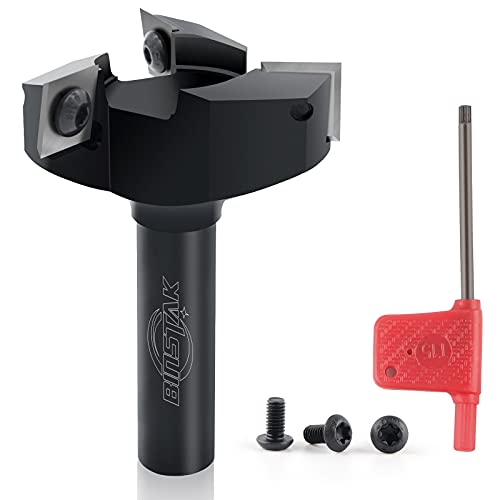
BINSTAK CNC Spoilboard Surfacing Router Bit 1/2″ Shank, 2″ Cut

Freud 40-101: 1-1/4″ Chamfer Bit with 1/2″ Shank
A Deeper Look At The Lineup
The IDC Woodcraft 9-piece kit lands as a sensible first step into CNC routing, bundling profile, V-bit, and surfacing cutters into one box so you don’t have to chase compatible tooling one piece at a time. The set ships with a 1/4-inch shank across most bits and includes reducing collets, which broadens spindle compatibility on entry-level machines that may not accept every shank size. It reads as a “learn the workflow” kit: enough variety to try sign carving, edging, and light slab work before committing to specialty tooling.
Compared to the dedicated surfacing picks later in this lineup, the IDC kit trades raw cut width and replaceable-insert economics for breadth. The included surfacing bit is a single-cutter design, so passes feel less aggressive than the multi-wing BINSTAK options, but the trade-off is simpler setup and easier learning curves for newcomers.
Useful Highlights
- Broad bit variety covers sign making, edge work, and basic surfacing in a single purchase
- Reducing collets expand the kit’s fit across smaller hobby CNC spindles
- Solid carbide construction holds up under repeated sign-carving sessions on plywood and soft hardwoods
- Lower entry cost than buying individual specialty bits one at a time
- Good way to test which cutter shapes you actually use before upgrading
Worth Noting
- The bundled surfacing bit is a single-wing design, so flattening wide slabs takes more passes than the 2+2 BINSTAK options covered later
- Carbide edges, while durable, are not user-replaceable, so dulling means a full bit swap rather than a fresh insert
- Owners commonly report that the included V-bits work well for detail but feel light for heavy stock removal
Quick Facts
Best Suited To
First-time CNC owners who want a versatile starter set rather than a single-purpose cutter.
Reach For A Different Pick When
You mostly flatten large slabs on a full-size CNC: the Whiteside 6220 surfacing bit or the BINSTAK 3-inch cutter will move material noticeably faster.
Chamfer bits don’t flatten slabs, but they finish them, and the Freud 40-098 is a textbook example of why that finishing step matters. The 1-inch cutter diameter with a 1/2-inch shank (the cylindrical shaft that locks into your router’s collet) gives you the rigidity to push through hardwoods without the chatter you get from skinnier bits. It uses Freud’s TiCo Hi-Density Carbide, which the manufacturer specifically designs for long edge life across hardwoods, softwoods, and plywood.
The 1-inch size is a practical sweet spot for joinery, where you want enough chamfer to break a sharp edge without eating into your glue surface. Compared to the larger Freud 40-101 covered later, this is the everyday version: easier to control on small parts and lighter on the router.
A Few Highlights
- TiCo Hi-Density Carbide is built for sustained edge retention across wood species
- 1/2-inch shank reduces deflection (sideways flexing) compared to common 1/4-inch chamfer bits
- 1-inch diameter suits most joinery without over-cutting the mating surface
- Works on hardwoods, softwoods, plywood, and composite boards without bit swap
Trade Offs
- Not a surfacing or flattening tool, so it complements rather than replaces the slab cutter picks on this list
- 1/2-inch shank requires a router or trim router that accepts that size
Whose Shelf It Belongs On
Woodworkers who want a reliable, repeatable chamfer on joinery and edge-easing tasks without burning through bits every few projects.
Consider Something Else When
You want a wider decorative chamfer for furniture edges: the Freud 40-101’s 1-1/4-inch diameter will give you a more visible profile.
Whiteside built its name on tight tolerances, and the 6220 surfacing bit is exactly the kind of tool a serious CNC shop reaches for. It features a 2-inch cut diameter, 1/2-inch cutting length, and four wings on a 1/2-inch shank, all spec’d for use with a 1/2-inch collet (the sleeve that grips the shank inside the spindle). That four-wing layout means more cutting edges hit the spoilboard per pass, which smooths the finish and shortens the time your machine spends tramming, or leveling, the work surface.
It is a dedicated spoilboard cutter, not a slab planer, so you run it across the sacrificial MDF (medium-density fiberboard) layer beneath your stock rather than across hardwood directly. For shops that flatten that MDF layer weekly, that trade is the whole point: predictable finish, repeatable results.
The Value In It
- 2-inch cut diameter covers the spoilboard quickly, reducing overall surfacing time
- Four-wing design spreads cuts across more edges for a smoother finish than single-wing economy bits
- 1/2-inch shank fits standard CNC spindles and reduces chatter on long passes
- Carbide-tipped construction extends service life across frequent shop use
Small Caveats
- Built for spoilboard work, so it isn’t the right tool for flattening thick hardwood slabs directly
- Requires a 1/2-inch collet, which not every hobby CNC includes out of the box
Feature Snapshot
The Right Fit
Shop owners and serious hobbyists who regularly re-surface their CNC’s spoilboard and want a smooth, predictable base for vacuum hold-down.
Look Elsewhere When
You flatten big, rough hardwood slabs directly: the BINSTAK 3-inch cutter with replaceable inserts is a better fit for that work.
Most small CNCs run 1/4-inch collets, so a 1/2-inch surfacing bit is a non-starter. The BINSTAK 1/4-inch shank cutter solves that with a 1-3/8-inch cut diameter and a 2+2 insert design, meaning two upcut and two downcut flutes (the spiral channels that evacuate chips) arranged for a balanced cut and smoother surface. It is the smallest surfacing bit on this list, and that is the point: you trade width for compatibility with the hobby machines that most people actually own.
Compared to the wider BINSTAK 3-inch option, this 1-3/8-inch cutter requires more passes to clear a large spoilboard, but the anti-kickback steel body and four-blade insert setup keep things stable as you work.
Real Benefits
- 1/4-inch shank fits the collets that ship with most hobby CNC routers
- 2+2 insert layout balances the cut, which helps reduce vibration and chatter on lighter machines
- 12mm square carbide inserts can be rotated to expose a fresh edge, extending tool life
- Anti-kickback design adds a margin of safety on aggressive passes
Possible Compromises
- 1-3/8-inch cut means more passes than the wider BINSTAK and Whiteside surfacing options
- Smaller diameter can leave slightly more noticeable step-over ridges on softer MDF
Quick Technical Notes
Who Should Grab It
Hobby CNC owners with 1/4-inch collet routers who want a real surfacing bit rather than a budget single-cutter.
Skip It When
You run a 1/2-inch collet spindle and want to clear large surfaces fast: the BINSTAK 3-inch cutter is the heavier hitter.
The widest surfacing bit on this list, the BINSTAK 3-inch cutter, is built for shops that flatten large spoilboards or rough-sawn slabs in serious volume. A 1/2-inch shank, 3-inch cut diameter, and the same 2+2 carbide insert setup as the smaller BINSTAK model mean you cover ground quickly without sacrificing balance. Each 12mm insert is four-sided, so a single rotation exposes a fresh edge and keeps the tool working longer between replacements.
This is the bit you grab when a 2-inch Whiteside still feels too slow. The trade is rigidity: a 3-inch cut puts more load on the spindle, so it really needs a machine with the horsepower and rigidity to handle it.
Noteworthy Benefits
- 3-inch cut diameter cuts spoilboard surfacing time roughly in half versus 2-inch bits
- Four-sided carbide inserts rotate to a fresh edge, lowering long-term tooling cost
- 2+2 flute design keeps the cut balanced for smoother finishes at higher feed rates
- Anti-kickback body design reduces bite risk on uneven spoilboard surfaces
Points To Keep In Mind
- Demands a 1/2-inch collet spindle with enough torque to drive a 3-inch cut
- Wider contact area amplifies any spindle runout, so machine health matters more here than with smaller bits
- Insert screws can loosen after heavy use, so a torque check before big jobs is wise
Technical Highlights
Made For
Shops with 1/2-inch collet CNCs that flatten large spoilboards or thick hardwood slabs on a regular basis.
A Better Fit Elsewhere
You run a lighter 1/4-inch collet machine: the smaller BINSTAK 1-3/8-inch surfacing bit is built for that hardware.
The 2-inch BINSTAK surfacing bit sits right in the middle of the lineup, and for most CNC owners that turns out to be exactly where the value lives. It uses a three-wing insert layout on a 1/2-inch shank, with the same 12mm four-sided carbide inserts shared across the BINSTAK family. That shared insert spec is quietly useful: you can stock one type of blade and use it across multiple BINSTAK cutters.
It feels less aggressive than the 3-inch version but more capable than the 1-3/8-inch option, which is the practical sweet spot for hobby and prosumer machines that don’t have the muscle to push a wide cut every session.
Advantages To Know
- 2-inch cut diameter balances speed and control on most mid-size CNCs
- Three-wing design spreads wear across more inserts, extending service intervals
- Anti-kickback body geometry adds a margin of safety on uneven MDF surfaces
- Shares 12mm insert spec with the wider BINSTAK cutter, simplifying spare-part inventory
A Few Limitations
- Not as wide as the BINSTAK 3-inch option, so very large spoilboards take more passes
- Three-wing layout leaves slightly more visible scallop (the gentle wave between cuts) than the four-wing Whiteside 6220 in the same width class
Who Will Love This
CNC owners who want a versatile 1/2-inch surfacing bit for both spoilboard cleanup and moderate slab work without overcommitting to a 3-inch cutter.
Where A Sibling Pick Shines
You want maximum surface speed: the BINSTAK 3-inch cutter flattens wide areas noticeably faster on a machine with the torque to drive it.
The Freud 40-101 is the bigger sibling of the 40-098, with a 1-1/4-inch diameter that lays down a more visible chamfer on the same 1/2-inch shank. The wider cut makes a real difference on furniture edges, picture frames, and multi-sided boxes where the chamfer becomes a design feature rather than just a softened corner. It uses the same TiCo Hi-Density Carbide formulation Freud builds into its premium edge-treatment tooling.
Compared to the 1-inch Freud earlier, this one eats more material per pass, so you may find yourself running shallower depth-of-cut settings to keep the edge clean on figured hardwoods.
What Helps Most
- 1-1/4-inch diameter creates a more pronounced, decorative chamfer that reads from across the room
- TiCo Hi-Density Carbide is engineered for edge life on hardwoods, softwoods, plywood, and composites
- 1/2-inch shank resists deflection on long edge runs where a thinner shank would chatter
- Pairs well with the smaller Freud 40-098 if you want both standard and wide chamfer profiles
Less Ideal Details
- Larger diameter means more bite per pass, so shallow cuts on figured wood need careful feed control
- Not a substitute for a surfacing or flattening bit: this is finishing-stage tooling
Key Attributes
Perfect Match For
Woodworkers building furniture, boxes, and decorative trim where the chamfer itself is part of the visual design.
Swap It Out When
You mostly need a subtle, functional edge break rather than a decorative profile: the smaller Freud 40-098 is the better everyday choice.
What To Weigh Before Buying Slab Flattening Router Bits
Shank Size And Spindle Match
Start with what your machine actually accepts. Most hobby CNCs come with 1/4-inch collets, while full-size routers and shop CNCs typically run 1/2-inch. Buying a great bit that doesn’t fit your spindle is the most common waste of money in this category, so verify collet size before diameter, insert style, or anything else. A reducer sleeve is sometimes an option, but the safest setup is a direct shank fit.
Cut Diameter And Pass Strategy
Cut diameter is essentially your “lane width” across the spoilboard or slab. A 1-3/8-inch bit covers ground slowly but stays controllable on light machines, while a 3-inch bit clears wide surfaces fast but needs spindle power and rigidity. Match the diameter to the size of the work you actually flatten most often, rather than sizing up because the wider bit looks more impressive.
Insert Design And Long-Term Cost
Replaceable carbide inserts turn a surfacing bit from a consumable into a long-term tool. Four-sided 12mm inserts can be rotated to a fresh edge, so you replace the blade, not the whole bit. Single-piece carbide bits can cut beautifully, but once they dull, the whole tool goes. For shop use, insert-style bits usually pencil out cheaper over time.
Cutter Type: Surfacing vs. Chamfer
These two bit families solve different problems. Surfacing and slab flattening bits plane large flat areas. Chamfer bits break or decorate edges. Many woodworkers end up owning both, because the surfacing bit gets the slab flat and the chamfer bit finishes the edges you’ll actually see. Decide which task you’ll do first, then choose the cutter type that matches.
Key Considerations Across These Picks
Common Buying Traps
A common slip is chasing the widest cut diameter on the shelf without checking whether the spindle can drive it. A 3-inch bit on a 1/4-inch collet router is a recipe for chatter and stalled cuts. Another is buying single-piece carbide bits for daily shop surfacing, only to discover that insert-style cutters save real money once you start flattening weekly. Always confirm shank size, spindle power, and bit type before adding to cart.
Where The Extra Money Goes
Premium bits earn their higher cost in two places: carbide grade and machining tolerance. TiCo and similarly dense carbides stay sharp through more board feet, while tighter runout specs mean smoother finishes and less sanding. For occasional hobby use, mid-tier bits can be plenty. For daily shop work, the upgrade usually pays off in tooling life and finish quality.




