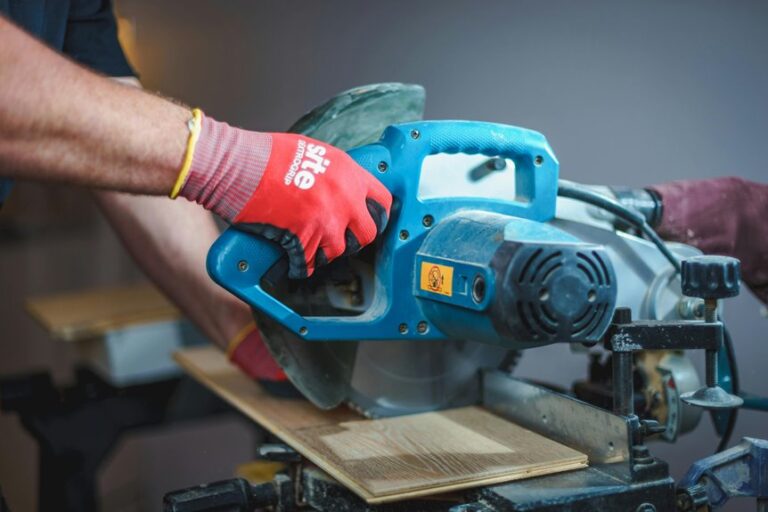
A sliding compound miter saw is the kind of tool that quietly changes how you build. Trim carpenters reach for one to slice crown molding at speed. Weekend woodworkers pull it out for picture frames, deck builds, and the occasional DIY bookshelf. Choosing the right one comes down to blade size, bevel range, portability, and how much horizontal slide you need for wider stock. This roundup breaks down eight workhorse options covering everything from a cordless compact to a heavy-duty pro setup, so you can match the saw to your shop or jobsite without second-guessing.
A Snapshot Of The Selections

DEWALT 12-in. Miter Saw and Work Stand Bundle (DWS715 + DWX725B)

DEWALT 12-Inch Miter Saw, 15-Amp, Single Bevel, Compound (DWS715)

DEWALT 12-inch Double Bevel Sliding Compound Miter Saw with XPS LED (DWS780)

DEWALT Single Bevel, Compound, 10-Inch, 15-Amp (DWS713)

DEWALT 12-Inch, Double Bevel, Compound, XPS Cutline, 15-Amp (DWS716XPS)

Milwaukee 2733-20 M18 Fuel 7-1/4″ Dual Bevel Sliding Compound Miter Saw

Makita LS1040 10″ Compound Miter Saw

Makita XSL05Z 18V LXT Brushless 6-1/2″ Compact Dual-Bevel Compound Miter Saw
Trimmers who load up a van every morning know the headache of hauling a heavy saw plus a separate stand. This bundle pairs the 12-inch DWS715 compound miter saw with the DWX725B rolling stand, solving that problem in one purchase. The saw delivers a 15-amp motor with a 4,000-rpm blade speed, and the stand carries up to 1,000 pounds per side, so you can stage long boards without racking the work area.
Set-up is straightforward: the mounting brackets let the saw lock into place, and the stand folds flat for transport. For remodelers running between job sites, that portability is the real story.
Everyday Advantages
- 14 positive detent stops and a stainless-steel miter plate for repeatable angle settings
- 5-1/2-inch vertical fence clearance handles most base molding in a single pass
- Machined base fence support keeps the cut line steady on longer stock
- Stand supports 1,000 lbs per side, plenty for trim, lumber, and sheet goods
- Folding design fits in a van or truck bed without taking up the whole cargo area
Things To Consider
- Single-bevel design means you flip the workpiece for opposing angles, which slows repetitive cuts
- Dust collection relies on a basic port, so expect some sweep-up after extended runs
Made For
Mobile trim carpenters and remodelers who want a saw and stand in a single haul.
Consider Something Else When
The DEWALT DWS780 suits finish carpenters who need double-bevel convenience and a shadow-cutline system.
The DWS715 has earned its place as a go-to for serious DIYers and pros who want a no-nonsense compound saw. A 15-amp motor drives the 12-inch blade at 4,000 rpm, and the cam-lock miter system with a stainless-steel detent plate delivers repeatable accuracy across the most common angles. Tall sliding fences support 5-1/2 inches of base molding vertically and the same in nested crown.
Compare that to the cordless picks later in the list, and you trade portability for raw cutting power and a more rigid footprint. The 51-pound weight stays manageable for a dedicated shop station.
Where It Excels
- 14 detent stops for quick, accurate angle changes without eyeballing
- Stainless-steel detent plate resists wear over years of use
- Cam-lock miter mechanism adjusts with one hand
- Carries enough crown and base capacity for typical residential trim
Worth Noting
- Single-bevel means flipping the workpiece for opposing miter cuts
- No laser or shadow line out of the box, so you’ll mark cuts manually
Key Specs
Right Fit For
Garage woodworkers and contractors who want proven accuracy without stepping up to a sliding model.
Look Elsewhere When
The DEWALT DWS780 fits users cutting wider boards who need a sliding rail and double-bevel design.
The DWS780 sits at the top of the DEWALT miter saw lineup for good reason. A 15-amp motor producing 3,800 rpm handles heavy stock, and the integrated XPS LED projects a shadow-cutline onto the workpiece, replacing the older laser-style indicators. The sliding rail extends the cut capacity significantly, so a 12-inch blade can chew through 4x4s and wide boards that would stop a standard compound saw in its tracks.
Double-bevel means you can tilt the head left or right without flipping the board, a real time-saver on crown molding runs. This is the saw finish carpenters reach for when accuracy and speed both matter.
Reasons It Performs
- XPS LED shadow line gives a clear, adjustment-free cut indicator
- Double-bevel design eliminates flipping the workpiece for opposing angles
- Sliding rails extend cut capacity for wider dimensional lumber
- 15-amp motor handles dense hardwoods and thick trim
Trade Offs
- Heavier than the DWS715, so it’s better suited to a fixed shop location
- Higher price tag than the basic 12-inch compound models
Feature Snapshot
Who It Suits Best
Finish carpenters and cabinet builders who prioritize cut precision on premium trim work.
Not Your Match When
The Makita XSL05Z suits remodelers working in finished spaces who want a lightweight cordless saw instead.
The 10-inch DWS713 trades the larger 12-inch blade of its bigger brothers for a lighter, more portable footprint. The 15-amp motor spins the smaller blade faster, hitting 5,000 rpm, which actually delivers cleaner cuts in thinner trim. The built-in carry handle makes it easy to grab and go, and at roughly 37 pounds it’s noticeably easier to move around than the DWS780.
What you give up is cutting depth and the sliding rail. For trim work, picture frames, and smaller lumber, that’s a fair swap. The same stainless-steel detent plate and tall sliding fence design show up here, scaled down to handle 4-1/2-inch crown molding nested.
What Earns Its Place
- 5,000 rpm blade speed keeps cuts clean in softwoods and trim
- Built-in carry handle supports one-handed transport
- Stainless-steel detent plate with turn-knob lock for repeatable accuracy
- Lighter than 12-inch options, easier for solo movers
Room For Improvement
- 10-inch blade limits maximum cutting depth and capacity
- Single-bevel design adds steps for opposing angle cuts
Quick Facts
Best Suited To
Job-site framers and trim carpenters who need a lighter 10-inch saw with reliable accuracy.
Skip It When
The DEWALT DWS716XPS fits users cutting taller baseboards or larger crown profiles regularly.
If you’ve ever fought to fit a tall baseboard under the fence, the DWS716XPS solves that problem. The tall sliding fences support 6-1/2 inches of base molding vertically and 6-5/8 inches of crown molding nested, more capacity than the DWS715. The 15-amp motor produces 3,800 rpm, and the 14 detent stops with cam-lock miter system keep your angle settings locked in.
The XPS cutline system projects a shadow indicator on the workpiece, no laser batteries to replace. Double-bevel design means you tilt the head for opposing miter cuts without flipping the board, a real time-saver on long crown runs.
Advantages To Know
- 6-1/2-inch base capacity handles tall baseboard in a single pass
- 6-5/8-inch nested crown capacity covers oversized profiles
- XPS cutline system needs no battery swaps or recalibration
- Double-bevel design for efficient production work
Honest Caveats
- Heavier than the single-bevel models, so it tends to live in one place
- Higher price than the 10-inch DWS713
Key Product Details
Perfect Match For
Crown and baseboard specialists who need maximum vertical capacity and double-bevel convenience.
Swap It Out When
The DEWALT DWS780 is a better fit for those who also need sliding rails for wider stock on top of double-bevel capacity.
The Milwaukee 2733-20 strips away the cord and the outlet hunt. The M18 Fuel platform uses a brushless motor paired with an M18 Red Lithium XC5.0 battery to deliver over 600 cuts per charge, enough to get through a long workday without swapping packs. At 28 pounds with battery, it’s lighter than any corded 12-inch saw on this list.
The 7-1/4-inch blade is smaller, so depth and crosscut capacity take a step down, but dual bevel and sliding rails keep the versatility intact. For remodelers working in finished homes, the lack of extension cords and surge protectors is a real perk.
What Pays Off
- Over 600 cuts per charge with the XC5.0 battery
- 28-pound weight makes it one of the lightest sliding models available
- Brushless motor for long-term durability and efficiency
- Dual bevel and sliding rails retain full functionality without a cord
Points To Keep In Mind
- 7-1/4-inch blade limits max crosscut and depth compared to 10- or 12-inch saws
- Battery and charger are sold separately, adding to total cost
Who Will Love This
Remodelers and finish carpenters working in spaces where running power isn’t practical.
A Better Fit Elsewhere
The DEWALT DWS780 is the right call for shop-based work where corded power and a 12-inch blade matter more than portability.
The Makita LS1040 has been around long enough to earn a reputation for plain reliability. The 15-amp direct-drive motor produces 4,600 rpm, and the dual-post compound pivoting arm keeps the head rigid under load. Miter cuts range from 0 to 45 degrees left and 0 to 52 degrees right, with positive stops at common angles.
What it lacks in modern features it makes up for in straightforward design. No laser, no sliding rail, no shadow line, just a sturdy workhorse for hobby shops and weekend projects. For many home carpenters, that’s the right tool for the job.
Strong Points
- 15-amp direct-drive motor with 4,600 rpm cutting speed
- Dual-post pivoting arm keeps cuts accurate and consistent
- Positive miter stops at nine common angles for quick setup
- 52-degree miter range to the right covers angled trim work
Less Ideal Details
- No sliding rail means limited crosscut on wider stock
- No laser or shadow line indicator, so cuts are marked manually
Built With In Mind
Hobbyists and homeowners who want a no-frills miter saw that simply works for typical DIY projects.
Reach For A Different Pick When
The DEWALT DWS713 is a better fit for those wanting a 10-inch saw with a carry handle and slightly higher rpm.
The XSL05Z is the lightest miter saw in this roundup, weighing just 14.6 pounds with a battery. It’s a true trim-cutting specialist: the 6-1/2-inch blade is small, but the dual-bevel design and integrated laser make accurate angle work easy in tight spaces. The brushless motor extends runtime and tool life, and the cordless platform means you can set up on a countertop or workbench without hunting for an outlet.
There’s a clear trade-off, though. The 6-1/2-inch blade won’t cut through 4x4s or wide baseboards, so this saw handles finish work, not framing. The tool-only listing means battery and charger come separately.
A Favorable Mix
- 14.6-pound total weight fits on countertops and small workbenches
- Brushless motor for longer runtime and durability
- Laser line indicator speeds up repetitive trim cuts
- Dual-bevel design without flipping the workpiece
Possible Compromises
- 6-1/2-inch blade limits cutting depth, not suited for framing lumber
- Battery and charger sold separately, raising the total investment
Feature Card
Whose Shelf It Belongs On
Finish carpenters and remodelers who need a cordless trim saw for tight spaces and countertop work.
Where A Sibling Pick Shines
The Milwaukee 2733-20 suits those wanting a larger 7-1/4-inch cordless saw with sliding rails for more capacity.
## Choosing The Right Sliding Compound Miter Saw For Your Shop Blade size drives the experience more than any other spec. A 12-inch blade cuts deeper and wider, but a 10-inch saw spins faster, weighs less, and handles trim with cleaner edges. Cordless options in the 6-1/2 to 7-1/4-inch range trade capacity for portability, which matters on remodel jobs where outlets are scarce. ### Blade Size And Cutting Capacity The jump from 10 to 12 inches is the most common crossroads. Twelve-inch saws handle wider baseboards and thicker stock in one pass, and the sliding rail extends that further on dual-bevel models. Ten-inch saws like the DWS713 and Makita LS1040 are lighter and easier to move, which carpenters on ladders appreciate. If you only cut trim and small lumber, a 10-inch saw often feels nimbler in daily use. ### Bevel And Miter Range Single-bevel saws tilt one direction, requiring you to flip the workpiece for opposing angles. Double-bevel or dual-bevel saws tilt both ways, saving real time on crown molding runs. A wider miter range (52 degrees on the Makita LS1040, for example) helps on angled trim work and non-standard corners. ### Corded Versus Cordless Corded 12-inch saws deliver consistent power and unlimited runtime. Cordless saws like the Milwaukee 2733-20 and Makita XSL05Z trade some capacity for the freedom to set up anywhere. For shop-based work, corded wins. For jobsite or remodel work without reliable power, cordless pays for itself in setup speed. ### Weight, Portability, And Stand Saw weight affects how often you actually move it. Anything over 50 pounds tends to live in one spot, while saws under 30 pounds get used more. Pairing a saw with a rolling stand like the DWX725B extends that portability, and a 1,000-lb-per-side capacity handles long stock without a helper. ## Smart Considerations Before You Commit ### Where Shoppers Go Wrong The most common mistake is buying a 12-inch saw for work that calls for a lighter 10-inch, or vice versa. Bigger isn’t always better, and a heavy saw that lives in the corner because it’s too much hassle to move is wasted money. Another misstep is overlooking bevel direction: a single-bevel saw slows you down on crown runs where you’d otherwise flip the workpiece. Also, forgetting to budget for a stand, blade upgrades, or a cordless battery (when buying tool-only) adds up fast at checkout. ### When Paying More Pays Off The jump from a basic compound saw to a sliding dual-bevel model with XPS cutline brings real productivity gains. Shadow indicators, taller fences, and sliding rails reduce setup time and cut errors on finish work. For occasional DIY, a budget saw handles the job. For daily production, the premium saws pay back the difference in saved time and fewer wasted cuts. ## Frequently Asked Questions ### What Is The Difference Between A Miter Saw And A Sliding Compound Miter Saw? A standard compound miter saw cuts angled miters and bevels on a fixed head. A sliding compound miter saw adds rails that let the blade slide forward, increasing the crosscut width so you can cut wider boards that would not fit on a fixed-head saw. ### How Do I Choose Between A 10-Inch And 12-Inch Blade? A 12-inch blade cuts deeper and handles wider stock in one pass, which suits baseboards, 4x4s, and thick lumber. A 10-inch blade spins faster, weighs less, and works well for trim, picture frames, and lighter material. Most home carpenters find 10 inches sufficient for trim-focused work. ### Are Cordless Miter Saws Powerful Enough For Daily Use? Modern brushless cordless miter saws like the Milwaukee 2733-20 deliver over 600 cuts per charge and handle trim and framing cuts effectively. They trade a bit of capacity for portability, making them a strong match for remodel work and sites without easy power access. ### What Does A Double-Bevel Saw Actually Do? A double-bevel saw tilts the head in both directions, so you can make opposing miter cuts without flipping the workpiece over. This saves time on crown molding, picture frames, and any job requiring repeated angled cuts in both directions. ### Do I Need A Miter Saw Stand? A stand makes a real difference on longer work. Rolling stands like the DEWALT DWX725B support heavy stock, let you move the whole setup around a jobsite, and put the saw at a comfortable working height. For shop-only use, a benchtop setup works, but a stand pays off the moment you cut anything over six feet long.