A benchtop CNC mill opens up real fabrication work without claiming a corner of the garage. Hobby machinists, woodworkers, and small shop owners turn to compact routers and mills to carve aluminum, cut plywood, or engrave signs, and you can run them from a kitchen table if the room is right. The trick is matching the machine, spindle, and tooling to the work you actually do, because tiny differences in rigidity, spindle power, and travel decide whether a cut finishes clean or walks across the stock.
Below are nine solid small CNC mill options, from full machines to the bits and add-ons that make them useful. Each pick solves a different problem on the bench.
Your Options, Compared

SpeTool 5Pcs Tapered Ball Nose Carving End Mill 1/8 inch Shank

Tools Extra Long Carbide Ball Nose End Mill for Alloy Steels

FoxAlien Masuter Pro MAX Desktop CNC Router

FoxAlien Masuter 3S CNC Router Machine with NEMA 23 Motor
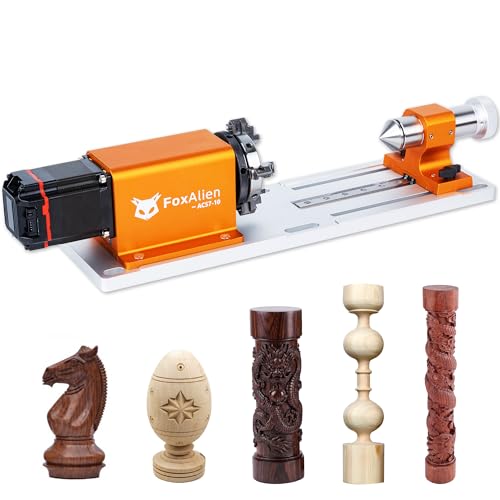
FoxAlien 4th Axis Rotary Module for Masuter 3S and XE-Ultra

FoxAlien Masuter Pro 3-Axis CNC Router for Beginners

FoxAlien XE-Ultra Core Desktop CNC Router (17x17in)
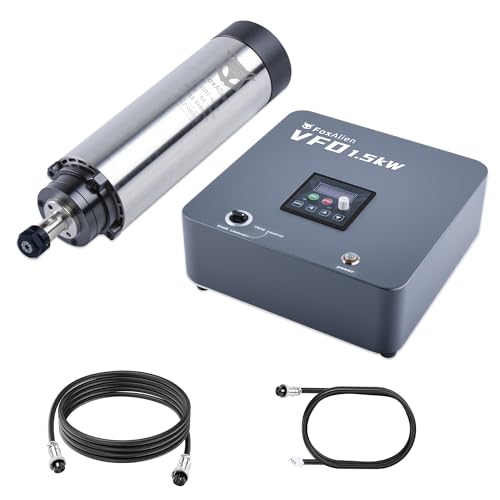
FoxAlien 1.5KW VFD Air Cooled CNC Spindle Motor Kit

FoxAlien XE-Ultra 8080 CNC Router (33x33in Work Area)
A Deeper Look At The Lineup
Tapered ball nose bits like these earn their keep when the job is sculpted surfaces, not flat pockets. A 0.25mm tip radius leaves a clean curve at the bottom of each pass, and the 5.12-degree taper means the bit narrows toward the point, so wider cuts at the top taper to a fine point at the bottom without leaving a stepped shoulder.
Woodworkers running small CNC routers for sign carving, guitar inlays, or relief work on hardwoods and MDF will get the most out of this set. The 1/8-inch shank fits the most common collet sizes on hobby machines, and a TiAIN coating helps the bit survive higher heat when feeds and speeds climb.
What Helps Most
- Ball nose geometry produces smooth 3D contours without flat-bottom artifacts
- Two-flute design clears chips efficiently in softwood and hardwood
- TiAIN coating handles elevated temperatures during deeper passes
- Five-piece pack lets you rotate fresh bits and avoid heat-soaking one cutter
Worth Noting
- Best suited for wood, plastic, and soft materials, not ferrous metals
- Tapered geometry means shallower effective cut depth than straight bits
Feature Snapshot
Best Suited To
Sign makers, inlay artists, and small-shop woodworkers shaping 3D relief carvings on a benchtop router.
Consider Something Else When
Shop owners cutting deep pockets in steel or aluminum should look at the WEXWE extra-long ball nose set instead.
When the cut runs deep and the material fights back, reach matters. This two-pack of extra-long ball nose bits stretches 3 inches overall with a 1/8-inch shank, so the cutter can plunge into tall pockets or thin walls where shorter bits would bottom out before finishing the floor.
HRC62 tungsten carbide gives the body enough hardness to walk through alloy steels and tool steels without dulling after a few passes. An AlTiN coating (aluminum titanium nitride, a thin ceramic layer that reduces friction and heat) keeps the cutting edge cooler, which matters in deep cuts where heat builds up faster than the coolant can carry it away.
The Good Stuff
- Extra-long reach handles deep pockets and tall side walls
- HRC62 tungsten carbide body resists wear on hardened alloys
- AlTiN coating cuts friction and extends tool life at high RPM
- Two-pack format keeps a spare ready for long production runs
Trade Offs
- Longer bits deflect more, so rigidity drops compared to stub-length cutters
- Works best in machines with low-runout spindles, not worn hobby tools
Right Fit For
Small shops milling mold cavities, firearm components, and deep pockets in hardened alloy where shorter bits cannot reach the floor.
Look Elsewhere When
Sign and woodworking hobbyists should stay with the SpeTool tapered ball nose set, which costs less and is built for softer stock.
Long engraving sessions punish spindles, so the Masuter Pro MAX swaps the typical hobby motor for a 500W brushless spindle. The brushless design (no carbon brushes to wear out) runs cooler, quieter, and for longer stretches without the brushed motors burning out after a few months of regular use.
The router targets hobbyists who have outgrown entry-level machines and want one rigid enough to handle soft aluminum, hardwood, and acrylic on a regular schedule. You trade some portability for a stouter frame and a spindle that does not need babying between cuts.
The Upside
- 500W brushless spindle sustains long cuts without overheating
- Quieter operation than brushed motors, easier on shared workspaces
- Rigid enough to handle light aluminum alongside wood and plastic
Points To Note
- Larger footprint than beginner machines, so plan bench space
- Brushless spindle raises the cost over brushed hobby routers
Quick Facts
Who Will Love This
Intermediate hobbyists and side-hustle makers running multi-hour engraving jobs on a regular basis.
Swap It Out When
Brand-new CNC users should start with the FoxAlien Masuter Pro instead, which has a friendlier learning curve.
Open-loop steppers lose steps when the cutter loads up, and the lost steps ruin the part. The Masuter 3S solves that with NEMA 23 closed-loop steppers (NEMA 23 is a standard motor frame size; closed-loop means the controller watches position and corrects errors in real time) that detect stalls and recover without crashing the job. The 400W spindle provides enough muscle for wood, acrylic, and light aluminum cuts.
Compared to the Masuter Pro earlier in this list, the 3S adds closed-loop control and faster rapids, which is the difference between a hobby machine and one that handles small-batch production work. It is the right pick when reliability matters as much as raw capability.
Benefits That Matter
- Closed-loop motors catch and correct missed steps before the part is ruined
- 2.2 Nm torque handles tougher cuts without bogging down
- 10,000mm/min rapid speed shortens non-cutting travel time
- Compatible with the 4th axis rotary module covered later in this roundup
Honest Caveats
- Heavier and more complex than the beginner Pro model
- Closed-loop tuning adds a learning step for first-time CNC users
Feature Rundown
Made For
Small-batch makers and serious hobbyists who want production-grade reliability from a benchtop mill.
Not Your Match When
Casual sign makers on a tight budget will get more value from the Masuter Pro, which costs less and ships ready for simple jobs.
Flat stock only goes so far, and a 4th axis rotary module turns a flat-bed router into a cylindrical carving station. The NEMA 23 closed-loop motor with a 10:1 reduction gearbox provides the low-RPM torque needed to spin a workpiece smoothly while the spindle shapes the side profile.
This module is built specifically for FoxAlien’s Masuter 3S and XE-Ultra machines, with a 4-jaw chuck for solid workholding. Drum sticks, tapered columns, chess pieces, and curved signage become routine once the rotary is dialed in.
Where It Helps
- Adds 360-degree carving to compatible FoxAlien routers
- 10:1 gearbox delivers high torque at low spindle-friendly speeds
- 4-jaw chuck grips round stock securely for clean cuts
Points To Keep In Mind
- Only fits listed FoxAlien models, so check compatibility before ordering
- Adds setup time per job as you center stock in the chuck
Feature Card
Perfect Match For
FoxAlien Masuter 3S or XE-Ultra owners carving columns, drum parts, and tapered round workpieces.
A Better Fit Elsewhere
Owners of the Masuter Pro should pair it with a different rotary module rated for their machine, since this one targets the higher-end 3S and XE-Ultra frames.
First CNC machines often arrive as acrylic frames that flex under load, and flex is what makes the cut go wrong. The Masuter Pro starts with an all-aluminum structure and a linear-rail Z-axis, which keeps the spindle tracking straight during cuts that would wander on a lighter frame.
Beginners get a machine sized for the materials they are most likely to cut first: wood, acrylic, MDF, and nylon. The dust-proof controller box and accessible emergency stop button signal a design that took first-time users seriously, and assembly stays manageable for someone comfortable with basic hand tools.
What It Does Well
- All-metal frame holds alignment better than plastic-bodied competitors
- Linear-rail Z-axis improves cut quality over round-rail designs
- Compact benchtop footprint suits a small home workshop
- Dust-resistant controller and prominent e-stop improve shop safety
Softer Spots
- Spindle is light, so it handles wood and plastic more confidently than aluminum
- Open-loop steppers can lose position on aggressive cuts, so stay conservative at first
Whose Shelf It Belongs On
First-time CNC users setting up a garage or basement workshop and starting with sign making or woodworking projects.
Reach For A Different Pick When
Users ready to commit to daily production should step up to the Masuter 3S, which adds closed-loop motors and a stronger spindle.
The XE-Ultra Core sits between the entry-level Masuter Pro and the larger XE-Ultra 8080. The 17×17-inch work area swallows most sign blanks and small cabinet panels, and the 46x80mm aluminum frame keeps the gantry from racking when the cutter takes a heavier pass.
NEMA 23 closed-loop steppers provide 2.6 N·m of torque, with built-in stall detection that protects the workpiece when the bit binds. Ball screws on the X, Y, and Z axes (a ball screw is a precision lead screw using ball bearings to reduce friction, giving smoother and more accurate motion than traditional belt or lead screws) and HG-15 linear rails keep positioning tight, so the machine handles carbon fiber and aluminum with reasonable accuracy.
Everyday Perks
- 16mm XY and 12mm Z ball screws provide precise, repeatable motion
- 2.6 N·m closed-loop motors detect stalls before parts are lost
- 17×17-inch bed covers a wide range of sign and panel projects
- Heavy-duty aluminum frame reduces flex during deep cuts
Things To Consider
- Supporting desk not included, so plan a sturdy base
- Larger and heavier than compact beginner machines, so placement matters
Details At A Glance
Who Should Grab It
DIY builders juggling wood, aluminum, and carbon fiber who want a desktop bed that does not feel cramped.
Skip It When
Shop owners cutting full 4×8 sheet goods should move up to the XE-Ultra 8080 with its 33×33-inch work area.
Stock spindles on hobby routers are the bottleneck, and a 1.5kW VFD (variable frequency drive, an electronic controller that adjusts motor speed) spindle swap is a common upgrade for owners hitting the ceiling of their factory motor. This kit tops out at 24,000 RPM, so it covers fine engraving through heavier profiling cuts on wood, aluminum, and copper.
The integrated VFD controller and anti-interference filter keep wiring simple and protect nearby electronics from noise. For shop owners who already own a compatible frame and want to push harder cuts without replacing the whole machine, this kit fills that gap cleanly.
The Practical Payoff
- 1.5kW motor handles aluminum and copper at production-feeds
- 24,000 RPM top speed covers both engraving and heavy profiling
- Built-in filter reduces electrical noise that can disrupt controllers
- Plug-and-play VFD controller shortens the install time
Practical Considerations
- Air cooling means the spindle needs clear airflow, not a sealed enclosure
- Wiring knowledge is required to integrate with non-FoxAlien machines
Built With In Mind
Existing CNC owners with a sturdy frame who want to upgrade the spindle instead of replacing the entire machine.
Another Choice May Suit
First-time CNC users should start with a complete machine like the Masuter Pro MAX before considering spindle swaps.
Some projects outgrow a 17-inch bed the moment you try them, and the XE-Ultra 8080 doubles the work area to 33×33 inches with a 5.3-inch pass height. That capacity means cabinet doors, sign blanks, and even small tabletop projects fit on a single setup, which saves the alignment headaches of cutting parts in pieces.
The same 16mm ball screws and HG-15 linear rails that appear on the smaller XE-Ultra Core carry over here, scaled up. NEMA 23 closed-loop steppers provide the torque and stall protection that bigger work demands, and the heavy aluminum frame holds alignment across the wider gantry.
Well-Handled Touches
- 33×33-inch bed handles full sheet-good projects without tiling
- 5.3-inch pass height accommodates thicker stock and tall fixtures
- Closed-loop NEMA 23 motors prevent stall damage on long cuts
- Industrial frame rigidity scales up to match the larger work envelope
Factors To Consider
- Large footprint demands dedicated bench space, so plan placement first
- Heavier price tag than the smaller Core model in this lineup
The Right Fit
Workshop builders cutting cabinet parts, large signs, and full sheets who want the capacity without buying a full industrial machine.
Where A Sibling Pick Shines
Smaller workshop owners without room for the 8080 footprint will find the XE-Ultra Core a better match for their bench.
## What To Weigh Before Choosing A Small CNC Mill ### Frame Rigidity Comes First A flexing frame translates directly to poor surface finish and dimensional errors, especially on deep cuts. All-metal frames with linear rails hold alignment better than acrylic or plastic-bodied designs, which is why the FoxAlien Masuter Pro and the XE-Ultra line lean on aluminum construction. If you plan to cut hardwoods, aluminum, or composites regularly, frame stiffness is the first thing to verify. ### Spindle Power And Type Set The Ceiling Brushed hobby spindles work for wood and light plastic but struggle with aluminum. Brushless 400W to 500W spindles, like the one in the Masuter Pro MAX, run cooler and last longer, while a 1.5kW VFD spindle swap is the next step for users cutting metal daily. Match the spindle to the hardest material you realistically expect to cut, not the easiest. ### Work Area And Travel Sizing Bigger beds handle more projects but eat shop space. A 17×17-inch work area covers most sign and panel jobs, while a 33×33-inch bed accommodates full sheet goods. Measure your bench and your largest typical project before choosing, since undersized machines force tiling and overspend. ### Closed-Loop Versus Open-Loop Motion Open-loop steppers are cheaper and fine for shallow cuts in soft materials, but they lose steps under heavy load with no way to recover. Closed-loop steppers detect the missed step and correct it, which matters during long production runs. For hobby work, open-loop is often enough, but anyone scaling up should pay for closed-loop control. ## Picking Through The Price Tiers ### Common Pitfalls When Buying A Benchtop Mill Underestimating the importance of frame rigidity is a frequent mistake, since plastic-bodied machines look identical in photos but behave very differently under load. Another trap is choosing a spindle based on RPM alone, when sustained torque and cooling matter more for real cuts. Buyers also often skip the tooling budget and end up with a machine that has no bits ready to run on day one. Plan for a starter set of end mills, clamps, and a spoilboard before the machine arrives. ### What The Higher Tier Buys You Spending more on a mill typically gets you closed-loop motors, ball screws instead of belt drives, and a brushless spindle rated for production hours. The XE-Ultra line and the Masuter 3S sit at that level, and the upgrade shows up in fewer ruined parts, faster cycle times, and the ability to leave the machine running while you handle other shop tasks. The upgrade pays off when you are running the machine more than a few hours a week, but casual hobbyists get good results from the entry tier. ## Frequently Asked Questions ### What materials can a small CNC mill actually cut? Most benchtop CNC routers handle wood, MDF, plywood, acrylic, and soft plastics with confidence. Machines with brushless 400W to 500W spindles, like the FoxAlien Masuter Pro MAX, can also mill soft aluminum with conservative feeds. Cutting steel or hardened alloys usually requires a dedicated mill rather than a router-style CNC. ### How much bench space do I need for a small CNC mill? Compact hobby machines like the FoxAlien Masuter Pro need roughly a 2×3-foot area plus clearance for the controller and dust collection. Larger benchtop models such as the XE-Ultra 8080 require closer to a 4×4-foot footprint to accommodate the full 33×33-inch work envelope. Measure your bench and leave room around the machine for loading stock and swapping bits. ### Do I need closed-loop steppers for hobby work? Open-loop steppers work fine for shallow cuts in wood and plastic, and they keep the cost down. Closed-loop motors become worth the premium when you cut deeper pockets, harder materials, or run multi-hour jobs where a lost step would scrap the part. If your projects stay light and short, open-loop is the practical choice. ### What tooling should I buy with my first CNC mill? Start with a basic end mill set covering straight, ball nose, and V-bit profiles in 1/8-inch shank sizes, since most hobby collets use that diameter. Add a set of clamps or a hold-down method and a spoilboard before the first cut, and consider the SpeTool tapered ball nose set or WEXWE extra-long bits depending on the work you plan to do. ### Can I upgrade a hobby CNC later? Yes, and spindle swaps, like the FoxAlien 1.5kW VFD kit, are a common first upgrade once the stock motor feels limiting. Add-ons such as the 4th axis rotary module expand the kind of work the machine can handle, and most FoxAlien models accept a growing ecosystem of accessories. Build a machine you can grow into, especially if you expect your projects to evolve.