Working in a small workshop or tackling quick home repairs means you need a saw that fits in your hand as comfortably as it fits in a crowded toolbox. Full-size circular saws and bulky jigsaws eat up shelf space and tire out your wrist on overhead cuts, while a poorly chosen compact model chokes on anything thicker than pine. The picks below cover the practical ground: a featherweight cordless circular saw, a precision circular blade, a brushless reciprocating saw for tight demo work, a folding jab saw, an all-metal scroll saw for crafts, and a trio of mini lathes and milling machines for small-batch precision work. Each one earns its place for a specific kind of user, and the trade-offs are called out honestly so you can match the right tool to the job.
The Choices Worth Comparing

Fanttik O11 Pro 3-3/8 Inch Mini Cordless Circular Saw, 4500RPM Brushless

Festool Panther Saw Blade 160 x 2.2 x 20 PW12

DEWALT 20V MAX XR Reciprocating Saw Cordless, Brushless, Compact

Goldblatt Folding Drywall Saw, 5-Inch Jab Saw for Wallboard, Plywood & PVC
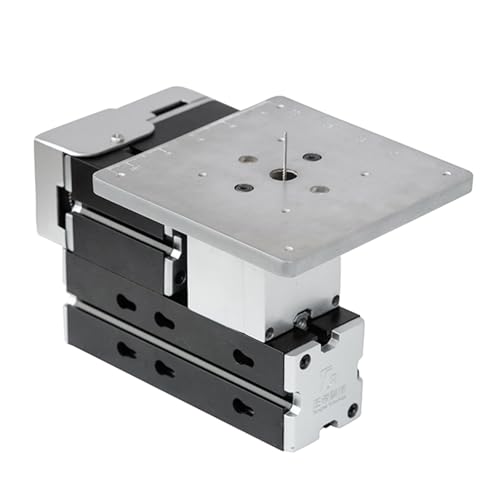
Mini Scroll Saw, 36W 20000RPM All-Metal Electric Scroll Saw for Woodworking

4-Axis All-Metal Micro Lathe, High-Power 60W Mini Lathe for Metalworking

All-Metal Mini Lathe Machine, 36W 20,000RPM Precision Lathe

Mini Milling Machine, Electroplated Metal 36W 20000rpm 3-Axis 0.02mm Precision DIY Vertical Mill
What Each Pick Brings To The Table
The Fanttik O11 Pro is the kind of small circular saw that disappears in a tool bag, weighing roughly 2.3 pounds and stretching just under 11 inches end to end. That footprint matters when you are trimming door jambs, slicing through plywood shelving in a closet, or cutting pressure-treated deck boards overhead where a full-size saw would have you fighting gravity.
A brushless motor (a motor with no carbon brushes, so it generates less friction and runs cooler) spins the 3-3/8 inch blade at 4500 RPM, which is brisk enough to glide through 2x lumber without bogging down. One-handed control is the genuine selling point: the grip is slim, the trigger placement feels natural, and the balance is forward-biased just enough that the saw tracks straight without wrist gymnastics. Compared to the Festool Panther blade on this list, the O11 Pro is the tool itself rather than a consumable, and it makes sense for renovators and renters who want cordless freedom.
Key Advantages
- At 2.31 lb, fatigue on long trim runs is noticeably lower than with full-size saws.
- One-handed control opens up cuts in spots where a two-handed saw simply cannot reach.
- Brushless motor delivers cooler, longer-running performance than brushed equivalents.
- 4500 RPM handles 2x dimensional lumber and plywood without visible stalling.
- Compact 10.75-inch frame slips into a five-gallon bucket or tight shelf.
Things To Consider
- The 3-3/8 inch blade limits maximum cut depth, so thick stock needs two passes from opposite sides.
- Battery and charger are typically sold separately, adding to the total spend.
- For extended cutting without a vacuum, owners commonly report needing to clear the dust port manually.
Made For
DIYers, remodelers, and weekend carpenters who need a featherweight cordless circular saw for trim work, plywood panels, and overhead cuts in tight spaces.
Skip It When
You need raw demolition power, in which case the DEWALT 20V MAX XR Reciprocating Saw is a more capable match for plumbing and remodel tear-outs.
The Festool Panther is a 160 mm circular saw blade, not a saw, and that distinction is important. It drops into plunge saws and track saws already on your bench, turning a good tool into a clean-finish cutting setup. With a 20 mm bore and 2.2 mm kerf (the width of material the blade removes), it slices efficiently without wasting stock.
The 12-tooth configuration is engineered for wood, particle board, cement-bonded chipboard, hardboard, and plasterboard, which covers the everyday panels a finish carpenter or cabinetmaker touches in a week. Compared to the Fanttik O11 Pro’s stock blade, the Panther produces noticeably cleaner edges in plywood and melamine, reducing sanding time before finishing. For woodworkers chasing splinter-free results, this is a refined upgrade over generic replacement blades.
Everyday Perks
- Clean cuts in plywood and melamine reduce post-cut sanding.
- Versatile tooth count handles solid wood, sheet goods, and plasterboard.
- 20 mm bore is a common fitment on premium plunge and track saws.
Worth Noting
- It is a replacement blade, so you need a compatible saw already on hand.
- The 12-tooth count favors speed over ultra-fine finish; crosscut work may benefit from a higher-tooth blade.
Right Fit For
Woodworkers and finish carpenters who already own a compatible plunge or track saw and want cleaner edges in sheet goods and hardwood.
Consider Something Else When
You are looking for a complete cutting tool rather than a consumable blade, in which case the Fanttik O11 Pro Mini Cordless Circular Saw is the more complete setup.
The DEWALT 20V MAX XR (DCS367B) is the reciprocating saw you reach for when the demo work starts. Its brushless motor stretches runtime per charge and the variable-speed trigger keeps the blade speed under your thumb, which matters when slicing through old copper pipe versus ripping out a subfloor. The compact body and pivoting shoe make it manageable in overhead demolition.
An integrated LED illuminates dim crawlspaces, and the tool-free blade change keeps the workflow moving when you swap between wood and metal blades. Compared to the Fanttik O11 Pro, which is built for finish cuts, this DEWALT is a tear-out tool: you point it at things you intend to remove. Plumbers, remodelers, and homeowners gutting a bathroom will appreciate the muscle, while the bare-tool body keeps the cost lower for anyone already running 20V MAX batteries.
What Works In Its Favor
- Brushless motor extends runtime and motor life over brushed designs.
- Variable-speed trigger gives precise control for plumbing versus framing cuts.
- Compact footprint fits between studs, in soffits, and inside vanities.
- LED work light improves visibility in dim basement or attic spaces.
- Tool-free blade change speeds up wood-to-metal swaps on the job.
Honest Caveats
- Tool-only body means battery and charger are purchased separately.
- Reciprocating saws trade finish quality for raw cutting power.
Who It Suits Best
Plumbers, electricians, and remodelers who need cordless brushless cutting power for demo, framing, and rough-in work in tight spaces.
Where Another Pick Suits Better
For fine trim and finish cuts, the Fanttik O11 Pro Mini Cordless Circular Saw produces cleaner edges with less tear-out.
The Goldblatt Folding Drywall Saw is a hand tool in a list full of powered options, and that is precisely why it earns its spot. No battery, no cord, no waiting for a charge: you plunge the 5-inch tip into drywall, saw outward, and patch the hole. The folding handle drops the total length down to pocket-friendly, which makes it a glove-box companion for property managers and apartment dwellers.
It handles wallboard, plywood, and PVC pipe, so the same saw that opens a wall for a new outlet can also notch a piece of trim or trim a fence. The triple-ground teeth cut on both the push and pull stroke, which speeds up the work compared to single-direction jab saws. Compared to the powered picks above, the Goldblatt is what you grab when electricity is a hassle or the cut is small enough that firing up a saw is overkill.
The Practical Payoff
- Folding handle makes it safe to carry in a pocket or tool belt.
- Cuts on both strokes for faster drywall and PVC work.
- Zero setup time: grab and go, no battery management needed.
- Useful for drywall, plywood, and PVC in a single tool.
Some Limits To Know
- Manual sawing gets tiring on long rip cuts through thick lumber.
- Not designed for finish cuts: edges are rough compared to powered saws.
Best Suited To
Homeowners, property managers, and electricians who need a fast, portable cutting tool for drywall patches, outlet openings, and small PVC jobs.
Reach For A Different Pick When
You need powered cutting for thicker stock, in which case the Fanttik O11 Pro Mini Cordless Circular Saw handles wood and panel work with far less effort.
The Mini Scroll Saw from AcmeFlare is built for detail work that would make a full-size scroll saw feel like overkill. The all-metal body, motor box, gears, side cover, and worktable all contribute to a low-vibration cut, which is what you want when following a tight curve in thin plywood or acrylic.
It runs at 20,000 RPM from a 36W motor, which sounds modest but is well-matched to wood, cardboard, and acrylic in thicknesses typical of model-making and craft work. The included student-safe blade is a thoughtful touch for classroom settings or households with curious kids. Compared to the larger tools above, this saw lives on a craft bench rather than a jobsite, and it shines for scrollwork, fretwork, and small signage.
Useful Highlights
- All-metal construction dampens vibration for cleaner curves.
- Compact benchtop footprint fits a small craft room or garage shelf.
- Handles wood, acrylic, and cardboard without blade swaps.
- Student-safe blade makes it approachable for supervised learning.
Points To Keep In Mind
- 36W motor is fine for thin stock, but slow going on hardwood thicker than 1/4 inch.
- Compact table limits the size of workpieces you can maneuver.
Who Will Love This
Model makers, hobbyists, and crafters who want a low-vibration all-metal scroll saw for detail work in thin wood, acrylic, and cardboard.
Swap It Out When
You need a complete woodworking lathe for turning, in which case the All-Metal Mini Lathe Machine covers spindle and face work the scroll saw cannot touch.
The 4-Axis All-Metal Micro Lathe is a small machine with serious ambition. The X, Z1, Z, and A axes give it multi-face capability: the A-axis rotates ±90° with 2.5° indexing, so you can machine several sides of a workpiece without re-fixturing (re-clamping the part in a new position). That saves time and improves accuracy on small jewelry, model parts, and engineering prototypes.
It runs on a 60W motor and accepts gold, silver, aluminum, copper, wood, and plastic, which makes it a useful bench tool for jewelers, watchmakers, and serious hobbyists. Handwheel scales on every axis provide 0.02 mm accuracy, and the T-slot and dovetail construction (interlocking metal slides that resist movement under cutting load) keep the cuts consistent. Compared to the AcmeFlare All-Metal Mini Lathe (pick 7), this model adds the fourth axis and a higher-power motor for tougher metals, which is the upgrade path worth taking if you already know you will push into steel-adjacent materials.
A Favorable Mix
- Four-axis system reduces re-fixturing and improves repeat accuracy.
- 0.02 mm handwheel scales support fine, controllable cuts.
- All-metal T-slot and dovetail construction resists flex under load.
- Handles precious metals, soft metals, wood, and plastic in one setup.
Trade Offs
- Learning curve is steeper than a basic two-axis mini lathe.
- 60W is sufficient for soft metals but slow on tougher alloys.
- Compact work envelope limits the size of stock you can mount.
Perfect Match For
Jewelers, watchmakers, and serious hobbyists who want four-axis precision turning for small metal and wood projects.
A Better Fit Elsewhere
For a simpler starter lathe, the AcmeFlare All-Metal Mini Lathe Machine offers a more approachable learning curve at lower cost.
The All-Metal Mini Lathe Machine is the friendlier on-ramp into precision turning. The 36W motor and 20,000 RPM top speed are well-matched to wood, copper, and aluminum, the three materials most beginners want to learn on, and the 0.02 mm molded scale on the handwheels delivers genuinely useful feedback as you develop a feel for the cuts.
Its all-metal construction, including spindle box, motor box, gears, handwheels, sliders, and a 3-jaw chuck, is unusual at this size, and the dovetail connection blocks with square nuts prevent the kind of screw slippage that frustrates new turners. Compared to the 4-axis micro lathe on this list, this model is simpler and more approachable, but it lacks the A-axis rotation for multi-face work.
Positive Points
- All-metal build dampens vibration and extends service life.
- Molded 0.02 mm scale supports consistent, readable cuts.
- Beginner-friendly 36W motor keeps the learning curve manageable.
- Works with wood, copper, and aluminum out of the box.
Smaller Limitations
- Two-axis design limits complex multi-face turning.
- Not intended for harder metals like steel.
Whose Shelf It Belongs On
New turners, students, and hobbyists who want a sturdy all-metal mini lathe to learn spindle work in wood and soft metals.
Where A Sibling Pick Shines
For four-axis multi-face turning, the 4-Axis All-Metal Micro Lathe is the step up that adds rotational machining.
The Mini Milling Machine fills a different niche from the lathes on this list: it removes material with a rotating cutter rather than spinning the workpiece. The electroplated metal body resists rust and holds rigidity over time, which matters for precision milling where any flex translates into dimensional drift on the finished part.
The X, Y, and Z axes each carry 0.02 mm precision scaled handwheels, supporting contour work, slot cutting, drilling, and small gear milling. The included scaled vise holds workpieces square, and the 36W motor is sensible for the soft metals, wood, and plastic typical of DIY and model-making work. Compared to the AcmeFlare lathes, which turn round parts, this mill is the right pick for flat-faced prototyping, pocketing, and slot work in small batches.
Why It Works Well
- Electroplated metal body resists rust and holds long-term accuracy.
- Three 0.02 mm scaled axes support fine contour and slot work.
- Included scaled vise improves setup repeatability.
- Compact bench footprint fits a home workshop or garage corner.
Points To Note
- 36W is appropriate for hobby work but slow on production runs.
- Small work envelope limits the size of parts you can machine.
- Not a replacement for an industrial mill in tougher metals.
Built With In Mind
DIY machinists, garage prototypers, and model engineers who need a compact 3-axis mill for soft metals, wood, and plastic.
Look Elsewhere When
You need to turn round parts rather than mill flat features, in which case the All-Metal Mini Lathe Machine handles spindle work the mill cannot.
Choosing The Right Compact Saw For Your Work
Match the Saw to the Material, Not the Other Way Around
Cordless circular saws like the Fanttik O11 Pro excel at sheet goods and dimensional lumber, but the 3-3/8 inch blade caps maximum cut depth. Reciprocating saws such as the DEWALT 20V MAX XR trade finish quality for raw power, making them ideal for demo and rough-in work. For finish cuts in plywood and melamine, a clean-running blade like the Festool Panther reduces post-cut sanding. Hand tools like the Goldblatt Folding Drywall Saw are still the fastest choice for one-off drywall openings. You may find a powered saw is the wrong tool for the job, and a manual jab saw finishes the task in less time overall.
Read the Tooth Count, Motor Type, and Weight
Higher tooth counts cut cleaner but slower, while fewer teeth remove material faster with rougher edges. Brushless motors run cooler, last longer, and stretch battery life compared to brushed designs, which is why they show up across both the Fanttik O11 Pro and the DEWALT 20V MAX XR. Weight matters more than people expect: a 2.3 lb mini circular saw feels nimble overhead, while a heavier tool exhausts you on long trim runs.
Sizing Up Lathe and Mill Work
For turning round parts, the AcmeFlare All-Metal Mini Lathe offers an approachable entry point, and the 4-Axis All-Metal Micro Lathe adds rotational machining for jewelers and watchmakers. Flat-faced prototyping calls for a mill instead, and the Mini Milling Machine covers contour, slot, and hole work in soft metals and plastic. In most home workshops, choosing between a lathe and a mill comes down to which shape of part you build more often, because the two tools complement rather than replace each other.
Plan for Accessories and Consumables
Cordless tools often ship as bare tools, meaning the battery and charger add to the cost. Replacement blades for circular saws, scroll saws, and mills wear out with use, so factor in the cost of having spares on hand. Storing blades in a dry case and wiping down the tool after each session extends accuracy and service life across both powered and manual options.
What To Weigh Before You Commit
Common Shopping Slip Ups
Picking a saw purely on power without checking the blade size or kerf leads to frustration when the cut depth falls short. Tool-only listings look appealing until you remember the battery and charger are not in the box, and that omission can push the real cost higher than a kit version. A common oversight in the small saw category is ignoring the work envelope: a compact benchtop scroll saw cannot hold a full sheet of plywood, and a 3-3/8 inch circular saw cannot slice through a 4×4 post in one pass. Measure your typical workpiece and the space you have to work in before deciding on a tool size.
Where The Extra Money Goes
Premium circular blades like the Festool Panther cost more because the tooth geometry, carbide grade, and plate hardening are engineered for clean cuts and long life. A four-axis lathe costs more than a two-axis model because the A-axis mechanism, indexing hardware, and reinforced slides add complexity. Higher-tier cordless saws justify the difference through brushless motors, better balance, and longer warranties, all of which show up over years of use rather than the first afternoon. The honest read is that paying more typically buys longer tool life and cleaner cuts, not just a fancier badge.
Frequently Asked Questions
What is the best small skill saw for a beginner?
The Fanttik O11 Pro Mini Cordless Circular Saw is approachable for beginners thanks to its light weight and one-handed control. A hand tool like the Goldblatt Folding Drywall Saw is even simpler for drywall patches and small cuts.
Can mini circular saws cut 2x lumber?
Yes, saws like the Fanttik O11 Pro handle 2x dimensional lumber with a 3-3/8 inch blade, though thicker stock may need two passes from opposite sides. A larger blade is the better choice for heavy framing work.
Are mini lathes accurate enough for jewelry work?
The 4-Axis All-Metal Micro Lathe offers 0.02 mm handwheel scales and multi-face capability suitable for small jewelry and watchmaking. Softer precious metals are well within its capabilities, while harder alloys push the limits of the 60W motor.
What blade cuts plywood without splintering?
Higher tooth counts and thin kerf blades like the Festool Panther are designed to reduce tear-out in plywood and melamine. Pairing the blade with a zero-clearance insert further improves cut quality.
How do I maintain a small scroll saw or mini lathe?
Keep the worktable and ways free of dust, oil the moving parts occasionally, and store blades in a dry case. Checking belt tension and brush condition on brushed motors helps prevent unexpected downtime.