


Cutting metal roofing panels is a different kind of job from slicing a straight duct seam, and the right snips save your hands, your panels, and your patience. Whether you trim a few flashing pieces around the chimney or you’re tackling a full re-roof, the difference between a clean cut and a ragged one usually comes down to the tool. This roundup covers nine hand tools built for sheet metal and metal roofing, from classic aviation snips to specialty notchers and crimpers, so you can match the cutter to the cut.
An Overview Of The Picks

HURRICANE Bulldog Aviation Tin Snips 9.5-Inch Straight Cut
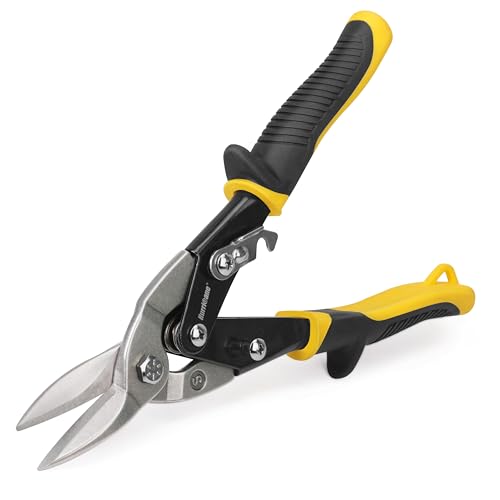
HURRICANE 10-Inch Aviation Tin Snips, Straight Cut, Cr-V Steel

MIDWEST Bulldog Aviation Tin Snip – Straight Cut, MWT-6716B
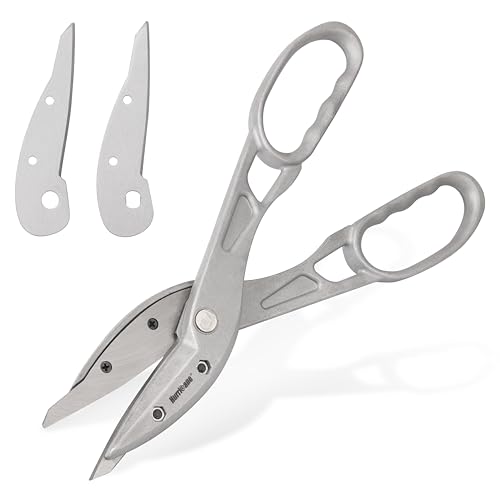
HURRICANE 12-Inch Aluminum Tin Snips, Straight Cut, Replaceable Blades

HURRICANE 10-Inch Aviation Tin Snips, Premium CR-MO Blade Straight Cut

Crescent Wiss 7-Inch Tool Line Clamp Snip Tinner (WDF7S)

HURRICANE Sheet Metal V Notcher, 30-Degree V-Notch, 24-Gauge
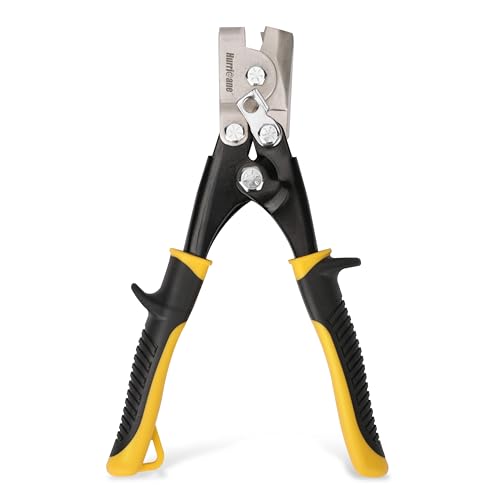
HURRICANE Snap Lock Punch Tool, 3/8-Inch Impression Gutter Crimper

HURRICANE 3-Piece Aviation Tin Snips Set, Straight/Left/Right
What Each Pick Brings To The Table
Roofers fighting stubborn standing seams know the regular aviation snip runs out of steam partway through the cut. The HURRICANE Bulldog Aviation Tin Snips address that with a shortened blade and a tight nose that pushes leverage into the tip, so the cutting force lands exactly where the material is thickest. In a real shingle-to-standing-seam transition, that geometry keeps the bite going without forcing your wrist into awkward angles.
Compared with the longer 10-inch HURRICANE straight cut below, this pair trades overall reach for raw cutting bite at the tip. The body is compact enough to fit in a nail bag, which matters when you’re working a ladder rather than a bench.
Useful Highlights
- Compact bulldog nose concentrates leverage where seams are thickest
- Shortened blade improves control for notch cuts and tight trim
- Rated for 18-gauge cold-rolled steel and 22-gauge stainless
- 9.5-inch length fits standard tool belts and pouches
Things To Consider
- Short blades mean slower progress on long, straight runs
- Compact grip may feel cramped on users with larger hands
Key Specs
Who It Suits Best
Roofers and metalworkers who regularly trim thick seams, ribs, and notches on standing-seam panels.
Consider Something Else When
Long, sweeping straight cuts across full panels are faster in the HURRICANE 10-Inch CR-MO straight cut reviewed below.
Homeowners who only pull out the snips for the occasional gutter patch or HVAC register rarely need a premium blade, and this is where the HURRICANE 10-Inch Straight Cut earns its keep. Cr-V (chrome vanadium) steel is the long-running workhorse alloy for hand tools, balancing hardness and toughness for thin sheet work. The non-slip Tyregrip handle keeps the cut controlled when your hands are dusty from the attic insulation.
This snip sits in the same brand family as the HURRICANE Bulldog above, but the longer 10-inch body is friendlier for full panel runs. If you’re trimming a few pieces of flashing or cutting a downspout, it does the job without overpaying for alloy upgrades.
The Case For It
- Light 10-inch frame suits short DIY sessions
- Cr-V steel handles up to 20-gauge cold-rolled material
- Tyregrip handle reduces slippage in dusty conditions
- Affordable entry point into aviation snips
Worth Noting
- Not designed for tight curves or sharp angles
- Edge retention trails the CR-MO version reviewed later
Right Fit For
DIYers trimming thin aluminum, vinyl siding, and light-gauge gutter work on weekends.
Look Elsewhere When
You need to follow tight left and right curves on a panel; the HURRICANE 3-Piece Set covers all three cut directions.
For shops that cut metal every single day, blade life is the metric that matters, and the MIDWEST MWT-6716B has a long track record on American job sites. Hot drop-forged construction (where steel is heated and hammered into shape) packs the grain tight, which is why the snip keeps a clean edge after years of cycling through galvanized stock. The 9-inch body is short enough to control on a brake but long enough for general straight work.
Side by side with the HURRICANE Bulldog, the geometry is similar: short nose, thick bite at the tip. The differentiator is the forging process, which tends to pay off over years rather than months.
What Works In Its Favor
- Hot drop-forged blades hold an edge through heavy use
- Rated to 16-gauge cold-rolled and 18-gauge stainless
- Compact 9-inch body for trim cuts in extra-thick stock
- Made in the USA for shops that value domestic tooling
Trade Offs
- Heavier than the HURRICANE Bulldog at similar length
- Premium construction commands a higher upfront cost
Key Specs
Best Suited To
Sheet metal shops and roofers who need a daily-driver straight cutter that holds up across years of production work.
Skip It When
Your projects are mostly thin aluminum trim; the HURRICANE 10-Inch Cr-V Snips are lighter on the wrist and easier on the wallet.
Long snip sessions on a roof or scaffold punish your forearm, and that’s where the HURRICANE 12-Inch Aluminum Tin Snips change the math. An aluminum body cuts the tool’s weight noticeably, while the high-carbon steel cutting edges (the part that actually does the work) stay sharp on tin, copper, vinyl siding, and cardboard. Replaceable blades also mean you can swap a dull edge instead of replacing the whole tool.
The 12-inch body is the longest snip in this roundup, which is a real advantage on long panel runs. Compared with the compact HURRICANE Bulldog above, you trade some tip bite for reach and a lighter carry.
Strong Points
- Aluminum body reduces fatigue during long cutting sessions
- Replaceable blades extend the life of the tool itself
- Handles tin, aluminum, copper, and vinyl siding
- Larger grip opening suits bigger hands and gloves
Some Limits To Know
- Aluminum body is more prone to drops and dings than steel
- Replaceable blades mean spare parts to keep on hand
Who Will Love This
Roofers and HVAC techs working overhead for hours who need a featherweight cutter with extra reach.
A Better Fit Elsewhere
For one-off flashing repairs in tight spots, the more compact HURRICANE Bulldog 9.5-Inch is easier to maneuver.
When you’re cutting 18-gauge cold-rolled steel all day, edge life becomes the difference between a productive Tuesday and a frustrating one. The HURRICANE 10-Inch Premium CR-MO Snips swap the standard Cr-V (chrome vanadium) blade for chrome molybdenum, a tougher alloy that holds a keen edge through heavy production runs. Compound leverage (a pivoting linkage that multiplies your hand force) reduces the squeeze needed per stroke, so your hand stays fresher across a full re-roof.
Versus the HURRICANE Cr-V version earlier in the list, the upgrade is alloy and linkage, not geometry. The 10-inch body remains the same friendly length for most panel runs.
Key Advantages
- CR-MO blade steel holds an edge longer than standard Cr-V
- Compound leverage reduces hand fatigue on long cuts
- Micro-serrated edge grips slick metal to prevent walking
- Safety lock and comfort grip for transport and storage
Points To Note
- Premium alloy adds cost over basic Cr-V models
- Slightly heavier than the entry-level 10-inch HURRICANE
Feature Snapshot
Perfect Match For
Working pros who cut metal roofing daily and need a blade that stays sharp through a full week of production.
Swap It Out When
You’re doing occasional weekend repairs; the HURRICANE 10-Inch Cr-V Snips deliver similar geometry for less.
Some roofing cuts aren’t about power; they’re about getting into a tight valley or trimming around a skylight curb. The Crescent Wiss 7-Inch Clamp Snip Tinner uses a clamp-style mechanism (the jaws lock onto the metal before cutting) that holds thin stock steady, which helps when the cut line keeps shifting under your hand. The 7-inch body slips into a back pocket or pouch where longer snips won’t fit.
It’s the smallest tool in this roundup and pairs naturally with one of the full-size aviation snips above for the times when reach is more important than bite.
The Practical Payoff
- 7-inch frame fits in tight roofing pockets and pouches
- Clamp action holds thin metal steady during cuts
- Lightweight build reduces wrist strain on detail work
Honest Caveats
- Short blade length limits reach on larger panels
- Clamp mechanism adds a step before each cut
- Less suited to long, sweeping straight runs
Whose Shelf It Belongs On
Tradespeople who want a compact backup cutter for tight detail and trim work alongside a primary aviation snip.
Where A Sibling Pick Shines
For general straight cutting, the HURRICANE 10-Inch Cr-V Snips offer more reach and faster progress.
Notching metal by hand with aviation snips works, but the angle drifts and the depth varies, which shows up as a wavy bend line. The HURRICANE Sheet Metal V Notcher standardizes that step: a 30-degree V-shape punched up to 13/16″ deep lands in the same place every time, so the bend behind it folds cleanly. Roofing flashings and HVAC duct corners both depend on that consistency.
This isn’t a replacement for any of the snips above. It complements them by handling the relief cuts that snips can’t reach with any real precision.
Practical Advantages
- 30-degree V-cut depth up to 13/16″ for deep relief notches
- Optimized for 24-gauge mild steel and 26-gauge stainless
- Safety lock keeps the jaws closed during storage
- Hand-powered, no compressor or cord required
Points To Keep In Mind
- Capacity tops out at thinner 24-gauge stock
Feature Rundown
Made For
Sheet metal workers and roofers who need repeatable V-notches for clean bends without freehand guessing.
Another Choice May Suit
If your work is mostly straight trims, the HURRICANE 10-Inch Aviation Snips cover day-to-day cutting more efficiently.
Cutting is only half the job; locking the pieces together is the other half, and the HURRICANE Snap Lock Punch Tool handles that step without a trip back to the brake. The 3/8-inch impression is the standard width for snap-lock gutter seams and HVAC Pittsburgh-lock duct connections. A compound-leverage linkage keeps the hand force low, so the tool stays comfortable across a long crimping run.
It arrives fully assembled and ready to use, which is a small but appreciated detail when you’re still unpacking the truck. Pair it with any of the snips in this list for a complete trim-to-lock workflow.
What Helps Most
- 3/8-inch impression matches standard gutter and duct locks
- Compound-leverage mechanism reduces required hand force
- Works on aluminum, vinyl siding, and HVAC duct sheet
- Ready to use out of the box, no assembly required
Worth Bearing In Mind
- Single-purpose tool; won’t replace any snip on the list
Built With In Mind
Roofers and HVAC installers who lock their own seams on-site and want a portable punch instead of a shop brake.
Not Your Match When
You mainly need to cut metal; stick with the HURRICANE 10-Inch Cr-V Aviation Snips for everyday cutting.
Cutting around a chimney cricket means switching between straight runs, left-hand curves, and right-hand curves in the same afternoon, and swapping tools each time eats into the work. The HURRICANE 3-Piece Aviation Snips Set solves that by bundling the three directional cutters in a color-coded kit. Yellow handles the straight lines, red takes left-hand curves, green takes right-hand curves, so you reach for the right tool without thinking.
Compared with the single-direction HURRICANE Cr-V snip reviewed above, the trade-off is that each tool is a step down in alloy. For shop or property maintenance use, the convenience of all three directions usually wins.
Strengths Worth Knowing
- Color-coded handles make direction selection instant
- Covers straight, left, and right cuts in one kit
- Non-slip Tyregrip handles across all three snips
- Safety latch on each tool for transport and storage
Where It May Fall Short
- Cr-V steel edges need more frequent sharpening than CR-MO
- Three tools to store rather than one
Who Should Grab It
Property maintenance teams and DIYers who work on metal roofing, gutters, and siding projects that demand curves in both directions.
Reach For A Different Pick When
You only need straight cuts all day; the HURRICANE 10-Inch Premium CR-MO Snips put a tougher blade on the same job.
Picking The Right Snips For Your Metal Roofing Project
Match The Snip To The Gauge
Metal roofing runs from roughly 22-gauge structural steel down to 29-gauge residential panels, and the tool’s rated capacity is the number that matters most. A snip rated for 18-gauge cold-rolled steel handles most residential gauges with room to spare, but pushing past the rating causes blade chipping and ragged cuts. Match the printed gauge rating to the thickest stock on your job before anything else.
Choose The Right Cut Direction
Aviation snips are directional by design, meaning the jaw geometry sends the material up or to one side as the cut progresses. Straight snips handle long panel runs; left-cut snips travel cleanly along left-hand curves; right-cut snips do the opposite. For roofing valleys, chimney crickets, and any curve work, you’ll need at least two directions on hand.
Consider Blade Alloy And Handle Ergonomics
Cr-V (chrome vanadium) steel is the everyday alloy, balancing cost and edge life for most users. CR-MO (chrome molybdenum) costs more but holds a sharp edge longer under heavy use. Handle grip matters too, since cuts accumulate force across the forearm. Aluminum bodies, rubber overmolds, and compound-leverage linkages each reduce fatigue differently.
Look For Specialty Tools That Complement Your Snips
V-notchers and snap-lock punches extend what a basic snip can do, turning rough relief cuts into repeatable bends and seams. On roofing projects that involve folding flashings or locking gutter ends, those specialty tools save time and improve fit. A complete kit often pairs a primary aviation snip with one specialty tool rather than buying every snip in every direction.
Key Considerations Across These Picks
Where Shoppers Go Wrong
Buying a single straight snip and expecting it to handle every curve is the most common mistake. Straight snips do straight work; curves need left or right directional snips, and forcing the wrong tool leads to bent edges and tired hands. The other slip is ignoring gauge ratings, which often shows up as chipped blades and torn metal on thicker panels.
Where The Extra Money Goes
Premium snips invest in better blade steel, tighter forging, and refined linkage. CR-MO alloys stay sharp through months of production rather than weeks. Hot drop-forged bodies, like the Midwest model reviewed above, last across years of daily use. The upgrade pays off when you cut metal often enough that sharpening or replacing a budget snip becomes a recurring chore.
Frequently Asked Questions
What Gauge Snips Do I Need For Metal Roofing?
Most residential metal roofing falls between 22 and 29 gauge, so snips rated for 18 to 22-gauge cold-rolled steel cover the typical range. Thicker structural panels need snips rated for 16-gauge or heavier.
Can Aviation Snips Cut Through Standing Seam Panels?
Yes, but thicker seams benefit from a bulldog-style snip with a short, powerful nose. The compact tip concentrates leverage where the seam is tallest, making the cut cleaner and easier to control.
What Is The Difference Between Left And Right Cut Snips?
Left-cut snips push the offcut to the left as the cut progresses, and right-cut snips push it to the right. Straight snips don’t curve much, so they’re best for long panel runs and trim cuts.
How Do I Keep Tin Snips From Rusting?
Wipe the blades dry after each use, store them in a dry pouch or toolbox, and put a light coat of machine oil on the pivot point. A few seconds of care after the job extends blade life noticeably.
Are Power Tools Better Than Hand Snips For Metal Roofing?
Power nibblers and shears speed up long straight runs, but hand snips are quieter, cord-free, and easier to control around cutouts and detail work. Many roofers carry both and switch based on the cut.




