


Sweating a copper joint cleanly comes down to the solder you feed the flame. Walk into any plumbing aisle and the wall of 50/50, 60/40, lead-free, and silver-bearing wire all looks similar, but each alloy melts at a different temperature and behaves differently when it hits a fluxed fitting.
This roundup covers the alloys and supplies most homeowners and trade plumbers actually reach for. The list stretches across plumbing-focused solders, electrical wire, stained-glass alloys, a premium audio wire, a flux paste, and even a desoldering filter pipe. You will see which ones genuinely belong on a copper pipe repair, and which ones have a different job.
The Shortlist At A Glance

Canfield 50/50 Solder for Stained Glass 1 Lb Spool

HAKKO B5185 Filter Pipe Replacement Set

Canfield 60/40 Solder for Stained Glass

AUSTOR 63-37 Rosin Core Solder Wire
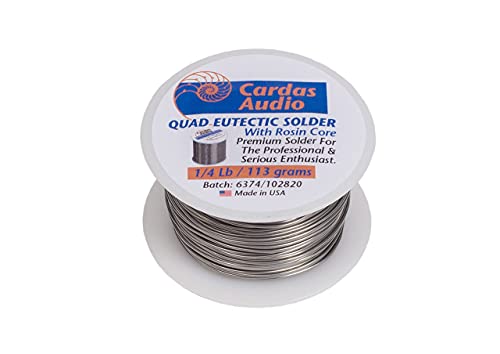
Cardas Quad Eutectic Silver Solder 1/4 lb

Essmetuin No-Clean Soldering Flux Paste 10cc

Oatey Safe-Flo Plumbing Solder Kit

AIM Aquasol Lead-Free Plumbing Solder

Oatey Silver Wire Solder 1 lb
Inside Each Recommended Option
Canfield’s 50/50 wire is a classic stained-glass alloy that hobbyists have relied on for decades. The blend splits evenly between tin and lead, which gives it a generous working window and forgiving flow on copper foil seams. It melts across a broad range, so beginners get a little extra time to position the iron before the puddle sets.
You will find a full one-pound spool ships in this listing, which is enough wire for a sizable panel or several smaller projects. For potable water lines, you would want to look at the lead-free plumbing entries further down this roundup instead. Within its lane, this solder behaves predictably and tines smoothly onto properly fluxed copper.
Useful Highlights
- Wide melting range gives beginners more time to lay a smooth bead
- Generous one-pound spool covers multiple stained glass projects
- Flows cleanly across copper foil when paired with a tinning flux
- Forgiving on uneven heating from smaller hobby irons
Things To Consider
- Contains lead, so it is not suitable for any drinking water line
- A full pound may be more wire than a casual hobbyist needs
Made For
Stained glass artists and craft hobbyists who want a forgiving leaded alloy for copper foil work.
Skip It When
You are sweating a copper pipe repair, in which case the Oatey Safe-Flo Plumbing Solder Kit is the more appropriate pick for the job.
This is a maintenance part rather than a spool of solder, but it earns its spot because every shop that owns a Hakko desoldering station eventually needs it. The B5185 set covers the filter pipe consumable on the FR-301, FR-410, FR-701, and FR-702 series. Replace it regularly and your desoldering gun keeps pulling clean, which matters when you are clearing old copper pipe joints or salvaging through-hole components.
Owners of older FR-series stations tend to notice a drop in suction power before they realize the filter is clogged. Swapping in a fresh pipe restores airflow and protects the internal heater. The parts are model-specific, so confirming your station number before ordering is worth the extra minute.
The Value In It
- Extends the working life of four popular Hakko desoldering models
- Restores suction that quietly fades as filters clog with residue
- Low-cost insurance against bigger station repairs down the line
Worth Noting
- Only fits a specific list of Hakko FR-series stations
- Not a solder itself, so it cannot sweat a copper joint on its own
Who It Suits Best
Electronics technicians and serious workshop users who already own a compatible Hakko desoldering station and need to maintain it.
Look Elsewhere When
You actually need a roll of pipe solder, in which case the AIM Aquasol Lead-Free Plumbing Solder is the proper match for copper plumbing work.
Step up to a higher tin content and you get a solder that melts and freezes more sharply than the 50/50. The 60/40 ratio here transitions quickly from solid to liquid, which experienced leadwork artists appreciate for clean, defined beads. The narrow plastic range means the puddle sets the moment you pull the heat away, leaving crisp seams on detailed panels.
Like its sibling in this roundup, the alloy still contains lead and is meant for art, not plumbing. The one-pound format covers a long stretch of bench time, and the spool feeds nicely through standard stained glass irons. In our view, this is the more disciplined of the two Canfield options.
Practical Pluses
- Sharp melt and freeze behavior produces tidy, well-defined beads
- Higher tin share helps the alloy wet out evenly on copper foil
- One-pound spool supports extended bench sessions
Trade Offs
- Still a leaded alloy, so ventilation and hand washing matter
- Less forgiving than 50/50 for true beginners learning heat control
Feature Snapshot
Best Suited To
Intermediate and advanced stained glass artists who want crisp seams and are confident managing heat on detailed work.
Reach For A Different Pick When
You need the extra working time of a 50/50 blend, in which case the Canfield 50/50 spool is the more forgiving choice.
The 63/37 tin/lead ratio is the textbook eutectic alloy for electronics work, meaning it transitions from solid to liquid without a plastic middle stage. That behavior makes the wire friendly to first-timers who are still learning when to pull the iron away. Rosin flux runs through the core, so the wire cleans and tins the pad in a single pass.
The 1.5 mm diameter is a comfortable middle ground for most circuit board work, from through-hole leads to small wire splices. This is genuinely an electronics solder rather than a pipe solder, so keep it on the bench and out of the plumbing kit. For homeowners restoring an old radio or tacking a low-voltage wire, it does the job neatly.
Useful Strengths
- Eutectic behavior avoids cold joints by skipping the plastic range
- Rosin core flux removes the need for a separate paste on most jobs
- 1.5 mm diameter handles both fine PCB work and slightly larger splices
Honest Caveats
- Contains lead, so it is not appropriate for potable water plumbing
- Rosin residue can be mildly corrosive on long-term joints if left uncleaned
- Not the wire you want for sweating a 3/4 inch copper pipe joint
Right Fit For
Beginners and hobbyists doing electronics soldering, small appliance repair, or low-voltage wiring projects around the house.
Not Your Match When
You are joining copper water lines, in which case the Oatey Silver Wire Solder is built for that exact use.
Cardas built its reputation in the high-end audio world, and this quad-eutectic wire reflects that heritage. The alloy blends silver, copper, tin, and lead in a proprietary ratio designed to flow smoothly onto connector pins without leaching the surrounding conductor. Audiophiles and cable builders tend to specify it for terminating RCA, XLR, and speaker terminations.
The 0.032 inch diameter is thin, which suits fine signal-level work but feels slow if you are moving to plumbing. The quarter-pound roll is also smaller than most plumbing spools, so heavy users go through it quickly. Treat this as a specialty wire for connector work, not a copper pipe solder.
What It Does Well
- Quad-eutectic blend wets out cleanly on premium copper conductors
- Rosin core simplifies small connector terminations
- Silver content produces a bright, well-bonded joint on audio gear
Points To Keep In Mind
- Premium positioning commands a noticeably higher price per gram than standard wire
- Still a leaded alloy, so it is not for potable water work
Technical Highlights
Perfect Match For
Audio enthusiasts, cable builders, and technicians who terminate high-end connectors where joint quality is paramount.
Consider Something Else When
You are working on copper plumbing, where the AIM Aquasol Lead-Free Plumbing Solder is the proper specialty choice.
Flux paste is the supporting actor in any copper joint, and this 10cc syringe delivers it in a tidy, controlled format. The no-clean formula means you do not have to wipe down the joint after sweating, which speeds up small plumbing repairs and bench-level electronics work. A push-style applicator keeps the paste from oozing and wasting inside the bottle.
The paste works on copper pipe, SMD pads, and small repair jobs around the house, so it is a genuinely multi-purpose tube. Lead-free and non-corrosive in dry conditions, it suits potable water work when paired with a lead-free wire. For a single joint, the small bottle is plenty.
Advantages To Know
- Push applicator limits waste and keeps the paste where you want it
- No-clean formula saves a wipe-down step after each joint
- Works on copper pipe, circuit boards, and small appliance repairs
- Lead-free composition is friendlier for drinking water line repairs
Softer Spots
- Only 10cc per bottle, so larger repipe projects may need multiple tubes
- No-clean flux leaves a visible residue some plumbers prefer to rinse off
Who Will Love This
Homeowners and technicians who want one flux tube that covers copper plumbing joints and electronics touch-ups without switching products.
A Better Fit Elsewhere
Plumbers running large repipe jobs may prefer the bundled solder and flux in the Oatey Safe-Flo Plumbing Solder Kit.
Oatey built this kit for the homeowner who wants everything in one box. You get a quarter pound of lead-free solder wire, a tin of tinning flux, an abrasive cloth to clean the copper, and an application brush. Everything lines up to walk a first-timer through a basic joint, from cleaning the pipe to brushing on flux to feeding the wire.
The lead-free tinning flux is a smooth, non-runny paste that pre-tins the copper for even flow. Because the kit is lead-free and paired with Oatey’s plumbing wire, it suits potable water line repairs under most local codes. For a single bathroom or kitchen fix, the included amounts are typically enough to complete the job.
Key Advantages
- All-in-one kit removes guesswork for first-time plumbing repairs
- Lead-free solder and flux pair cleanly with potable water lines
- Brush and abrasive cloth included so no extra supply run is required
- Tinning flux preps the copper and helps the wire flow evenly
A Few Limitations
- Quarter pound of wire may run short on larger repipe projects
- Lead-free alloys need a bit more heat than 50/50, so plan torch time accordingly
Quick Facts
Whose Shelf It Belongs On
Homeowners handling a small copper pipe repair who want a code-friendly lead-free kit without buying four separate supplies.
Swap It Out When
You need higher-temperature silver-bearing performance, in which case the AIM Aquasol Lead-Free Plumbing Solder is the upgrade.
AIM’s Aquasol wire is the heavier-duty step up from a basic lead-free solder. It uses a silver-bearing alloy that flows into fittings with the kind of capillary action professionals expect, even on larger diameter copper. The half-pound spool covers a meaningful stretch of repair work or a small repipe, so trade plumbers can keep it on the truck without restocking every week.
Manufacturing in Canada by a well-established solder maker lends confidence for code-sensitive work. You will still want a quality tinning flux alongside it, but the alloy itself is the main event. For copper water lines where lead-free is required, this is a workhorse grade rather than a hobby pick.
What Works In Its Favor
- Silver-bearing alloy draws smoothly into larger copper fittings
- Half-pound spool supports multiple repair visits without resupply
- Lead-free composition meets modern potable water line requirements
Possible Compromises
- Higher silver content can drive a steeper price than basic lead-free wire
- Still demands proper flux and clean pipe prep to flow cleanly
Built With In Mind
Plumbing contractors and serious DIYers working on code-compliant copper water lines who want reliable, repeatable joints.
Where A Sibling Pick Shines
Homeowners tackling a single small repair may find the bundled Oatey Safe-Flo Plumbing Solder Kit easier on the wallet and the workflow.
Oatey’s silver wire pairs a copper, bismuth, tin, and silver alloy into a lead-free solder with a notably wide pasty range. That extended working window is genuinely useful on bigger joints, because the alloy stays workable long enough for you to feather it around the full circumference of a 3/4 inch or 1 inch fitting without racing the torch.
The 0.117 inch wire diameter handles standard plumbing joints without feeding too thin. Certification for safe use in potable water applications makes it a sensible choice for kitchen and bath supply lines. The full pound roll supports multiple projects, so it suits a homeowner planning more than one repair.
Positive Points
- Wide pasty range gives generous working time on larger copper joints
- Lead-free silver-bearing alloy meets potable water safety standards
- One-pound spool covers several plumbing visits around the home
- Copper, bismuth, tin, and silver blend flows evenly when properly fluxed
Worth Bearing In Mind
- Higher melt point than 50/50, so you need a torch that holds steady heat
- Bismuth content means the alloy is not a perfect substitute for tin-antimony in every situation
Spec Overview
The Right Fit
Homeowners and pros working on larger copper potable water lines who value working time and code-friendly materials.
Not Your Match When
You only need a small bundled kit, in which case the Oatey Safe-Flo Plumbing Solder Kit is a tighter, all-in-one alternative.
Choosing the Right Alloy and Format for Your Joint
The first decision is whether the application is plumbing or something else. Copper water lines almost always call for a lead-free wire, since lead leaching into drinking water is a real concern. Stained glass, electronics, and audio work all use leaded alloys where flow and freezing behavior matter more than potable safety.
Within plumbing, alloy choice shapes how the joint feels under the torch. Standard lead-free tin-antimony wires are simple and forgiving, while silver-bearing and bismuth-based alloys gain extra strength and a wider working window. For larger fittings, the wider pasty range of a silver-bearing wire pays off in fewer rushed joints.
Wire diameter matters more than people expect. Thicker wire feeds heat into the joint faster and lays a heavier bead, which is helpful on 3/4 inch and 1 inch lines. Thinner wire gives finer control for small repair joints and tight spaces behind walls.
Finally, do not underestimate flux. Even a premium wire struggles on poorly cleaned, poorly fluxed copper. A quality tinning paste or no-clean flux makes the difference between a joint that wicks cleanly and one that leaves dry spots. The kits and pastes in this list exist because prep work, not alloy bragging rights, decides most joint quality.




