


A reliable solder station changes the entire feel of an electronics workbench. The right setup makes swapping a phone connector feel like a calm, controlled process instead of a guessing game with a hot iron. This roundup covers seven picks that earn their place across hobbyist, repair-shop, and DIY scenarios.
A Closer Look At The Lineup

Hakko 611-1 Solder Reel Stand

Delcast R1K Solder Dispenser Reel

AUORY Silicone Soldering Mat 13.8″ x 9.8″
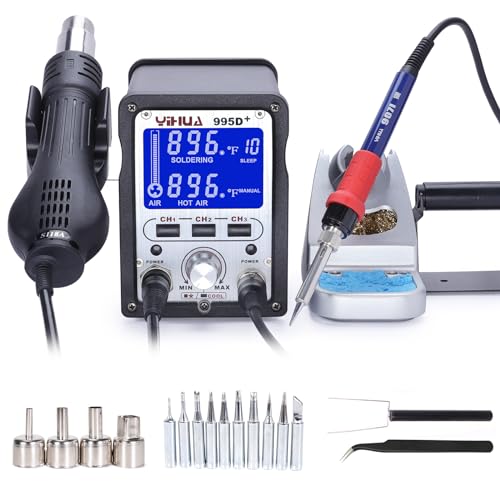
YIHUA 995D+ 2 in 1 Hot Air Rework Station

YIHUA 8786D I 2 in 1 Rework Station
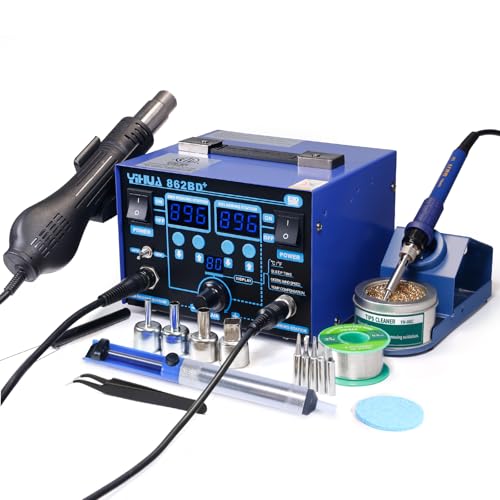
YIHUA 862BD+ SMD 2 in 1 Rework Station

FNIRSI DWS-200 200W Soldering Station Kit
What Each Pick Brings To The Table
The Hakko 611-1 is the kind of small bench accessory that quietly improves every session. It holds a single solder spool upright so the wire feeds smoothly without rolling across the bench or tangling mid-job. The compact footprint slips beside a station without crowding the work area, and the design has the restrained look typical of Hakko accessories.
For a hobbyist who works with one standard spool of solder, this stand removes the small daily friction of chasing a runaway reel. It also helps keep flux splatter and stray wire clippings contained, since the spool stays put. If you regularly swap between spool sizes or run multiple alloys, a wider dispenser may suit you better down the road.
What Stands Out
- Upright design lets solder unwind cleanly through the feed loop
- Compact footprint fits cramped repair benches and small desks
- Sturdy base keeps the spool stable during long soldering sessions
- Reduces wire tangles and bench clutter during repetitive work
Points To Note
- Single-spool design, so multi-alloy workflows need a second dispenser
- Limited capacity for spools heavier than roughly 1 kg
Whose Shelf It Belongs On
This stand suits hobbyists and repair techs who run one main solder spool and want a tidier bench without bulky hardware.
Consider Something Else When
The Delcast R1K Solder Dispenser Reel is a friendlier option for shops that want a simpler upright dispenser at a lower cost.
The Delcast R1K brings upright solder dispensing to a tighter budget than most branded stands. The reel holds a spool vertically and lets the wire pass through an adjustable arm, so feed stays controlled while you work. It reaches a maximum capacity of around 1 kg, covering the spool sizes most home users actually buy.
This dispenser works well for a hobby bench or classroom setup where one person handles multiple projects in a week. Compared with the Hakko 611-1, the Delcast trades some material refinement for a noticeably lower entry point. It feels like a sensible starter accessory rather than a lifelong shop tool, depending on how hard you push it day to day.
Positive Points
- Adjustable dispenser arm keeps solder feeding in a steady line
- Supports up to 1 kg spools, covering common hobby sizes
- Lower cost than premium reel stands, friendly to new benches
Trade-Offs
- Construction is lighter than premium stands, so it may shift under heavy pulls
- Limited tolerance for very large or non-standard spools
Built With In Mind
This reel fits hobbyists, students, and weekend tinkerers who want upright dispensing without stretching the bench budget.
Skip It When
Reach for the Hakko 611-1 Solder Reel Stand if you want a heavier base and a longer service life in a busy repair shop.
The AUORY silicone soldering mat turns any flat surface into a safe electronics workspace. Rated to resist heat up to 932°F, it shrugs off the stray drip from a hot iron and protects the desk underneath. At 13.8 by 9.8 inches, it covers a phone repair or laptop teardown with a little room to spare.
The non-slip silicone grips the bench so the mat itself doesn’t slide mid-solder, and it wipes clean with a quick rinse. Magnetic zones and small compartments help corral screws and tiny components that would otherwise vanish into the carpet. For a hobbyist replacing a kitchen towel workaround, this mat is a meaningful upgrade.
Where It Delivers
- Heat resistance up to 932°F protects the bench from iron contact
- Flexible silicone rolls up for storage and lays flat again easily
- Non-slip backing keeps the mat stable during detailed work
- Magnetic zones and compartments keep small parts within reach
Honest Caveats
- Surface shows flux and solder splatter over time, though it cleans off
- Smaller than full bench mats, so large rework projects may outgrow it
Quick Facts
Who It Suits Best
Phone and laptop repair hobbyists who want a portable, easy-to-clean surface that protects the desk and organizes small parts.
Where Another Pick Suits Better
Skip toward the YIHUA 995D+ 2 in 1 Hot Air Rework Station if your bench needs a full rework station rather than just a work surface.
The YIHUA 995D+ merges a soldering iron and hot air rework handle into a single bench unit, which keeps cable clutter down on a busy desk. The large LCD shows both temperatures at a glance, and the unit toggles between Fahrenheit and Celsius with a button press. Three memory presets let you save common temperature profiles and switch between them mid-project.
PID temperature control (a feedback loop that constantly adjusts power to hold the setpoint steady) cycles quickly to keep the iron close to the dialed-in value, which matters for SMD work where a few degrees off can lift a pad. Compared with the AUORY mat, this is a full workstation rather than a surface, so the use cases barely overlap. The sleep mode helps extend tip and element life on long breaks.
Practical Pluses
- Combined soldering iron and hot air rework in one unit
- Three memory slots speed up profile switches across projects
- Large dual readout shows both temperatures simultaneously
- Sleep function cools the iron during idle stretches
Things To Consider
- Bulkier than single-function stations, so small desks feel the footprint
- Learning curve to tune hot air airflow for delicate SMD chips
Made For
Repair techs and advanced hobbyists who need both iron and hot air in one station and value the memory presets for switching between boards.
Look Elsewhere When
The YIHUA 8786D I 2 in 1 Rework Station is a better fit if you want a richer tip and nozzle bundle included in the box.
The YIHUA 8786D I pairs a soldering iron and hot air gun in one housing, with a separate display and power switch for each side. Ten soldering tips and four hot air nozzles ship in the box, which saves the new owner from buying a starter accessory kit on day one. The PID program monitors actual temperatures and adjusts output quickly to keep the iron steady.
ESD-safe design (engineered to dissipate static electricity before it reaches sensitive components) protects microcontrollers and other delicate parts during rework, which is the kind of detail that matters when handling phone boards. Compared with the YIHUA 995D+, this model leans harder into bundled accessories and a more compact dual-display layout. The cool-to-hot air conversion gives the hot air gun an extra mode for shrinking tubing or thawing frosted parts.
Practical Advantages
- Ten iron tips and four nozzles cover most entry-level rework jobs
- Dual display and dual power switch allow independent control
- ESD-safe construction protects sensitive components during work
- Cool/hot air conversion adds flexibility beyond standard rework
Room For Improvement
- Tip selection skews toward entry-level shapes, so specialty work needs extras
- No memory presets like the 995D+, so profile switching takes more button presses
Technical Highlights
Best Suited To
First-time rework station shoppers who want a full tip and nozzle kit in the box and a clear path into SMD repair.
Not Your Match When
The YIHUA 995D+ 2 in 1 Hot Air Rework Station suits you better if memory presets and a larger LCD matter more than the included tip count.
The YIHUA 862BD+ arrives with the kind of accessory spread that lets a beginner start a project within minutes of unboxing. The kit bundles lead-free solder, multiple soldering tips, hot air nozzles, ESD-safe tweezers, a desoldering pump (a spring-loaded tool that vacuums molten solder off a pad), a brass wool tip cleaner, and a metallic iron holder. That range of extras trims the time between opening the box and finishing a first repair.
PID temperature control keeps the iron close to the dialed-in value during long sessions. Compared with the YIHUA 8786D I, this kit trades a higher tip count for a more varied tool spread including tweezers and a desoldering pump. The unit toggles between Fahrenheit and Celsius for users who track one scale over the other.
Everyday Perks
- Lead-free solder and SGS-certified tips included from the start
- ESD-safe tweezers and desoldering pump round out a working kit
- Brass wool tip cleaner extends tip life between swaps
- Metallic iron holder keeps the bench safe during idle moments
Potential Drawbacks
- More components to store, so the bench footprint grows with the kit
- Some accessories suit light duty rather than daily production use
Right Fit For
First-time rework station owners who want a single box that covers iron, hot air, and the small hand tools a repair session needs.
Reach For A Different Pick When
The YIHUA 8786D I 2 in 1 Rework Station is a stronger pick if you prefer more soldering tips and nozzles over the included hand tools.
The FNIRSI DWS-200 pushes higher wattage than most hobby stations, which translates into noticeably faster heat-up and stronger recovery when the iron touches a large ground plane. The built-in pure copper transformer supports a wide voltage range, so the unit travels between bench setups without a step-down box. Two helping hands are part of the kit, holding boards steady while you solder or rework.
For someone running back-to-back phone board repairs or working on thicker copper traces, that 200W headroom changes the workflow. Compared with the YIHUA 862BD+, this station skips the bundled solder and tweezers in favor of raw heating power and the helping-hand add-ons. The adjustable temperature range covers most leaded and lead-free work without manual recalibration between jobs.
What It Does Well
- 200W output heats up quickly and recovers fast on heavy joints
- Pure copper transformer supports 100-240V inputs for travel use
- Two helping hands hold boards at useful angles during rework
- Wide temperature range handles leaded and lead-free solder alike
Less Ideal Details
- Higher wattage means more heat to manage for very small SMD parts
- No hot air function, so SMD chip removal still needs a separate tool
Feature Rundown
Who Should Grab It
Power-user repair techs and serious hobbyists who run long sessions on big boards and want a station that keeps up with heavy joints.
A Better Fit Elsewhere
Pick the YIHUA 995D+ 2 in 1 Hot Air Rework Station instead if hot air rework is part of your regular workflow and 200W is more than you need.
Factors To Consider When Choosing Solder Stations
Wattage And Heat Recovery
Wattage shapes how fast the iron reaches temperature and how well it holds that temperature when it touches a large joint or ground plane. Stations around 60W handle light through-hole and small SMD work, while 150W and above speed up repair sessions on big boards. Higher wattage also means quicker recovery after each joint, so the tip stays close to the dialed-in value.
Temperature Control And Readout
A station with PID control maintains a steady tip temperature through constant feedback, which protects sensitive components. A clear display, dual readouts for iron and hot air, and unit toggling between Fahrenheit and Celsius make daily use less frustrating. Memory presets add convenience for shops that switch between leaded and lead-free work throughout the day.
Form Factor And Bench Footprint
Compact stations fit cramped desks and shared workspaces, while full dual-function units need room for the iron holder, hot air cradle, and accessories. A helping hand or third-hand tool can be built in or sold separately, depending on the model. Match the station size to the bench you actually have, not the bench you wish you had.
Included Accessories And Extras
Some stations ship with a roll of solder, a tip assortment, a desoldering pump, and cleaning supplies, which shortens the path to a first project. Others focus on raw heating power and leave the accessories to you. The right answer depends on whether you want a single box or you already own the supporting tools.
Smart Choices Across The Lineup
Where Shoppers Go Wrong
A common slip is chasing the lowest entry price on a station without checking wattage or temperature stability. A cheap iron that swings 30 degrees during a joint will lift pads and frustrate beginners fast. Match the station to the kind of work you actually do, and buy an ESD-safe mat before the first repair session.
When Paying More Pays Off
Higher-tier stations earn their place with faster heat-up, better thermal recovery, and sturdier tip holders. They also tend to include better displays, memory presets, and accessory bundles that save money over time. The upgrade is worth it for repair techs running daily sessions, while occasional hobbyists may stay happy with a mid-range pick.




