


Jewelry soldering rewards patience and the right hardware. Fine silver work, jump-ring repairs, and bezel setting all demand a station that holds steady temperature while your hands stay free for tiny components. Walk into the category blind and you’ll wade through a wall of generic “60W stations” that look identical until you read the details.
These five picks cover the real range of jewelry work. From a full classroom-grade station to a dedicated third-hand platform, plus a true silver solder for the bench, the list spans hobby kits and serious studio setups. The Plusivo entry includes a digital multimeter for the tinkerers, the YIHUA kit adds twin helping hands for tricky assemblies, and the Weller bundle delivers the kind of build teachers trust in a learning environment.
Your Options, Compared
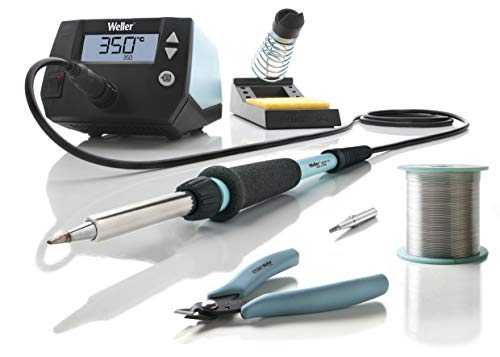
Weller WE1010EDU Soldering Education Kit 8-Piece

Plusivo 60W Digital Soldering Station Kit with Multimeter

EOOKU Helping Hands Soldering Station with Magnifying Lamp
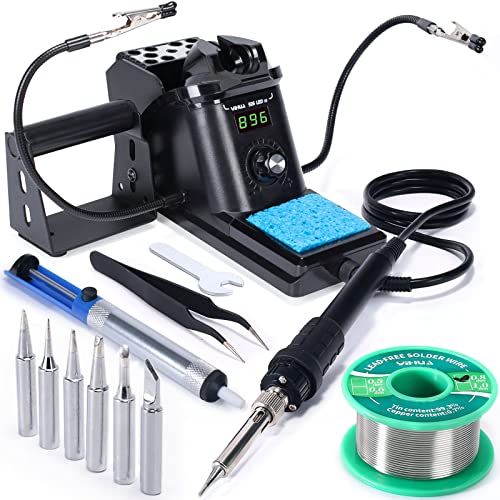
YIHUA 926 III 60W Soldering Station Kit with Twin Helping Hands

YEJJET Easy Silver Solder Wire 22 Gauge 5 FT
A Closer Look At Each Pick
The Weller WE1010EDU arrives as a complete bench bundle rather than a loose collection of parts. The WE1010NA station pairs with a WEP70 iron and PH70 safety rest, and the included 170MN shear cutter plus lead-free solder spool cover the first sessions without a second shopping trip. For a home studio running repeatable classes, that all-in-one nature trims setup time considerably.
Weller’s reputation lives in professional shops, and the Education Kit pulls from that same component family. You get a station known for steady heat recovery, not a toy iron wrapped in marketing. Compared with the Plusivo station below, the Weller costs more, but the build quality and tip consistency tend to justify it for committed learners and small-batch teachers.
A Strong Showing
- Complete 8-piece bundle covers station, iron, rest, cutter, and solder in one box
- WEP70 iron offers the tip stability students need when learning heat control
- PH70 safety rest keeps the iron parked securely between joints
- Lead-free solder included, which keeps indoor studio air cleaner during long sessions
Things To Consider
- Higher entry cost than the Plusivo or YIHUA stations if budget is tight
- No dedicated third-hand or magnifier included, so detailed jewelry work needs a separate helping-hands tool like the EOOKU station
Whose Shelf It Belongs On
Studio owners, classroom instructors, and serious hobbyists ready to invest in a station they can keep for years.
A Better Fit Elsewhere
Budget-focused beginners who mainly want a digital station with extras should look at the Plusivo 60W Digital Soldering Station Kit with Multimeter instead.
Plusivo packs a full starter ecosystem into a single box, which makes it appealing for newcomers who want one shipping label instead of three. The 60W digital station tops out around 932°F (500°C) and includes a calibration feature, so the temperature readout on the display actually matches what reaches the tip. That accuracy matters for jewelry work, where a few degrees decide whether solder flows cleanly or sits dull on the metal.
The real twist is the bundled digital multimeter and solder wire. Most soldering stations in this price range stop at the iron and stand, leaving you to source consumables separately. For someone setting up a first bench on a dorm desk or a corner of a craft room, the all-in-one approach removes a week of guesswork. The Weller kit above offers stronger long-term durability, but Plusivo wins on immediate completeness.
Key Advantages
- Five included solder tips cover most hobby jobs without a separate purchase
- °C/°F conversion suits users following either metric or imperial tutorials
- Standby and sleep modes extend tip life during long studio breaks
- Bundled multimeter lets you test jewelry circuits and small electronic repairs in one station
Points To Note
- Standby mode is helpful, but the iron body cools slower than the YIHUA’s auto-sleep function on repeat workdays
- Lacks the heavy steel base and magnifier that the EOOKU third-hand station provides, so small jump rings still need extra support
Right Fit For
First-time jewelry solderers and electronics tinkerers who want a single kit that handles both hobbies from day one.
Skip It When
Studios that focus purely on silver soldering and need a wide work surface should consider the EOOKU Helping Hands Soldering Station with Magnifying Lamp.
EOOKU takes a different angle from the digital stations above. Instead of obsessing over wattage or PID controllers, it gives you a 16.5″x10″ heavy-duty steel work surface, a non-slip silicone pad, and a 10X/5X magnifier that holds position where you set it. For jewelry work, that workspace-first approach is more useful than people expect, because the bottleneck on tiny silver pieces is rarely heat and almost always visibility.
The non-slip pad and multiple grooves hold rings, bezels, and findings without chasing them across the bench. Compared with the bare stand that ships with the Plusivo station, this platform essentially replaces your third hand. You will still need an actual soldering iron, but the EOOKU pairs naturally with any station on this list.
The Good Stuff
- 10+ magnetic accessories let you reconfigure the layout for each piece
- 10X and 5X magnification in one lamp helps with both fine bezel work and broader assembly checks
- Steel base weighs enough to stay planted even when the helping arms are extended
A Few Limitations
- Does not include a soldering station or iron, so the total cost climbs once you add one
- Magnifier lamp requires its own power outlet, adding another cable to an already crowded bench
Built With In Mind
Jewelry makers who already own a station but lose time hunting for dropped findings or squinting at solder seams.
Consider Something Else When
Beginners who do not yet own an iron should start with the YIHUA 926 III 60W Soldering Station Kit, which includes both a station and helping hands in one bundle.
The YIHUA 926 III covers more ground than most kits at this tier. PID temperature stabilization keeps the tip at the number you set, even when you draw a long bead across a silver cuff. Range runs from 194°F up to 896°F, which gives low-heat work for delicate findings and high-heat for chunkier joints without swapping stations.
What makes this kit feel complete for jewelry is the twin helping-hands package and six extra tips. Where the Plusivo kit includes a multimeter aimed at electronics hobbyists, YIHUA leans into the hands-on bench experience. You also get lead-free solder, a solder sucker for cleanup, and stainless tweezers, which means you can sit down and start a real repair the same afternoon you unbox it.
Strong Points
- Six extra iron tips mean you can switch from a fine pinpoint to a chisel tip mid-project
- Twin helping hands hold components from two angles, useful for ring soldering and prong work
- Auto-sleep function cools the iron when you walk away, extending tip life on long studio days
- Lead-free solder and solder sucker included for cleaner joints and quick rework
Honest Caveats
- Heavier and bulkier than the Plusivo station, so a tiny desk may feel crowded
- Calibration takes a few minutes on first setup, which beginners may find fiddly
Feature Snapshot
Best Suited To
Intermediate jewelry makers who solder rings, pendants, and small silver pieces on a regular basis and want a stable, all-around station.
Look Elsewhere When
Classroom instructors running multi-student sessions should look at the Weller WE1010EDU Soldering Education Kit for its professional-grade iron and safety rest.
Most soldering kits ship with a generic lead-free wire that works fine for electronics but leaves silver jewelry joints looking dull. The YEJJET Easy Silver Solder steps into that gap with 65% silver content and a 22-gauge thickness that flows at a real silver-melting range. Solidus sits at 1240°F and liquidus at 1326°F, which means you can pair it with a torch or a high-heat station without the wire balling up before it spreads.
Five feet of wire is enough for dozens of small repairs, and the 0.64mm thickness feeds smoothly through standard third-hand clips. Think of this as the consumable upgrade to whichever station you choose. The Weller or YIHUA kit handles the heat, this roll handles the join, and the result is a brighter, stronger bond on sterling pieces.
Points In Its Favor
- 65% silver content produces a color match closer to sterling than generic lead-free wire
- 22-gauge thickness feeds cleanly through standard solder feeders and third-hand clips
- Melting range suits both torch work and high-heat stations
Practical Considerations
- Requires a torch or a station that reaches the 1240°F solidus, so it will not work on entry-level 60W irons running at typical electronics temps
- Flux is not included, so you will need a separate silver-solder flux to prevent oxidation during flow
Who Should Grab It
Jewelers repairing sterling rings, chains, and pendants who want a true silver-colored joint rather than a gray tin-lead seam.
Reach For A Different Pick When
Beginners still learning heat control on a basic station should start with the lead-free solder included in the Plusivo 60W Digital Soldering Station Kit before moving to silver-specific wire.
What To Weigh Before Choosing A Soldering Setup
Temperature Control And Stability
Steady heat matters more than peak wattage in jewelry work. A station that swings 30 degrees every time you touch a joint leaves you chasing temperature, not placing solder. Look for digital displays with PID (proportional-integral-derivative) feedback, which adjusts power in small bursts to hold the setpoint. The YIHUA 926 III builds this in at a mid-tier price, while budget stations often skip it.
Workspace, Hands, And Magnification
A bench crowded with loose parts eats time fast. Heavy steel bases, magnetic accessory pads, and adjustable helping arms free both your hands for the actual joint. The EOOKU platform turns a chaotic corner of a desk into a usable station, and pairing it with a magnifier removes the eye-strain that comes with squinting at 2mm bezels.
Real Silver Vs. Generic Solder
Lead-free electronics solder looks gray on sterling and tarnishes faster. For true silver joining, a 65%-silver wire like the YEJJET roll flows at a higher range and matches the parent metal. Plan on adding a matching flux, because silver solder without flux oxidizes before it bonds. Beginners usually start with the generic wire that ships in their kit, then upgrade once they understand heat control.
Key Considerations Across These Picks
Pitfalls Shoppers Hit
First-time jewelry solderers often buy the cheapest station on the shelf and then wonder why their solder balls up instead of flowing. The usual culprit is insufficient temperature range, not bad technique. Another common miss is skipping the helping hands, which forces you to hold the work, the iron, and the solder at the same time. Pick a kit that includes the hands or budget for the EOOKU platform alongside your station.
Where The Extra Money Goes
The jump from a generic 60W station to the Weller WE1010EDU pays for iron longevity, tip consistency, and a safety rest that survives daily use. With digital stations, paying more typically means better PID control, more accurate displays, and sleep modes that protect the tip during long breaks. For silver soldering, the upgrade from standard wire to the YEJJET 65%-silver roll delivers a brighter joint that actually matches the metal, which is the kind of detail customers notice on a finished piece.
Frequently Asked Questions
What wattage do I need for jewelry soldering?
Most jewelry soldering sits between 30W and 60W, because the work is small and the heat needs to stay localized. Anything above 80W risks lifting fine details off the metal. The Plusivo and YIHUA stations both run at 60W, which gives you enough recovery time for continuous seams without scorching the surrounding silver.
Can I use a regular soldering iron for silver jewelry?
For very small repairs on thin silver, yes, but the joint will be weaker and darker than a true silver solder. A standard iron also cannot reach the 1240°F solidus of silver solder wire, so the YEJJET roll needs a torch or a high-heat station. For sterling rings and chain work, plan on dedicated silver solder rather than generic electronics wire.
Do I really need a helping-hands tool?
For anything smaller than a pendant, yes. Holding a ring, a solder pick, and an iron at the same time is the fastest path to a missed joint or a burned finger. The twin helping hands in the YIHUA 926 III kit or the EOOKU platform both solve this. If you skip it, you will build a third-hand habit out of tape and weights, which never works as well as it sounds.
What is PID temperature control?
PID stands for proportional-integral-derivative, a feedback loop that adjusts power in small, smooth corrections to keep the tip at the temperature you set. Cheaper stations use simple on-off control, which causes the tip to overshoot and dip repeatedly. For jewelry, where a few degrees decide between a clean flow and a scorched surface, PID control makes a noticeable difference.
How long does a soldering tip last?
A quality tip lasts months with daily use, but only if you tin it before storage (coating the hot tip with a thin layer of solder) and avoid abrasive cleaning. Stations with auto-sleep or standby modes, like the Plusivo and YIHUA, extend tip life by cooling the iron during breaks. Once a tip turns black and refuses to hold solder, replacement is faster than restoration.




