


A good soldering pencil disappears in your hand. The tip heats fast, the grip stays cool, and the joint flows cleanly on the first try. The wrong one leaves you chasing cold solder joints, swapping tips, or tethered to a bench outlet when you really needed to crawl behind a stereo deck. This roundup pulls together nine solid options for electronics work, hobby pyrography (the art of burning designs into wood), and field repairs, with notes on who each one actually fits.
A Side-By-Side Look
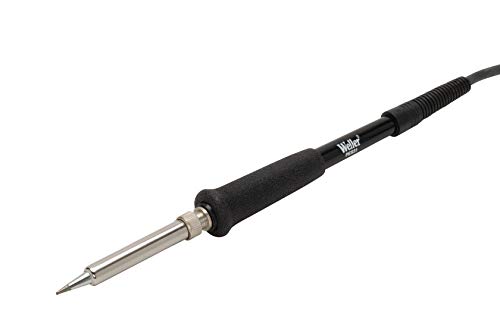
Weller 50-Watt Soldering Pencil (PES51)

Bakon Cordless Precision Soldering Iron Kit

MIYAKO USA 150-Watt Soldering Iron Pencil Welder (74B8150)
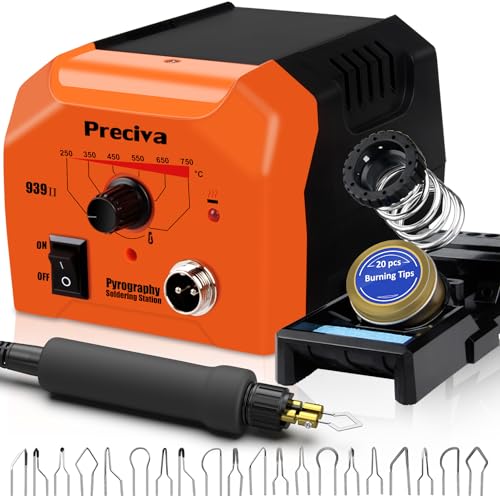
Preciva 40W Wood Burning Pen with 20 Tips

Kaisi K211 65W USB-C Soldering Iron Kit

Preciva 31-Piece Wood Burning & Soldering Kit

100W Pyrography Kit with LCD Display and 29 Tips
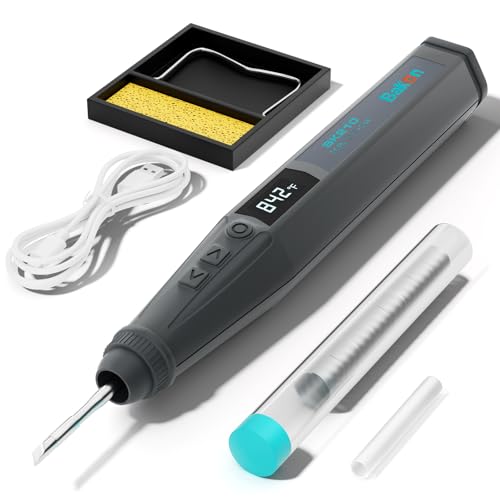
BAKON BK210 Cordless Soldering Iron (Slate Grey)

BAKON BK210 Cordless Soldering Iron Kit with C210 Tip
More Details On Our Top Picks
The Weller PES51 is a slim 50-watt pencil designed to drop into a Weller WES51 station, which is the kind of setup you’ll find on plenty of repair benches and school electronics rooms. Its temperature range stretches from 350°F to 850°F, giving you room for both delicate through-hole work (components with wire leads pushed through holes on a circuit board) and sturdier connections on slightly larger pads.
Unlike the cordless options elsewhere in this list, this pencil needs its parent station to run. Owners commonly rely on it as a daily driver that just keeps working, and replacement tips are widely available. For anyone already invested in the Weller ecosystem, it slots in without a learning curve.
Useful Touches
- Slim, pencil-style grip that doesn’t fight your hand on long sessions
- Wide 350°F to 850°F range covers most electronics and light chassis work
- 50W output recovers heat quickly between joints
- Compatible with the common WES51 station platform, so spares and tips are easy to source
Worth Noting
- Requires a separate Weller station, so it isn’t a grab-and-go tool on its own
- No digital readout; you set temperature at the station, not on the pencil
Made For
Workshop regulars and electronics students who already own, or want to own, a Weller bench station.
Where Another Pick Suits Better
The BAKON BK210 Cordless Soldering Iron Kit fits technicians who need to leave the bench and work on installed equipment.
The Bakon Cordless Precision kit solves a specific headache: working on a guitar amp, a car harness, or any device that isn’t sitting politely on a bench. An 1100mAh internal cell runs the iron at up to 10W DC in cordless mode, and a Type-C port switches it into 12W AC corded mode when the battery runs low.
Compare that to the Weller PES51, which is firmly chained to its station, and the appeal of this little tool becomes obvious. The integrated heating core paired with a C210-series tip (a standardized tip shape used across many modern soldering tools) melts solder in roughly seven seconds, so you’re not waiting around for thermal recovery on quick repairs.
Everyday Perks
- Dual-mode operation covers both field work and bench sessions
- Seven-second heat-up keeps short repair jobs moving
- Standard C210 tip compatibility means replacements are easy to find
- Lightweight body reduces fatigue during overhead repairs
Trade Offs
- Ten watts in cordless mode is light for chassis or battery-tab work
- The smaller 1100mAh battery tops out around 40 minutes per charge under load
Who It Suits Best
Mobile technicians and hobbyists who need portability more than maximum wattage.
Skip It When
The MIYAKO USA 150 Watts Heavy Duty Soldering Iron is the better match for heavy gauge wire and metalwork.
Where the Weller PES51 is a scalpel, the MIYAKO 74B8150 is a club. Rated at 150 watts with a high-output mica heater (a thin mineral sheet that resists electrical current and turns it into heat), this pencil reaches working temperature in seconds and holds it across thick copper joints, ground planes, and beefier wire.
For through-hole and surface-mount work on tiny boards, that much heat is overkill, but the trade-off shows up in chassis repair, audio amplifier builds, and any job where thermal mass would otherwise stall a smaller iron. The red reinforced plastic and rubber handle is textured to stay put, and a built-in power switch means you can leave the cord plugged in without cooking the tip.
Practical Advantages
- 150W output tackles large joints and ground planes without stalling
- On-body power switch is more convenient than unplugging at the wall
- Replaceable long-life tip reduces long-term running cost
- Textured handle helps during extended, sweaty sessions
Points To Note
- Too much heat for fine SMD (surface-mount device) components if not carefully dialed back
- Heavier body can cause hand fatigue on long detail work
Right Fit For
Audio repair, automotive wiring, and metalwork where you need heat reserve more than micro-precision.
A Better Fit Elsewhere
The Kaisi K211 65W USB-C Soldering Iron Kit suits laptop-bench electronics work where lower thermal mass protects small components.
The Preciva 40W wood burning pen lives on the hobby side of the soldering world. Temperature adjusts from 482°F to 1382°F, which covers everything from soft basswood shading to deep leather branding, and 20 included tips mean you can sketch, shade, and stamp without buying extras right away.
For soldering small electronics, the lower wattage will feel underpowered, but that’s not really the point. The heat-resistant handle is comfortable, and the wide tip range lets beginners experiment without committing to expensive replacements.
Good Reasons To Consider
- 20 tips cover most beginner pyrography techniques out of the box
- Wide 482°F to 1382°F range spans wood, leather, and light cork work
- Heat-resistant grip keeps hands comfortable on longer sessions
- Accessible price for someone trying the craft for the first time
Small Caveats
- 40 watts is light for any real electronics soldering
- Tip changes require a cool-down wait, which interrupts workflow
Best Suited To
First-time wood burners and crafters who want variety without a steep up-front cost.
Consider Something Else When
The 100W Pyrography Kit with LCD Display fits makers who want faster heat-up and precise digital control.
The Kaisi K211 is a small, modern iron that runs from a USB-C power source, which is a quiet convenience if you already live in a laptop-and-dock world. Three C210-style tips (I, IS, and K) come in the box, and the temperature range of 212°F to 842°F covers most through-hole and SMD rework.
It also has a few grown-up features: temperature calibration, auto-sleep to protect the tip, and a screen that flips depending on which hand you hold it in. For a 65W tool, heat recovery is solid, though like any pencil-style iron it isn’t built for thick chassis work.
What Helps Most
- USB-C power works with laptop docks, power banks, and PD (Power Delivery) chargers
- Three included C210 tips cover most common pad sizes
- Auto-sleep mode extends tip life during idle moments
- Flippable display suits both left- and right-hand users
Honest Caveats
- Not cordless; needs a power source that can sustain 65W output
Perfect Match For
Engineers and students who do a lot of small-board rework at a laptop rather than a fixed bench.
Look Elsewhere When
The Bakon Cordless Precision Soldering Iron Kit is the right answer when no power outlet is anywhere nearby.
Preciva’s 31-piece kit tries to bridge two crafts, soldering and pyrography, in a single pen-style iron. The temperature range of 482°F to 1382°F is wider than a typical electronics iron, and the tip assortment covers calligraphy, soldering, and leather embossing in one box.
You give up some refinement on the electronics side, since dedicated soldering tools tend to hold temperature more accurately under load. For someone dabbling in both, though, the convenience of one device and 31 accessories is hard to argue with. The 40W core keeps the price friendly, but heavier joints will be a stretch.
The Upside
- 31 accessories let you try multiple crafts without extra purchases
- Wide 482°F to 1382°F range covers wood, leather, and light soldering
- Pen-style form factor is comfortable for both writing and detail work
Where It Is Less Suited
- 40W output runs out of steam on larger solder joints
- Not a specialist tool, so it lacks the precision of dedicated electronics irons
- Storage for 31 tips and accessories can be a hassle in a small workspace
Whose Shelf It Belongs On
Cross-discipline hobbyists who want one iron for both pyrography and occasional soldering.
Reach For A Different Pick When
The Kaisi K211 65W USB-C Soldering Iron Kit is the smarter tool for daily electronics work.
Preciva’s 100W kit steps up significantly from the entry-level pen above. A ceramic heating element (a type of heater that responds quickly to power changes, giving more accurate temperature control) takes the iron to working temperature in about 45 seconds, and the digital LCD lets you dial in anywhere from 392°F to 932°F without guessing.
The kit also bundles 29 tips, stencils, colored pencils, and wood pieces, so a beginner can start a project within minutes of unboxing. Owners commonly report that the LCD readout makes repeat settings much easier to replicate between sessions, and the higher wattage helps when shading larger panels.
What Earns Its Place
- 100W output keeps heat steady even on bigger wood pieces
- Digital LCD eliminates the dial-and-hope approach to temperature
- 29-tip assortment covers shading, calligraphy, and fine line work
- Bundled stencils and starter materials shorten the learning curve
Practical Considerations
- Larger brick-style power supply takes up more bench space than a slim pen
- Higher price than the 40W kit, which may not suit a casual dabbler
Who Should Grab It
Detail-oriented woodworkers who want repeatable temperature settings and a ready-to-go kit.
Swap It Out When
The Preciva 40W Wood Burning Pen is a leaner choice for someone still exploring the craft.
The BAKON BK210 in Slate Grey is a focused take on a single tool: a cordless soldering iron with a smart display and a long-lasting battery. A 3200mAh internal cell runs the iron for over an hour of continuous work, and Type-C charging means any modern power bank or laptop brick can top it up.
The LCD shows real-time temperature, and a customizable auto-sleep timer protects the tip during pauses. Compared to the Bakon Precision kit, the BK210 trades a smaller body for more battery, which matters on installations where you might solder for an hour straight without a power outlet.
What It Does Well
- 3200mAh battery delivers over 60 minutes of cordless work per charge
- Real-time LCD readout makes temperature drift easy to spot
- Auto-sleep function extends tip life on longer jobs
- Type-C recharging works with most modern chargers and power banks
Factors To Consider
- Iron only, no extras in the box; tips and accessories sold separately
Built With In Mind
Field service technicians who need dependable cordless runtime more than a full accessory kit.
Where A Sibling Pick Shines
The BAKON BK210 Cordless Soldering Iron Kit adds a C210 tip and child-lock safety for shared environments.
The kit version of the BK210 wraps the same cordless iron in a more complete package. You get a C210 tip, an adjustable range of 356°F to 842°F, and an LED digital display that makes calibration straightforward. Heat-up lands around eight seconds, which is brisk enough to keep small repair queues moving.
The auto-hibernation feature, which puts the iron to sleep when it’s idle, and the child lock make this a comfortable pick for shared workspaces, classrooms, and homes where curious hands might wander close. The 3200mAh battery delivers around 60 minutes at 840°F on wireless power, and Type-C recharging keeps things flexible.
Notable Gains
- Full kit with C210 tip included, so you can start soldering right away
- Eight-second heat-up keeps short jobs snappy
- Auto-hibernation and child lock add safety in shared spaces
- LED display simplifies precise temperature adjustment
Things To Weigh
- Pricier than the iron-only BK210 above
- Higher output settings drain the battery faster than lower-temperature work
Who Will Love This
Classroom instructors, repair cafés, and homeowners who want a safe, ready-to-go cordless kit.
Not Your Match When
The Weller 50-Watt Soldering Pencil (PES51) is a stronger choice for a fixed bench with a station already in place.
What To Weigh Before Choosing Your Next Soldering Pencil
Wattage And Temperature Range
Wattage, the electrical power a tool draws, determines how fast the tip recovers heat after each joint. A 30 to 60W iron handles most through-hole electronics comfortably, while 100W and above becomes useful for chassis work, large ground planes, and thick copper. Temperature range matters too; a wider spread covers both delicate SMD components and higher-temperature tasks like stained glass or heavy wire tinning (coating wire strands with a thin layer of solder so they hold together when twisted).
Corded Vs. Cordless Form Factor
Corded irons deliver consistent power and unlimited runtime, which suits long bench sessions. Cordless pencils trade continuous power for freedom, and battery life, typically 40 to 60 minutes, becomes the limit. For installers, automotive techs, and anyone working on equipment that’s already mounted, cordless saves time. For dedicated repair benches, corded still wins on endurance and thermal stability.
Tip Compatibility And Accessories
Standardized tip families, like the C210 series used by Bakon and Kaisi, make replacements cheap and easy to find. Kits that ship with multiple tips cost more up front but save the hassle of sourcing them later, and for wood burning especially, tip variety defines what styles you can attempt.
Ergonomics And Intended Use
A thin pencil-style grip suits detail work and reduces fatigue on small boards. Heavier pistol or chunky tools give better leverage for plumbing and heavier joints but tire the hand faster on long electronics sessions. Match the grip to the dominant task in your workflow, not the other way around.
Key Considerations Across These Picks
Common Buying Mistakes Worth Dodging
Picking by wattage alone is a frequent trap. A 150W iron that overshoots a tiny SMD pad will lift traces faster than a 40W tool used patiently. Equally common is ignoring tip ecosystem: a cheap iron with a proprietary tip can become expensive once you need three different shapes. Match the tool to your most common task, and check that tips and accessories will still be available in a year or two.
What The Higher Tier Buys You
Stepping up to a feature-rich kit like the 100W LCD pyrography set or a smart cordless iron like the BK210 mostly buys precision and repeatability. Digital readouts, calibration controls, and auto-sleep protect both the tool and your work. For casual weekend projects, that overhead is hard to justify, but anyone soldering or burning daily will feel the difference within a few sessions.




