


Whether you fix game controllers on weekends, restore vintage audio gear, or wire up your own Raspberry Pi hats from scratch, the right soldering station turns a frustrating job into a smooth one. The category splits roughly into three camps: dedicated iron stations, hot air rework stations for SMD (surface-mount device) work, and “helping hands” rigs that hold everything still. Most hobbyists benefit from owning a little of each. The picks below cover the full spread, from a workhorse iron for daily through-hole joints to a magnifier-equipped bench rig for fine pitch work, so you can match a station to the kind of electronics you actually work on.
A Closer Look At The Lineup

Hakko FX888DX-010BY Digital Soldering Station (Blue/Yellow)

SainSmart Magnetic Helping Hands Soldering Station with LED Magnifier
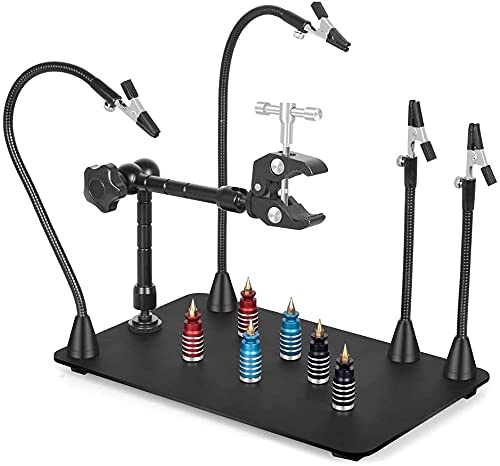
NOEVSBIG Magnetic Helping Hands with Heavy-Duty Steel Base
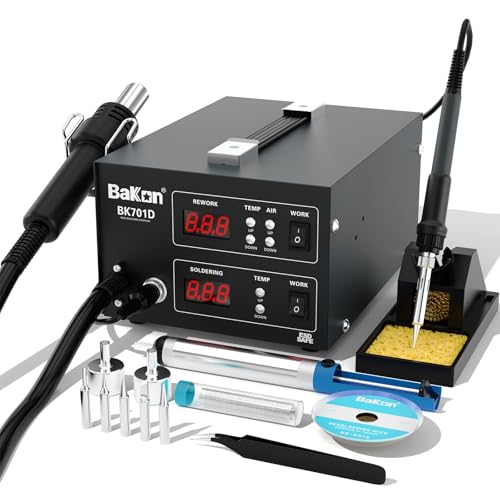
BAKON BK701D 700W 2-in-1 Hot Air & Soldering Station

BAKON 852D+ Heat Gun and Soldering Iron 2-in-1 Kit
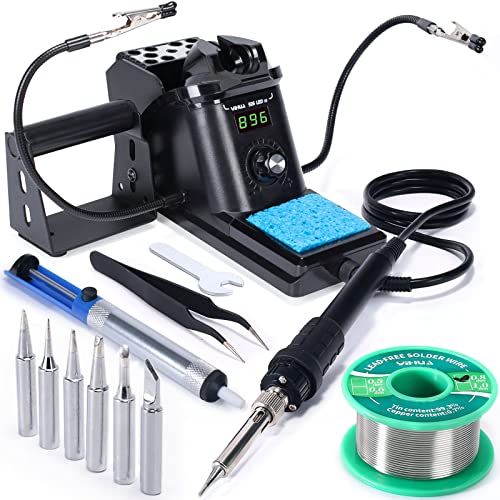
YIHUA 926 III 60W Digital Soldering Iron Station Kit
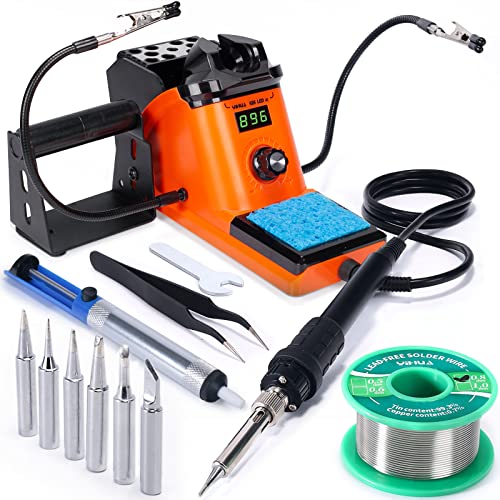
YIHUA 926 III 60W LED Display Soldering Iron Station Kit

YIHUA 926 III Soldering Iron Station Kit with 12-in-1 Helping Hands

BAKON BK602S 2-in-1 Soldering and Hot Air Rework Station
What Each Pick Brings To The Table
Hakko’s FX-888DX slots in as the workhorse iron for someone who lights up their bench several times a week. The signature rotary encoder (a turn-and-click dial that replaces a row of up/down buttons) makes nudging temperature feel precise instead of fiddly, and the digital readout sits in plain sight so you can confirm the tip temperature at a glance.
It targets hobbyists who already know the difference between a chisel tip and a conical tip and want a station that simply gets out of the way. Compared with the helping-hands stations further down the list, the FX-888DX is a tool, not a rig: it heats the iron, not your board. That’s the right call for through-hole work and the kind of mid-volume repair that justifies a dedicated controller.
The Good Stuff
- Rotary encoder for fast, one-handed temperature tweaks mid-job
- Digital readout confirms setpoint and reduces guesswork on delicate joints
- Parameter lock prevents accidental calibration shifts when you bump the dial
- Blue-and-yellow chassis is easy to spot on a crowded bench
- Hakko’s tip ecosystem is broad, so replacements and shapes are easy to find
Things To Consider
- Iron, stand, and tips are sold separately on some listings, so factor that into the budget
- No helping-hands or magnifier built in; you’ll likely pair it with a separate holder
At A Glance
Best Suited To
Hobbyists and technicians who want a long-life daily iron and don’t mind adding a separate helping-hands rig for board holding.
Reach For A Different Pick When
The BAKON BK701D suits you better if most of your work is phone or laptop rework that needs a hot air gun alongside the iron.
Where the Hakko above is a soldering iron first, this SainSmart rig is a third-hand-and-a-magnifier first. The 11.1 x 7.1 inch base gives you real estate to spread out a board, and the four magnetic gooseneck arms can be planted anywhere on the steel surface to clamp a PCB (printed circuit board) from four angles at once.
The integrated 5X LED magnifier is what separates this from a bare helping-hands frame. If you’ve ever squinted at 0402 resistors and wished your eyes still worked, the lamp is the reason to put this on your bench. It’s a comfortable partner for any iron you already own, including the YIHUA kits further down.
Where It Excels
- Five-times magnification built into the lamp, no extra clamp needed
- Four flexible arms give a stable four-corner hold on irregular boards
- Large 11.1 x 7.1 in footprint fits standard dev boards and breakout shields
- Magnetic feet let you reposition clamps in seconds when a board changes shape
Worth Noting
- No soldering iron included; this is a holder-and-lamp rig, not a station
- LED magnifier needs power, so plan a free USB or wall outlet nearby
Who It Suits Best
Inspectors and detail-focused builders working on SMD and small-pitch components who already have a separate iron they trust.
Look Elsewhere When
The YIHUA 926 III 12-in-1 kit makes more sense if you want a holder, magnifier, and iron in a single box.
The NOEVSBIG trades the magnifier for sheer plant-on-the-bench stability. The powder-coated steel base weighs more than 3.3 pounds, which sounds trivial until you lean into a stubborn joint and watch lighter rigs scoot across the desk. This one parks itself.
It also gives you the widest jaw opening in this roundup at 2.16 inches, so the alligator clamps can swallow chunky battery holders, BGA (ball grid array) rework fixtures, and oddly shaped harnesses. Think of it as the heavier sibling to the SainSmart above: same magnetic arm concept, more mass behind it.
What Makes Sense
- 3.3 lb powder-coated base resists sliding when you apply side pressure
- Rubber feet protect your worktop from scratches and dampen vibration
- 2.16-inch jaw opening fits bulky parts that smaller clamps cannot grip
- Four flexible metal arms with strong magnetic feet reposition in a second
Trade Offs
- Heavier to store on a shelf or move to a different workstation
- No magnifier, so tiny joints still need a separate loupe or your reading glasses
Made For
Shop owners and serious hobbyists who push hard on connectors and want a rig that refuses to walk across the bench.
A Better Fit Elsewhere
The SainSmart is a smarter pick if built-in magnification matters more than raw base weight to your workflow.
The BK701D is a rework station in the literal sense: a 700W-class iron and a hot air gun sharing one chassis but operating on independent controls. That matters when you’re pulling a QFP (quad flat package) chip with hot air while tacking a new component with the iron, and you need both tools live at once.
It’s positioned for mobile phone and laptop repair, with SMD work and BGA reballing (reflowing tiny solder balls back onto a chip) firmly in scope. ESD-safe (electrostatic discharge-safe) construction helps protect sensitive components from stray static during the kind of board-level work this station was built for.
Good Reasons To Consider
- Independent iron and hot air channels let you work two tools at once
- 700W total output handles the thermal mass of larger SMD packages
- ESD-safe design suits modern static-sensitive components
- Suits phone, laptop, and circuit board repair under one chassis
Points To Keep In Mind
- Learning curve is steeper than a basic iron; read the manual before first power-up
- Bulkier footprint than a single-tool station, so reserve real bench space
Quick Facts
Whose Shelf It Belongs On
Phone and laptop repair techs, plus advanced hobbyists working on SMD and small-package reflow jobs.
Skip It When
The Hakko FX-888DX is a calmer fit for through-hole work and general electronics where hot air is overkill.
Where the BK701D above feels like a tech’s tool, the 852D+ leans into being a kit. It bundles the iron and hot air gun with a roll of lead-free solder, multiple tips, two hot air nozzles, ESD tweezers, a desoldering pump, and the small sundries that usually send you back to the retailer the day your first kit arrives.
That makes it a friendly starting point for someone who wants to do basic SMD rework without buying a separate solder sucker, brass cleaner, and tip set. The LED display and knob-based controls feel approachable rather than pro-only.
The Upside
- Lead-free solder, tips, and nozzles ship in the box; no immediate accessory buys
- ESD-safe tweezers included for SMD placement work
- Knob-controlled temperature is approachable for first-time users
- Two hot air nozzles cover different airflow patterns out of the gate
Soft Spots
- Lots of included parts means more setup time before your first joint
- Documentation tends toward minimal, so budget time for a YouTube walkthrough
Right Fit For
First-time rework setup owners who want a station, accessories, and consumables in one shipment.
Consider Something Else When
The YIHUA 926 III 60W kit is a quieter starting point if you mainly need an iron, not a hot air station.
YIHUA’s 926 III has become a default recommendation for a first soldering station, and the 60W digital-display version is the most direct expression of that. A PID temperature loop (a control algorithm that constantly adjusts power to hold the setpoint steady) holds the tip temperature where you set it, the iron heats up quickly, and the kit arrives with most of what a beginner needs.
It’s a sensible pick for someone setting up a hobby bench on a smaller surface. Two helping hands, six extra tips, lead-free solder, a desoldering pump, and tweezers cover the first few months of projects. For a starter in 2026, this is a calm, predictable way to begin.
Notable Upsides
- PID temperature control holds setpoint during longer joints
- Auto-sleep extends tip life when you forget to switch it off
- Full kit: tips, solder, sucker, tweezers, and a pair of helping hands
- Switchable °C/°F readout is helpful when reading foreign datasheets
Honest Caveats
- No hot air, so SMD-heavy work is out of reach for this station alone
- Helping hands are basic; a heavy job will still benefit from a separate rig
Feature Snapshot
Perfect Match For
First-time bench builders, students, and DIYers who want everything in one box and a forgiving learning curve.
Not Your Match When
The BAKON BK602S makes more sense if you specifically want hot air and a small footprint from day one.
This is the LED-display sibling of the 926 III kit above. Functionally the iron and the included accessories are nearly identical, but the LED readout (rather than the segment-style display on the digital model) makes the temperature pop in a dimly lit shop.
It’s a smart pick when the small display difference matters to your eyes more than the price difference matters to your wallet. The PID loop, auto-sleep, °C/°F toggle, and accessory load are the same, so there’s no functional sacrifice to make for the readout style.
Notable Gains
- LED display stays readable in low light
- Same dependable 60W iron and PID control as the digital-display model
- Auto-sleep, calibration support, and °C/°F conversion are all present
- Full kit with tips, solder, sucker, and helping hands included
Less Ideal Details
- Still no hot air, so SMD-only projects remain out of reach
- Helping hands are lightweight, so heavy parts benefit from a sturdier rig
Who Should Grab It
Hobbyists who solder mostly in low light and want a brighter readout without giving up kit-style value.
Swap It Out When
The YIHUA 926 III 12-in-1 kit is the better call if integrated helping hands matter more than display type.
The third YIHUA entry on the list is the most integrated of the trio. Instead of a separate helping-hands add-on, the 12-in-1 base folds board-holding, solder dispensing, a heat-resistant iron rest, and a tip cleaner into a single footprint.
It targets the entry-level DIYer who wants a tidy first station and doesn’t want to chase accessories across multiple shopping carts. The 60W ESD-safe iron with PID control is the same dependable core as the other 926 III kits, just dressed with a more capable base.
Points In Its Favor
- Integrated 12-in-1 base reduces desk clutter for small benches
- Built-in solder dispenser keeps wire within thumb’s reach
- ESD-safe iron protects delicate components during repair work
- Heat-resistant iron rest adds a margin of safety during long sessions
Trade-Offs To Consider
- Single-tool design, so a hot air gun still has to come from a separate station
- Integrated base is harder to reposition mid-project than a magnetic rig
Built With In Mind
DIYers and hobby students setting up a first all-in-one bench on a small desk or shared workspace.
Where A Sibling Pick Shines
The SainSmart rig wins if you want a magnifier and four magnetic arms over a fully integrated base.
The BK602S is the BAKON answer to a small-footprint rework station. It crams a soldering iron and a hot air gun into one compact chassis with independent switches, so you can fire up just the iron for a quick joint or run both at once for a small SMD reflow.
PID-driven temperature control and switchable °C/°F readouts sit in the same compact shell, and an auto-sleep function cools the iron when you forget to power down. It suits a tight workshop bench where a full-size rework station simply won’t fit.
Useful Touches
- Compact 2-in-1 chassis frees bench space over a separate iron and heat gun
- Independent switches let you run iron and hot air solo or together
- PID temperature control holds setpoint through longer joints
- Auto-sleep extends tip and element life when the station sits idle
A Few Limitations
- Lower power than the BK701D, so very large packages may push the station
- Smaller chassis can run warmer in extended sessions; keep vents clear
Who Will Love This
Home tinkerers and small-shop operators who want hot air and an iron in one slim station for the occasional SMD job.
Where Another Pick Suits Better
The BAKON BK701D is the right upgrade for daily phone or laptop repair where higher wattage matters.
Picking A Soldering Station That Fits Your Bench
Iron wattage, tip ecosystem, and temperature control do the heavy lifting here. A 60W iron covers most through-hole joints, but a PID-stabilized loop is what keeps the tip from sagging mid-solder, which matters more for fine SMD than raw wattage. If you plan to remove or reflow SMD components, plan on adding a hot air station either as a 2-in-1 like the BK602S or a dedicated rework unit like the BK701D.
Helping hands deserve a second look. A heavy base, magnetic feet, and flexible gooseneck arms free both of your hands, which is the difference between a clean joint and a burnt fingertip. The SainSmart and NOEVSBIG rigs split along two different priorities: built-in magnification versus brute base weight. Pick the one that matches your most common joint size, since neither helps if the clamps are too small for your board.
ESD safety is non-negotiable for modern components. CMOS and MOSFET parts can be damaged by a static discharge you never feel, so an ESD-safe iron and grounded tip are worth the small premium. Finally, tip availability matters more than people expect. A station with a deep tip catalog lets you swap shapes for drag soldering, drag removal, and fine pitch work without buying a second station.
What To Watch For Across These Picks
Where Shoppers Go Wrong
The most common mistake is buying a high-wattage station and a flimsy helping-hands rig, then wondering why the joints look terrible. The clamp matters as much as the iron. A second slip is ignoring tip availability: a station with one tip shape forces you into a single soldering style, while a wider tip ecosystem grows with your skills. Finally, people underrate ventilation. Solder fumes aren’t a joke, and a small fan or fume extractor pays for itself the first time you sit at the bench for a long session.
What Separates Premium From Basic
The jump from entry-level to mid-tier stations is mostly about temperature stability and tip quality. PID loops hold the setpoint instead of letting it sag, and better tips transfer heat faster, which means shorter contact times and cleaner joints. The jump to higher tiers is about hot air integration, dual-channel control, and tougher chassis. You pay for the second tool and the build that can run it all day without overheating. The honest read is that a YIHUA-class kit handles the first year of serious hobby work just fine, and the upgrade makes sense once you know which jobs you actually do most.




