


A stubborn round of oak can turn a Saturday morning into a workout. The right splitting wedge fixes that, giving you a clean, repeatable break whether you’re stacking cordwood, felling a leaning maple, or breaking a stubborn boulder for a patio base. This roundup covers eight solid options across three categories: traditional steel log splitters, plastic spike wedges for chainsaw work, and feather-and-wedge sets for stone and concrete. You’ll see clear trade-offs in weight, material, and pack size, so the goal is matching the wedge to the job in front of you.
A Fast Comparison Of The Options

ESTWING Sure Split Wedge, 5lb Steel, E-5
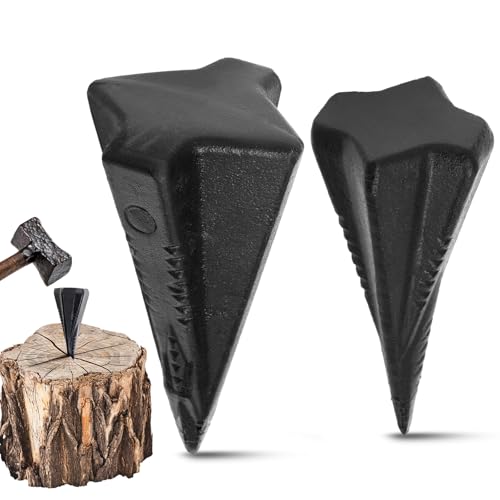
Otoolling 4lb & 5lb Wood Splitting Wedges (2-Pack)
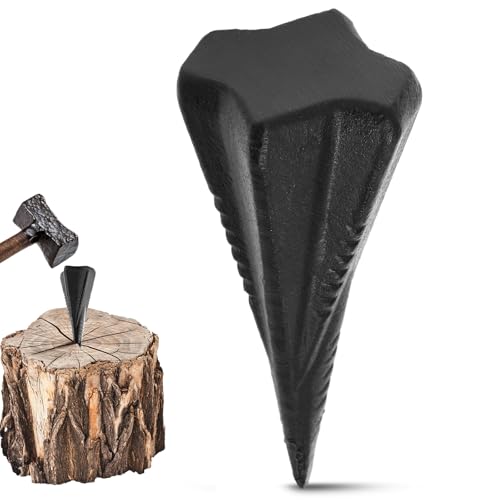
Otoolling 4lb Wood Splitting Wedge (Single)
Skyward 6-Pack Orange Spiked Logging Wedges, ABS (5.5″)

PetPhilia 12-Pack Rock Wedges 3/4″ with 1 Drill Bit

PetPhilia 16-Pack Rock Wedges 3/4″ with 2 Drill Bits

PetPhilia 7-Pack Rock Wedges 5/8″ with Drill Bit

AR-PRO 6-Pack Tree Felling Wedges with Spikes (8″ and 5.5″)
The Picks, Examined More Closely
The ESTWING Sure Split Wedge E-5 is the kind of tool you buy once and forget about. Forged from a single piece of steel, it carries a 5-pound heft that drives deep into knotty oak and stubborn elm without mushrooming at the striking face. The cutting edge measures 1-7/8″ across, which threads into a split cleanly and keeps the wedge from wandering sideways on the first swing.
You pair this wedge with a 6- to 8-pound hand sledge for best results, and the combo chews through rounds that fight a maul alone. Compared with the lighter Otoolling wedges coming up, the E-5 is the option for folks who split full cords every season rather than occasional weekend kindling.
Real-World Strengths
- One-piece forged steel construction, so there’s no welded head to pop loose after heavy use.
- 5-pound mass delivers solid momentum on the strike, transferring more energy into the log per swing.
- Wide 1-7/8″ cutting edge opens a deep, clean split that resists back-pressure from twisted grain.
- Compatible with any standard sledge or maul you already own, no special hammer required.
- Finish may be blasted or painted, so you can pick whichever surface treatment shows up without performance changing.
Worth Noting
- 5 pounds gets tiring over a long session, especially for shorter users or anyone working overhead rounds.
- Steel-on-steel striking means a quality sledge is essentially required to protect your striking tool.
Who It Suits Best
Homeowners with a wood stove or outdoor furnace who split multiple cords each fall and want one wedge that lasts decades.
Where Another Pick Suits Better
The Otoolling 4lb & 5lb Wood Splitting Wedges (2-Pack) is a smarter match for casual users who split a few face cords a year and want backup in the same order.
Buying one wedge at a time gets old fast, and the Otoolling 2-pack solves that by giving you both a 4- and 5-pound diamond-style wedge in a single order. The diamond cross-section (a tapered four-sided point) bites cleanly into the grain and tracks true as you swing, which is genuinely helpful on dense ash or beech.
You can drive both wedges into a stubborn round at once, working the split open from two sides rather than fighting one wedge alone. Versus the single 4-pound Otoolling entry below, this set gives you versatility across log sizes without doubling your budget.
Useful Strengths
- Two wedges in one order cover small and medium rounds without a second purchase.
- Diamond cross-section tracks straight through grain and resists popping out during strikes.
- Black finish helps you spot them in leaf litter or on a dusty woodpile.
- Moderate weights stay manageable for users who find the 5-pound Estwing tiring.
Honest Caveats
- Source details on the exact steel grade or forging method are limited, so durability on heavy commercial use is unverified.
- Two wedges invite more swinging, so a quality sledge is still a smart companion to protect your striking tool.
- Storage is essentially up to you; no case or wrap is included.
Made For
Weekend splitters working a face cord or two per year on a mix of softwood and hardwood rounds.
Consider Something Else When
The ESTWING Sure Split Wedge E-5 is the stronger pick for users splitting full cords of dense oak who want a longer-tracked forging heritage.
Sometimes you just need a single wedge, and the Otoolling 4-pounder fills that role without the bulk of a 5-pound head. The lighter mass means faster swings and less fatigue, which matters for shorter sessions or for users who don’t want to muscle a heavy wedge overhead onto a tall splitting block.
You give up some driving force, but the diamond profile still tracks well through standard rounds. Compared with the Estwing E-5, you trade raw impact energy for control, and for kindling-sized and small stove rounds, that’s often the right call.
A Favorable Mix
- 4-pound weight keeps arm and shoulder fatigue manageable over long sessions.
- Diamond cross-section gives the wedge a clean bite into grain.
- Black finish stands out on the ground when you set it down between swings.
Trade Offs
- Less mass means it stalls in very dense, knotty rounds where the Estwing would push through.
- Only one wedge in the box, so losing it means you’re back to ordering.
- Limited published detail on steel grade, so heavy commercial use isn’t its strong suit.
Best Suited To
Casual users splitting small rounds for a fire pit or wood stove a few times per season.
Look Elsewhere When
The Otoolling 4lb & 5lb Wood Splitting Wedges (2-Pack) makes more sense for anyone splitting a wider range of log sizes and wanting a backup wedge on hand.
Plastic spike wedges earn their keep when you’re working a chainsaw, not a splitting maul. The Skyward 6-pack uses molded ABS plastic (a tough, impact-resistant synthetic) with serrated teeth on the back end, and that design drives into a back-cut to tip trees exactly where you want them to fall.
The 5.5″ length is on the shorter side, so you reach for these on smaller trunks and mid-size branches rather than old-growth trunks. Versus the AR-PRO felling set covered later, this is the lighter, lower-impact option aimed at property owners who drop a handful of trees a year.
Positive Points
- ABS plastic construction keeps the wedges light and easy to carry through brush.
- Serrated teeth grip wood fibers and prevent back-slip when a tree starts to settle.
- Six-pack gives you spares for multiple work sites without reordering.
- Bright orange color is easy to spot in leaves and sawdust.
Points To Keep In Mind
- Plastic is no match for steel on a hardwood round; these are chainsaw companions, not splitting maul partners.
- 5.5″ length runs out of bite on larger trunks, where a longer 8″ wedge gives you more lift.
- ABS can deform if struck at an angle with a maul, so hammer placement matters.
Right Fit For
Homeowners clearing small trees or storm damage who want a low-cost felling set that pairs with their chainsaw.
A Better Fit Elsewhere
The AR-PRO 6-Pack Tree Felling Wedges with Spikes is the stronger pick for loggers working bigger trunks, with both 8″ and 5.5″ sizes in the same set.
Rock splitting works nothing like log splitting. Instead of driving a wedge into a soft face, you drill a series of holes, drop a steel feather (a curved shim) and wedge (a flat tapered strip) into each, and hammer the wedges to crack the stone along your chosen line. The PetPhilia 12-pack handles that workflow from start to finish.
You get twelve 3/4″ (18mm) feather-and-wedge pairs plus a single SDS-Plus compatible rotary hammer bit. SDS-Plus is the standard shank design for most corded and cordless rotary hammer drills. Each shim-and-strip assembly is 4.13″ long, sized for clean, controlled breaks on granite, marble, and concrete. The pack suits weekend hardscape work and is a sensible entry into stone work without a large upfront buy-in.
Reasons It Performs
- 3/4″ (18mm) diameter matches common rotary hammer bit sizes, so you drill and split with the same drill.
- 12 pairs let you set up a long line of holes for clean, straight breaks on large boulders.
- SDS-Plus drill bit included in the kit saves a separate purchase.
- 4.13″ shim-and-wedge length gives you enough reach for typical hardscape depths.
Possible Compromises
- One drill bit is the limit, so a misaligned hole or a stuck wedge means a stop work moment for a replacement bit.
- 3/4″ diameter is overkill for thin flagstone or very small splits, where a 5/8″ set is more efficient.
Whose Shelf It Belongs On
DIYers shaping a patio base, breaking up a concrete pad, or trimming landscape boulders over a weekend project.
Skip It When
The PetPhilia 16-Pack Rock Wedges 3/4″ with 2 Drill Bits is the better match for high-volume work or anyone who wants a backup bit from the start.
The 16-pack version of the PetPhilia stone-splitting kit takes the same 3/4″ (18mm) feather-and-wedge format and stretches it for bigger jobs. Sixteen pairs mean you can stage a much longer break line, which matters when you’re splitting a large embedded boulder or running a controlled fracture across a wide concrete pad.
You also get two SDS-Plus drill bits rather than one, so a worn or stuck bit doesn’t end the day. Each shim-and-strip pair is 4.13″ long. Compared with the 12-pack above, the extra sets and second bit are aimed at folks who treat stone work as a recurring task rather than a one-off project.
Why It Works Well
- Sixteen pairs let you crack long sections of stone or concrete without re-drilling between rounds.
- Two SDS-Plus drill bits give you a backup on the job, so a stuck or broken bit isn’t a deal-breaker.
- 3/4″ (18mm) diameter is the most common size for rotary hammer masonry bits.
- Works on granite, marble, and standard concrete, covering most landscape and remodel scenarios.
Less Ideal Details
- More pieces to keep track of, so storage and organization become a real ownership task.
- Higher count than a weekend DIYer typically needs, so the cost-per-pair value only kicks in on bigger jobs.
Who Should Grab It
Contractors and serious hardscape pros running repeated splits on stone or concrete where downtime costs money.
Reach For A Different Pick When
The PetPhilia 7-Pack Rock Wedges 5/8″ with Drill Bit is the cleaner choice for small, precise splits in flagstone or thin concrete where a 3/4″ hole is more than you need.
The 5/8″ PetPhilia set goes the other direction, trading raw splitting force for finer control. The smaller 5/8″ (16mm) diameter lets you drill tighter hole patterns and split thinner material without over-cracking the surrounding stone, which is exactly the situation you hit on flagstone walkways and detail tile work.
You get seven feather-and-wedge pairs plus a single SDS-Plus drill bit. Each shim-and-strip pair measures 4.13″ long, just like the 3/4″ kits. Compared with the 12- and 16-pack 3/4″ options above, this is the precision set rather than the heavy hitter.
Features That Help
- 5/8″ (16mm) diameter suits smaller rotary hammer bits and tighter stone patterns.
- Seven pairs cover a modest break line without leaving you with unused shims in the toolbox.
- SDS-Plus drill bit included so you can start work without sourcing a separate bit.
A Few Limitations
- Smaller diameter means slower progress on thick granite or large boulders where the 3/4″ kits chew faster.
- Only one drill bit included, so a backup means another purchase.
Perfect Match For
Hardscapers and detail-oriented DIYers trimming flagstone, shaping thin wall caps, or splitting small landscape rocks.
Where A Sibling Pick Shines
The PetPhilia 12-Pack Rock Wedges 3/4″ with 1 Drill Bit is the right call for breaking apart thick concrete pads or large boulders where bigger holes speed the work.
The AR-PRO set covers both ends of tree felling in one order. You get three 8″ wedges and three 5.5″ wedges, plus six felling “dogs” (the small toothed grip inserts that bite into the cut and stop the wedge from kicking back) and a storage bag to keep the kit together between jobs.
The longer 8″ wedges give you serious lift on mid-size trunks, while the 5.5″ pair handles smaller diameter work where the longer wedges are overkill. Compared with the Skyward 6-pack, this set brings a real size mix to the table and includes a bag, which is a small but practical ownership win.
Everyday Wins
- Mixed 8″ and 5.5″ sizes cover small saplings through mid-size trunks without swapping kits.
- Felling dogs grip the cut face and prevent the wedge from popping out as the tree shifts.
- Storage bag keeps the six wedges and dogs together on the way to a job site.
- Six total wedges let you stage multiple cut lines on bigger trees.
Room For Improvement
- Larger and heavier than the Skyward 6-pack, so it’s more tool to haul through a brushy lot.
- Two sizes can feel redundant if you only ever fell in one trunk diameter range.
Built With In Mind
Loggers, property managers, and serious homeowners dropping trees of varying sizes throughout the year.
Not Your Match When
The Skyward 6-Pack Orange Spiked Logging Wedges is a lighter, lower-cost fit for occasional felling on small-diameter trees.
What To Weigh Before Picking Your Splitting Wedges
The first decision is material, because it dictates what job the wedge can actually do. Forged steel is the right call for log splitting, where you need mass and impact resistance to drive deep into dense rounds. Plastic spike wedges pair with chainsaws for felling and limbing, and feather-and-wedge steel sets are the only real option for stone and concrete, since rock needs drilled holes to split cleanly rather than a single driving point.
Next up is weight, and it works against you in both directions. Heavier wedges (4 to 5 pounds in steel) drive deeper per swing, but they wear you out across a long session. Lighter plastic wedges are easier to carry through brush but stall out in hardwood rounds. Match the weight to the size of the rounds you typically split, not the largest one you’ve ever faced.
Sizing matters for two reasons. Wedge length controls how deep you can drive into a log, and pack size in feather-and-wedge kits controls how long a break line you can stage at once. A 3/4″ rock wedge set is the workhorse for landscape projects, while 5/8″ is the precision pick for thin stone where over-cracking is a real risk.
Finally, think about your striking tool. A heavy steel wedge demands a quality 6- to 8-pound sledge to drive it without bouncing or chipping. Plastic wedges take a standard maul or even a heavy axe, since you don’t need as much force to seat them in a back-cut. Buying a wedge without a matching hammer is the most common reason a splitting session goes sideways.
Key Considerations Across These Picks
Pitfalls Shoppers Hit
The most common mistake is grabbing a steel log splitter when the real job is felling. Plastic spike wedges are what guide a tree’s fall, and a 5-pound steel maul-and-wedge setup is no substitute for them. The categories look similar at a glance but solve different problems on the ground.
The second trap is over-buying in a feather-and-wedge kit. A 16-pack sounds like a deal until you realize you’ll drill four holes for a typical landscape rock, and the extras just take up shelf space. Match the pack size to the scale of the projects you actually have lined up, and only size up when you run a real production workflow.
Where The Extra Money Goes
Higher-tier steel wedges earn their price with tighter forging tolerances and harder alloys that resist mushrooming (flattening and cracking at the striking face) over years of use. A budget wedge can deliver the first dozen splits cleanly, then start to deform, and at that point you replace the whole tool. Paying for a forged single-piece build up front often means the wedge outlasts your sledge.
In feather-and-wedge kits, the upgrade typically buys you more pairs and a second drill bit, which is more about job-site resilience than tool longevity. If a single bit breaks mid-project, you’re stuck waiting for a replacement. The extra pairs of shims and wedges also let you stage longer break lines on large boulders without re-drilling between setups.
Frequently Asked Questions
What’s the difference between a splitting wedge and a felling wedge?
A splitting wedge drives into logs with a sledge to break wood along the grain. A felling wedge has a flat base and serrated teeth that drop into a chainsaw back-cut, lifting the tree in your chosen fall direction.
Do I need a sledgehammer to use a steel splitting wedge?
For best results, yes. Steel wedges need the impact mass of a 6- to 8-pound sledge to drive fully into a round. A standard axe handle can chip or split under repeated heavy blows on a steel head.
Can rock splitting wedges work on concrete?
Yes, the feather-and-wedge method works on standard concrete, granite, and marble, because the same drill-and-drive principle opens a clean fracture along your line of holes regardless of the stone type.
How many feather-and-wedge pairs do I need per break?
Most landscape rocks split cleanly with three to five pairs spaced about 4 to 6 inches apart along your break line. Larger boulders or concrete pads benefit from six to ten pairs for a controlled, even fracture.
Are plastic felling wedges strong enough for hardwood?
For mid-size hardwoods up to roughly 12 inches in diameter, yes. Larger trunks benefit from 8″ steel-reinforced wedges, since ABS plastic can deform under repeated heavy hammer blows on big timber.




