


Latex paint behaves differently from lacquers or stains. It’s thicker, water-based, and can clog cheap tips in minutes if your spray gun isn’t set up for it. Whether you’re refreshing a living room, finishing a fence, or tackling a full exterior repaint, the right gun makes the difference between a smooth professional-looking coat and a frustrating afternoon of runs and tip dries. This roundup covers full sprayers, gravity-feed guns, and the supporting accessories that keep latex flowing cleanly, with a clear note on which jobs each one handles best.
The Choices Worth Comparing

Wagner Control Pro 130 HEA Paint & Stain Sprayer

Graco 60-Mesh Spray Gun Filter for SG2/SG3

Titan Capspray Maxum II HVLP Spray Gun

KEHE Classic X LVLP Spray Gun Regular Kit

KEHE Classic X LVLP Spray Gun Starter Kit
KEHE Disposable Paint Cup System 12 oz
Fuji Spray 5100-5 Aircap Set #5-1.8mm

Wagner Control Spray QX2 HVLP Stain Sprayer

Wagner FLEXiO 570 HVLP Paint & Stain Sprayer
Meet The Standout Selections
The Control Pro 130 sits in a different weight class than most handheld units, which makes sense once you unpack it. This is an airless sprayer, meaning it pressurizes paint directly without mixing it with air, and the HEA (High Efficiency Airless) designation refers to its soft-tip design that breaks the paint into a gentler pattern. For homeowners staring down a multi-room repaint or a full exterior refresh, that matters because it cuts way back on the fog of overspray that turns a Saturday project into a masking marathon.
Where it really earns its place is on raw square footage. You can run unthinned latex straight from the bucket, which saves the trial-and-error of mixing and the streaky results that come from paint that’s too thin. Setup is genuinely fast: prime the pump, attach the gun, point, and spray. Compared to the smaller Wagner handheld units later in this list, the trade-off is portability. This is a stationary unit on a cart, not something you carry up a ladder one-handed. For shop and garage workflows, that trade feels fair.
What Helps Most
- Airless HEA tech cuts overspray noticeably, so masking takes less time
- Handles unthinned latex straight from the can with no straining
- Cart-based design keeps the motor off the floor and easy to roll
- Strong fit for two-story exteriors where a handheld gun runs out of hose
Points To Keep In Mind
- Bulkier than handheld options and not ideal for one-room touch-ups
- Thorough flushing between colors takes a few extra minutes, so plan breaks accordingly
Key Specs
Who It Suits Best
Homeowners tackling whole-room or whole-house repaints, plus anyone staining a large deck in a single weekend.
Look Elsewhere When
For a single accent wall or a small furniture flip, the Wagner FLEXiO 570 is a much friendlier fit because it sets up in minutes and stows in a closet.
This one isn’t a sprayer at all, it’s a small replacement screen that lives inside your gun handle, and skipping it is one of the most common reasons latex jobs go sideways. The 60-mesh rating refers to the fineness of the weave: tight enough to catch dried paint flecks, label debris, and the tiny bits that flake off bucket rims, but open enough that latex flows through without starving the gun.
Graco designed this filter for the SG2 and SG3 spray gun handles, which are common on Magnum-class airless rigs. Pop the old one out, drop the new one in, and you’re back to spraying. The honest read is that you’ll forget you have it until you don’t replace one and end up with a spitting tip halfway through a wall. Treat it as a recurring consumable, not a one-time buy.
What Works In Its Favor
- 60-mesh weave catches the chunks that cause tip clogs and spitting patterns
- Direct fit for Graco SG2 and SG3 gun handles, no modification needed
- Tiny price tag relative to the time it saves on a clogged job
Trade-Offs To Consider
- Only fits SG2 and SG3 handles, so confirm your gun model before ordering
- Needs cleaning after every use and replacement when more than 20% clogged, which adds an ongoing step to your workflow
Right Fit For
Anyone already running a Graco Magnum-style airless setup who wants fewer interruptions mid-project.
Where Another Pick Suits Better
If you don’t yet own a Graco gun, the Wagner Control Pro 130 HEA covers a wider range of project sizes and comes with its own filtration system built in.
HVLP stands for High Volume, Low Pressure, and the Maxum II uses that approach to lay down a controlled fan of paint at lower air pressure than a conventional gun. The result is less bounce-back and a softer spray pattern, which is exactly what you want on cabinet doors, trim, and furniture where every run shows. Titan built the fluid path in stainless steel, a meaningful upgrade over aluminum-bodied guns that corrode if you ever switch between latex and solvent-based coatings.
Compared to the airless Wagner earlier in this list, the Maxum II is a different tool for a different job. Airless covers square footage fast; HVLP covers fine detail clean. The Maxum II is a turbine-fed gun, so you pair it with a separate turbine unit, and that adds to your setup. For shop owners spraying cabinetry batches or restoration folks working on a single piece at a time, the finish quality justifies the extra gear.
The Helpful Details
- Stainless steel fluid passages resist corrosion from latex and solvent crossover
- Wide internal air passages handle light and heavy coatings without constant adjustment
- HVLP delivery dramatically reduces overspray, so masking is faster
- Well-suited to fine-finish work on cabinets, doors, and trim
Practical Considerations
- Requires a separate HVLP turbine to operate, sold as a standalone gun
- Slower per square foot than the airless Wagner, so it’s the wrong tool for whole-room coverage
Quick Facts
Best Suited To
Cabinetmakers, furniture refinishers, and detail-oriented remodelers who need clean edges and minimal orange peel on visible surfaces.
Swap It Out When
For larger wall and ceiling coverage where speed matters more than finish refinement, the Wagner Control Pro 130 HEA will outpace the Maxum II every time.
LVLP is the lower-pressure cousin of HVLP, and the Classic X leans into that format for hobbyist and small-shop work. The Regular Kit ships with three nozzle sizes, 1.3, 1.5, and 1.7 millimeters, which lets you swap between fine basecoat work and broader primer passes without buying extra needles. For someone painting a motorcycle tank one day and refinishing a side table the next, that flexibility is the main draw.
Atomization is the make-or-break spec on any LVLP gun, and this one produces a soft, even fan at lower CFM (cubic feet per minute) than older guns demanded, meaning you can run it on a smaller compressor. Compared to the Titan Maxum II, the Classic X trades some of that pro-grade feel for a friendlier price and a more forgiving learning curve. For first-time sprayers worried about runs and sags, that’s a fair exchange.
Real Benefits
- Three nozzle sizes cover clear coat, base coat, and primer in one kit
- Lower CFM demand means a portable compressor can drive it
- Adjustable fan width helps dial in coverage for curved or flat panels
- Solid match for automotive touch-ups and small furniture projects
Honest Caveats
- Not a high-volume production tool, so coverage on big panels takes longer than an airless system
- Requires careful cleaning between color changes to keep the nozzle channels clear
Whose Shelf It Belongs On
Garage hobbyists tackling weekend projects, plus first-time auto refinishers building out a basic spray setup.
Reach For A Different Pick When
For high-output fine-finish work on cabinetry batches, the Titan Maxum II HVLP offers a more robust stainless fluid path and longer sessions between cleanings.
The Starter Kit version of the Classic X is the same gun, but bundled with the accessories a first-timer actually needs. You get the LVLP body, a regulator, cleaning brushes, and the connector hardware that often gets left out of “gun only” listings. If you’ve never set up an HVLP or LVLP gun before, those missing parts are usually what stops a project before it starts.
For someone who wants to learn on a forgiving gun without buying accessories piecemeal, this kit is the more useful entry point. The Regular Kit earlier in the list makes more sense for people who already own compatible hardware. The trade-off is duplication, you may end up with a spare regulator or a few extra brushes, and the kit’s higher total cost reflects that bundling.
The Practical Payoff
- Includes the regulator, connectors, and cleaning tools a first-timer would otherwise source separately
- Same proven LVLP atomization as the Regular Kit version
- Lower CFM draw works with smaller home-shop compressors
- Good training platform before stepping up to a higher-end HVLP gun
Where It May Fall Short
- Costs more than the Regular Kit if you already own compatible accessories
- Still slower than airless systems on broad wall coverage
Perfect Match For
First-time LVLP shooters who want one purchase that gets them spraying without extra trips to the hardware store.
Not Your Match When
Shop owners who already own regulators and cleaning kits should grab the KEHE Classic X Regular Kit and skip the duplicated accessories.
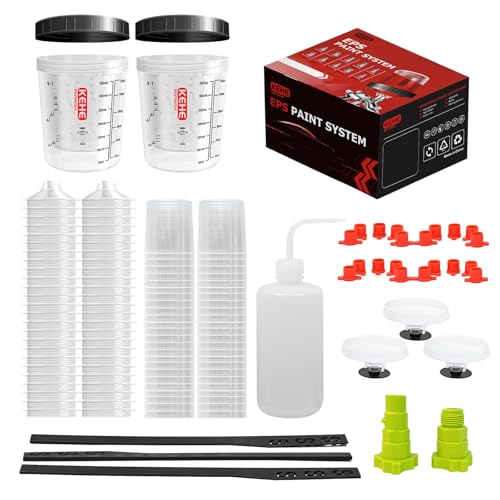
Disposable cup systems changed small-shop spraying more than any other accessory in the last decade, and this KEHE kit is a strong example of why. You get 50 disposable liners that fit inside reusable hard cups, plus lids with built-in strainers, so when you switch from white to red, you peel out the liner, drop in a fresh one, and you’re spraying again in under a minute. No solvent baths, no scratched gun cups.
The 12-ounce capacity sits in the sweet spot for most detail work, large enough to cover a motorcycle fender or a chair, small enough to avoid wasted paint when you’re testing a color mix. Compared to washing out a traditional metal cup between every color, this system is faster, cleaner, and arguably more accurate, since you’re never chasing residual pigment. The hard cups come with retainer rings and adapters, so they fit most HVLP and LVLP guns on the market.
Advantages To Know
- 50 liners mean weeks of multi-color work before restocking
- Built-in lid strainer catches debris before it reaches the nozzle
- Adapter set covers both HVLP and LVLP gun threads
- Calibrated ratios printed on the cup speed up mixing
Less-Strong Areas
- Plastic liners add recurring waste, which isn’t ideal for every shop
- Adapter compatibility varies; double-check thread size for non-standard guns
Feature Snapshot
Who Will Love This
Shop owners and serious hobbyists who switch colors often and want to skip the solvent-bath cleanup between every batch.
Where Another Pick Suits Better
For a single-room latex wall project, the Wagner FLEXiO 570 has its own cup system built in and doesn’t need extra accessories to get going.
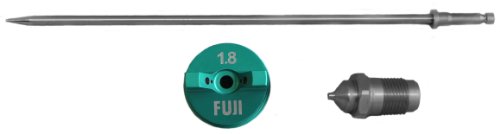
The aircap is the front part of the spray gun that shapes air and paint into the fan pattern, and swapping it changes the personality of the gun completely. Fuji’s 5100-5 is a high-output 1.8mm cap designed for their T-Model guns, and it leans toward heavier coatings and broader passes. If you’ve ever found a stock cap too tight or too narrow for a thicker latex, this kind of swap can open up the workflow.
Where this part shines is on wider panels and larger furniture pieces, where a broader, more open fan reduces the number of passes needed. It’s also a smart pickup for anyone running a Fuji T-series gun who wants to push thicker materials like primers or high-viscosity latex without forcing the gun past its comfort zone. The catch is compatibility: older Fuji guns and non-T-series models won’t accept this cap, so confirm your gun before clicking buy.
Real-World Strengths
- 1.8mm high-output opening handles thicker latex and primers cleanly
- Wider fan pattern reduces passes on large flat surfaces
- Genuine Fuji part, so fit and finish match the gun’s stock components
Some Limits To Know
- Only fits current Fuji T-series guns, not older or non-T models
- Wider fan can feel unwieldy on small detail work
Who Should Grab It
Current Fuji T-series owners spraying broad panels with thicker latex or primer who want a wider, higher-output fan.
Skip It When
If you don’t already own a Fuji T-series gun, this aircap won’t help, and the Wagner FLEXiO 570 is a more complete starter solution.
The QX2 is Wagner’s answer to a specific problem: staining outdoor projects faster than a brush can handle without renting an airless rig. Three spray patterns, typically horizontal, vertical, and a detail cone, let you switch between fence slats, deck boards, and tight corners without swapping tips. That alone cuts hours off a typical weekend staining job.
For homeowners who aren’t ready to commit to a full airless setup like the Control Pro 130 earlier in this list, the QX2 hits a useful middle ground. It handles most unthinned stains and many latex coatings, runs on a standard household outlet, and breaks down for cleaning in a few minutes. The trade-off versus the bigger Wagner is speed on truly large surfaces, but for an average backyard deck or fence, the QX2 is more than enough gun.
Where It Excels
- Three patterns cover broad, vertical, and detail work without tip swaps
- Sets up fast and runs on a standard household outlet
- Handheld design is much easier to carry up ladders than a cart-based rig
- Strong fit for fences, decks, lattice, and pergolas
A Few Limitations
- Slower than an airless rig on very large expanses like full house exteriors
- Hose length is limited, so dragging it around a big yard takes some planning
Right Fit For
Homeowners staining a deck or fence in a single weekend who want speed without renting or storing a full airless rig.
Consider Something Else When
For full-house exterior repaints that span multiple days, the Wagner Control Pro 130 HEA offers the volume and reach to match that scale.
The FLEXiO 570 closes the roundup because it covers the widest spread of casual use cases. The detachable iSpray nozzle is the headline feature: snap it off for detail work, snap it back on for broad walls. Combined with the unit’s ability to spray most unthinned latexes and stains, that means one tool covers the bedroom repaint in spring and the fence refresh in fall without swapping equipment.
Compared to the airless Control Pro 130 earlier, the FLEXiO trades raw speed for portability and storage. It weighs less, breaks down smaller, and stows in a closet. Compared to the QX2 stain sprayer, the FLEXiO is a better all-arounder, though dedicated stain-only projects may still go faster on the QX2’s simpler controls. For most people dipping into spraying for the first time, the FLEXiO is the safest buy because it grows with you as projects get more ambitious.
Everyday Wins
- iSpray nozzle detaches for switching between detail and broad-coverage work
- Handles unthinned latex straight from the can, with no pre-mixing
- Breaks down into a few removable parts for quick cleaning
- Compact enough for apartment storage between projects
Possible Compromises
- Slower on multi-room whole-house jobs than the airless Control Pro 130
- Cleaning still takes longer than a quick rinse, so plan time at the end of each session
Feature Rundown
Who Should Grab It
First-time sprayers and casual homeowners who want one flexible tool that covers weekend indoor and outdoor projects.
Where A Sibling Pick Shines
For full exterior house painting at scale, the Wagner Control Pro 130 HEA delivers noticeably faster coverage and a more rugged cart-based platform.
What To Weigh Before Choosing A Latex Spray Gun
Match The Gun To The Project Scale
A handheld HVLP like the FLEXiO 570 covers a bedroom in an afternoon, while a full airless rig like the Control Pro 130 covers a house exterior in a day. Buying oversized equipment for a one-room job usually means more setup than spraying, while undersized gear on a big project turns into fatigue and inconsistent coats. Match the tool to the square footage you’ll actually face most often.
HVLP, LVLP, Or Airless, And Why It Matters
HVLP (High Volume, Low Pressure) and LVLP (Low Volume, Low Pressure) guns use a turbine or compressor to atomize paint at gentler pressures, which means less overspray and finer finish detail, ideal for furniture, cabinets, and trim. Airless sprayers push paint through a tiny tip at high pressure, covering large walls and exteriors fast but with more bounce-back. Latex paint works in all three formats, but the experience differs sharply, and choosing the wrong category is the most common mistake first-time buyers make.
Tip Size, Filtration, And The Maintenance Reality
Latex is thicker than most solvent coatings, so larger fluid tips and clean filters are non-negotiable. The Graco 60-mesh filter in this list is a perfect example of the kind of small part that prevents 80% of clogging headaches. Plan to clean the gun, the tip, and the filter after every session, and expect to replace the filter periodically.
Budget For Accessories, Not Just The Gun
Disposable cup systems, extra nozzles, aircap sets, and replacement filters add up. The Titan Maxum II and Fuji aircap both assume you already have a turbine or compatible gun, and the KEHE Classic X Starter Kit exists because so many first-timers forget the regulators and connectors. Budget an extra 15-20% beyond the gun itself for a smooth first project.
Key Things To Know Before You Buy
Where First-Time Shoppers Slip Up
The most common mistake is choosing by brand recognition alone. Wagner makes excellent handheld HVLP units, but the same brand’s airless machines are a different category, and the wrong one for a small furniture project leads to overspray disasters. A close second is ignoring compressor or turbine requirements. LVLP guns demand a certain CFM (cubic feet per minute) from your air supply, and a small pancake compressor often won’t keep up, leading to sputter and frustration. Read the spec sheet for CFM, tip size, and recommended coatings before you commit.
Why Higher-Tier Models Cost More
Stepping from a basic HVLP to a stainless-steel, multi-nozzle setup like the Titan Maxum II typically pays off in two ways: build quality and finish quality. Stainless fluid paths resist corrosion when you switch between latex and solvent coatings, and precision-machined air caps lay down a more consistent fan, which matters on visible surfaces like cabinet doors. The upgrade is worth it for anyone spraying more than a few times a year or selling finished work where the final coat is judged up close. For one-off weekend projects, the cheaper tier makes more sense, and the savings can go toward quality filters and cup liners instead.




