


Refinishing cabinets is one of those projects that looks simple on paper and turns messy the moment a brush touches a shaker door. Roller marks gather in the recessed panels, and brushed edges leave brush texture you can see across the room. A purpose-built spray gun flips that experience: you get an even film on flat doors, crisp lines on rails and stiles, and a finish that dries smooth without sanding every coat.
The challenge is sorting through different spray technologies. Airless sprayers move paint fast but throw a lot of fine mist. HVLP (high-volume, low-pressure) systems push softer air at lower pressure, so less paint ends up on your drop cloth and more ends up on the cabinet. LVLP (low-volume, low-pressure) variants trade a little speed for finer atomization, which matters when you’re laying down a clear topcoat on figured wood. Each pick below covers a different slice of that spectrum, so the right tool depends on whether you’re refreshing a single vanity or running a full kitchen gut reno.
An Overview Of The Picks

Wagner Spraytech Control Pro 130 HEA Sprayer

KEHE Classic X LVLP Spray Gun (Regular Kit)

KEHE Classic X LVLP Spray Gun (Starter Kit)
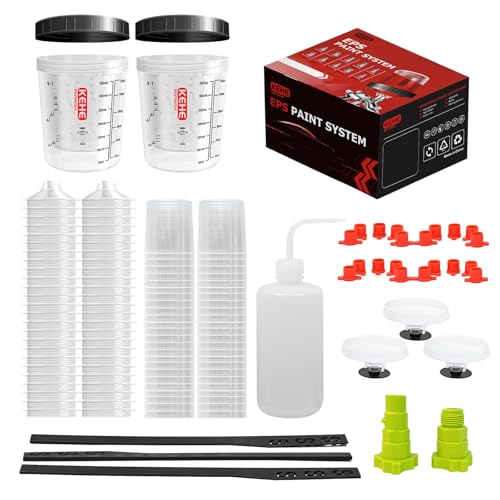
Disposable Paint Cups Kit With Liners

Fuji Mini-Mite 4 Platinum HVLP System
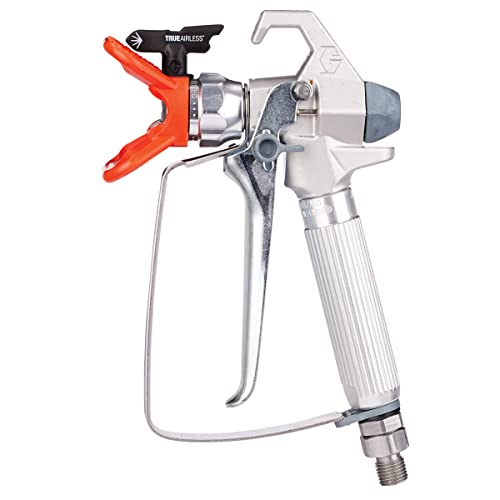
Graco SG3 Airless Spray Gun

Wagner Control Spray QX2 HVLP Stain Sprayer

Wagner FLEXiO 570 HVLP Sprayer

CUIOFREE 1000W Electric Spray Gun
The Strengths Of Each Pick
The Control Pro 130 is the kind of airless sprayer that eats a kitchen whole. HEA stands for High Efficiency Airless, a design that lowers overspray compared to older airless designs, which matters when you’re working in a garage with cabinets hung on a sawhorse wall. Pull it out of the box, prime the line with a few squirts into a bucket, and you’re clearing a 30-door kitchen in a long afternoon.
For homeowners tackling one large project, the speed advantage over an HVLP handheld is real. The trade-off is paint consumption: airless systems push more material per minute, and thinner cabinet paints atomize so finely that you can find a fine mist on every surface in the room hours later. Plan masking time accordingly.
A Favorable Mix
- HEA pump tech reduces bounce-back and fog, which is friendlier to indoor cabinet work than older airless designs.
- Handles unthinned cabinet paints and stains without extra thinning steps.
- Airless flow keeps coverage fast on flat slab doors.
- Setup is quick enough for a single weekend project, with minimal priming fuss.
Points To Keep In Mind
- Airless pressure means more masking and a sealed-off spray zone than you’d need with the KEHE LVLP picks below.
- Clean-up involves flushing the full paint path, so budget extra solvent and time at the end of the job.
- Less suited to fine detail on inset panel doors where atomization can read slightly coarse.
At A Glance
Whose Garage It Belongs In
Homeowners with a full wall of cabinet doors and a weekend to dedicate to masking and spraying, where the faster airless cycle beats the careful touch of an HVLP setup.
Skip It When
The Wagner FLEXiO 570 makes more sense for mixed indoor and outdoor staining where portability and lower overspray win out over raw airless speed.
The KEHE Classic X lands in the LVLP category, which splits the difference between HVLP and airless: lower air pressure and lower volume mean softer atomization with less bounce-back on cabinet edges. The Regular Kit ships with 1.3, 1.5, and 1.7 mm nozzle sets, so you can swap to a finer tip for clear coats and a wider one for primer surfacers without buying extras.
Compared to the Wagner Control Pro 130 above, this gun moves much less paint per minute, but what comes out lays down cleaner. For a raised-panel cabinet where brush marks tend to telegraph, the finer fan pattern is the difference between a finish you admire at an angle and one you don’t.
Benefits That Matter
- Three nozzle sizes cover everything from primer to clear coat in one kit.
- LVLP airflow produces finer atomization, which reads as a smoother cabinet surface under raking light.
- Lower overspray means less masking tape and plastic sheeting for indoor work.
- Works with a small compressor, which many home workshops already have on hand.
Trade-Offs
- Slower pace than the Wagner airless option, so full kitchen runs take longer per coat.
- Requires a compressor with adequate CFM (cubic feet per minute) for sustained spraying, and small pancake compressors may cycle constantly.
- No disposable cup system included, so cleaning the gun between color changes takes a few minutes each time.
Best Suited To
Shoppers who already own a decent compressor and care more about a polished final coat on a smaller set of cabinets than about raw speed.
Look Elsewhere When
The KEHE Classic X Starter Kit is a better match for first-time users who want the disposable cup system and accessories included from the start.
The Starter Kit version of the Classic X bundles the same LVLP gun with the accessories a first-time cabinet sprayer usually buys separately: disposable cup adapters, strainers, and a basic cleaning kit. For someone who has never set air pressure at a regulator before, the extras remove the awkward first afternoon of hunting for fittings.
The underlying gun behaves identically to the Regular Kit above, so the same paint compatibility and finish quality apply. You pay a little more upfront for the bundle, but you save the trial-and-error phase of finding the right adapters to fit a non-proprietary cup.
A Strong Showing
- Bundle format reduces the parts chase for first-time users.
- Same fine atomization as the Regular Kit, so finish quality is not compromised.
- Good entry path into LVLP spraying without buying each accessory individually.
Less Ideal Details
- Costs more than the Regular Kit for the same gun, so it’s only a value if you would have bought the extras anyway.
- Starter accessories tend to be functional rather than long-lasting, with cleaning brushes that wear quickly.
- Still depends on a compressor that can sustain the gun’s CFM draw.
Made For
First-time DIYers stepping up from brush-and-roller to spray finishing, who want one purchase that covers the basics.
Swap It Out When
The Fuji Mini-Mite 4 Platinum below makes more sense for users who don’t already own a compressor and prefer a self-contained turbine system.
This kit is a different beast from the rest of the list. It’s a consumable system, not a gun: 12 oz (350 ml) hard cups, 50 disposable liners, lids with built-in strainers, plugs, caps, and adapters that fit most HVLP and LVLP spray guns on the market. For a cabinet project that involves primer, paint, and clear coat, the liner system means you swap colors by lifting out a bag instead of scrubbing the cup.
Used alongside the KEHE Classic X above, or any gun with a compatible thread, it turns a 20-minute cleanup between coats into a 30-second liner swap. The trade-off is ongoing cost: each liner is single-use, so multi-coat jobs eat through them quickly.
Useful Highlights
- Cuts cleanup time between color and coat changes.
- Built-in strainer in each lid reduces clogs in the spray tip.
- Adapters broaden compatibility with various gun thread patterns.
Honest Caveats
- Ongoing consumable cost, so budget replacements for future jobs.
- Adapter fit varies by gun brand, so confirm the included adapters match your gun before committing.
- Not a standalone tool, only useful paired with an HVLP or LVLP gun.
Who Should Grab It
Shoppers planning a multi-color or multi-coat cabinet project who value speed of color swap over per-job cost.
Where Another Pick Suits Better
The KEHE Classic X Starter Kit bundles a similar disposable cup concept, so beginners who don’t already own gun cups may prefer the all-in-one route.
The Fuji Mini-Mite 4 Platinum is a turbine-driven HVLP system, meaning the motor and air supply live in a separate box rather than a wall-mounted compressor. The non-bleed spray gun stays cool during long sessions, the metal turbine case has a built-in gun holder, and the included 25 ft hose includes an air control valve to dial back overspray on cabinet edges.
For someone who sprays cabinets regularly, the Fuji platform is the kind of tool that quietly outperforms cheaper handhelds on every coat. The T75G gravity gun feels balanced in the hand, and the side-mounted pattern control knob lets you resize the fan without reaching up to the gun tip, which matters when you’re working overhead on upper cabinet faces.
Key Advantages
- Self-contained turbine means no compressor needed.
- Side pattern control knob adjusts fan size without stopping work.
- Heat Dissipation Chamber keeps the gun cooler during long sessions.
- 25 ft hose gives real reach around a kitchen without dragging the base.
A Few Limitations
- Higher upfront cost than handheld HVLP options like the Wagner QX2 below.
- Turbine noise is louder than a compressor-fed LVLP, so ear protection is helpful indoors.
- Takes up floor space in a small workshop.
Quick Facts
Right Fit For
Serious hobbyists and small-shop refinishers who spray multiple cabinet projects a year and want consistent results without investing in a full compressor setup.
Where A Sibling Pick Shines
The Wagner FLEXiO 570 is a more wallet-friendly handheld HVLP for homeowners who spray occasionally rather than on a recurring schedule.
The Graco SG3 is a replacement gun, not a complete sprayer. It pairs with Graco and Magnum airless sprayers, and the standout feature for cabinet work is the built-in hose swivel: a 360-degree fitting that keeps the hose from twisting as you move from door to door. After an hour of spraying, that swivel saves real wrist strain.
The 4-finger trigger pulls smoothly, and the thumb-engaged safety lock prevents accidental sprays when you set the gun down between coats. For someone already running a Magnum or Graco airless unit, the SG3 is the upgrade that turns a tired stock gun into a more comfortable tool for long cabinet sessions.
Notable Gains
- Built-in swivel keeps the hose untangled during extended spraying.
- 4-finger trigger reduces hand fatigue over long runs.
- Safety lock prevents accidental discharge when the gun is set down.
- Replaceable in-handle paint filter is easy to swap mid-job.
Some Limits To Know
- Requires a compatible Graco or Magnum airless sprayer, so it’s not a standalone purchase.
- Airless atomization still produces more overspray than HVLP or LVLP options above.
- Maximum operating pressure is high, so handling care matters for newer users.
Spec Overview
Built With In Mind
Owners of Graco or Magnum airless sprayers looking to upgrade a worn factory gun for the comfort demands of a full kitchen cabinet refinish.
Reach For A Different Pick When
The Wagner Control Pro 130 is the better starting point for shoppers who don’t already own a separate airless unit and want a complete system in one box.
The QX2 is a handheld HVLP sprayer aimed at homeowners who want a faster alternative to brushing without the learning curve of a professional gun. Three spray patterns (horizontal, vertical, and detail) cover most cabinet door layouts, and the unit disassembles for cleaning without special tools.
It earns its place in a kitchen cabinet list mainly for staining and sealing coats rather than pigmented paint. The flow rate is dialed for thin finishes, and the low-overspray HVLP design makes it practical to set up in a spare room with a window. The trade-off is cup size: cabinet paint goes through the reservoir quickly on larger doors.
Real-World Strengths
- Three pattern settings handle rails, stiles, and flat panels without swapping tips.
- Disassembly for cleaning is tool-free, which lowers the cleanup barrier for occasional users.
- Handheld format stores on a shelf without a dedicated cart.
- Low overspray makes indoor use more practical than airless alternatives.
Worth Noting
- Reservoir size means frequent refills on a full kitchen of doors.
- Less atomization refinement than the Fuji Mini-Mite 4 above, so high-gloss clear coats may need extra wet-sanding.
- Not built for daily production use; the motor and seals are designed around occasional projects.
Who Will Love This
Homeowners staining or sealing a single vanity or a small set of cabinet doors without committing to a pro-grade system.
Where Another Pick Suits Better
The Wagner FLEXiO 570 below handles pigmented cabinet paint with more authority thanks to its higher-output iSpray nozzle, while the QX2 is best for thinner stains and sealers.
The FLEXiO 570 splits the difference between a household handheld and a full turbine system. The iSpray nozzle handles unthinned cabinet paint and broad surfaces, and the detail nozzle swaps in for tight cabinet corners and raised-panel profiles. For homeowners who spray a kitchen one year and a deck the next, the versatility pays off.
Compared to the Wagner QX2 above, the FLEXiO 570 has noticeably more atomization power, which translates to a smoother finish on pigmented cabinet paints. The trade-off is weight in the hand: a full cup of cabinet paint makes the unit front-heavy during long sessions, and a wrist strap becomes useful.
What Pays Off
- Two nozzles (iSpray and detail) cover both broad cabinet faces and recessed areas.
- Sprays most unthinned cabinet paints and stains, reducing prep steps.
- Adjustable flow and pattern controls help dial in different coatings.
- Transitions easily between indoor cabinet jobs and outdoor staining projects.
Where It May Fall Short
- Heavier in the hand than the QX2, especially with a full cup of paint.
- Cleanup involves more parts than a simple handheld, so disassembly time runs longer.
- Not as quiet as the Fuji turbine-based system, which is noticeable on long indoor sessions.
Feature Snapshot
Perfect Match For
Homeowners who want one sprayer for both indoor cabinet work and outdoor staining, with enough finesse for pigmented paint but without a steep learning curve.
Where A Sibling Pick Shines
The Fuji Mini-Mite 4 Platinum is the better match for users who value a cooler-running gun and quieter turbine for repeated indoor sessions.
The CUIOFREE 1000W is an entry-level electric sprayer positioned for homeowners on a tight budget. The 1000W motor and three spray patterns (horizontal, vertical, round) cover the basic cabinet door orientations, and the kit typically includes multiple nozzle sizes for different coating viscosities.
The honest read: it works for a single weekend cabinet refresh, but it lacks the atomization refinement of the Wagner FLEXiO 570 above or the Fuji turbine system. For a one-off vanity or a small set of upper cabinet doors, it gets the job done without the upfront cost of a pro-grade system.
A Few Strong Suits
- Accessible price point for first-time cabinet sprayers.
- Multiple nozzle sizes handle different coating thicknesses.
- Three spray patterns cover most cabinet door orientations.
Trade-Offs
- Atomization is coarser than mid-tier picks, so finishing coats may need extra wet-sanding.
- Build quality and seal longevity are not on par with established pro brands.
- Not ideal for full kitchen runs, where higher-tier options save time and frustration.
Built For
Shoppers tackling a single weekend project on a tight budget, where a one-time use is the realistic expectation.
Consider Something Else When
The Wagner Control Spray QX2 offers better atomization at a similar tier, and is the better pick for homeowners who plan to use the sprayer more than once.
Picking The Right Spray Gun For Your Cabinets
The first decision is which spray technology matches the job. HVLP systems, including turbine units like the Fuji Mini-Mite 4 Platinum, push a high volume of air at low pressure, so paint lands on the cabinet rather than drifting across the room. LVLP guns use less air overall, which makes them friendlier to small compressors but slower per coat. Airless sprayers like the Wagner Control Pro 130 push paint at high pressure for fast coverage, at the cost of more overspray and more masking.
The second decision is scope. A single vanity refresh doesn’t need the same tool as a full kitchen gut. Handheld units like the Wagner FLEXiO 570 or the Wagner QX2 cover small and medium jobs well. For larger kitchen runs, an airless or a dedicated HVLP turbine system saves hours per coat. Cabinet door count, door style (slab versus raised panel), and whether you’re spraying pigmented paint or just stain all shift the answer.
Cabinet Door Style And Atomization
Slab doors hide minor atomization flaws, so a budget handheld works fine. Raised-panel and shaker-style doors have recessed centers and profiled edges that catch and reveal orange peel (a bumpy, dimpled texture that comes from paint droplets drying before they fully level out). For those, finer atomization from an LVLP gun like the KEHE Classic X or a turbine HVLP like the Fuji Mini-Mite 4 produces a noticeably smoother result under raking light.
Finish Coats And Topcoats
Clear coats and conversion varnishes show every imperfection. The 1.3 mm nozzle on the KEHE Classic X Regular Kit is built for exactly this kind of work, and the lower CFM draw of an LVLP gun keeps the clear coat from flashing too fast, which is when finish flaws like blush or orange peel appear. Reserve the airless tools for pigmented coats where the finish hides minor texture.
Ventilation, Masking, And Cleanup Reality
Airless systems produce the most airborne mist, so plan for a sealed spray zone with plastic sheeting and a respirator rated for organic vapors. HVLP and LVLP systems are friendlier indoors but still need a respirator and active ventilation. Cleanup time varies dramatically: disposable cup systems like the KEHE paint cup kit cut between-coat cleanup to seconds, while airless systems require flushing the full paint path with solvent at the end of each session.
Key Considerations Across These Picks
Common Shopping Slip Ups
The most common mistake is choosing an airless sprayer for a small indoor cabinet job and then underestimating the masking work. Airless overspray travels further than most first-timers expect, and the cleanup at the end of the day is longer than the actual spraying. The second slip is buying a cheap handheld and expecting cabinet-paint-grade finish, which usually means wet-sanding every coat. Match the tool to the finish standard you actually want.
Where The Extra Money Goes
Stepping up to a turbine HVLP like the Fuji Mini-Mite 4 Platinum buys you a cooler-running gun, a longer hose, and finer pattern control, all of which show up as a smoother final coat and less hand fatigue on long jobs. Disposable cup systems and proper respirators are smaller upgrades that save real time across a multi-coat project. The honest case for spending more: if you plan to spray more than one cabinet project, the upgrade pays back in saved time and better finishes.
Frequently Asked Questions
What type of spray gun works best for kitchen cabinets?
HVLP and LVLP spray guns are widely considered the best match for kitchen cabinets because they produce low overspray and finer atomization, which translates to a smoother finish on raised-panel and shaker-style doors. Airless sprayers cover large kitchens faster but require more masking and cleanup.
Do I need to thin cabinet paint before spraying?
It depends on the spray gun. Most HVLP handhelds and the Wagner airless models handle unthinned cabinet paints and stains, while some LVLP setups and smaller compressor-fed guns may need light thinning to flow properly. Always check the paint manufacturer’s spray recommendation and run a test pattern on cardboard before spraying cabinet doors.
How do I avoid orange peel when spraying cabinets?
Orange peel comes from paint drying before it fully levels on the surface. To minimize it, hold the gun at the recommended distance (usually 6 to 10 inches), keep the gun moving in smooth parallel passes, overlap each pass by about 50 percent, and ensure proper ventilation without drafts. Finer atomization from an LVLP or HVLP turbine setup also helps.
Can I spray cabinets indoors with an airless sprayer?
Yes, but plan on sealing off the spray area with plastic sheeting, opening windows for ventilation, and wearing a respirator rated for organic vapors. Airless sprayers produce more airborne mist than HVLP or LVLP guns, so the masking and ventilation work is heavier for indoor cabinet projects.
How do I clean a spray gun after cabinet paint?
Disassemble the gun according to the manufacturer’s instructions, pour any remaining paint back into the can, then flush the cup and passages with the appropriate solvent (water for latex, mineral spirits or paint thinner for oil-based). Run solvent through the gun until the output runs clear, and clean the nozzle and air cap with the brush included or a soft-bristle brush.




