


Reupholstering a headboard, building a pet cage, or wrapping a vintage chair frame all come down to the same question: which tool actually sinks fasteners cleanly into fabric and wood without shredding your material. Upholstery work lives in a different zone than framing or roofing. The fabrics are soft, the frames are often hardwood, and the joinery needs to hold up to years of flexing and weight.
Pneumatic guns dominate this category for good reason. They drive staples with consistent depth, reduce hand fatigue during long runs, and leave smaller holes in delicate textiles. Manual tackers still earn a spot for quick fixes and small craft projects, especially when a compressor isn’t available. The lineup below covers both worlds, with a clear focus on the pneumatic workhorses that professional upholsterers and serious DIYers reach for again and again. Every pick is matched to a real use case, from light craft fabric to heavy-duty seat assembly and fencing.
A Side-By-Side Look

meite SC760S-I2 Pneumatic Hog Ring Gun 16 Gauge Short Magazine

meite SC7C Pneumatic Hog Ring Gun 15 Gauge 3/4″ Crown

Milwaukee 2447-20 M12 3/8″ Crown Stapler

meite SC7C-I2 Pneumatic Hog Ring Gun 15 Gauge Upgrade Trigger

meite MT7116LN Pneumatic Upholstery Stapler 22 Gauge Long Nose
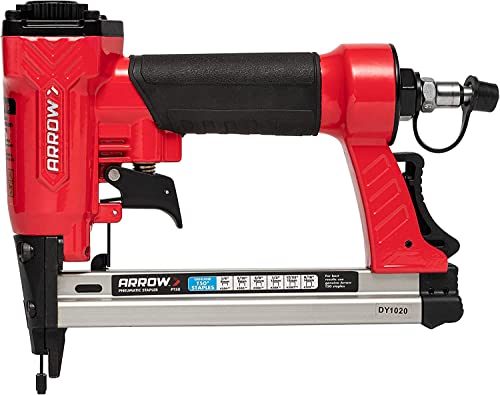
Arrow PT50 Oil-Free Pneumatic Staple Gun

DEWALT Carbon Fiber 2-in-1 Staple Gun (DWHT80276)

meite MT8016LN Upholstery Staple Gun Extended Nose 21 Gauge

meite MT5016SLN Upholstery Staple Gun Extended Nose Safety Trigger
A Deeper Look At The Lineup
The meite SC760S-I2 takes a different approach than most pneumatic hog ring tools on the market. It uses 16 gauge rings with a 1/2″ crown rather than the larger 15 gauge format, and that smaller fastener profile is the key to its appeal. The result is a closure diameter between 2.6 and 3.6 mm, which sinks cleanly into softer materials without splitting fabric or crushing foam padding.
The short magazine, rated for about 100 rings, keeps the tool lightweight and easy to pivot in tight spots. Anyone working on pet cages, small fencing runs, or detailed upholstery projects will appreciate the balance. Compared to heavier hog ring pliers designed for thick spring wire, this one trades raw holding power for finesse. For most home upholstery and small enclosure work, that trade is well worth making.
Where It Delivers
- 16 gauge rings leave smaller, less visible holes in delicate fabric
- Short 100-ring magazine reduces wrist fatigue during angled work
- Closure range of 2.6 to 3.6 mm handles both thin and medium materials
- Pneumatic operation delivers consistent ring closure with minimal hand strain
Worth Noting
- Requires a compatible air compressor to operate, adding to setup cost
- 100-ring magazine means more frequent reloading on large projects
- Not suited for heavy spring wire that demands 15 gauge holding power
Who It Suits Best
DIY upholsterers and craft-focused hobbyists who need precision ring closure in tight spaces and don’t run high-volume production jobs.
Where Another Pick Suits Better
The meite SC7C is a stronger match for anyone fastening thick seat springs or welded mesh, where a 15 gauge 3/4″ crown ring delivers the holding power this tool can’t match.
Step up to mattress rebuilding, seat assembly, or wire cage construction, and you need a fastener with real muscle behind it. The meite SC7C delivers exactly that. It uses 15 gauge 3/4″ inner crown hog rings that close to a 5.5 to 6.0 mm diameter, a substantial step up from the smaller 16 gauge format used in the SC760S-I2 reviewed above. That larger closure grips spring wire, heavy mesh, and dense upholstery materials with authority.
The standout feature here is the magazine capacity at 150 rings, which keeps reloading interruptions to a minimum during long runs. The tool’s weight and balance are tuned for steady, two-handed operation rather than the rapid wrist pivots of finer detail work. For shops that rebuild seat cushions or assemble wire enclosures daily, that sustained comfort matters more than absolute light weight.
Positive Takeaways
- 15 gauge rings provide serious holding power for spring wire and thick mesh
- 150-ring magazine supports longer continuous work sessions
- Closure range of 5.5 to 6.0 mm handles demanding material stacks
Trade Offs
- Heavier and more tiring during overhead or extended detail work
- Larger ring profile can split thinner fabrics if depth isn’t adjusted carefully
- Still needs a compressor, which is a separate purchase for new shop owners
Made For
Professional upholsterers and small shop owners tackling mattress rebuilding, automotive seat assembly, and wire cage fabrication on a regular basis.
Look Elsewhere When
The meite SC7C-I2 is worth stepping up to if trigger fatigue becomes a problem during all-day production runs, since its refined switch mechanism is built to reduce hand strain.
Most of the tools in this roundup are pneumatic, meaning they need an air compressor to run. The Milwaukee 2447-20 breaks that pattern. It runs on the M12 battery platform, which means upholstery work can move freely between rooms, vehicles, and outdoor furniture without dragging a hose behind. For mobile upholsterers and anyone who services furniture on-site, that freedom is genuinely valuable.
The tool drives 3/8″ flat crown staples in lengths from 1/4″ to 9/16″, which covers the staple sizes most commonly used in upholstery work. The compact 7.25″ length and roughly 3-pound weight make it easy to maneuver into tight chair corners. It accepts any Milwaukee M12 battery, so anyone already in that ecosystem can use batteries they already own. This is a different category of tool than the hog ring guns above, and for the right workflow it solves problems pneumatics simply can’t.
What Pays Off
- Cordless design eliminates the need for a compressor and air hose
- 3/8″ flat crown staples match standard upholstery fastening patterns
- Staple length range from 1/4″ to 9/16″ covers most fabric-to-frame jobs
- Compact 7.25″ body fits into tight chair and cushion corners
Honest Caveats
- Tool body only, so battery and charger are separate purchases
- Lower staple-driving power than pneumatic tools for hard hardwood frames
Quick Facts
Right Fit For
Mobile upholsterers and homeowners tackling furniture repairs without a compressor setup, especially those already invested in the Milwaukee M12 ecosystem.
A Better Fit Elsewhere
The meite MT7116LN pneumatic option is a smarter pick for workshop-bound upholsterers who need a longer nose to reach into deep recesses on chair backs and ottoman frames.
Take the SC7C reviewed above and refine the part your finger actually presses all day, and you get the SC7C-I2. This version keeps the same 15 gauge 3/4″ crown fastener format and 5.5 to 6.0 mm closure range, but swaps in an upgraded trigger mechanism. The new switch is designed to improve responsiveness and cut down on the hand fatigue that builds up over hundreds of repeated pulls.
For anyone running a production upholstery shop or rebuilding seats in volume, that trigger refinement is the difference between finishing a job comfortably and dreading the next one. The tool also uses the same 150-ring magazine as the standard SC7C, so reloading frequency stays the same. The 1500 series upgrade may also have a more durable internal sealing arrangement, though users in heavy daily use tend to report the trigger as the standout improvement.
Standout Benefits
- Upgraded trigger reduces finger fatigue during long production runs
- Same 15 gauge 3/4″ crown format as the proven SC7C base model
- 150-ring magazine minimizes reloading interruptions
- 5.5 to 6.0 mm closure handles the thickest upholstery material stacks
Soft Spots
- Carries a small premium over the standard SC7C for the trigger upgrade alone
- Still requires a compressor, so it’s not a step up for those wanting cordless freedom
Best Suited To
Full-time upholsterers and production workers who already know they want the SC7C platform and want the most comfortable daily-use version available.
Swap It Out When
The Milwaukee 2447-20 is a better fit for mobile work where dragging a compressor hose into a client’s home isn’t practical, even if it can’t match the SC7C-I2’s raw fastening strength.
The meite MT7116LN sits firmly in the classic upholstery staple gun category, and the long nose is what sets it apart. Where a standard short-nose stapler can struggle to reach into chair backs, inside ottoman wells, or behind decorative trim, the extended nose design pokes into those recesses and lays a clean line of staples. It accepts 22 gauge 71 series staples with a 3/8″ crown in lengths from 1/4″ to 5/8″, the traditional upholstery standard.
Running pressure sits in the 70 to 90 PSI range, which is well within the output of most home and small shop compressors. The 1/4″ NPT air inlet is the standard fitting found on virtually every compressor hose and manifold. For anyone wrapping fabric over a wooden frame, this is the staple format that decades of upholsterers have relied on, and the long nose version just makes that classic work easier in awkward geometry.
Real-World Strengths
- 22 gauge 71 series staples are the time-tested upholstery standard
- Long nose reaches into deep recesses and tight frame corners
- Staple length range from 1/4″ to 5/8″ covers thin to medium fabric layers
- Standard 1/4″ NPT air fitting works with common shop compressors
Room For Improvement
- Not a hog ring tool, so it won’t close rings on cages or seat springs
Feature Snapshot
Whose Shelf It Belongs On
Home upholsterers and small workshop owners wrapping fabric over chair frames, headboards, and footstools where deep reach matters.
Another Choice May Suit
The meite MT8016LN offers a similar long nose with a 21 gauge format for users who want slightly heavier staple holding without moving to a true hog ring tool.
Arrow has been making fastening tools for generations, and the PT50 reflects that long institutional knowledge. The headline feature is oil-free operation, which means no daily lubrication ritual and no risk of oil mist contaminating fabric or staining light-colored textiles. For upholstery shops, that single detail can save real time and prevent expensive callbacks.
The PT50 supports bump firing, which is a mode where the tool fires each time the nose contacts the workpiece. That makes rapid sequential stapling along a frame far faster than single-shot mode. The easy-load magazine, contact safety mechanism, and adjustable exhaust cover are the kind of thoughtful touches that experienced shop workers notice immediately. It’s a different category of tool than the meite hog ring guns, and it works alongside them rather than competing directly.
Key Advantages
- Oil-free design means no daily lubrication and no oil mist on fabric
- Bump fire mode speeds up repetitive stapling along frame edges
- Easy-load magazine reduces reloading time during production runs
- Contact safety mechanism helps prevent accidental firing
Some Limits To Know
- A staple gun rather than a hog ring tool, so it doesn’t close rings on cages or springs
- Requires a compressor to operate, adding to total workshop setup cost
Who Should Grab It
Busy upholstery shops and production environments where low maintenance and high daily firing volume matter more than cordless portability.
Skip It When
The Milwaukee 2447-20 is the better choice for any mobile setup that needs to work without a compressor hose, even though it can’t match the PT50’s rapid bump fire capability.
Not every upholstery job needs a pneumatic tool. The DEWALT DWHT80276 is a manual tacker, which means it relies on hand pressure rather than compressed air to drive staples. The carbon fiber composite housing keeps weight down, and the 2-in-1 design accepts both heavy-duty staples and 18 gauge brads. For quick repairs, small craft projects, and the occasional re-tack of a loose seat cover, this kind of tool is genuinely useful to have around.
The reversible belt hook is a small detail that makes a real difference when you’re moving around a furniture piece and need both hands free between staples. The low fastener indicator shows when the magazine is running low, so you don’t find yourself mid-stroke with an empty tool. Compared to the pneumatic workhorses elsewhere in this list, this is a different tool for a different scale of job, and it earns its spot by being the simplest reliable option for light tasks.
What Earns Its Place
- No compressor required, ready to use right out of the box
- 2-in-1 design handles both staples and 18 gauge brads
- Carbon fiber body cuts weight compared to all-metal manual tackers
- Low fastener indicator prevents mid-job empty magazine surprises
Practical Considerations
- Hand-powered, so not realistic for full furniture reupholstering
- Lower driving power than any pneumatic option in this lineup
Feature Rundown
Who Will Love This
Homeowners and casual crafters who need a simple, no-setup tool for small upholstery repairs, decorative projects, and occasional household fastening.
Not Your Match When
The meite MT7116LN is the right step up for anyone wrapping full chair frames or headboards, since pneumatic power and a long nose handle that scale of work far better than any manual tacker.
Reach matters more in upholstery than most people expect. The meite MT8016LN is built around that reality, with a 50 mm extended nose that pokes into deep cavities, tight corners, and recessed frame areas where a standard-length stapler simply can’t go. It drives 21 gauge staples with a 1/2″ crown, a slightly heavier format than the 22 gauge staples used in the MT7116LN reviewed earlier.
That 21 gauge wire holds a bit better in dense hardwoods and thick fabric stacks, at the cost of slightly more visible staple holes. The 150-staple capacity keeps reload frequency reasonable, and the pneumatic operation means consistent driving depth shot after shot. For anyone working on ornate chair backs, deep cushion wells, or decorative wooden frames with carved recesses, the extended nose here is the main reason to pick this tool over a standard-length stapler.
Benefits That Matter
- 50 mm extended nose reaches into deep cavities and corners
- 21 gauge wire holds firmly in dense hardwood frames
- 150-staple capacity reduces reloading interruptions
- 1/2″ crown width offers solid holding in thick fabric stacks
Factors To Consider
- 21 gauge leaves more visible holes than finer 22 gauge staples on decorative fabric
- Extended nose changes balance, taking a short adjustment period for users used to standard staplers
Perfect Match For
Upholsterers restoring ornate furniture, deep-seated cushions, and chair backs with carved recesses where a standard nose can’t reach the fastening points.
Reach For A Different Pick When
The meite MT7116LN is a better fit for general flat-frame upholstery work, where the 22 gauge format and shorter nose handle most jobs without the reach-related balance adjustment.
The MT5016SLN rounds out the meite upholstery staple line with a focus on two things: reach and safety. Like the MT8016LN reviewed above, it uses an extended nose to access tight frame areas, but adds a dedicated safety trigger mechanism to reduce the chance of accidental firing. For shared workshop spaces, training environments, or any setup where multiple people handle the tool, that safety feature is a meaningful addition.
Staple compatibility covers 20 gauge 1/2″ crown staples in lengths from 1/4″ to 5/8″, giving the tool a wide working range across different material thicknesses. The 20 gauge wire is a step up again from the 21 gauge MT8016LN, providing even stronger holding power for the most demanding upholstery stacks. It’s the heaviest-duty traditional stapler in this roundup, and it’s aimed squarely at users who prioritize both reach and safe handling.
Practical Advantages
- Safety trigger reduces accidental firing in shared workshop environments
- 20 gauge wire provides strong holding in thick upholstery material stacks
- Extended nose reaches recessed areas other staplers can’t access
- Staple length range from 1/4″ to 5/8″ covers most upholstery jobs
Details To Watch
- Heavier 20 gauge wire can be visible on lighter decorative fabrics
- Safety trigger requires a slightly different firing motion that takes some getting used to
Built With In Mind
Shared workshop owners, training instructors, and safety-conscious upholsterers who want extended reach and a tool that’s harder to fire by accident.
A Better Fit Elsewhere
The meite MT8016LN is a smoother pick for solo craftspeople who don’t need the safety trigger and prefer the slightly lighter 21 gauge format for finer fabric work.
What Matters Most Before Choosing Staple Guns For Upholstery
Staple Format and Gauge Compatibility
The single biggest practical decision is matching the tool to the staple format you can actually source. Upholstery work most commonly uses 22 gauge 71 series staples with a 3/8″ crown, which is the standard the meite MT7116LN and the manual DEWALT both support. Hog ring work is a different category entirely, with 15 gauge or 16 gauge C-rings in either 1/2″ or 3/4″ crown widths.
Buying a tool you can’t feed is a common misstep. Always confirm the specific staple size, crown width, and gauge the tool requires before committing, and check that those staples are available in the lengths you need for your projects.
Power Source: Pneumatic vs Cordless
Pneumatic tools deliver consistent driving depth and handle long production runs without battery swaps, but they require a compressor, hose, and the discipline of occasional lubrication. Oil-free models like the Arrow PT50 remove the lubrication step. Cordless tools like the Milwaukee 2447-20 trade raw driving power for total portability, which is the right trade for mobile work but the wrong one for a fixed shop. The right answer depends entirely on where and how often you’ll be working.
Magazine Capacity and Reloading Frequency
Magazine capacity affects how often you’ll interrupt your workflow. The 100-ring SC760S-I2 is fine for occasional detail work, while the 150-ring SC7C and SC7C-I2 reduce reloading during production runs. For standard staplers, 150-staple magazines are typical and adequate. The honest read is that magazine size matters most when you’re firing hundreds of fasteners in a single session.
Nose Length and Access
A standard nose works for flat frame faces, but upholstered chair backs, deep cushion wells, and ornate trim often hide fastening points that demand an extended nose. Tools like the meite MT8016LN, MT5016SLN, and MT7116LN all use longer nose designs specifically to reach those areas. For decorative and antique furniture work, that reach is often the difference between a clean install and a frustrating struggle.
Key Considerations Across These Picks
Common Shopping Slip Ups
The most frequent mistake is buying a tool designed for a different fastener format than the project requires. A standard upholstery stapler won’t close hog rings, and a hog ring gun won’t drive 22 gauge staples. Confirming the exact staple size and type your project needs, and then matching the tool to that specification, prevents the most common returns. Another misstep is underestimating compressor requirements. Pneumatic tools list a recommended PSI range, and a small pancake compressor often can’t deliver the volume and pressure a shop-grade pneumatic tool needs for consistent firing. Check compressor specs against tool requirements before committing.
Why Top Tier Costs More
Higher-tier pneumatic tools tend to cost more for three concrete reasons. First, refined trigger mechanisms, like the one in the meite SC7C-I2, use more durable internal components designed for thousands of daily cycles. Second, extended nose designs add precision-machined parts that cost more to manufacture than standard short noses. Third, oil-free operation, like the Arrow PT50’s design, requires tighter internal sealing that adds engineering and production cost.
The upgrade makes sense for full-time upholsterers running daily production. For occasional DIY projects, the standard-tier tools in this list deliver the same fastening result at lower cost, and that tradeoff is well worth considering before spending up.
Frequently Asked Questions
What is the difference between a staple gun and a hog ring gun for upholstery?
A staple gun drives U-shaped staples with two prongs, typically used to attach fabric to wood frames. A hog ring gun closes C-shaped rings around wire, mesh, or fabric edges, used for seat springs, cages, and bag closures. They serve different fastening roles and aren’t interchangeable for the same job.
Do pneumatic staple guns for upholstery need oil?
Most pneumatic tools benefit from a few drops of air tool oil in the inlet before each session, but oil-free designs like the Arrow PT50 eliminate that step. Oil-free operation is cleaner around fabric and reduces daily maintenance, which matters in upholstery shops where oil mist can stain textiles.
Can I use a manual staple gun for full furniture reupholstering?
A manual tacker like the DEWALT DWHT80276 is fine for small repairs, decorative craft work, and occasional loose-cover retacks, but full furniture reupholstering involves hundreds of staples per piece, and hand-power driving through that volume is exhausting. A pneumatic tool is the realistic choice for full reupholstery projects.
What size compressor do I need for a pneumatic upholstery stapler?
Most pneumatic upholstery staplers in this category specify a 70 to 90 PSI operating range. A small 6-gallon pancake compressor can power light intermittent use, but a 20 to 30 gallon tank with a higher CFM (cubic feet per minute) rating handles sustained production firing without pressure drop. Always match the compressor’s CFM output to the tool’s listed air consumption.
What gauge staples are best for upholstery fabric?
22 gauge 71 series staples with a 3/8″ crown are the traditional upholstery standard, fine enough to minimize visible holes but strong enough to hold fabric securely. Thicker 20 or 21 gauge staples hold better in dense material stacks but leave more visible marks. The right gauge depends on fabric weight, frame hardness, and how visible the staple line will be in the finished piece.




