


A first stick welder should feel approachable, not intimidating. The right machine forgives sloppy technique, holds settings steady, and gives you room to grow into thicker steel without immediately needing an upgrade. You’re weighing amp ranges, duty cycles, and whether to add TIG, plasma cutting, or stick-only simplicity, all while learning the basics of arc length, rod angle, and slag.
The picks below cover full starter kits, dedicated stick machines, and multi-process units, plus the consumables and PPE that round out a beginner setup. A quick note before diving in: a “stick welder” is a shielded metal arc welding (SMAW) machine, the kind that uses a flux-coated rod that melts into your weld pool. It’s the most common entry point for garage welders because the rods are cheap, the machines are forgiving, and the technique translates to thicker steel than most entry-level MIG (metal inert gas) or flux-core setups can touch.
The Lineup, Simplified

PRIMEWELD TIG225X 225 Amp AC/DC Tig/Stick Welder with Pulse
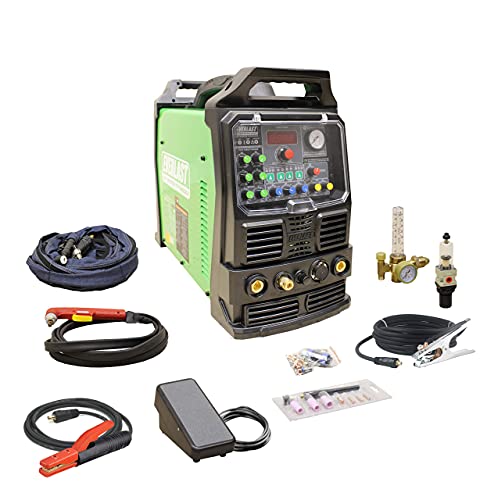
Everlast PowerPro 205Si 200amp AC DC TIG 50A Plasma Cutter

VASTOOLS Welding Accessories Kit with Chipping Hammer and Gloves

LIIJII E6013 Welding Rod 3/32″ 1lb Pack

YESWELDER E6013 3/32″ 2LB Welding Rods

MIGVAN Auto Darkening Welding Helmet with LED Light

KINBOIN “Dirty Hands Make Clean Money” Reflective Hard Hat Stickers

BESTMIG 145A 4-in-1 Multi-Process Welder with Helmet and Gloves
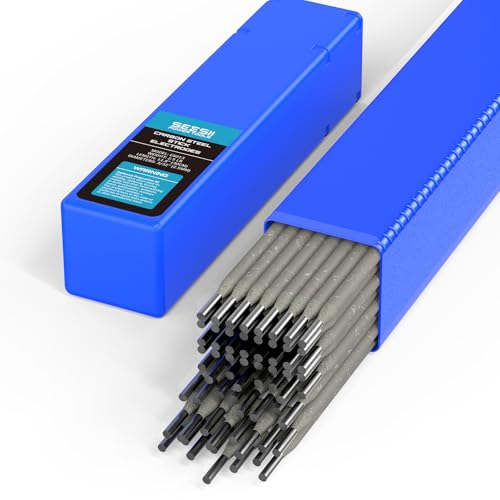
Seesii E6013 2.5LB 3/32″ Welding Rod for Arc Welding
Meet The Standout Selections
Most beginners don’t need a 225-amp AC/DC TIG machine, but the TIG225X earns its place here because it grows with you. The IGBT (insulated-gate bipolar transistor) inverter delivers smooth, stable arc control on thin sheet metal, mild steel, and aluminum, which is where cheap stick machines stumble. If your projects move from repair work to fabrication on a frame, gate, or trailer, the AC balance, pulse control, and CK17 flex torch (the hand-held electrode holder) give you real room to improve.
The trade-off is complexity. There are more knobs and settings here than a pure stick-only unit, and you’ll spend time learning the menu before your first bead. For hobbyists who want one welder that handles steel today and aluminum next year, it’s a sensible upgrade path.
What Works In Its Favor
- 225 amps covers thick plate plus thin sheet without losing arc stability
- AC/DC and pulse functions open up aluminum and stainless work
- CK17 Superflex TIG torch with flex head makes tight corners easier
- CK DINSE connector and USA-made hose add long-term durability
- Single machine replaces separate TIG and stick units
Honest Caveats
- Steep learning curve for someone with no TIG background
- Bulkier and heavier than a stick-only starter, so storage matters
- You may find the pulse controls intimidating until you read the manual
Who It Suits Best
Intermediate-to-advanced hobbyists who want TIG and stick in one box and don’t mind a longer setup routine.
Where Another Pick Suits Better
The BESTMIG 145A 4-in-1 Multi-Process Welder makes more sense for total beginners who want MIG, flux-core, and stick from day one without the TIG learning curve.
The PowerPro 205Si crams three tools into one footprint: 200 amps of TIG, 160 amps of stick, and a 50-amp plasma cutter. For a small fabrication shop or a homeowner who cuts, breaks down scrap, and welds, that combination is hard to beat. The digitally controlled IGBT inverter responds smoothly when you dial in current, and the plasma side reaches enough power for clean cuts on thin plate.
You pay for that versatility with bulk and a crowded control panel. The plasma function also requires separate consumables, so ongoing costs run higher than a stick-only setup. The honest read is that this machine rewards people who actually use all three processes; stick-only beginners will leave most of it idle.
The Case For It
- Three processes in one chassis, saving shop space
- Strong stick output for repair and fabrication work
- Plasma cutting adds real scrap-handling capability
- Digital IGBT inverter keeps arc response consistent
Things To Consider
- Plasma function adds consumable cost and learning time
- Heavier and bulkier than dedicated stick welders
- Power requirements assume a dedicated 220V circuit
Made For
Garage fabricators and small-shop owners who want stick, TIG, and plasma in a single unit.
Skip It When
The PRIMEWELD TIG225X is the better fit for anyone focused purely on aluminum and stainless without the need for plasma cutting.
No stick welder is complete without a chipping hammer, wire brush, and decent gloves. The VASTOOLS kit bundles the cleanup essentials so you don’t piece them together one by one. The high-carbon steel chipping hammer is heat-treated, with a spring handle that absorbs the shock of knocking off slag (the hard, glassy residue left on top of a cooled weld). The 13.5-inch leather gloves run a comfortable cotton lining and lock-stitch construction, which matters when you’re handling warm parts.
The kit also includes a 7-inch 6-in-1 “welpers” plier (a multi-purpose welding plier that grips, cuts wire, and removes spatter) and an 11-inch wire brush. For first-day welders, that covers slag removal, wire brushing, and electrode handling without a second trip to the hardware store.
Strengths Worth Knowing
- Heat-treated chipping hammer handles repeated slag removal
- Leather gloves with cotton lining balance heat protection and comfort
- 6-in-1 plier covers wire cutting, tip cleaning, and nozzle handling
- Bundles the four tools every beginner forgets to buy
Trade-Offs
- Wire brush wears out faster than dedicated stainless options
- Gloves fit differently than premium MIG-specific models
Right Fit For
First-time welders setting up a garage workspace who need core cleanup tools in one package.
A Better Fit Elsewhere
The MIGVAN Auto Darkening Welding Helmet is a better add-on for anyone still using a fixed-shade hood and missing the auto-darkening safety upgrade.
E6013 is the rod most people learn on, and the LIIJII 1-pound pack is a low-risk way to start. The 3/32-inch diameter (a wire-thickness measurement: about 2.4 mm) is the right call for thin-to-medium steel up to roughly 1/4 inch, and the all-position formula means you can practice flat, horizontal, vertical, and overhead without switching rods. Arc starting stays smooth on AC and DC, and the slag lifts cleanly with a chipping hammer, which matters when you’re learning to read your weld.
The 1-pound pack runs out fast if you’re running long practice sessions, and LIIJII doesn’t offer the brand recognition of larger rod manufacturers. For pure practice beads and small repairs, though, the value per rod is solid.
Key Advantages
- Easy arc start reduces frustration on first strikes
- All-position welding covers every beginner joint type
- Slag removes cleanly, helping you see weld quality faster
- Works on AC and DC, including low-voltage AC machines
Points To Keep In Mind
- 1-pound pack disappears quickly during heavy practice
- Not the best choice for thick plate over 1/4 inch
Best Suited To
New welders practicing beads on mild steel with a 110V stick machine in a home garage.
Consider Something Else When
The YESWELDER E6013 2LB pack is the better fit for anyone running long practice sessions and wanting fewer reorders.
The YESWELDER E6013 sticks build on the same beginner-friendly formula as the LIIJII pack but double the volume to 2 pounds. For anyone planning more than a single afternoon of practice, that’s a meaningful upgrade. The rods are designed for shallow penetration in poorly fitted joints, which is exactly what you hit when you first start tacking pieces together.
Low spatter (molten metal droplets that scatter away from the weld) and self-cleaning slag behavior on vertical down fillets (small triangular welds between two pieces of metal meeting at a corner) cut cleanup time, so you spend more time striking arcs and less time chipping. Operating on AC and DC gives flexibility with whatever stick machine you own or plan to buy.
Bright Spots
- 2-pound pack supports long practice sessions without reordering
- Self-cleaning slag saves time on vertical welds
- Low spatter keeps your workspace cleaner
- General-purpose rod handles AC and DC machines equally well
Room For Improvement
- Shallow penetration limits use on thick plate
- Storage matters because moisture ruins flux-coated rods over time
Who Will Love This
Hobbyists running regular training sessions on mild steel and wanting a rod that forgives imperfect technique.
Not Your Match When
The Seesii E6013 2.5LB pack makes more sense for larger home repair projects that demand a bit more rod volume and all-position flexibility.
An auto-darkening helmet is the single biggest safety upgrade a new stick welder can make. The MIGVAN hood darkens in milliseconds when you strike an arc, so you keep both hands on the rod and don’t waste time flipping a fixed-shade mask. The wide shade range (4/5 to 13) covers stick, MIG, and grinding, and four arc sensors keep the lens responsive even when the angle shifts.
The built-in LED light is a small but genuinely useful touch, especially in a dimly lit garage or basement workshop. Solar plus battery power means the lens stays functional even if you forget to charge it. True color technology gives a clearer view of the weld pool, which helps beginners read puddle behavior more accurately.
What Helps Most
- True color viewing makes the weld pool easier to read
- LED light helps in low-light workspaces
- Wide shade range covers stick, MIG, and grinding modes
- Four arc sensors reduce missed arc strikes
Points To Note
- Heavier than a basic fixed-shade hood
- LED light requires periodic recharging via USB
Perfect Match For
Beginners moving up from a fixed-shade hood who weld in low-light conditions and need clear puddle visibility.
Another Choice May Suit
The BESTMIG 145A 4-in-1 Multi-Process Welder includes its own helmet, making it a better fit for anyone starting from a complete zero-equipment setup.
This is the only item on the list that doesn’t weld anything, but it earns its spot because a shop needs personality. The “Dirty Hands Make Clean Money” skull decal sticks to hard hats, toolboxes, lunch coolers, and lockers. Reflective material makes it visible under low light, which adds a small bit of safety at job sites.
For welders, mechanics, and other trades, it’s a low-cost gift that says something about the work. The vinyl holds up to scuffs and weather, so it stays readable after months in a truck bed or shop drawer. Whether it lands on a helmet or a tool chest is up to the recipient.
Where It Delivers
- Reflective vinyl stays visible in low light
- Sticks to hard hats, toolboxes, and metal surfaces
- Trades-themed design fits the audience naturally
- Durable enough for outdoor job sites
A Few Limitations
- Single-design pack offers no color or size options
- Not a functional welding tool
Built With In Mind
Welders, mechanics, and electricians looking for a small gift or a personal touch on a toolbox.
Look Elsewhere When
The VASTOOLS Welding Accessories Kit is the better fit for someone who actually needs functional gear rather than shop decoration.
The BESTMIG 145A is the closest thing on this list to a complete starter package. It runs MIG, gasless flux-core, lift TIG, and stick (MMA, or manual metal arc) on 110V or 220V, and ships with a welding helmet and gloves in the box. For someone buying their first welder with no existing gear, that means one purchase covers the machine, eye protection, and hand protection.
The 145-amp output is enough for most home projects, and the IGBT inverter keeps the arc stable. Wire compatibility covers .030-inch to .040-inch solid and flux-cored, plus silicon bronze. The catch is that doing four processes well in a small chassis means each mode has tighter limits than a dedicated machine, so heavy fabrication may outgrow it.
Useful Strengths
- Four welding processes in one unit, plus included PPE
- Dual-voltage (110V/220V) works in any garage circuit
- Synergy IGBT inverter handles a range of materials
- No gas required for flux-core MIG operation
Worth Bearing In Mind
- 145 amps limits you on thick plate
- Included helmet is basic compared to a dedicated auto-darkening hood
- Four processes means more menu navigation per job
Who Should Grab It
First-time welders who want every process available from day one, with helmet and gloves bundled in.
Reach For A Different Pick When
The PRIMEWELD TIG225X is the stronger fit for hobbyists who plan to focus on aluminum and stainless rather than MIG.
The Seesii E6013 pack rounds out this list with a slightly larger 2.5-pound option aimed at home repair work. The 3/32-inch diameter and 11-inch rod length match the common E6013 spec, and the all-position formula handles flat, vertical, horizontal, and overhead joints equally well. For homeowners who fix a gate, repair a trailer, or patch a steel bracket, this is a practical volume.
Like the LIIJII and YESWELDER rods, it runs on AC and DC, including low-voltage AC machines. The trade-off is that none of these E6013 rods thrive on thick plate. For general garage and home repair, though, the Seesii pack offers solid value per pound.
What Makes Sense
- 2.5-pound pack balances practice and repair volume
- All-position formula covers common home repair joints
- Operates on AC, DC, and low-voltage AC machines
- Mild-steel general-purpose rod suits most home projects
Some Limits To Know
- Not the best choice for plate over 1/4 inch thick
- Rods need dry storage to preserve flux coating
Whose Shelf It Belongs On
Homeowners and DIYers who fix steel around the house and want one rod that handles most common repairs.
Swap It Out When
The LIIJII E6013 1lb pack is a smarter fit for brand-new welders still testing whether they’ll stick with the hobby.
Factors To Consider Before Choosing Your First Stick Welder
Match the Amp Range to Your Steel Thickness
The 140- to 200-amp range covers almost every home project, from sheet metal repair to 1/4-inch plate. Thinner rods and lower amperage work better on light gauge steel because too much heat warps the metal. Heavy fabrication beyond 3/8 inch usually calls for more amps, but most beginners never reach that point. The machines on this list sit comfortably in that sweet spot.
Decide Whether You Need Multi-Process Capability
Stick-only machines stay simple, with fewer settings to misadjust. Multi-process units like the BESTMIG 145A and Everlast PowerPro 205Si add MIG, TIG, or plasma, but each new mode adds another learning curve. For absolute beginners, a stick-only setup builds better fundamentals; you can always upgrade once the basics feel automatic.
Check the Power Source Available in Your Shop
Most starter stick welders run on standard 110V household current, which is convenient for a garage. Higher-output machines, like the PRIMEWELD TIG225X and Everlast PowerPro 205Si, often need 220V. Confirm your shop has the right outlet before you commit, because a dedicated 220V circuit sometimes requires professional installation.
Plan Your Consumables and PPE From Day One
Rods, a chipping hammer, gloves, and an auto-darkening helmet all add up. Budgeting for those alongside the machine keeps the first welding session from stalling on missing gear. The VASTOOLS kit and the rod packs on this list cover most of those needs.
Key Considerations Across These Picks
Common Shopping Slip Ups
The biggest mistake is buying a machine that needs 220V when the garage only has 110V outlets, or paying for multi-process capability you never touch. Another common slip: skipping PPE, because a fixed-shade hood slows learning and frustrates first-timers. The MIGVAN auto-darkening helmet and a basic rod pack turn a rough first day into a productive one.
Where The Extra Money Goes
Higher-tier machines add AC/DC TIG, pulse control, and plasma cutting, but those features only earn their price if your projects demand them. The PRIMEWELD TIG225X costs more because it handles aluminum and stainless, not because it welds mild steel better than a basic 145-amp unit. Stepping up makes sense once you know which process you’ll use most.
Frequently Asked Questions
What amperage do I need as a beginner?
Most beginners do well with a 140- to 200-amp stick welder. That covers 1/8-inch to 1/4-inch steel, which is the bulk of home repair and hobby work. Lower-amperage machines struggle on thicker plate, while higher-amperage units add cost without benefit until your projects grow.
Can I learn stick welding on a 110V outlet?
Yes. Many starter stick welders run on standard household current. Entry-level rods like E6013 3/32-inch work well at 110V, though low-voltage AC machines sometimes make striking the arc slightly harder. Checking your circuit’s amperage rating matters because long welds can trip a 15-amp breaker.
What size rod should I buy first?
3/32-inch E6013 is the most common starting point. It runs at moderate amperage, handles AC and DC, and forgives imperfect technique. Stepping up to 1/8-inch rods makes sense once you’re comfortable striking consistent arcs and laying flat beads.
Do I need a TIG machine to start welding?
No. Stick welding is the most common entry point because the equipment is affordable, the rods are cheap, and the technique transfers to thicker steel than most entry MIG or flux-core setups can handle. TIG adds capability for thin materials, aluminum, and stainless, but it isn’t required on day one.
How long does it take to learn stick welding?
Basic competence, meaning you can lay a flat bead without major defects, often comes within a few practice sessions. Vertical and overhead work take longer, and clean, code-quality welds typically require months of regular practice. The forgiving nature of E6013 rods helps shorten that learning curve for most beginners.




